Artwork
Military Commander on Horseback
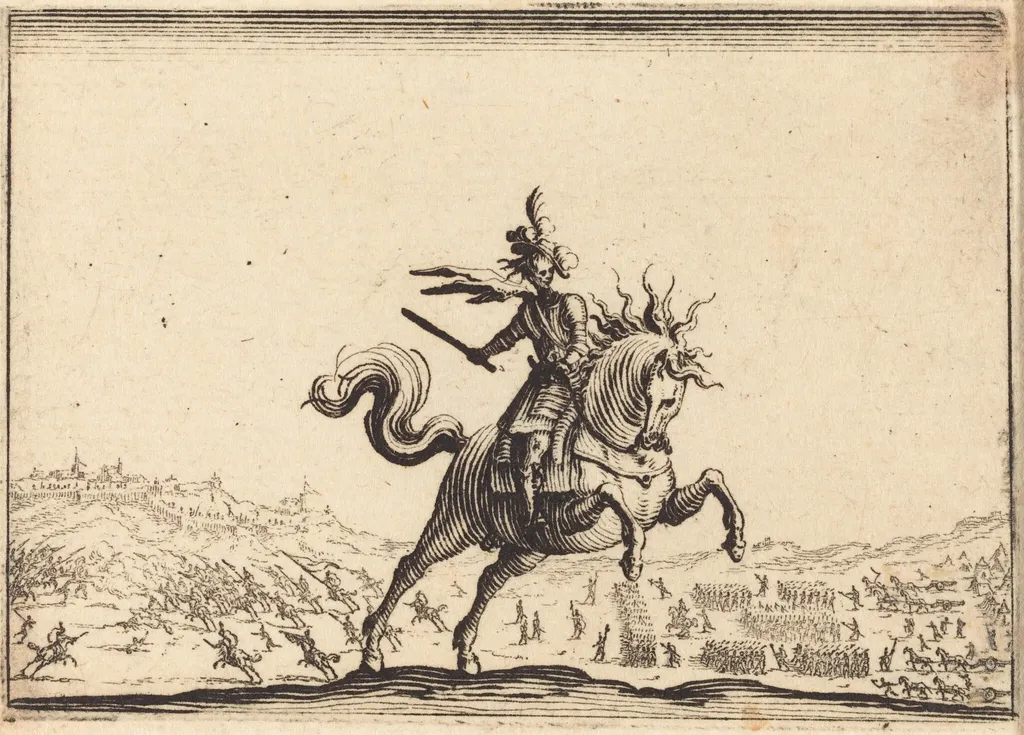
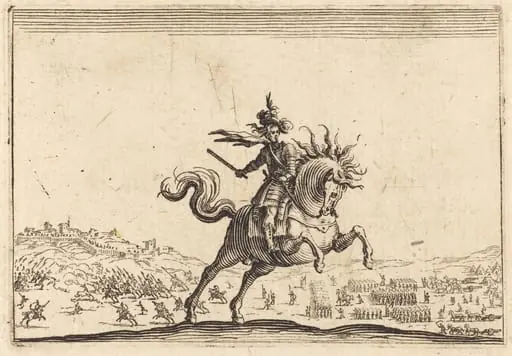
Military Commander on Horseback is an ink print by the Baroque artist Jacques Callot. It dates from 1617 and is held in the collection of the National Gallery of Art.
About this work
Overview
As a printmaker from the Duchy of Lorraine, Callot specialized in detailed etchings that recorded the visual culture of his time.
Created around 1617 by Jacques Callot, this etching on laid paper captures a mounted military leader in dynamic motion. As a printmaker from the Duchy of Lorraine, Callot specialized in detailed etchings that recorded the visual culture of his time. This work belongs to a broader series of military scenes he produced, reflecting his interest in the realities of soldiering and command during the early 17th century.
Subject & Meaning
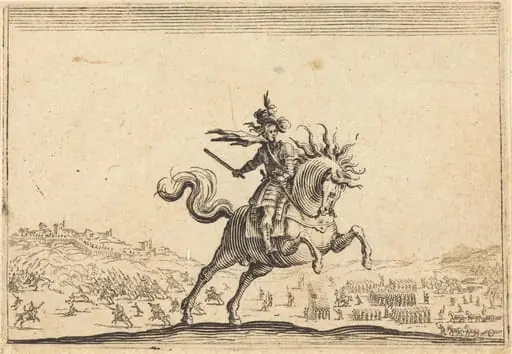
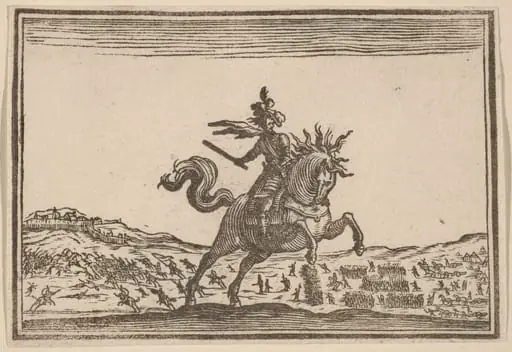
The figure is a commander on horseback, clad in armor and wearing a plumed hat, holding a sword in one hand. His steed rears sharply, conveying urgency and authority. Behind them, indistinct figures and rolling hills suggest a battlefield or campaign setting. The image does not depict a specific historical event but rather embodies the idealized presence of military leadership, emphasizing motion and command rather than narrative detail.
Technique & Style
Callot employed fine-line etching to render texture and movement with precision. The horse’s muscles, the commander’s armor, and the flowing cape are defined by delicate, intersecting lines that suggest depth and energy. The background remains softly rendered, allowing the central figures to dominate. This technique aligns with Baroque sensibilities, using contrast and motion to heighten drama without overt lighting effects.
History & Provenance
The print emerged during Callot’s early career, before his more famous series on war and beggars. It was likely produced for a private or scholarly audience interested in military iconography. No specific early ownership records are documented, but similar etchings by Callot circulated widely among collectors and artists in Europe, contributing to his reputation as a chronicler of contemporary life.
Context
In the early 1600s, the Thirty Years’ War reshaped European society, and military imagery became increasingly prevalent in art. Callot, though not a soldier, observed troop movements and camp life closely. His prints, including this one, served as visual records of the era’s martial culture, blending observation with artistic convention to reflect the tension between order and chaos in wartime.
Legacy
Callot’s etchings influenced generations of printmakers through their technical precision and observational depth. While this particular image is not among his most widely reproduced, it exemplifies his approach to capturing movement and authority in static form. His work laid groundwork for later artists who sought to document military and social life with nuance rather than glorification.
Artist & collection
Artist
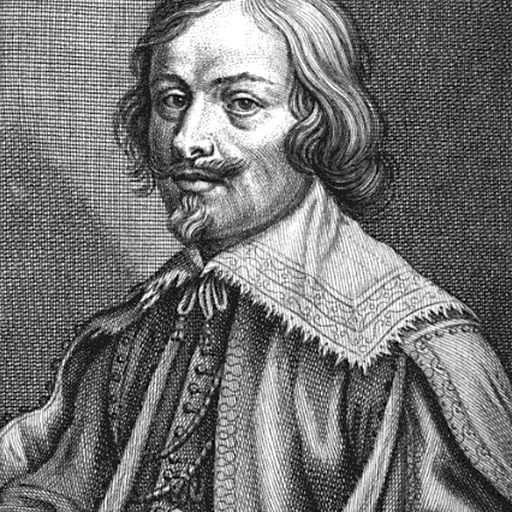
Jacques Callot was a baroque printmaker and draftsman from the Duchy of Lorraine.

 Holy Family at supper
 Restoration of the Aqueduct at Pisa
 Restoration of the Aqueduct at Pisa
 Square in Paris with Many Figures
 Square in Paris with Many Figures
 Horsemen Attacked by Robbers
 HOW WILL A COVERED PART BE CORRECTED?HOW WIKA A COVERED HEART DEED CORRECTED?
![Christ Walking on the Water [second plate], by Jacques Callot](https://artifactworldgallery.com/img/jacques-callot--christ-walking-on-the-water-second-plate--2069f3bfe4cb2126-w320.webp) Christ Walking on the Water [second plate]
Christ Walking on the Water [second plate]