Artwork
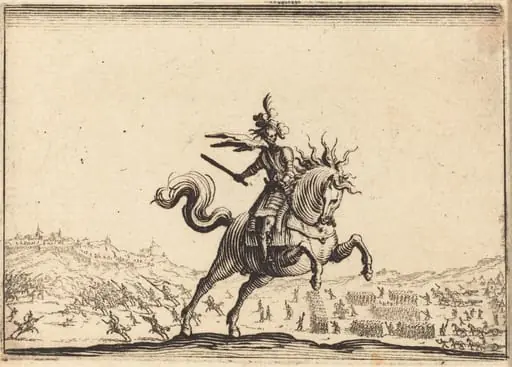
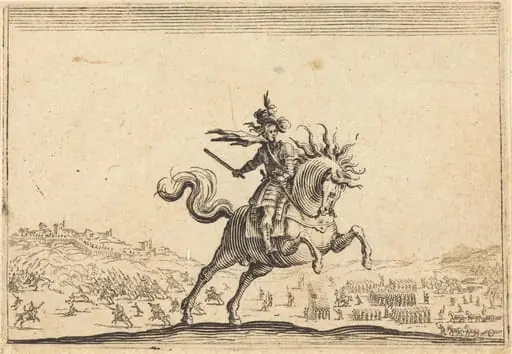
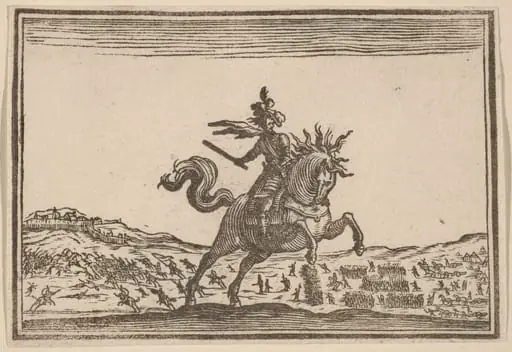
Military Commander on Horseback
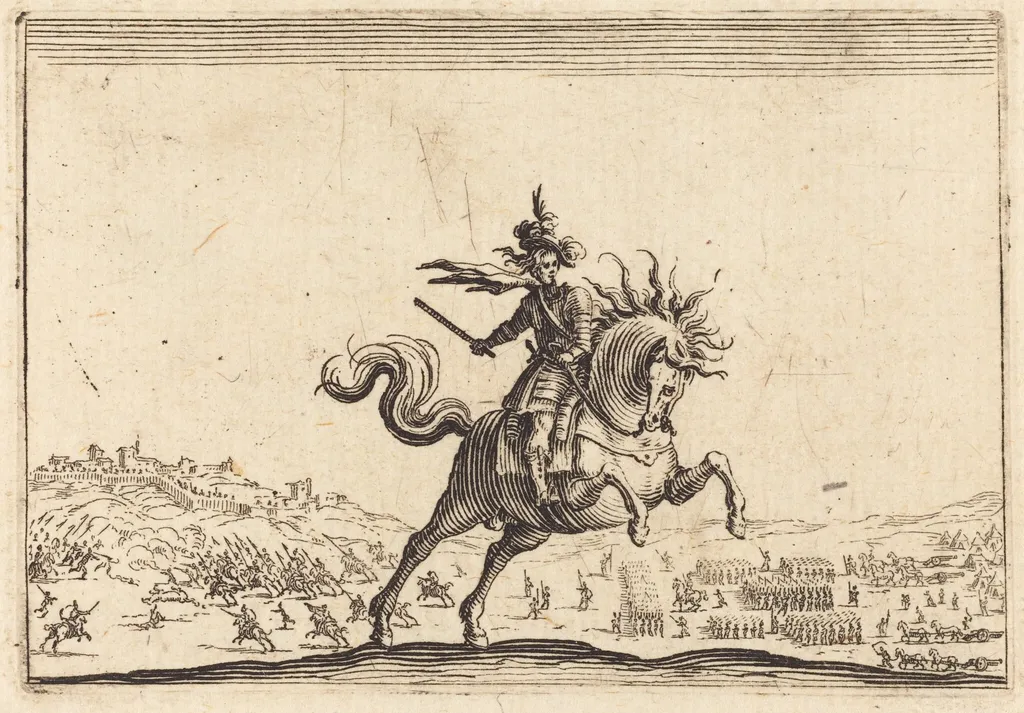
Military Commander on Horseback is an ink print by the Baroque artist Jacques Callot. It dates from 1622 and is held in the collection of the National Gallery of Art.
About this work
Overview
As one of over 1,400 prints by the Lorraine-born artist, it exemplifies his focus on the visual language of war and movement.
Created around 1622 by Jacques Callot, this etching on laid paper captures a mounted military leader in dynamic motion. As one of over 1,400 prints by the Lorraine-born artist, it exemplifies his focus on the visual language of war and movement. The composition balances a central heroic figure with a sprawling, turbulent backdrop, characteristic of Callot’s interest in documenting the chaos of contemporary conflict through precise, expressive line work.
Subject & Meaning
The central figure, a commander on a rearing horse, holds a raised sword, suggesting command in the midst of battle. His face is rendered ambiguously, almost featureless, transforming him from an individual into a symbol of authority amid disorder. Below, clustered soldiers engage in violent close combat, while smoke and dust obscure the ground, reinforcing the disorientation of warfare. The image conveys power not through individual identity, but through collective turbulence.
Technique & Style
Callot employed fine, sharp etching lines to render motion and texture with precision. The horse’s mane and tail are carved with swirling, flame-like strokes, heightening the sense of energy. Deep shadows and dense hatching create dramatic contrast, while the background landscape is rendered with intricate detail, extending the scene’s spatial depth. The blurred facial features of the rider demonstrate his deliberate choice to prioritize symbolic presence over portraiture.
History & Provenance
This print emerged during Callot’s most prolific period, when he was based in Florence and deeply engaged with military themes inspired by the Thirty Years’ War. Though no specific early ownership records are documented, it aligns with a broader body of work circulated among European collectors and military observers. Its survival in multiple institutional collections suggests early recognition of its technical and thematic significance.
Context
Produced during the height of the Thirty Years’ War, the print reflects widespread European anxiety and fascination with military life. Callot, though not a soldier, observed troop movements and camp life closely, translating them into detailed, often unflinching imagery. His prints served as both documentation and commentary, offering viewers a visceral sense of war’s scale and disorder beyond official chronicles or propaganda.
Legacy
Callot’s etchings, including this one, influenced generations of printmakers through their technical innovation and narrative intensity. His ability to compress complex scenes into single plates set a precedent for later artists exploring war and social upheaval. The work remains a key reference in the study of early modern printmaking, valued for its unembellished portrayal of conflict and its mastery of the etching medium.
Artist & collection
Artist
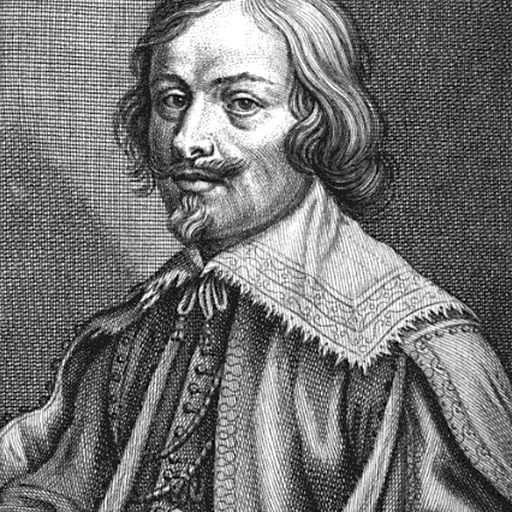
Jacques Callot was a baroque printmaker and draftsman from the Duchy of Lorraine.

 Holy Family at supper
 Restoration of the Aqueduct at Pisa
 Restoration of the Aqueduct at Pisa
 Square in Paris with Many Figures
 Square in Paris with Many Figures
 Horsemen Attacked by Robbers
 HOW WILL A COVERED PART BE CORRECTED?HOW WIKA A COVERED HEART DEED CORRECTED?
![Christ Walking on the Water [second plate], by Jacques Callot](https://artifactworldgallery.com/img/jacques-callot--christ-walking-on-the-water-second-plate--2069f3bfe4cb2126-w320.webp) Christ Walking on the Water [second plate]
Christ Walking on the Water [second plate]