Artwork
Peasant with a Cup
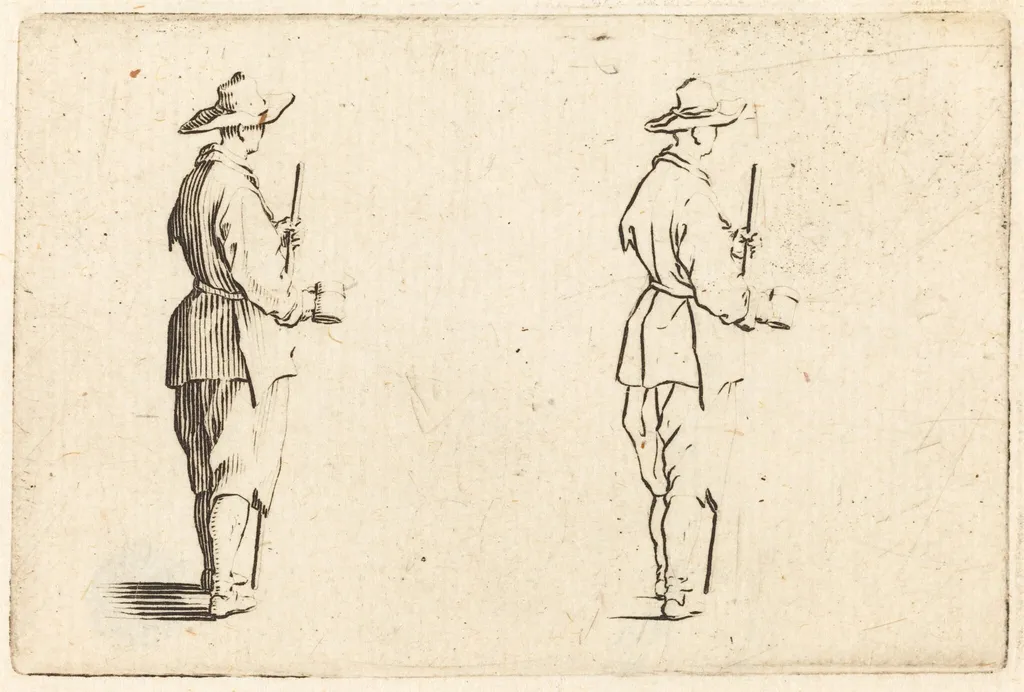
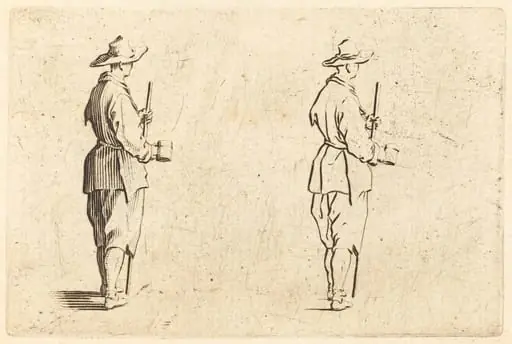
Peasant with a Cup is an ink print by the Baroque artist Jacques Callot. It dates from 1622 and is held in the collection of the National Gallery of Art.
About this work
Overview
His focus on common figures—laborers, soldiers, beggars—distinguishes his work within the old master print tradition, emphasizing observation over idealization.
Created around 1622, *Peasant with a Cup* is an etching by Jacques Callot, a printmaker from the Duchy of Lorraine. Executed on laid paper, the work belongs to a vast body of over 1,400 prints in which Callot recorded everyday life in early 17th-century Europe. His focus on common figures—laborers, soldiers, beggars—distinguishes his work within the old master print tradition, emphasizing observation over idealization.
Subject & Meaning
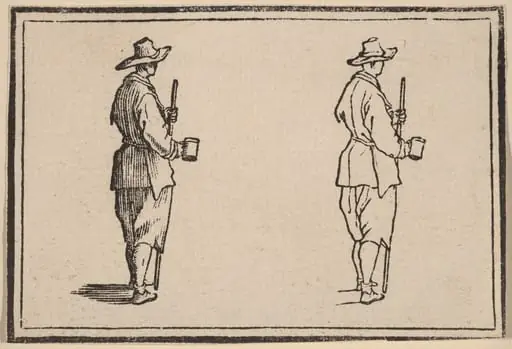
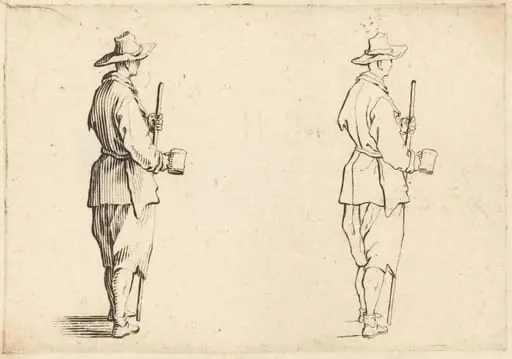
The print depicts two rural men, each wearing broad hats and striped tunics, standing near each other with canes. One holds a cup, the other rests his hands near his belt. Their postures suggest a moment of pause, perhaps after labor or during a brief respite. The scene offers no overt narrative, instead presenting quiet dignity in ordinary life, consistent with Callot’s interest in documenting the unremarkable aspects of his era.
Technique & Style
Callot employed fine, incised lines to capture texture and movement, using the etching process to achieve both precision and spontaneity. The rough, sketch-like strokes define the folds of clothing and the contours of bodies, while the paper’s laid texture enhances the tactile quality of the image. His control over line weight and density gives the figures presence without embellishment, reflecting a commitment to direct observation.
History & Provenance
The print emerged during Callot’s most productive period, when he was active in Florence and Paris, producing scenes drawn from both courtly and common life. While the specific early ownership of this impression is undocumented, it aligns with the broader circulation of his prints among collectors and artists in Europe. Its survival reflects the enduring interest in his depictions of social types during the Baroque era.
Context
In the early 1600s, printmaking became a key medium for recording social realities beyond aristocratic subjects. Callot’s work responded to a growing appetite for images of peasants, soldiers, and street life, influenced by the upheavals of the Thirty Years’ War and urban expansion. His prints served as both documentation and commentary, offering a visual record of the lower classes often excluded from high art.
Legacy
Callot’s detailed etchings, including *Peasant with a Cup*, influenced later generations of printmakers and realist artists by demonstrating how everyday subjects could be rendered with technical rigor and emotional nuance. His approach to capturing movement and character through line helped shape the development of genre printmaking in Europe, establishing a precedent for observational art grounded in the lives of ordinary people.
Artist & collection
Artist
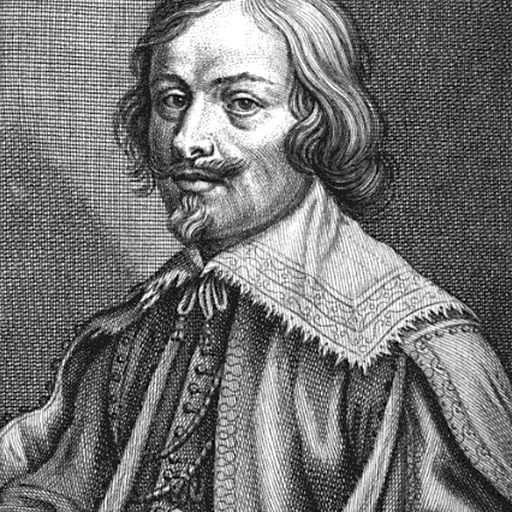
Jacques Callot was a baroque printmaker and draftsman from the Duchy of Lorraine.

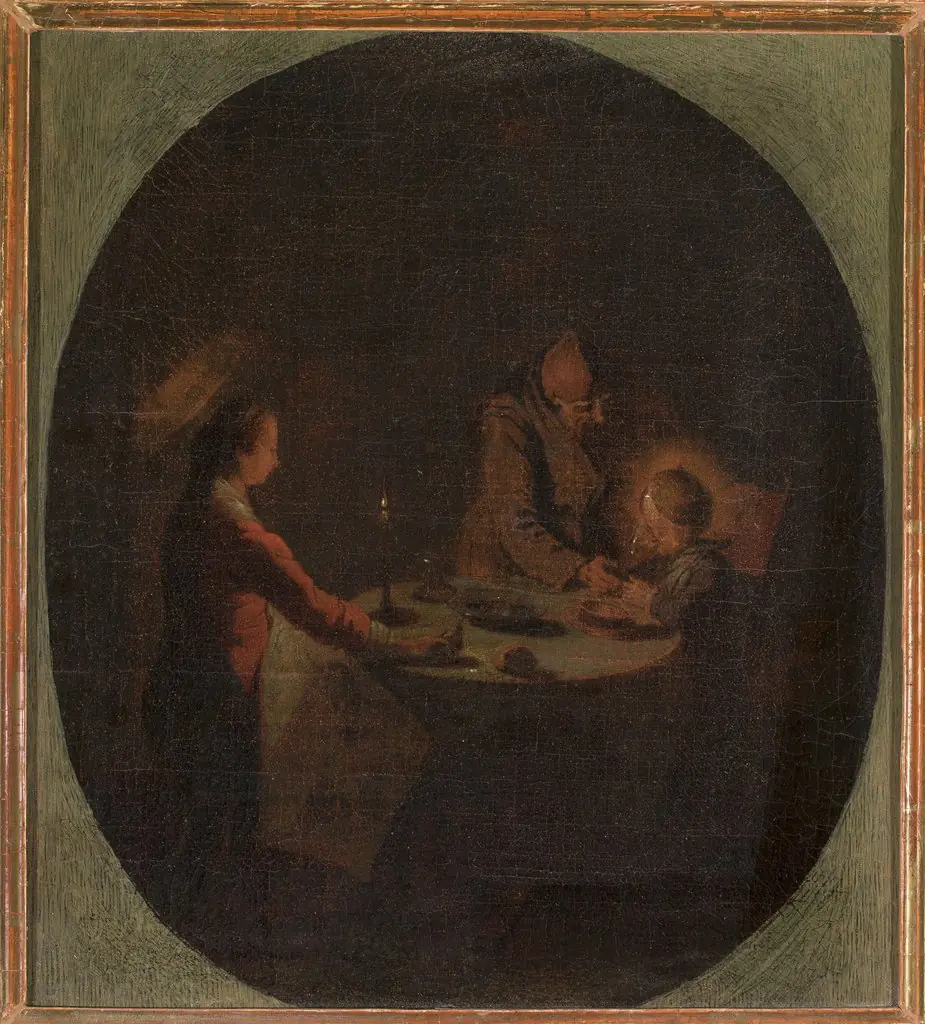 Holy Family at supper
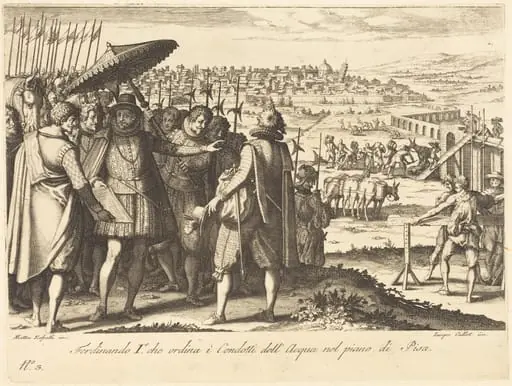 Restoration of the Aqueduct at Pisa
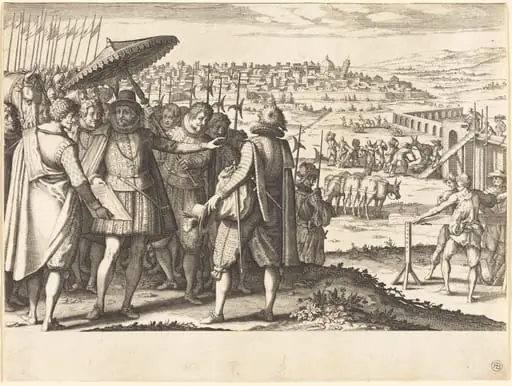 Restoration of the Aqueduct at Pisa
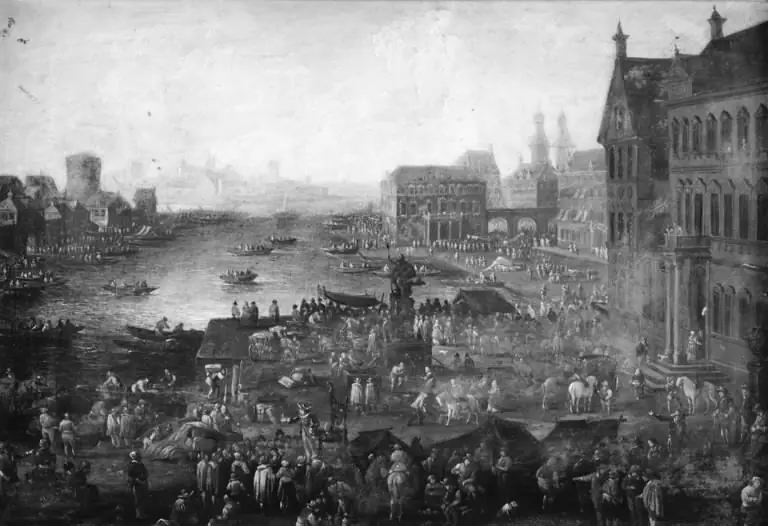 Square in Paris with Many Figures
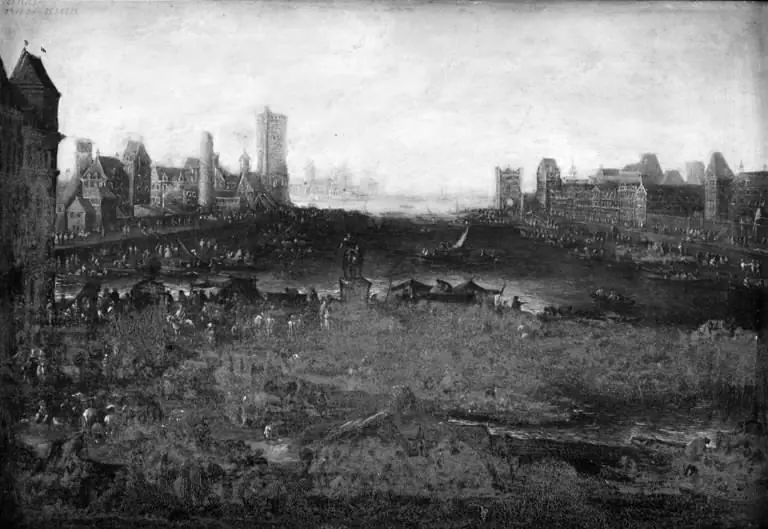 Square in Paris with Many Figures
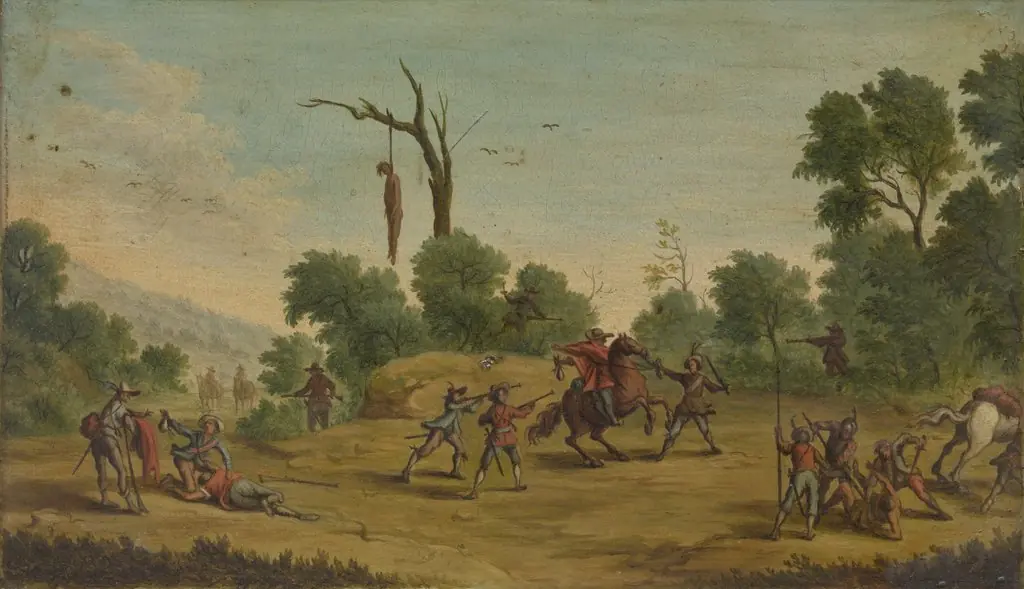 Horsemen Attacked by Robbers
 HOW WILL A COVERED PART BE CORRECTED?HOW WIKA A COVERED HEART DEED CORRECTED?
![Christ Walking on the Water [second plate], by Jacques Callot](https://artifactworldgallery.com/img/jacques-callot--christ-walking-on-the-water-second-plate--2069f3bfe4cb2126-w320.webp) Christ Walking on the Water [second plate]
Christ Walking on the Water [second plate]