Artwork
Queen of Cyprus
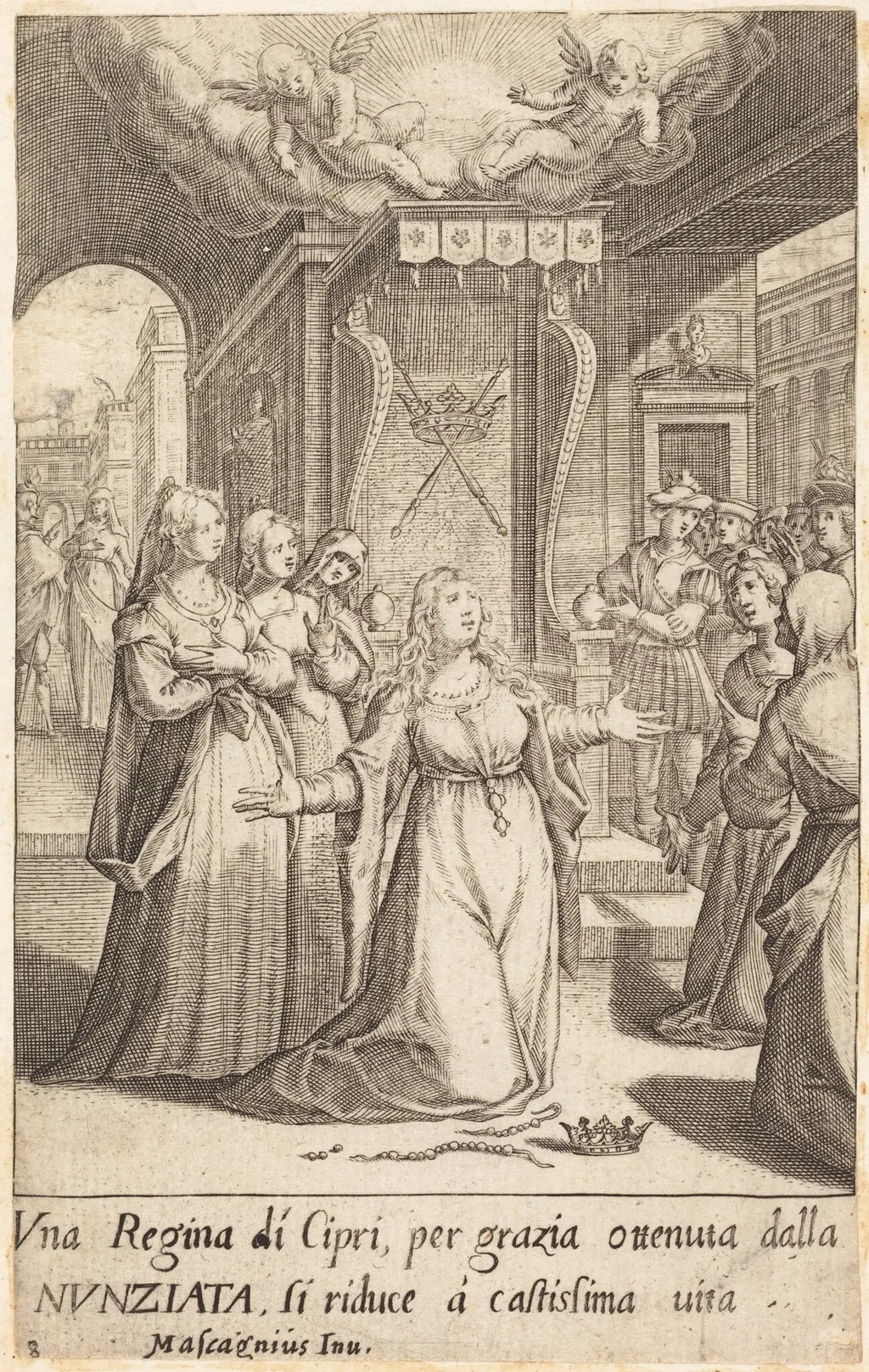
Queen of Cyprus is an ink print by the Baroque artist Jacques Callot. It dates from 1619 and is held in the collection of the National Gallery of Art.
About this work
Overview
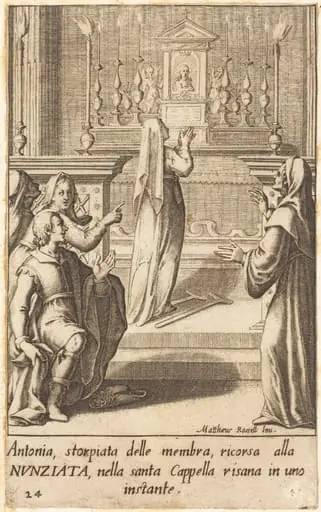
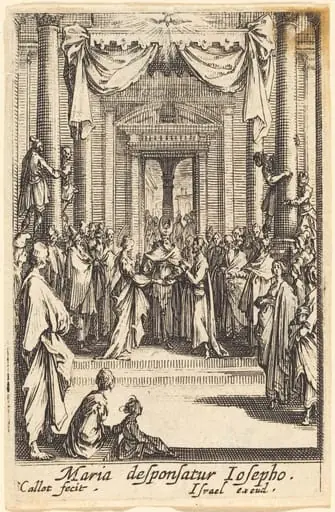
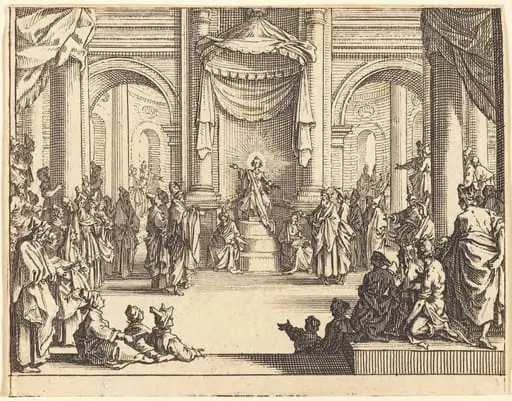
Created in 1619, *Queen of Cyprus* is an engraving executed on laid paper by Jacques Callot, a French printmaker active in the early seventeenth century. The work presents a staged scene that combines regal and sacred motifs, centering on a woman in an elaborate gown beside a modest throne, surrounded by onlookers and celestial figures.
Subject & Meaning
The composition depicts a female figure identified as a queen, possibly alluding to a legendary or historical ruler of Cyprus, while angels hover above a cruciform emblem. A male figure offers a crown, suggesting a coronation or ceremonial acknowledgment, and the surrounding crowd reinforces the public nature of the event, blending political authority with religious symbolism.
Technique & Style
Callot employed fine, intersecting lines and careful hatching to render depth and texture, a demanding approach for metal engraving. The use of laid paper provides a subtle grain that enhances the tonal variations. The overall aesthetic reflects Baroque sensibilities, with dynamic arrangement of figures and dramatic chiaroscuro achieved through meticulous incising.
History & Provenance
As part of Callot’s prolific output—exceeding fourteen hundred prints—the engraving exemplifies his interest in documenting contemporary courtly and ceremonial life. Produced in the Duchy of Lorraine, the work circulated among collectors of the period and contributes to the broader understanding of early modern print culture and its role in disseminating visual narratives.
Artist & collection
Artist
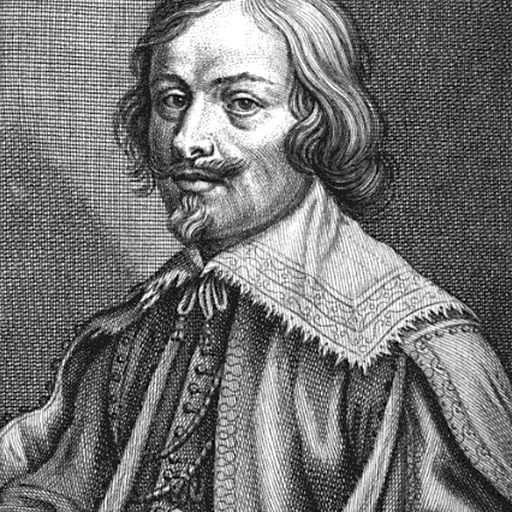
Jacques Callot was a baroque printmaker and draftsman from the Duchy of Lorraine.

 Holy Family at supper
 Restoration of the Aqueduct at Pisa
 Restoration of the Aqueduct at Pisa
 Square in Paris with Many Figures
 Square in Paris with Many Figures
 Horsemen Attacked by Robbers
 HOW WILL A COVERED PART BE CORRECTED?HOW WIKA A COVERED HEART DEED CORRECTED?
![Christ Walking on the Water [second plate], by Jacques Callot](https://artifactworldgallery.com/img/jacques-callot--christ-walking-on-the-water-second-plate--2069f3bfe4cb2126-w320.webp) Christ Walking on the Water [second plate]
Christ Walking on the Water [second plate]