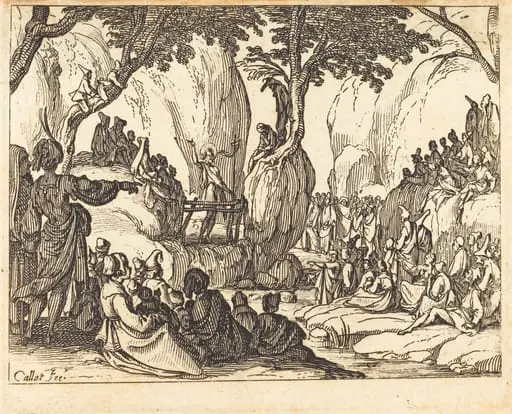
Artwork
Saint Amond
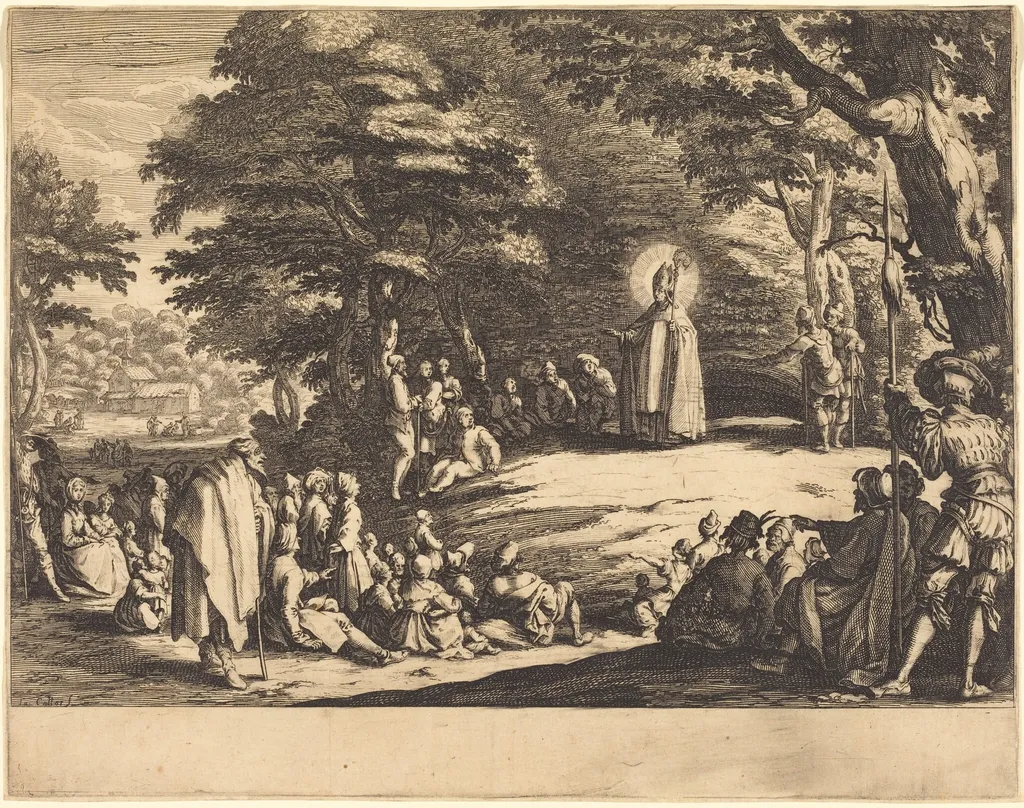
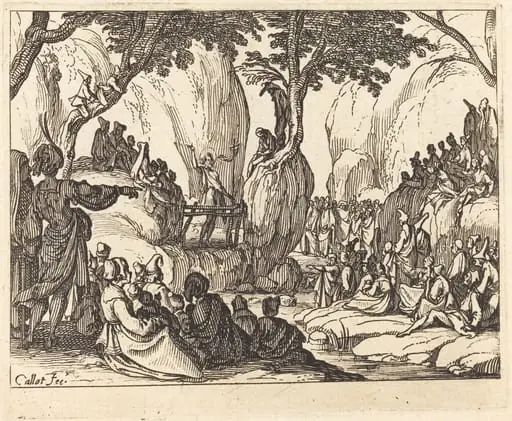
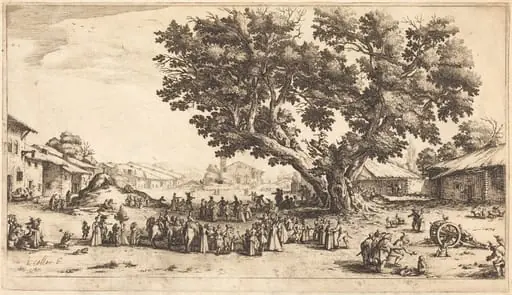
Saint Amond is an ink print by the Baroque artist Jacques Callot. It dates from 1621 and is held in the collection of the National Gallery of Art.
About this work
Overview
Jacques Callot, a printmaker from the Duchy of Lorraine, produced this etching in 1621 as part of his extensive series of religious and genre scenes.
Jacques Callot, a printmaker from the Duchy of Lorraine, produced this etching in 1621 as part of his extensive series of religious and genre scenes. Executed on laid paper, the work reflects his technical mastery and sustained interest in capturing moments of communal devotion. Unlike grand altarpieces, Callot’s approach focused on intimate, observed gatherings, grounding spiritual themes in everyday life.
Subject & Meaning
The scene depicts a group of pilgrims or worshippers gathered around a figure in white robes, likely Saint Amond, who holds an object of veneration. The varied postures—kneeling, standing, conversing—suggest a moment of communal reverence or miracle. The setting, beneath a tree near modest buildings, evokes a rural shrine or roadside pilgrimage site, emphasizing accessibility and lived faith over institutional grandeur.
Technique & Style
Callot employed fine, precise etching lines to render textures in clothing, facial expressions, and foliage. The use of cross-hatching and varied line weight creates depth and volume, while the dense composition conveys movement and activity. His attention to individual gestures and spatial layering—foreground figures against distant fences and trees—demonstrates his skill in orchestrating complex scenes with clarity and rhythm.
History & Provenance
Created during Callot’s early career in Nancy, this print was likely made for a private or devotional audience rather than public display. As part of a larger body of over 1,400 etchings, it circulated among collectors and clergy interested in religious imagery that mirrored real-life piety. Its survival in multiple institutional collections attests to its enduring recognition within printmaking circles.
Context
In early 17th-century Lorraine, religious imagery remained vital amid the tensions of the Counter-Reformation. Callot’s etchings responded to a demand for accessible, emotionally resonant depictions of saints and miracles. Unlike official church art, his works captured informal worship, aligning with popular devotion and the growing market for printed images among non-elites.
Legacy
Callot’s detailed etchings influenced later generations of printmakers across Europe, particularly in their treatment of crowd scenes and naturalistic detail. While *Saint Amond* is not among his most widely reproduced works, it exemplifies his contribution to elevating etching as a medium for nuanced narrative and social observation beyond mere illustration.
Artist & collection
Artist
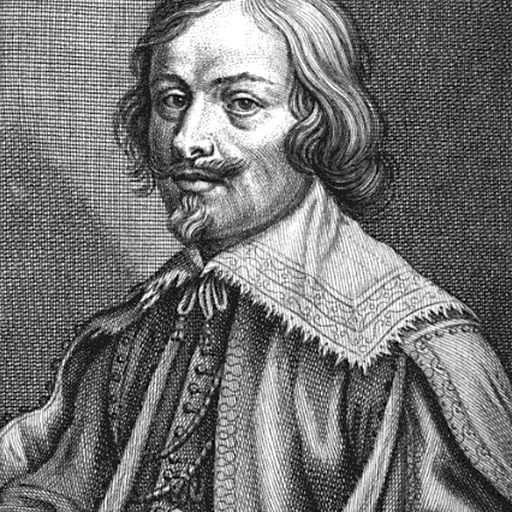
Jacques Callot was a baroque printmaker and draftsman from the Duchy of Lorraine.

 Holy Family at supper
 Restoration of the Aqueduct at Pisa
 Restoration of the Aqueduct at Pisa
 Square in Paris with Many Figures
 Square in Paris with Many Figures
 Horsemen Attacked by Robbers
 HOW WILL A COVERED PART BE CORRECTED?HOW WIKA A COVERED HEART DEED CORRECTED?
![Christ Walking on the Water [second plate], by Jacques Callot](https://artifactworldgallery.com/img/jacques-callot--christ-walking-on-the-water-second-plate--2069f3bfe4cb2126-w320.webp) Christ Walking on the Water [second plate]
Christ Walking on the Water [second plate]