Artwork
La Fontaine de la Régénération sur les débris de la Bastille, le 10 Aout 1793
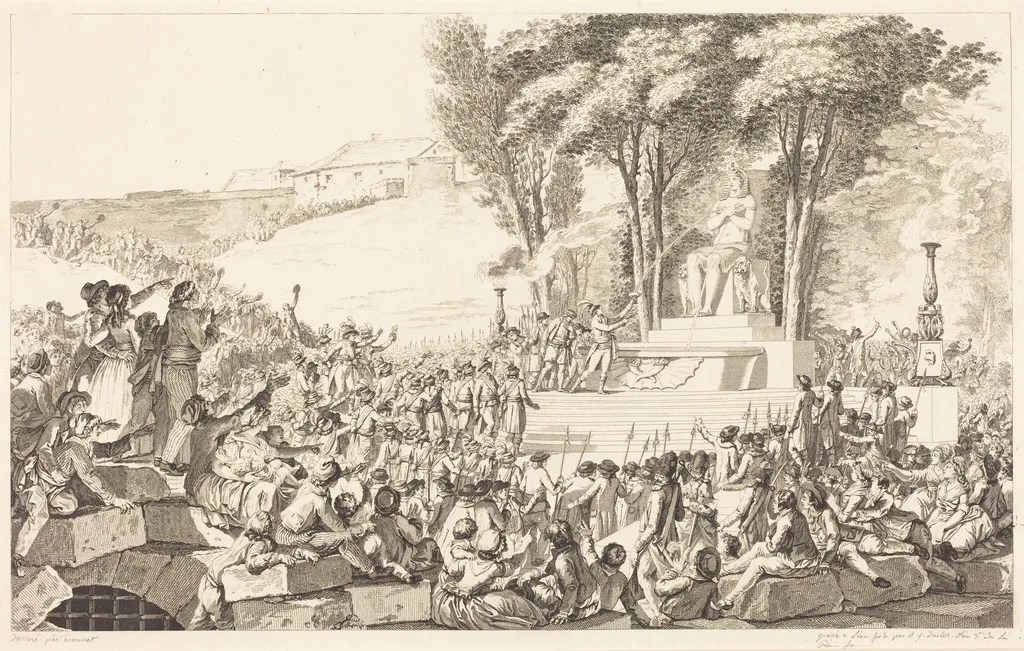
La Fontaine de la Régénération sur les débris de la Bastille, le 10 Aout 1793 is an ink print by the Romanticist artist Antoine-Jean Duclos. It is held in the collection of the National Gallery of Art. Antoine‑Jean Duclos produced an etching in 1796 titled La Fontaine de la Régénération sur les débris de la Bastille, le 10 Août 1793.
About this work
Overview
Antoine‑Jean Duclos produced an etching in 1796 titled La Fontaine de la Régénération sur les débris de la Bastille, le 10 Août 1793. Executed on laid paper, the print records a densely populated gathering at the site of the former Bastille, three years after the revolutionary demolition.
Subject & Meaning
The composition centers on a tall, shattered column crowned by a small statue, evoking the ruin of the former fortress. Around it, men and women—some seated, others standing with flags or weapons—gesture toward the broken monument, suggesting collective reflection on the overthrow of the old regime.
Technique & Style
Duclos employed the etching process, incising fine lines into a copper plate to achieve intricate detail in facial expressions, clothing folds, and architectural fragments. The use of laid paper enhances the texture, while the delicate hatching conveys depth and the bustling atmosphere of the crowd.
History & Provenance
Created three years after the storming of the Bastilla, the print documents a specific commemoration on 10 August 1793, when a temporary fountain symbolizing regeneration was erected amid the rubble. The work entered public collections in the early nineteenth century, reflecting contemporary interest in revolutionary iconography.
Context
The image belongs to a broader visual tradition of Revolutionary France that celebrated the destruction of monarchical symbols and the emergence of new civic virtues. The broken column functions as a visual metaphor for the collapse of ancien‑régime authority, while the surrounding figures embody popular participation in the new political order.
Legacy
Duclos’s print offers historians a detailed visual record of post‑Bastille celebrations and the manner in which artists employed printmaking to disseminate revolutionary narratives. Its precise rendering of crowd dynamics continues to inform studies of public spectacle in the early Republic.
Artist & collection


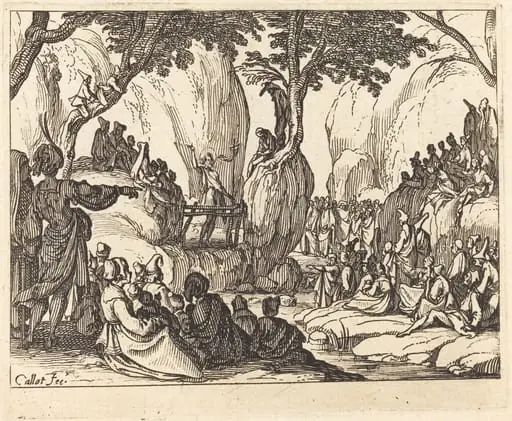 Saint John Preaching in the Desert
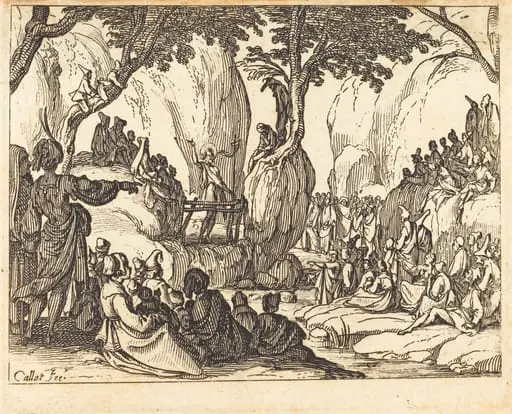 Saint John Preaching in the Desert
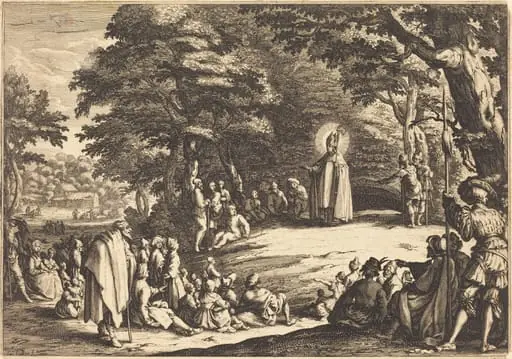 Saint Amond
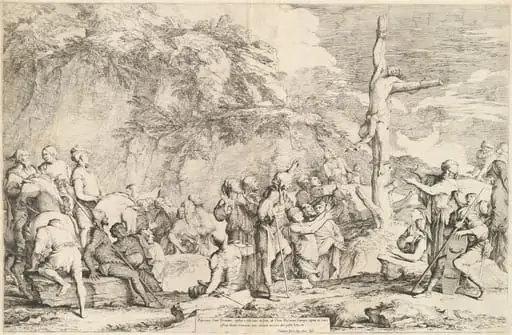 The Crucifixion of Polycrates
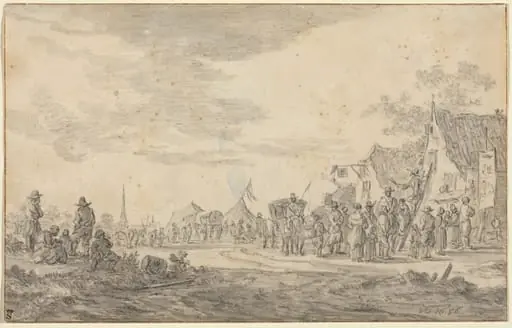 Village Fair
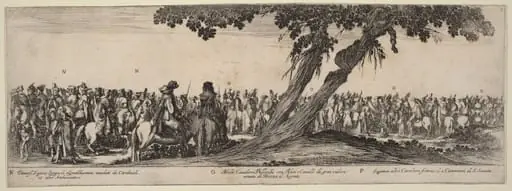 Spanish Gentlemen, Polish and French Horsemen
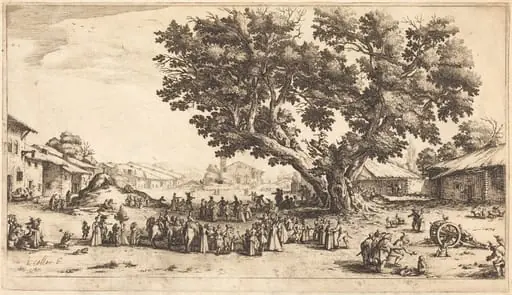 The Fair at Xeuilley
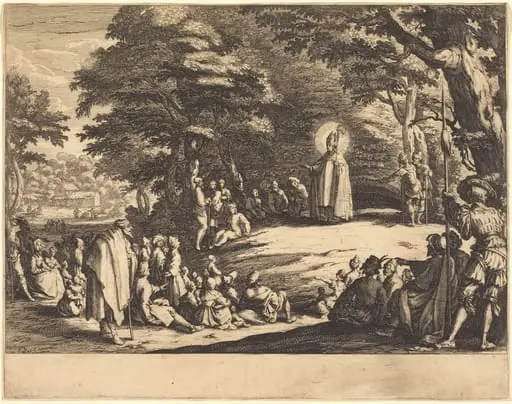 Saint Amond
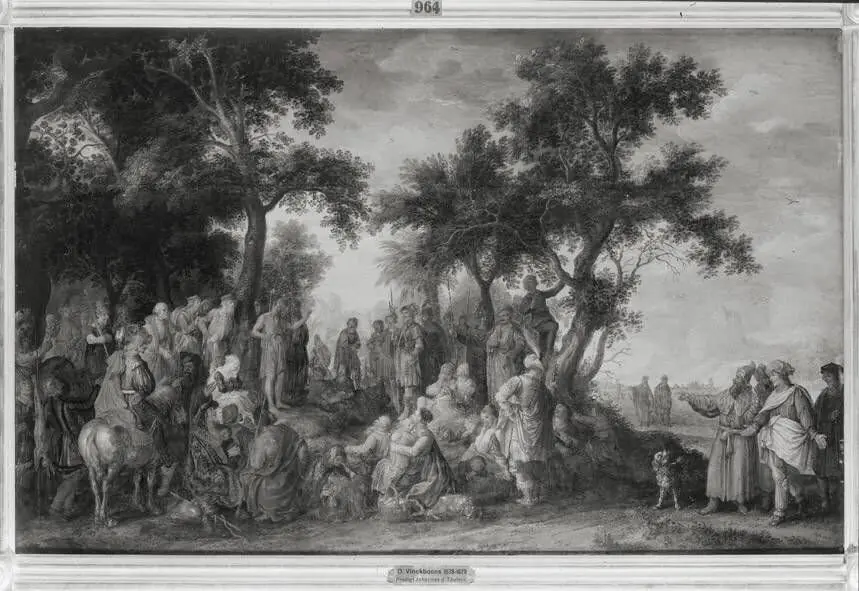 Predigt Johannes des Täufers
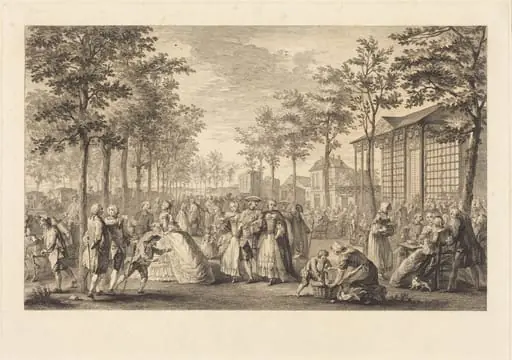 La promenade des remparts de Paris
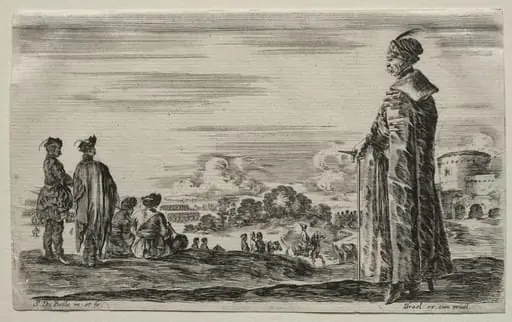 Various Figures and Landscapes: A Group of Polish Gentlemen
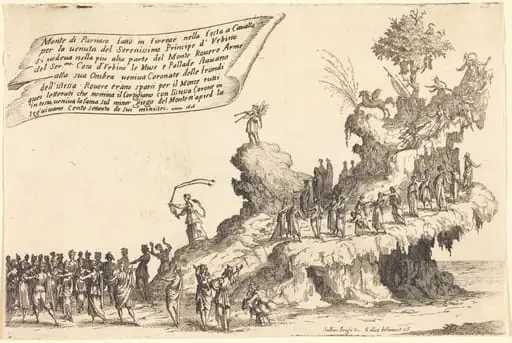 The Float of Mount Parnassus