Artwork
Saint Bartholomew
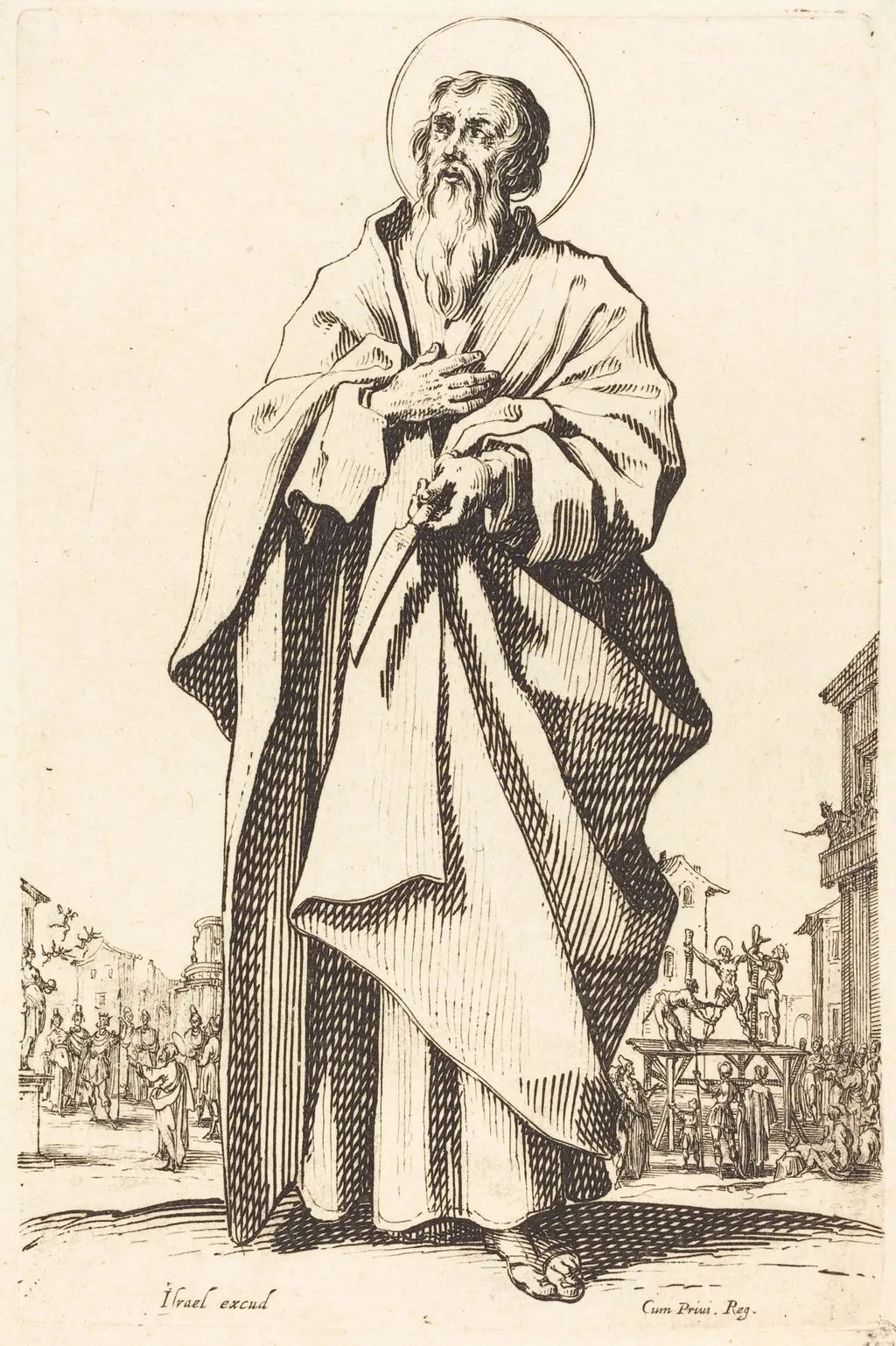
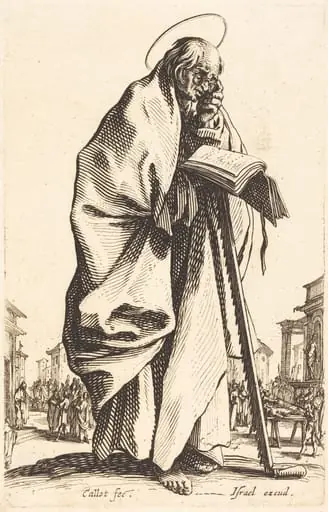
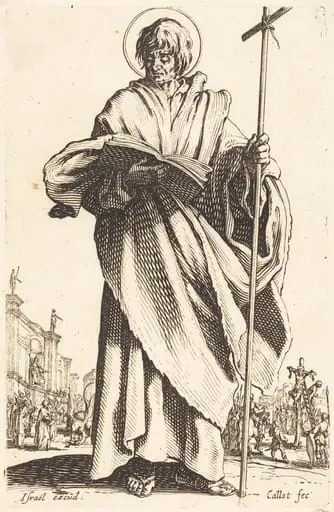
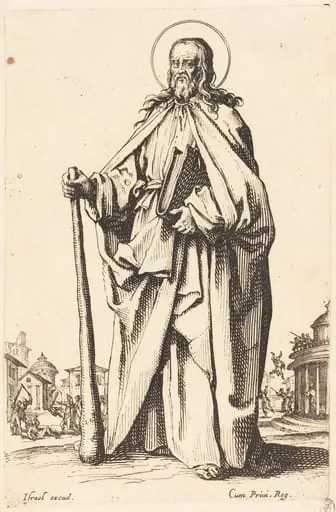
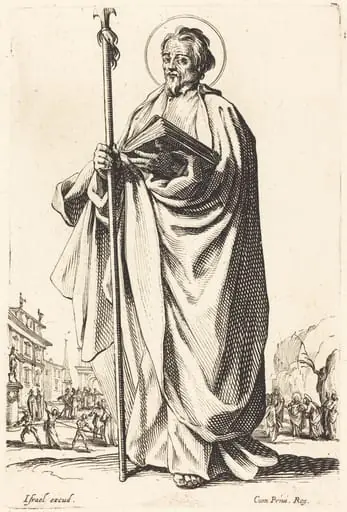
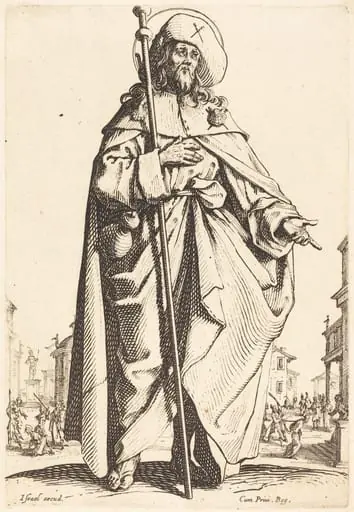
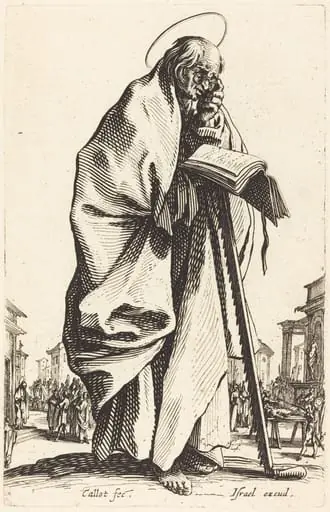
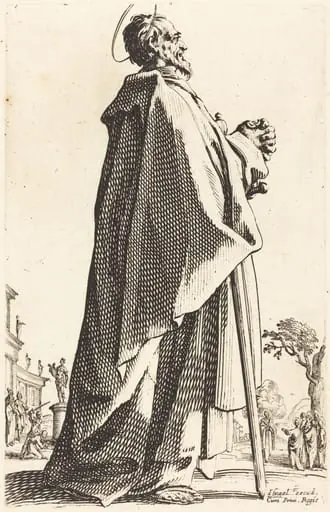
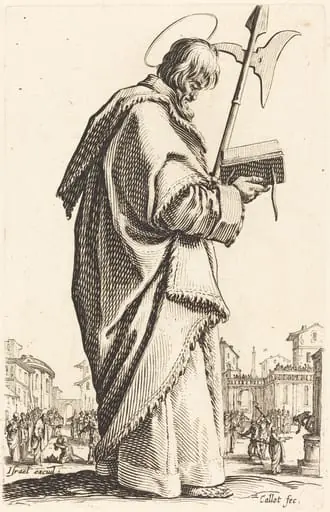
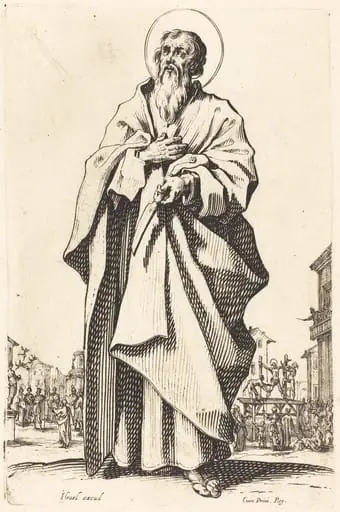
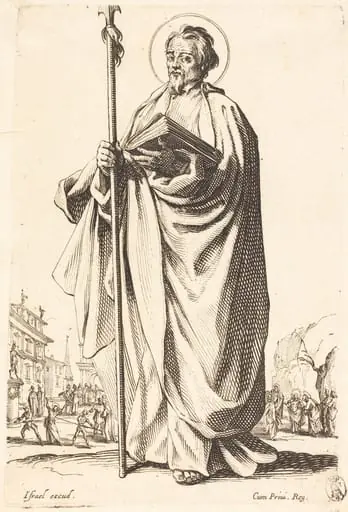
Saint Bartholomew is an ink print by the Baroque artist Jacques Callot. It dates from 1631 and is held in the collection of the National Gallery of Art.
About this work
Overview
Executed on laid paper, the work reflects his mastery of the etching technique and his interest in capturing human figures within structured environments.
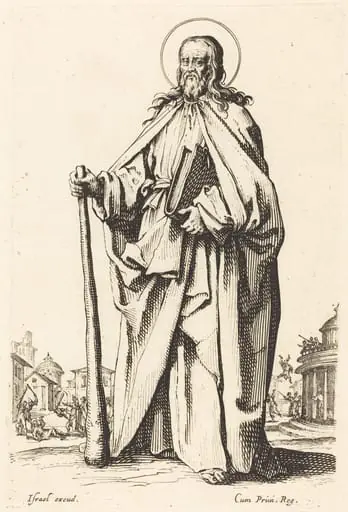
Jacques Callot, a French printmaker from the Duchy of Lorraine, produced this etching in 1631 as part of his extensive series of religious subjects. Executed on laid paper, the work reflects his mastery of the etching technique and his interest in capturing human figures within structured environments. With over 1,400 prints to his name, Callot consistently explored themes of faith, labor, and social order through precise, finely detailed imagery.
Subject & Meaning
The figure depicts Saint Bartholomew, one of Christ’s apostles, traditionally associated with martyrdom by flaying. He holds a knife, the instrument of his death, and stands in a public square, surrounded by onlookers. The composition emphasizes his solitary presence amid a crowd, suggesting both his isolation and the public nature of his sacrifice. The scene avoids overt drama, instead conveying solemnity through stillness and spatial arrangement.
Technique & Style
Callot employed fine etching lines to render texture and depth, using varied hatchings and crosshatching to model form and shadow. The contrast between the sharply defined foreground figure and the looser, receding background crowd enhances spatial recession. His use of laid paper, with its subtle grain, complements the ink’s tonal range, allowing for nuanced gradations without losing the clarity of individual strokes.
History & Provenance
Created during Callot’s mature period in Nancy, the etching was likely made for private collectors or devotional use rather than public display. It circulated among European print enthusiasts who valued his technical precision and narrative restraint. No specific early ownership records are documented, but similar works from this period appear in major European print collections by the late 17th century.
Context
In early 17th-century Europe, religious imagery remained central to print culture despite growing secular interests. Callot’s depictions of saints aligned with Counter-Reformation efforts to reinforce spiritual narratives through accessible art. His focus on ordinary settings for sacred figures—like this town square—reflected a broader trend toward grounding religious stories in recognizable, human environments.
Legacy
Callot’s etchings, including this one, influenced later generations of printmakers through their technical rigor and compositional clarity. While not widely exhibited as standalone works, his religious prints contributed to the development of narrative print series and informed the visual language of ecclesiastical imagery in Northern Europe. His approach to figure and space became a reference point for artists seeking balance between detail and emotional restraint.
Artist & collection
Artist
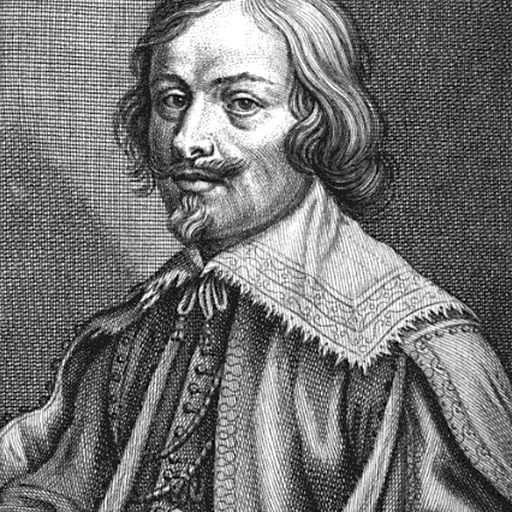
Jacques Callot was a baroque printmaker and draftsman from the Duchy of Lorraine.

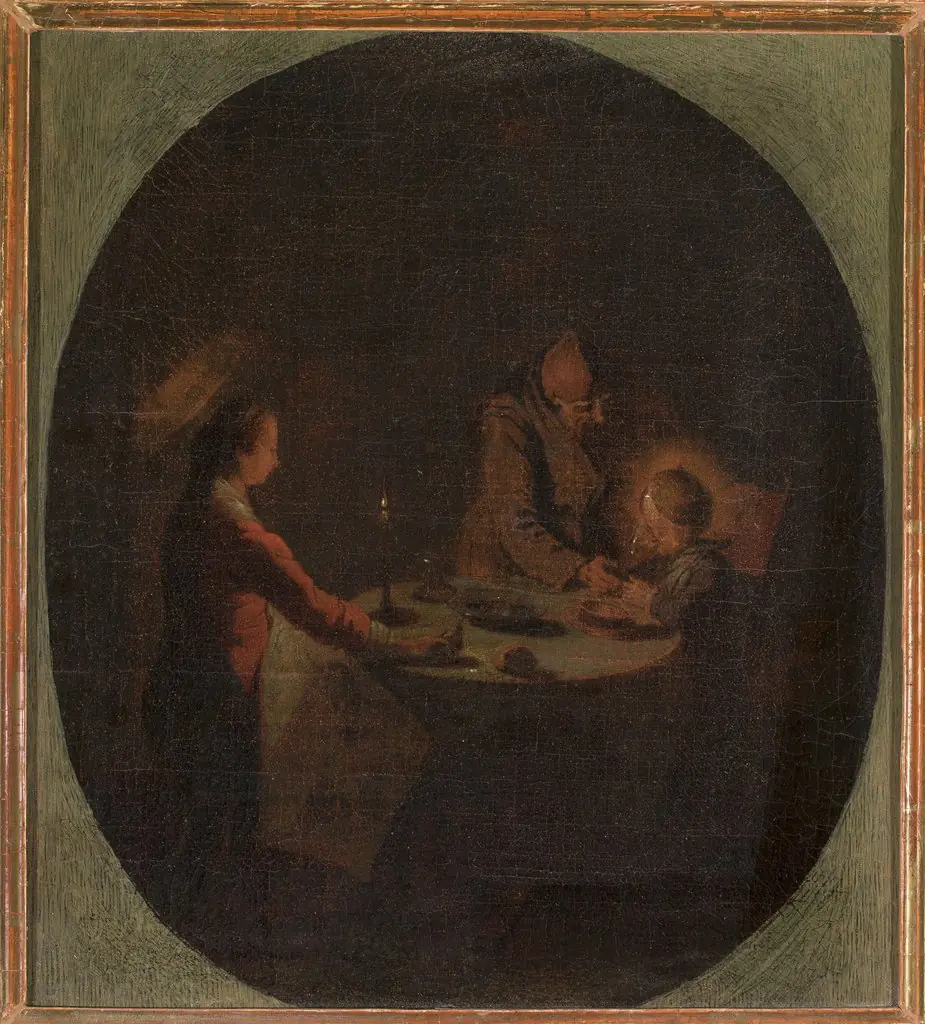 Holy Family at supper
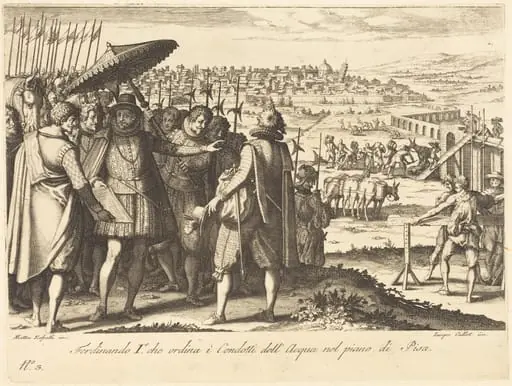 Restoration of the Aqueduct at Pisa
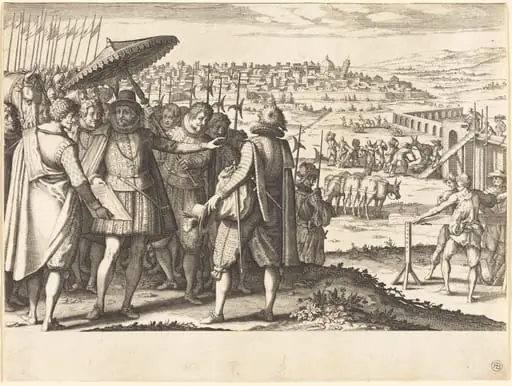 Restoration of the Aqueduct at Pisa
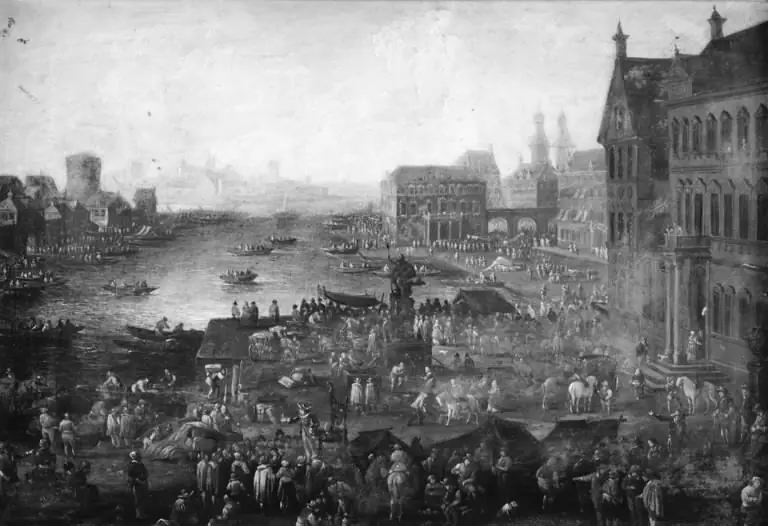 Square in Paris with Many Figures
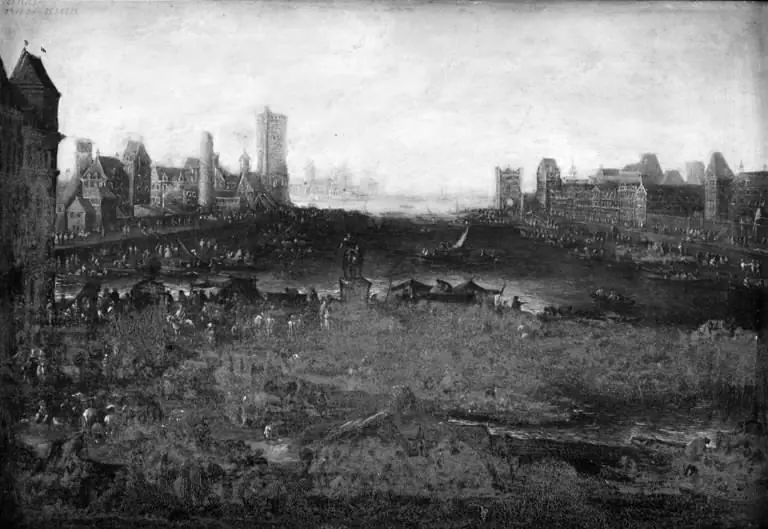 Square in Paris with Many Figures
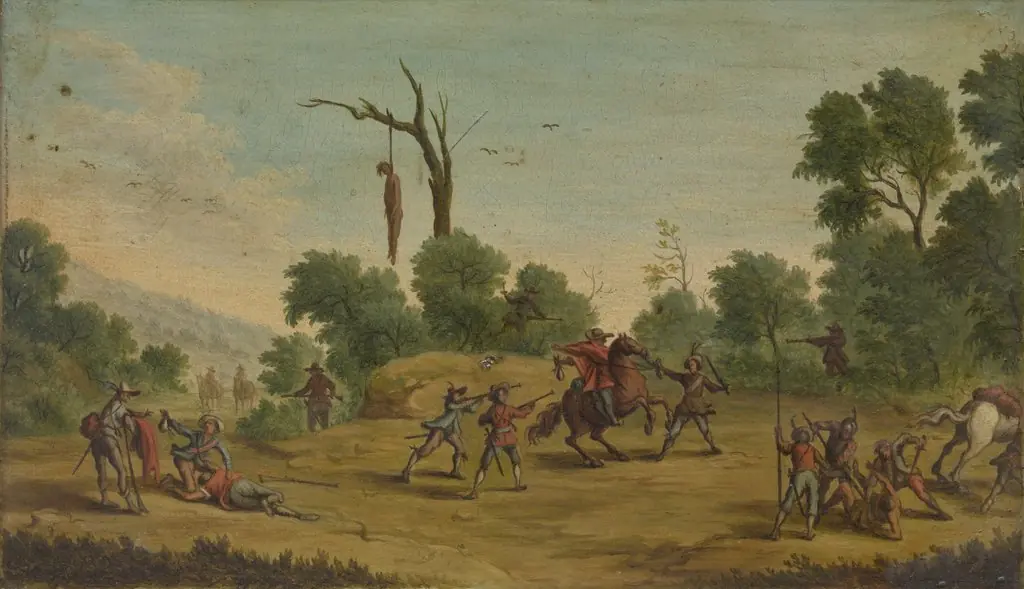 Horsemen Attacked by Robbers
 HOW WILL A COVERED PART BE CORRECTED?HOW WIKA A COVERED HEART DEED CORRECTED?
![Christ Walking on the Water [second plate], by Jacques Callot](https://artifactworldgallery.com/img/jacques-callot--christ-walking-on-the-water-second-plate--2069f3bfe4cb2126-w320.webp) Christ Walking on the Water [second plate]
Christ Walking on the Water [second plate]