Artwork
Saint Bartholomew
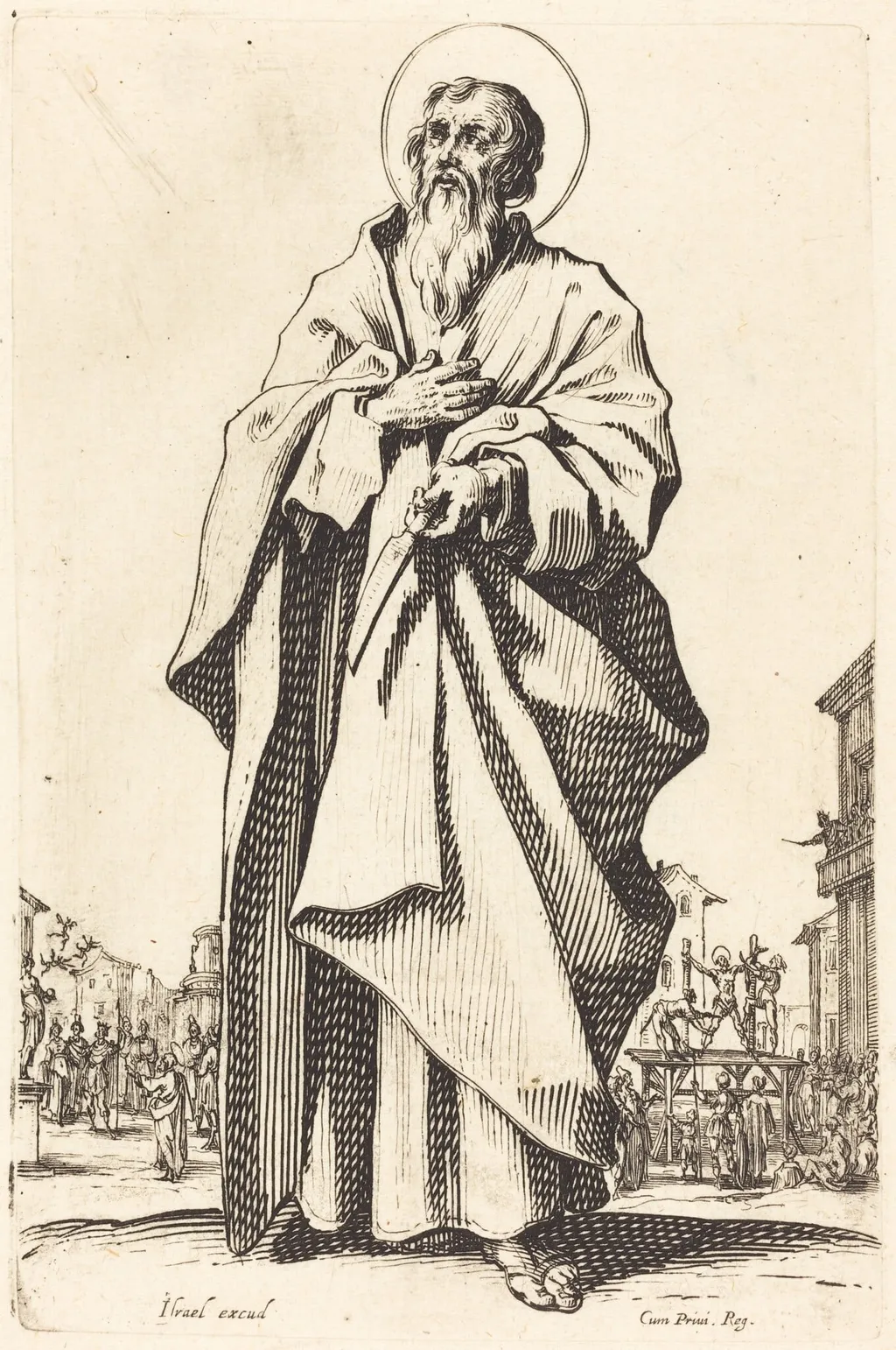
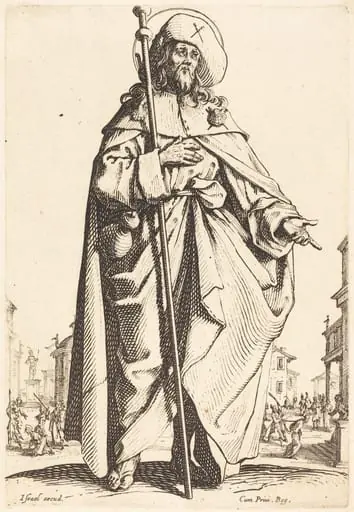
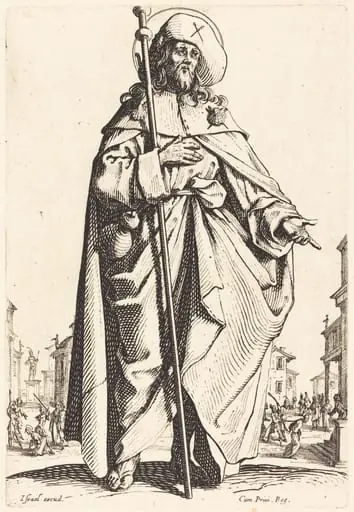
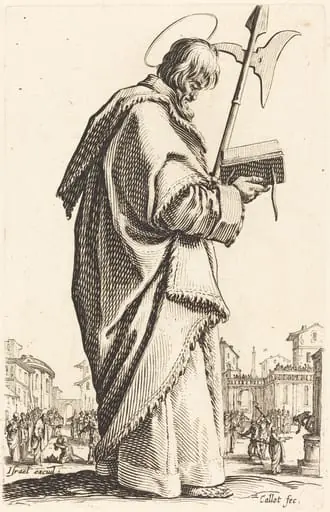
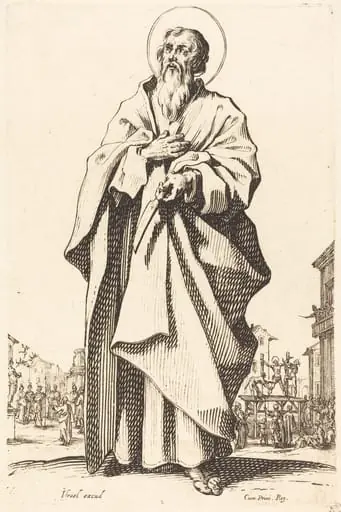
Saint Bartholomew is an ink print by the Baroque artist Jacques Callot. It dates from 1631 and is held in the collection of the National Gallery of Art.
About this work
Overview
Jacques Callot, a French printmaker active in the early 17th century, executed the etching Saint Bartholomew in 1631. The image is printed on laid paper and belongs to his extensive output of more than a thousand etchings that range from genre scenes to religious subjects.
Subject & Meaning
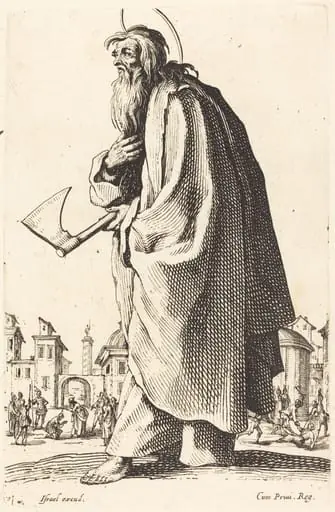
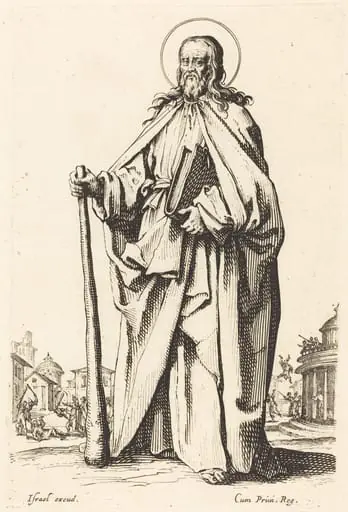
The composition presents the apostle Bartholomew, identifiable by his long beard, halo, and the book he holds, a traditional attribute of a saint. A smaller object in his other hand may allude to his martyrdom. He stands amid a crowd gathered before architectural elements, suggesting a public proclamation or miracle.
Technique & Style
Callot employs fine, incisive lines to render the folds of the robe, the shadows, and the surrounding architecture. The etched lines create a strong chiaroscuro effect, giving the scene a sense of depth and kinetic energy that is characteristic of his precise draftsmanship.
History & Provenance
Created in the Duchy of Lorraine, the print was part of Callot’s prolific output that circulated widely in the 17th‑century print market. Copies of the work have been held in several European collections, reflecting the artist’s reputation as a leading figure in baroque printmaking.
Context
Saint Bartholomew belongs to a broader series of religious prints that Callot produced alongside his more famous depictions of contemporary life, such as the *Les Grandes Misères*. The work illustrates how baroque artists used print media to disseminate devotional imagery beyond the confines of painted altarpieces.
Artist & collection

Artist
Jacques Callot was a baroque printmaker and draftsman from the Duchy of Lorraine.

 Holy Family at supper
 Restoration of the Aqueduct at Pisa
 Restoration of the Aqueduct at Pisa
 Square in Paris with Many Figures
 Square in Paris with Many Figures
 Horsemen Attacked by Robbers
 HOW WILL A COVERED PART BE CORRECTED?HOW WIKA A COVERED HEART DEED CORRECTED?
![Christ Walking on the Water [second plate], by Jacques Callot](https://artifactworldgallery.com/img/jacques-callot--christ-walking-on-the-water-second-plate--2069f3bfe4cb2126-w320.webp) Christ Walking on the Water [second plate]
Christ Walking on the Water [second plate]