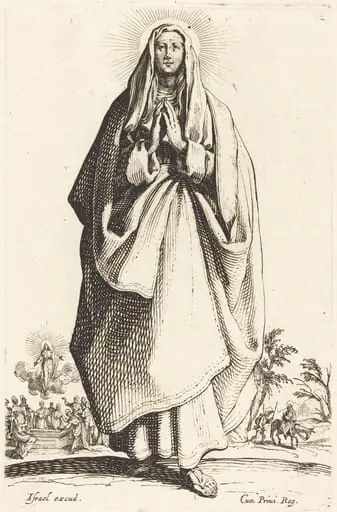
Artwork
Saint John the Evangelist
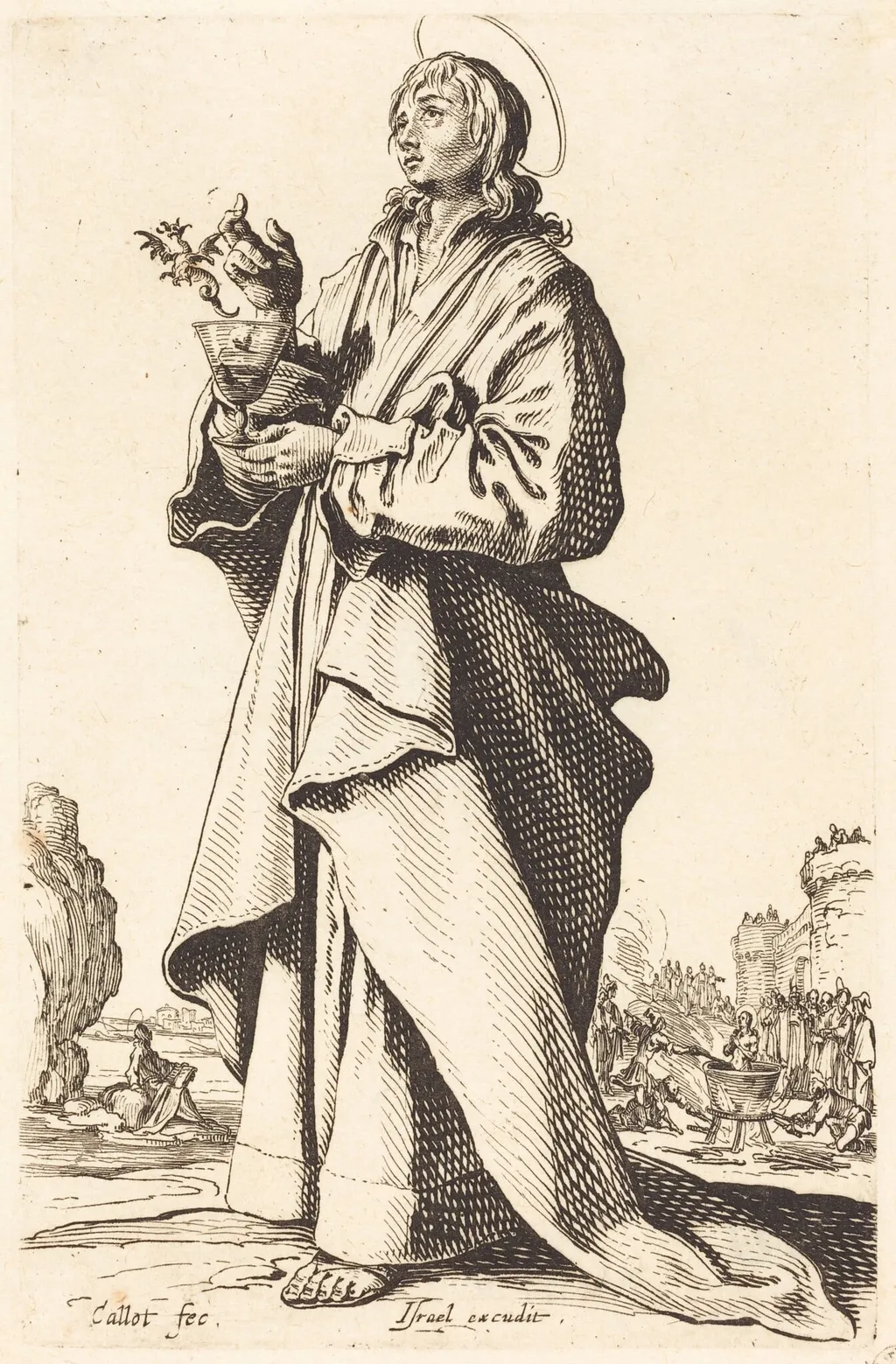
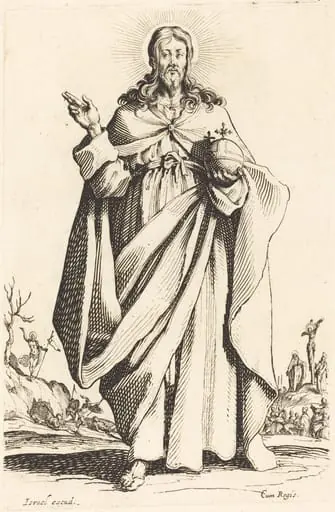
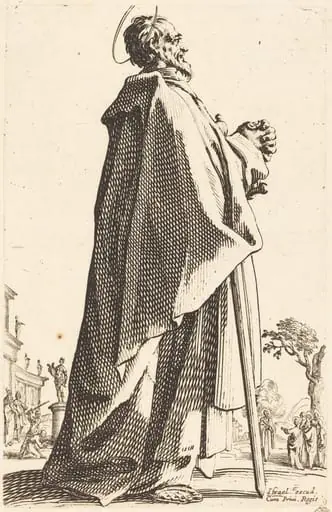
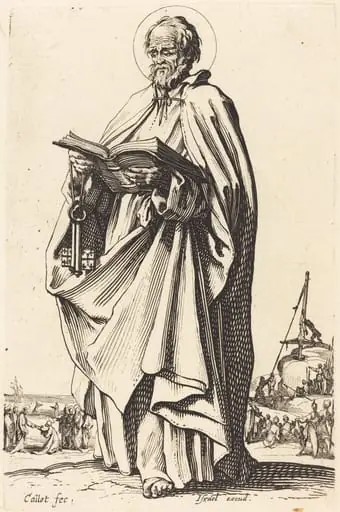
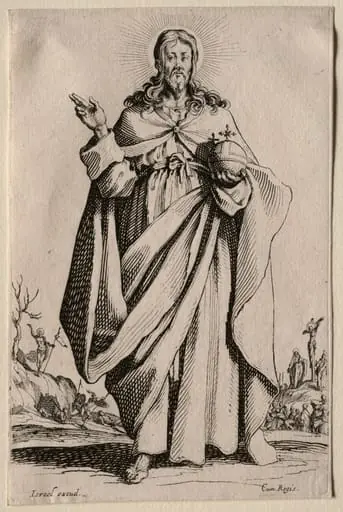
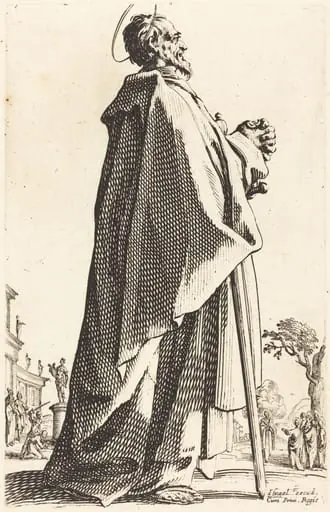
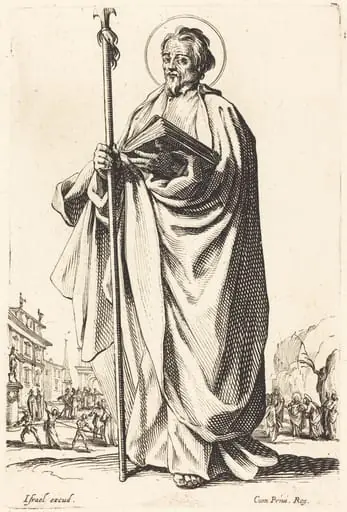
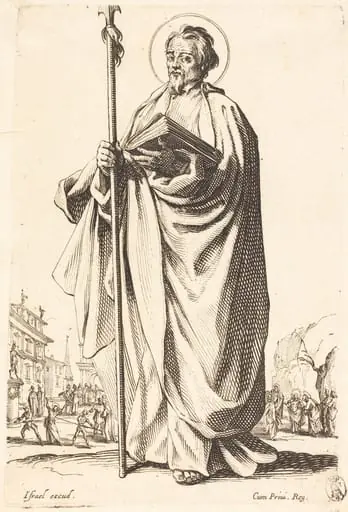
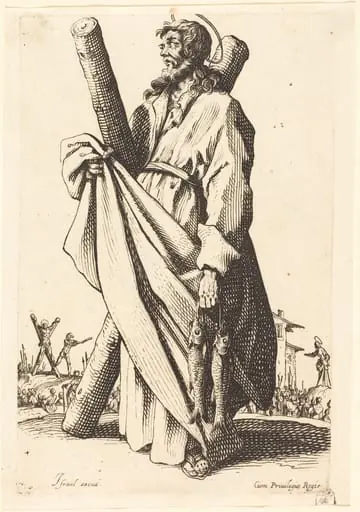
Saint John the Evangelist is an ink print by the Baroque artist Jacques Callot. It dates from 1631 and is held in the collection of the National Gallery of Art.
About this work
Overview
Jacques Callot, a French baroque printmaker from the Duchy of Lorraine, executed the etching Saint John the Evangelist in 1631. Rendered on laid paper, the work is part of Callot’s prolific output of more than 1,400 prints that range from everyday scenes to religious subjects.
Subject & Meaning
The image presents Saint John the Evangelist in a long robe, his right hand clutching a cup and his left holding a plant, traditional symbols linked to his apostolic role. Behind him, a crowd gathers around a fire with a distant castle, suggesting a narrative setting drawn from biblical or hagiographic sources.
Technique & Style
Callot employed fine etching lines to model the figure and create atmospheric depth, using cross‑hatching to render texture in the robe and the surrounding landscape. The composition balances a detailed foreground with an expansive background, a hallmark of his intricate, narrative‑driven style.
History & Provenance
Created in 1631, the print reflects Callot’s mature period when he was establishing a reputation across Europe for his technical skill and thematic range. It remains documented within the corpus of his religious prints, which were circulated among collectors and patrons of the early 17th‑century art market.
Artist & collection
Artist
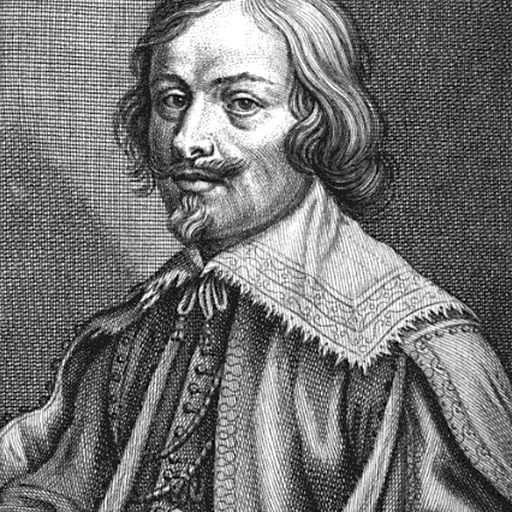
Jacques Callot was a baroque printmaker and draftsman from the Duchy of Lorraine.

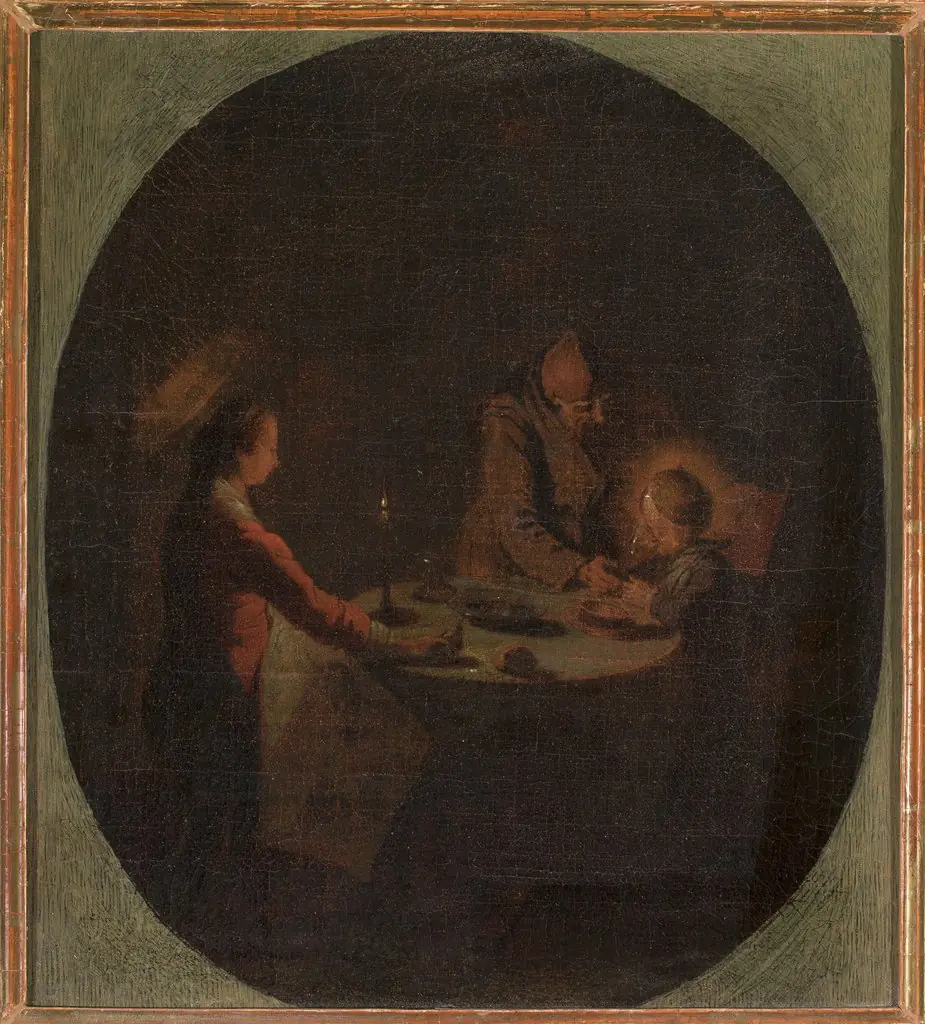 Holy Family at supper
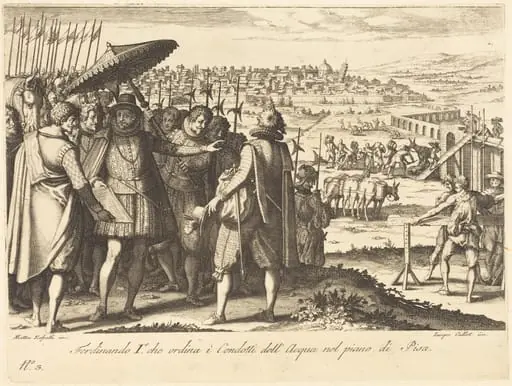 Restoration of the Aqueduct at Pisa
 Restoration of the Aqueduct at Pisa
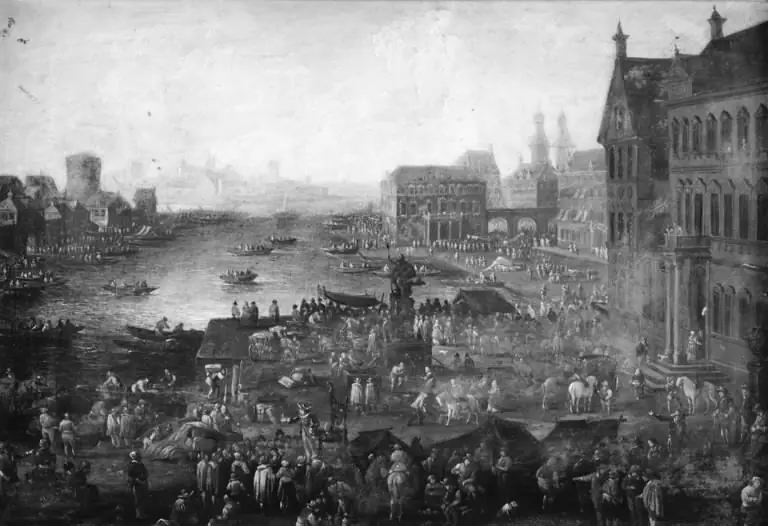 Square in Paris with Many Figures
 Square in Paris with Many Figures
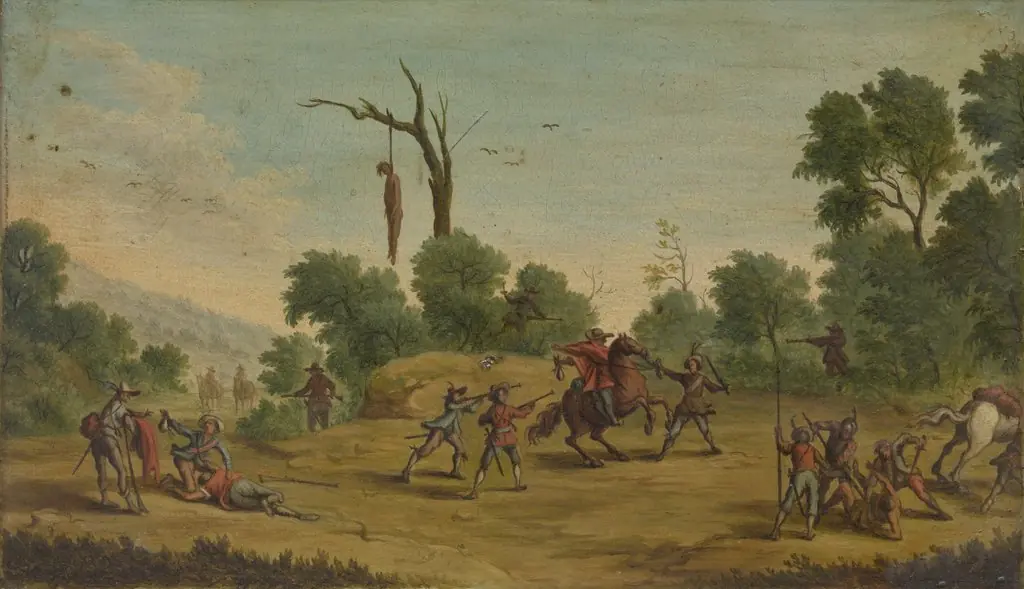 Horsemen Attacked by Robbers
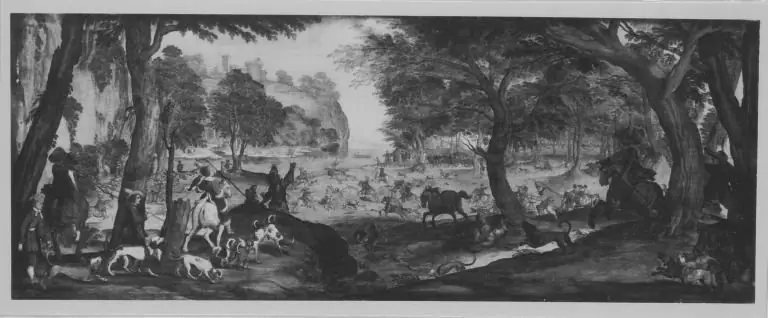 HOW WILL A COVERED PART BE CORRECTED?HOW WIKA A COVERED HEART DEED CORRECTED?
![Christ Walking on the Water [second plate], by Jacques Callot](https://artifactworldgallery.com/img/jacques-callot--christ-walking-on-the-water-second-plate--2069f3bfe4cb2126-w320.webp) Christ Walking on the Water [second plate]
Christ Walking on the Water [second plate]