Artwork
Saint Matthew
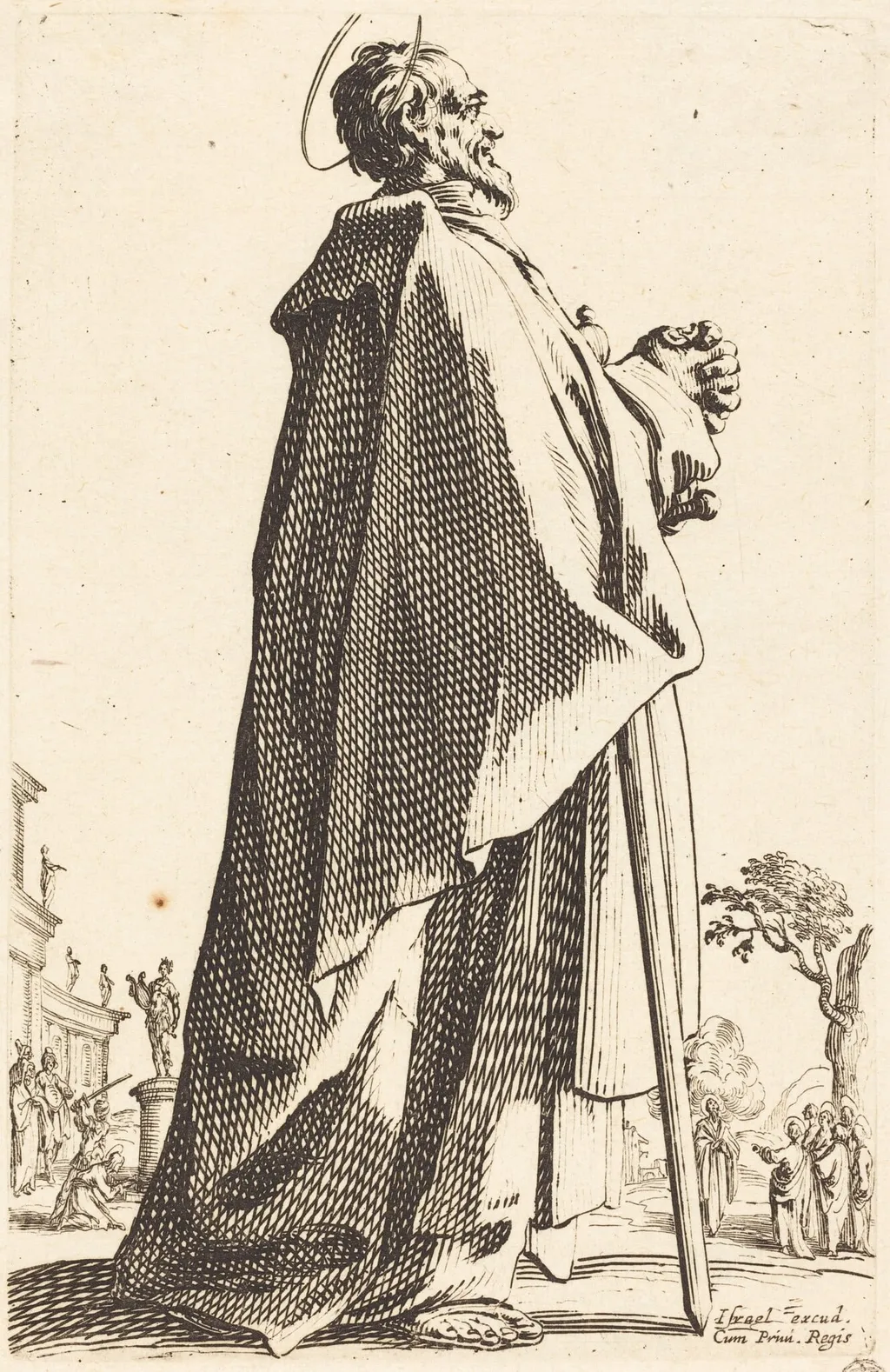
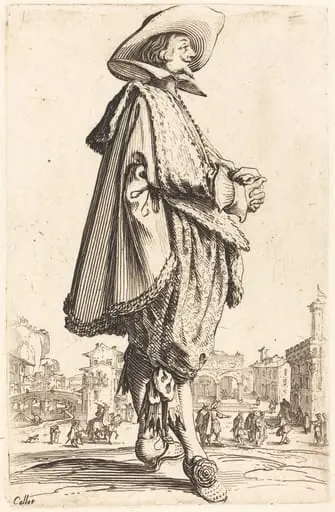
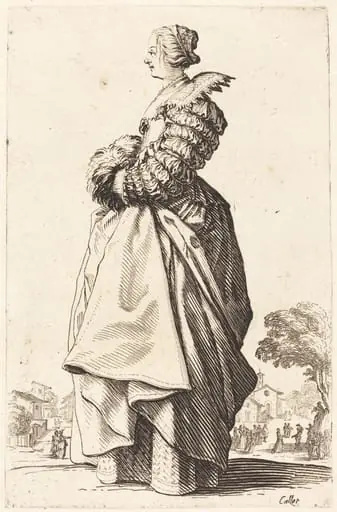
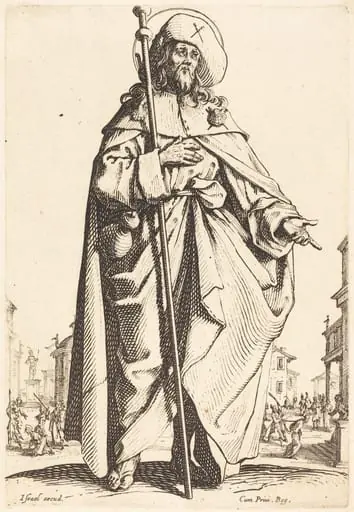
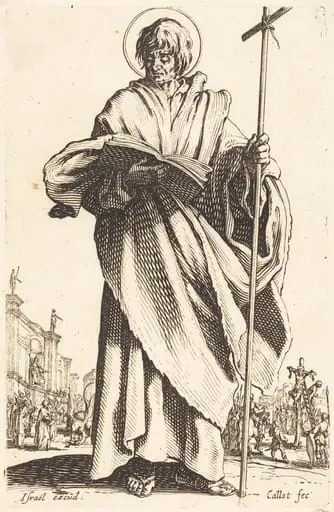
Saint Matthew is an ink print by the Baroque artist Jacques Callot. It dates from 1631 and is held in the collection of the National Gallery of Art.
About this work
Overview
Jacques Callot, a printmaker from the Duchy of Lorraine, produced this etching in 1631 as part of his extensive series of religious and secular subjects.
Jacques Callot, a printmaker from the Duchy of Lorraine, produced this etching in 1631 as part of his extensive series of religious and secular subjects. Executed on laid paper, the work exemplifies his technical precision and dedication to the etching medium. With over 1,400 known prints, Callot’s output was both prolific and varied, often capturing figures within richly detailed environments that extended beyond the central subject.
Subject & Meaning
The figure depicted is Saint Matthew, identified by the scroll he carries, a symbol of his authorship of the Gospel. Rendered from behind, the saint walks away from the viewer, suggesting contemplation or movement toward divine purpose. The absence of facial expression shifts focus to posture and gesture, emphasizing spiritual solitude rather than narrative drama. The background figures and architecture imply a broader sacred world, subtly reinforcing the saint’s role within a larger ecclesiastical context.
Technique & Style
Callot employed fine, intersecting lines to model the heavy folds of the saint’s robe, creating a sense of weight and texture through controlled etching. The background is rendered with sparse but deliberate marks, suggesting distant figures and structures without distracting from the central form. His use of sharp, deliberate strokes reflects the precision possible with the etching needle on a metal plate, a technique he refined to achieve greater detail than many contemporaries.
History & Provenance
Created during Callot’s mature period in Nancy, this print emerged from a time when he was deeply engaged with religious themes alongside his depictions of military and courtly life. While specific early ownership records are sparse, the work aligns with prints circulated among collectors and religious institutions in early 17th-century France and the Low Countries. Its survival in multiple institutional collections suggests consistent scholarly and artistic interest.
Context
In the early 1630s, etching was a favored medium for religious imagery in Catholic regions, offering a balance between devotional clarity and artistic expression. Callot’s work responded to Counter-Reformation demands for accessible sacred imagery while retaining the individuality of the artist’s hand. His integration of landscape and crowd elements into religious scenes distinguished his approach from more isolated, frontal depictions common in altarpieces.
Legacy
Callot’s technical innovations in etching influenced generations of printmakers across Europe, particularly in the use of fine line work to convey texture and spatial depth. *Saint Matthew* exemplifies his ability to infuse religious subjects with quiet dignity through composition and detail rather than overt drama. Though less celebrated than his battle scenes, this work remains a quiet testament to his skill in rendering spiritual presence through understated means.
Artist & collection
Artist
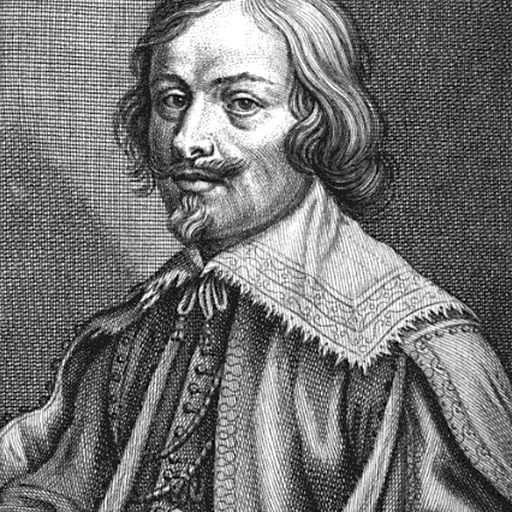
Jacques Callot was a baroque printmaker and draftsman from the Duchy of Lorraine.

 Holy Family at supper
 Restoration of the Aqueduct at Pisa
 Restoration of the Aqueduct at Pisa
 Square in Paris with Many Figures
 Square in Paris with Many Figures
 Horsemen Attacked by Robbers
 HOW WILL A COVERED PART BE CORRECTED?HOW WIKA A COVERED HEART DEED CORRECTED?
![Christ Walking on the Water [second plate], by Jacques Callot](https://artifactworldgallery.com/img/jacques-callot--christ-walking-on-the-water-second-plate--2069f3bfe4cb2126-w320.webp) Christ Walking on the Water [second plate]
Christ Walking on the Water [second plate]