Artwork
St. Germanus of Paris; St. Maximinus; St. Emmelia; St. Petronilla
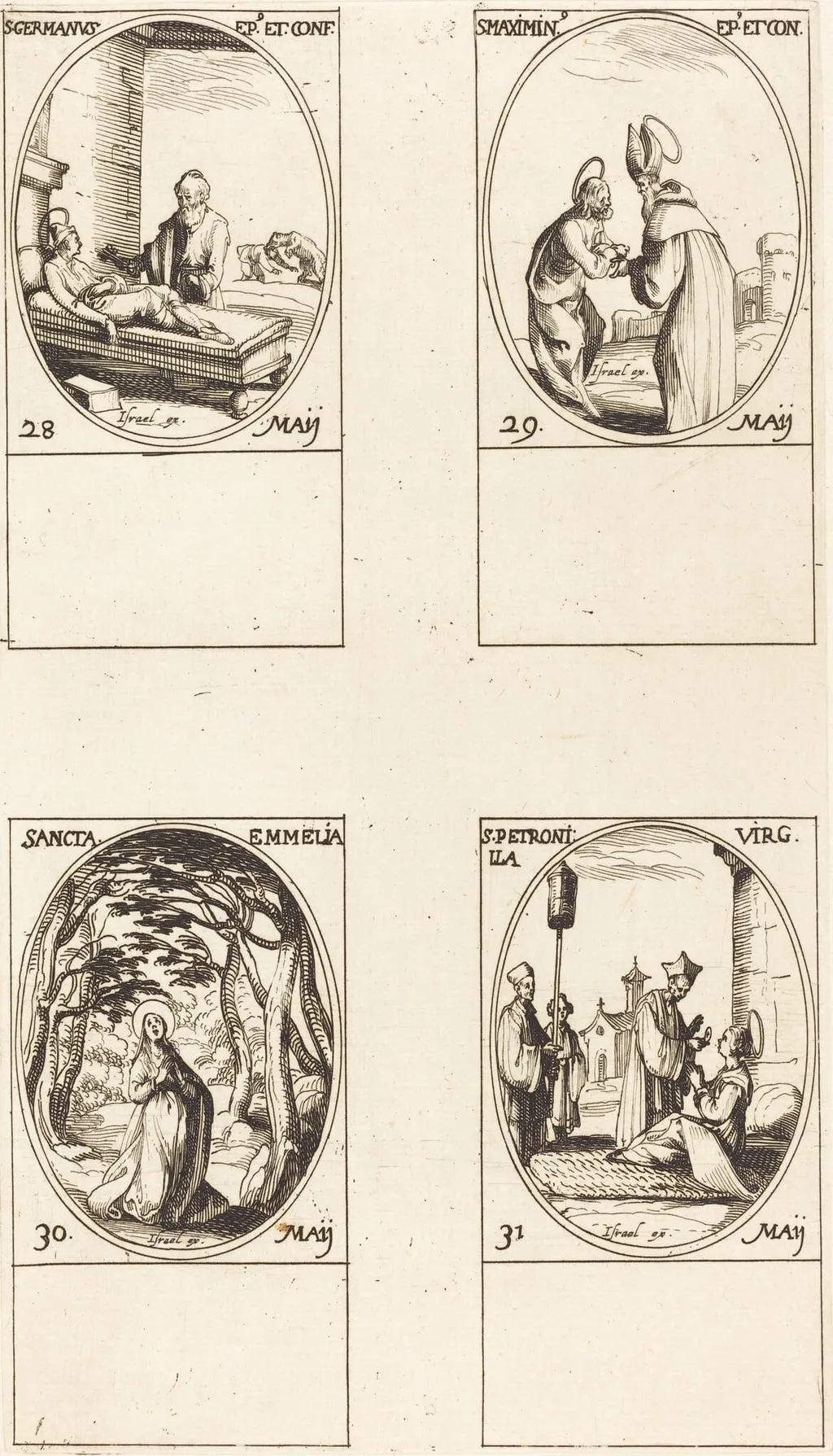
St. Germanus of Paris; St. Maximinus; St. Emmelia; St. Petronilla is an ink print by the Baroque artist Jacques Callot. It dates from 1634 and is held in the collection of the National Gallery of Art.
About this work
Overview
A prolific printmaker from Lorraine, Callot produced over a thousand etchings, often blending religious imagery with observations of daily life.
Created around 1634 by Jacques Callot, this etching depicts four Christian saints on laid paper. A prolific printmaker from Lorraine, Callot produced over a thousand etchings, often blending religious imagery with observations of daily life. This work belongs to a series of devotional prints that reflect his interest in hagiography, rendered with precision and clarity characteristic of his mature style.
Subject & Meaning
The four figures—St. Germanus of Paris, St. Maximinus, St. Emmelia, and St. Petronilla—are presented in solemn alignment, each identified by inscriptions and halos. Their upright postures and simplified drapery emphasize spiritual dignity over individual narrative. The composition avoids dramatic action, instead inviting quiet contemplation, consistent with Counter-Reformation ideals that valued saintly intercession and orderly devotion.
Technique & Style
Callot employed fine-line etching on a metal plate, using acid to bite precise grooves that held ink for printing. The lines are sharp, controlled, and evenly spaced, creating crisp contours and subtle texture in the robes. The plain background isolates the figures, directing focus to their forms. His mastery of the medium allowed for intricate detail without clutter, a hallmark of his technical discipline.
History & Provenance
The print was made during Callot’s time in Florence, where he worked for the Medici court and produced numerous religious subjects. Though the exact provenance of this specific impression is undocumented, similar etchings from this period circulated widely among collectors and religious institutions in France and Italy, serving both devotional and artistic purposes.
Context
In the early 17th century, etching emerged as a favored medium for religious imagery amid the Catholic Church’s renewed emphasis on visual piety. Callot’s work responded to this demand, offering accessible, portable devotional aids. His depictions of saints, while traditional in subject, were distinguished by their clarity and restraint, contrasting with the theatricality of some Baroque painting.
Legacy
Callot’s etchings influenced generations of printmakers through their technical refinement and compositional discipline. Though less celebrated than his genre scenes, his saintly portraits exemplify his ability to convey solemnity through minimal means. This work remains a quiet testament to his role in elevating etching as a serious medium for spiritual representation.
Artist & collection
Artist
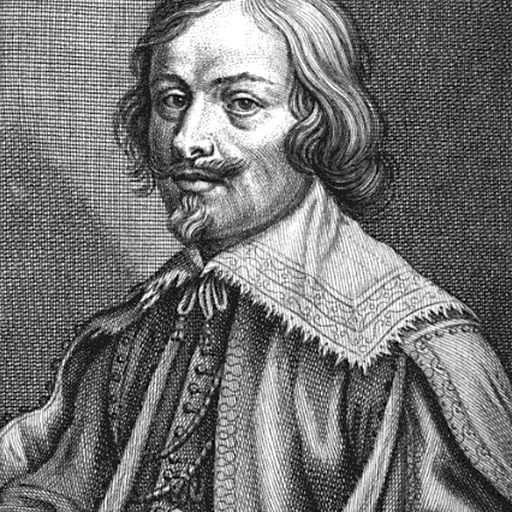
Jacques Callot was a baroque printmaker and draftsman from the Duchy of Lorraine.

 Holy Family at supper
 Restoration of the Aqueduct at Pisa
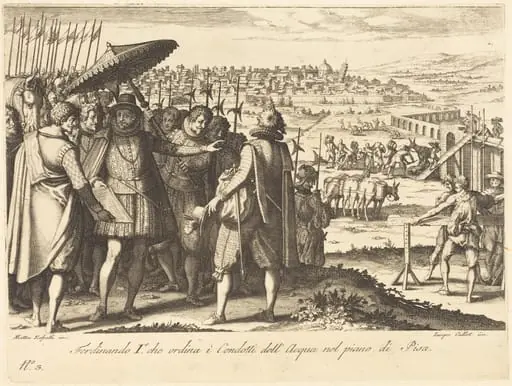
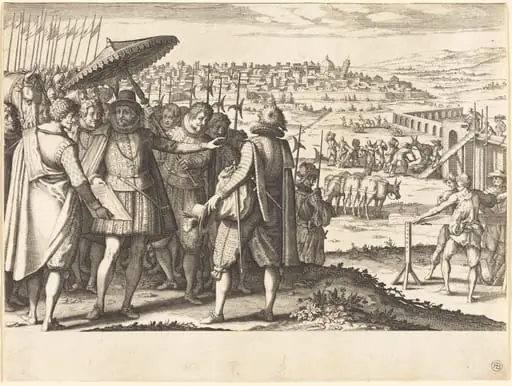 Restoration of the Aqueduct at Pisa
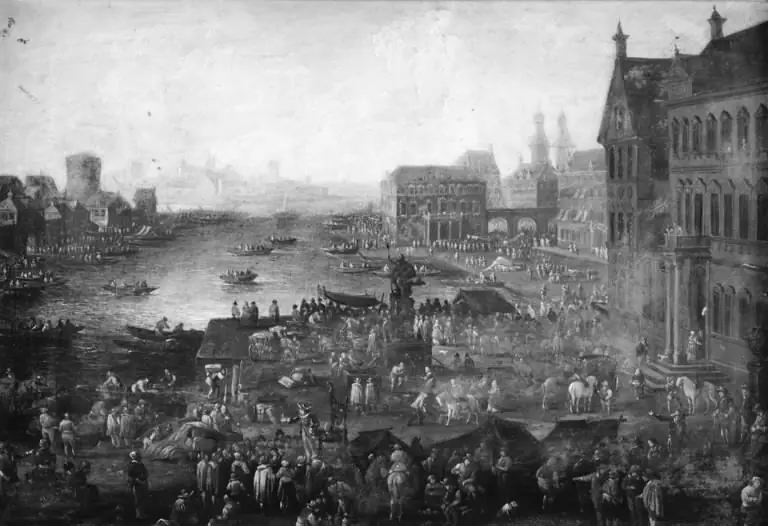 Square in Paris with Many Figures
 Square in Paris with Many Figures
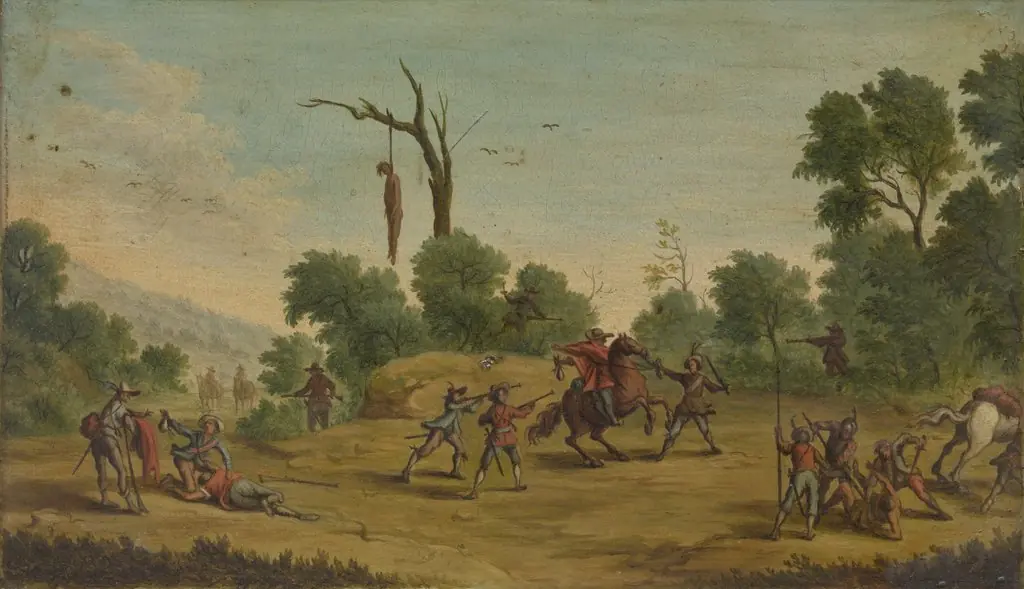 Horsemen Attacked by Robbers
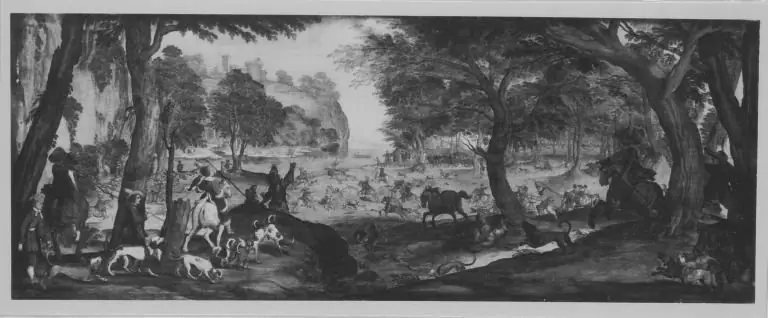 HOW WILL A COVERED PART BE CORRECTED?HOW WIKA A COVERED HEART DEED CORRECTED?
![Christ Walking on the Water [second plate], by Jacques Callot](https://artifactworldgallery.com/img/jacques-callot--christ-walking-on-the-water-second-plate--2069f3bfe4cb2126-w320.webp) Christ Walking on the Water [second plate]
Christ Walking on the Water [second plate]
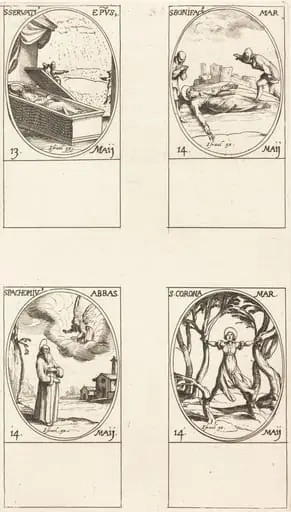 St. Servatius; St. Boniface; St. Pachomius; St. Corona
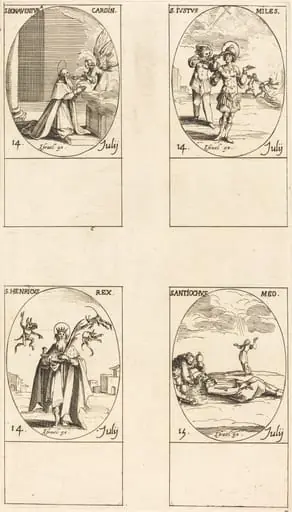 St. Bonaventura; St. Justus; St. Henry, Emperor; St. Antiochus
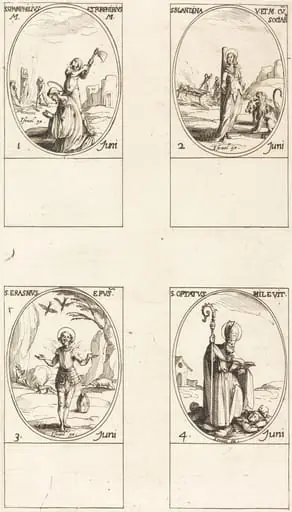 Sts. Pamphilius and Porphyrius; St. Blandina and Companions; St. Erasmus; St. Optatus
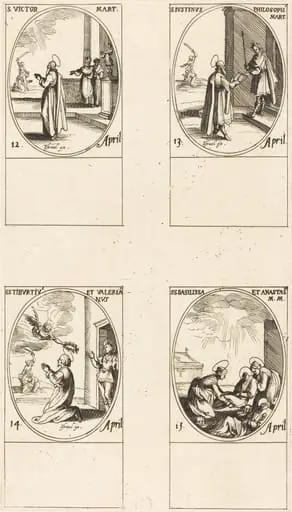 St. Victor; St. Justinus; Sts. Tiburtius and Valerianus; Sts. Basilissa and Anastasia
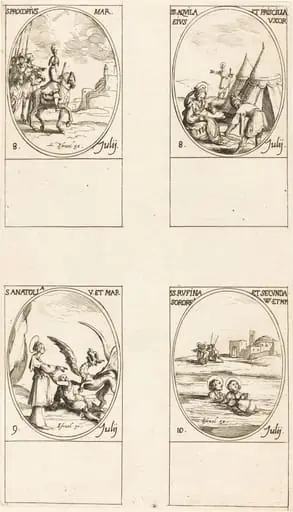 St. Procopius; Sts. Aquila and Prisca; St. Anatolia; Sts. Rufina and Secunda
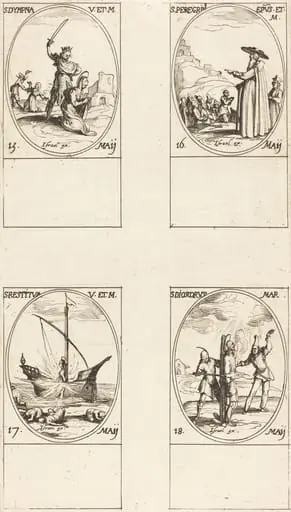 St. Dympna; St. Peregrinus; St. Restituta; St. Dioscorus
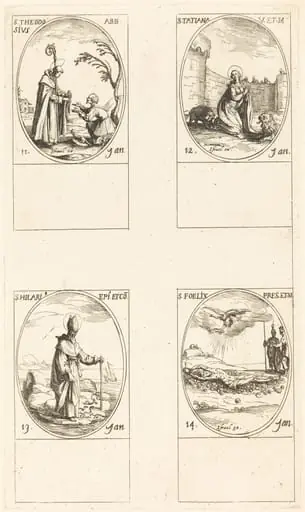 St. Theodosius; St. Tatiana; St. Hilary; St. Felix
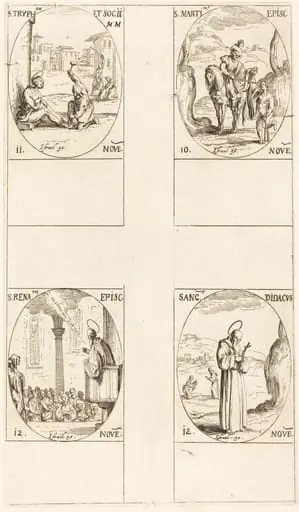 St. Martin; St. Tryphon and Companions; St. Renatus; St. Didacus