Artwork
St. Gregory; Sts. Romanus & Barulla; Dedication of the Basilicas of Sts. Peter & Paul; St. Elizabeth
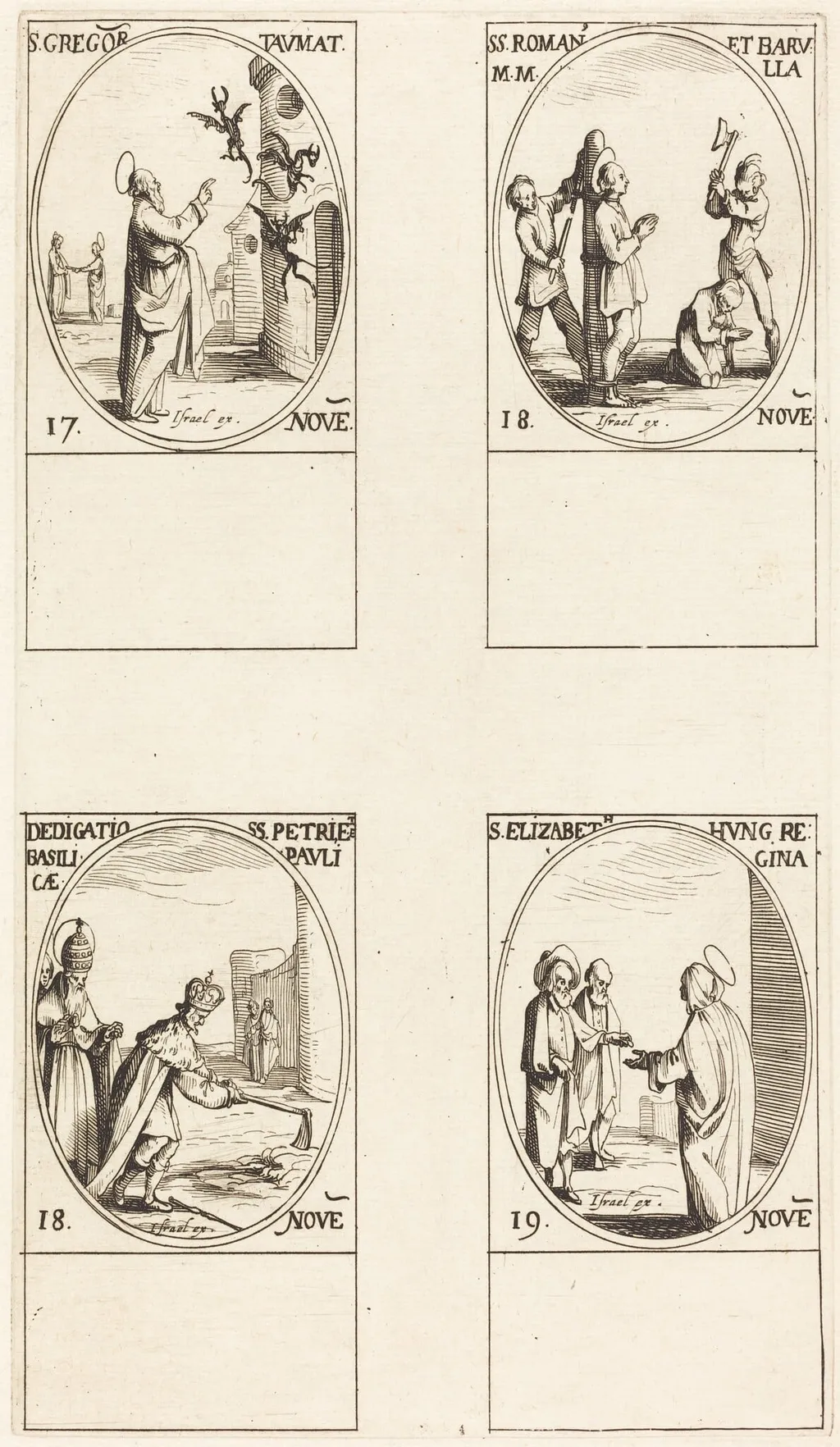
St. Gregory; Sts. Romanus & Barulla; Dedication of the Basilicas of Sts. Peter & Paul; St. Elizabeth is an ink print by the Baroque artist Jacques Callot. It dates from 1634 and is held in the collection of the National Gallery of Art.
About this work
Overview
The composition balances narrative economy with intricate detail, characteristic of Callot’s approach to devotional imagery.
This 1634 etching by Jacques Callot presents four small oval scenes on a single sheet of laid paper. Each panel depicts a distinct religious episode, rendered with fine linear precision. As one of over 1,400 prints by the Lorrainer artist, the work exemplifies his mastery of the etching technique, using a needle to incise lines into a metal plate for ink transfer. The composition balances narrative economy with intricate detail, characteristic of Callot’s approach to devotional imagery.
Subject & Meaning
The four scenes illustrate episodes from Christian hagiography: St. Gregory at prayer, the saints Romanus and Barulla, the dedication of the basilicas of Peter and Paul, and St. Elizabeth in acts of charity. Each vignette serves as a devotional anchor, emphasizing sanctity through ritual gesture and architectural setting. The selection of subjects reflects Counter-Reformation priorities, promoting veneration of saints and sacred spaces as conduits of divine presence.
Technique & Style
Callot employed fine etching lines to model form and texture, using controlled burin-like strokes to suggest fabric folds, stone surfaces, and atmospheric depth. The small scale of the scenes demands close viewing, revealing meticulous attention to architectural elements and figure positioning. Unlike painting, the medium relies on inked grooves pressed onto paper, creating crisp, tonal contrasts that enhance the narrative clarity without color or shading.
History & Provenance
Created around 1634 during Callot’s mature period in Nancy, the print likely circulated among religious patrons and collectors in Lorraine and beyond. Though no specific early ownership is documented, its subject matter aligns with devotional prints produced for private meditation. The work survives in multiple institutional collections, indicating its continued recognition among early modern print audiences.
Context
In the early 17th century, etching emerged as a favored medium for religious imagery due to its reproducibility and detail. Callot’s work responded to the Catholic Church’s emphasis on visual piety after the Council of Trent. His prints, often smaller and more intimate than altarpieces, offered accessible devotional tools for households and clergy, bridging the gap between public ritual and private contemplation.
Legacy
Callot’s precision and narrative compression influenced generations of printmakers across Europe. While this particular group of scenes is not among his most widely reproduced, it exemplifies his ability to condense complex stories into compact, legible compositions. The work remains a reference for the technical and thematic potential of etching in religious art during the Baroque era.
Artist & collection
Artist
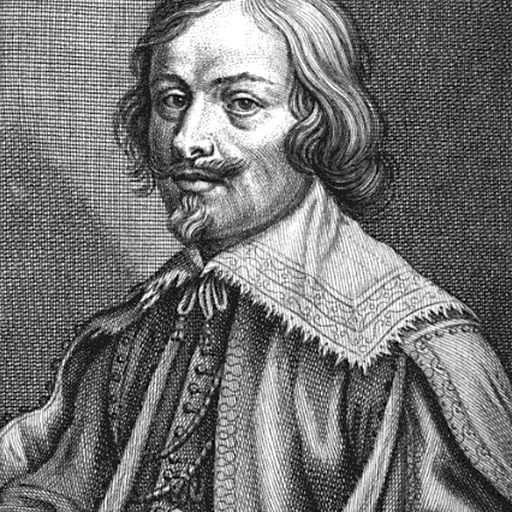
Jacques Callot was a baroque printmaker and draftsman from the Duchy of Lorraine.

 Holy Family at supper
 Restoration of the Aqueduct at Pisa
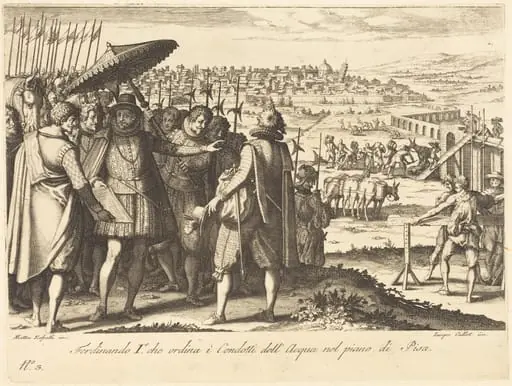
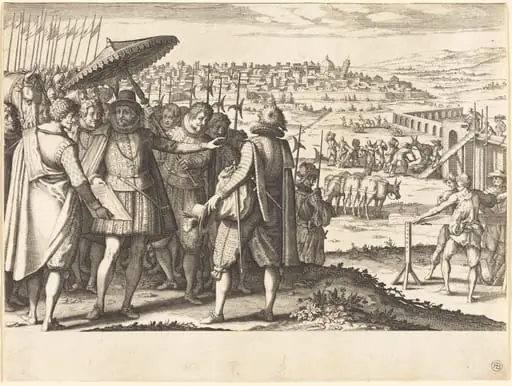 Restoration of the Aqueduct at Pisa
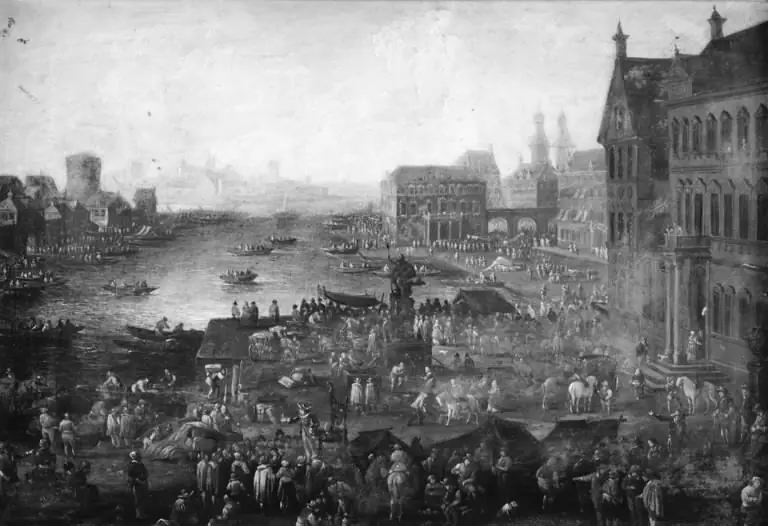 Square in Paris with Many Figures
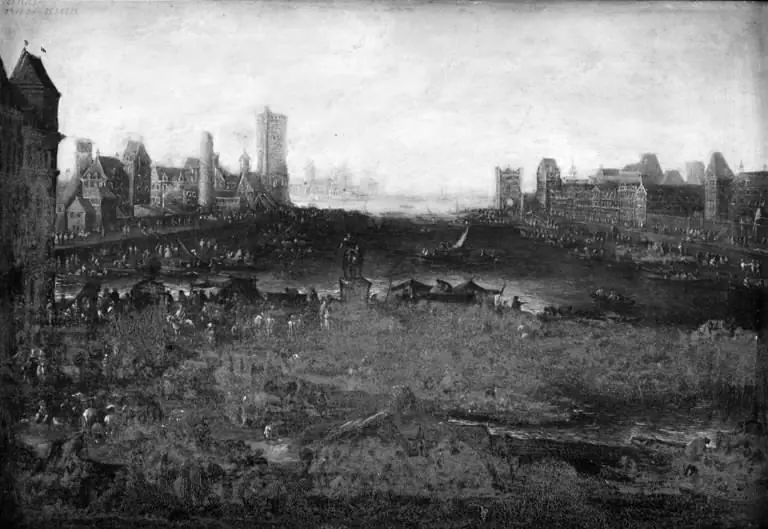 Square in Paris with Many Figures
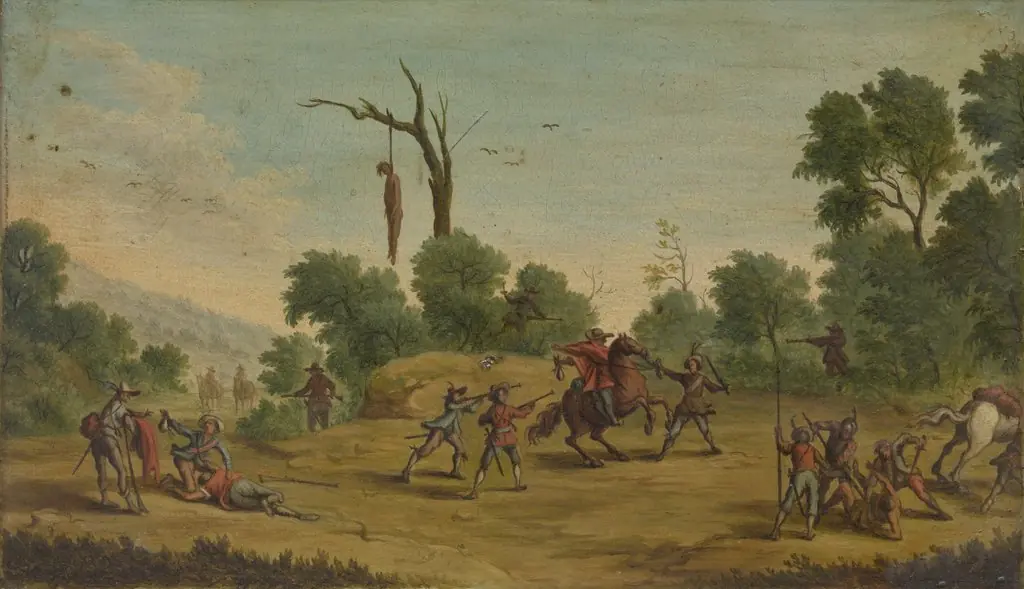 Horsemen Attacked by Robbers
 HOW WILL A COVERED PART BE CORRECTED?HOW WIKA A COVERED HEART DEED CORRECTED?
![Christ Walking on the Water [second plate], by Jacques Callot](https://artifactworldgallery.com/img/jacques-callot--christ-walking-on-the-water-second-plate--2069f3bfe4cb2126-w320.webp) Christ Walking on the Water [second plate]
Christ Walking on the Water [second plate]
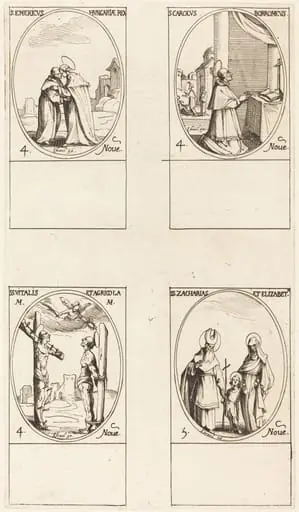 St. Emeric; St. Charles Borromeo; St. Vitalis & Agricola; Sts. Zachary & Elizabeth
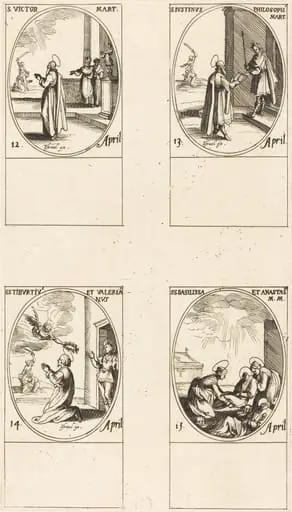 St. Victor; St. Justinus; Sts. Tiburtius and Valerianus; Sts. Basilissa and Anastasia
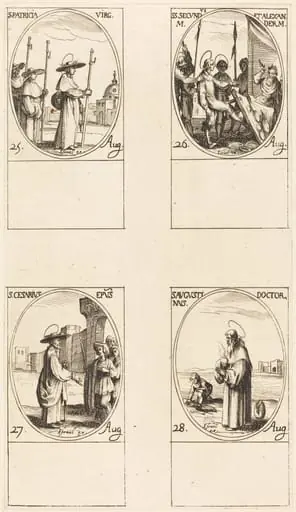 St. Patricia; Sts. Secundus and Alexander; St. Cesarius; St. Augustine
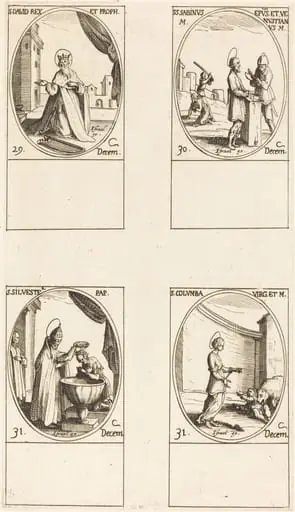 St. David, King and Prophet; Sts. Sabinus and Venustianus; St. Sylvester; St. Colomba
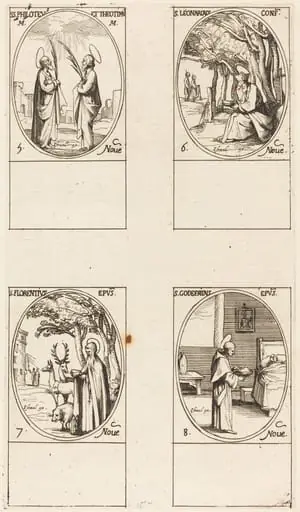 Sts. Philoteus and Theotimus; St. Leonard; St. Florentinus; St. Godfrey
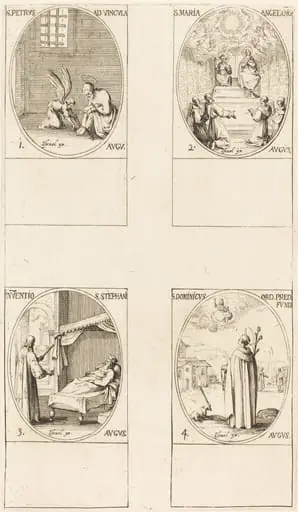 St. Peter, Apostle; St. Mary of Angels; Discovery of the Body of St. Stephen; St. Dominicus
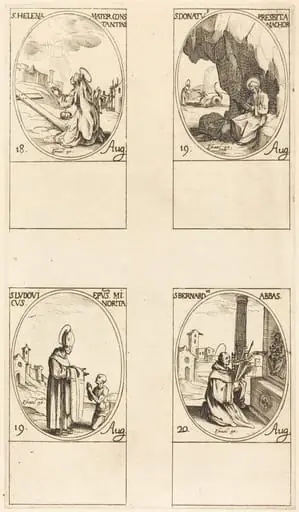 St. Helen; St. Donatus; St. Ludovicus, Bishop; St. Bernard
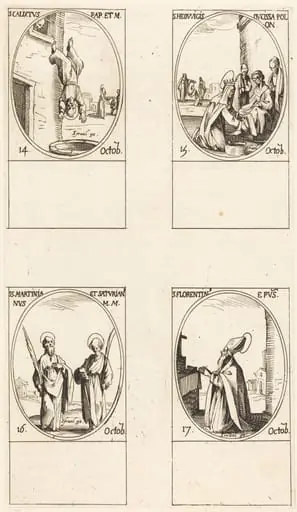 St. Calixtus; St. Hedwiges; Sts. Martinian and Saturian; St. Florentinus
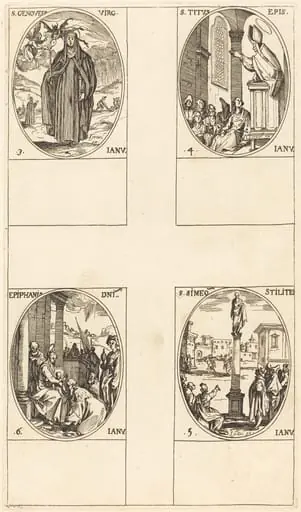 St. Genevieve; St. Titus; St. Simeon Stylites; Epiphany
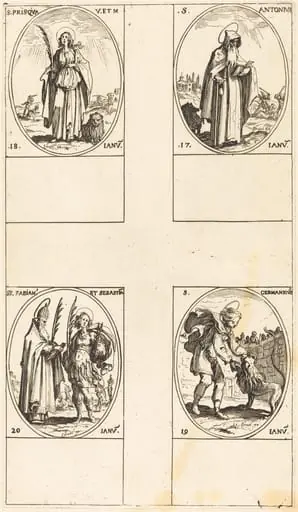 St. Anthony; St. Prisca; St. Germanicus; Sts. Fabian and Sebastian
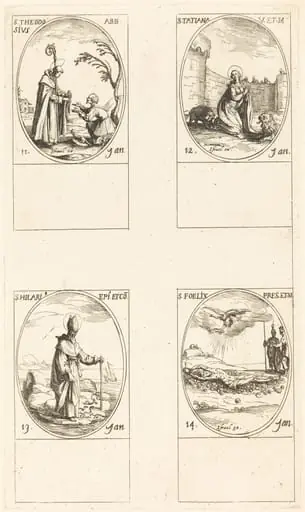 St. Theodosius; St. Tatiana; St. Hilary; St. Felix