Artwork
St. Hippolytus; St. Radegund, Queen; St. Cassian; St. Athanasia
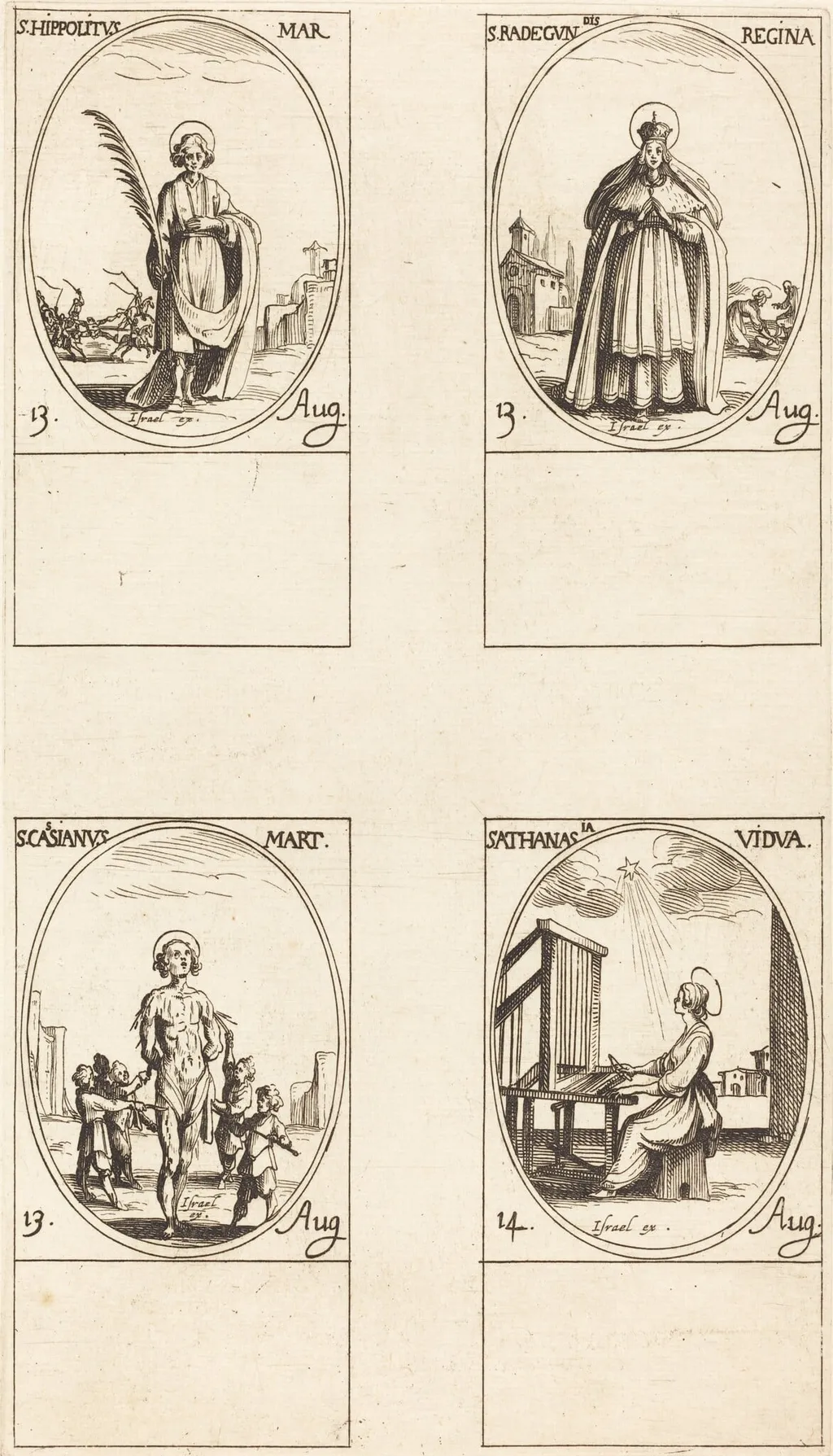
St. Hippolytus; St. Radegund, Queen; St. Cassian; St. Athanasia is an ink print by the Baroque artist Jacques Callot. It dates from 1634 and is held in the collection of the National Gallery of Art.
About this work
Overview
This etching on laid paper, created by Jacques Callot around 1634, presents four saintly figures in oval frames. The work is characteristic of Callot's religious prints, which often combined detailed figures with expansive backgrounds.
Subject & Meaning
The four scenes depict St. Hippolytus, St. Radegund, St. Cassian, and St. Athanasia, each identified by name above their respective oval frames. The saints are shown in various settings, including a woman at a loom and a bearded figure with children, suggesting different aspects of their stories or attributes.
Technique & Style
The print was made using etching, a technique where a sharp tool scratches lines into a metal plate, which is then filled with ink to create the design. Callot's work is notable for its detailed figures and simple, etched backgrounds, showcasing his skill in this medium.
History & Provenance
Jacques Callot, a French printmaker and draftsman from the Duchy of Lorraine, created this work during his active period in the early 17th century. He was prolific, producing over 1,400 etchings that contributed to the old master print tradition.
Artist & collection
Artist
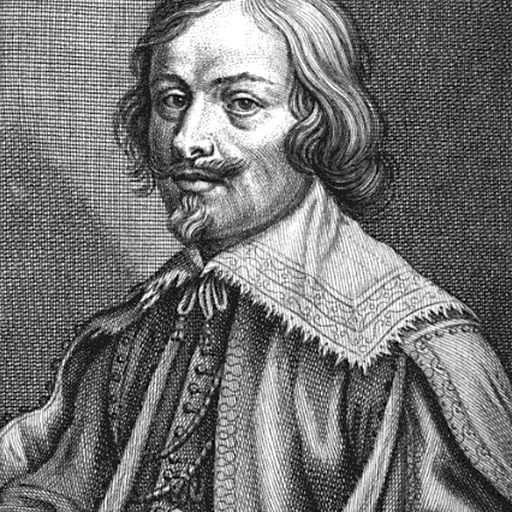
Jacques Callot was a baroque printmaker and draftsman from the Duchy of Lorraine.

 Holy Family at supper
 Restoration of the Aqueduct at Pisa
 Restoration of the Aqueduct at Pisa
 Square in Paris with Many Figures
 Square in Paris with Many Figures
 Horsemen Attacked by Robbers
 HOW WILL A COVERED PART BE CORRECTED?HOW WIKA A COVERED HEART DEED CORRECTED?
![Christ Walking on the Water [second plate], by Jacques Callot](https://artifactworldgallery.com/img/jacques-callot--christ-walking-on-the-water-second-plate--2069f3bfe4cb2126-w320.webp) Christ Walking on the Water [second plate]
Christ Walking on the Water [second plate]
 St. Potentiana; St. Dunstan; St. Yvo; St. Bernardinus of Siena
 St. Servatius; St. Boniface; St. Pachomius; St. Corona
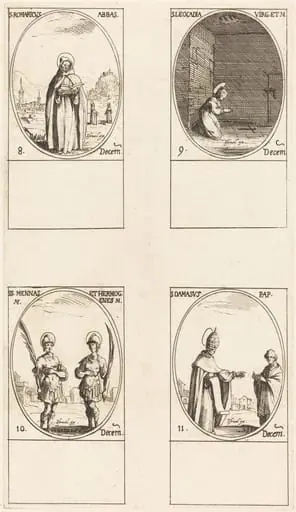 St. Romaricus; St. Leocadia; Sts. Mennas and Hermogenes; St. Damasus
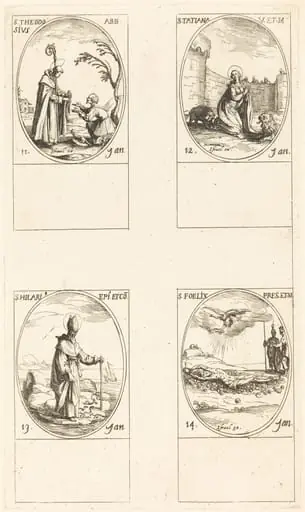 St. Theodosius; St. Tatiana; St. Hilary; St. Felix
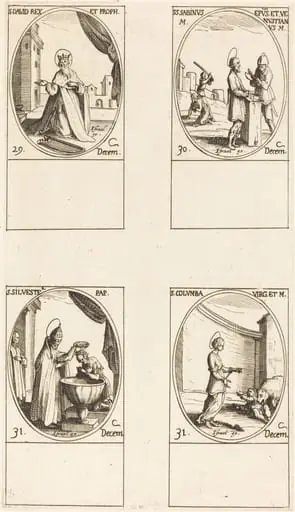 St. David, King and Prophet; Sts. Sabinus and Venustianus; St. Sylvester; St. Colomba
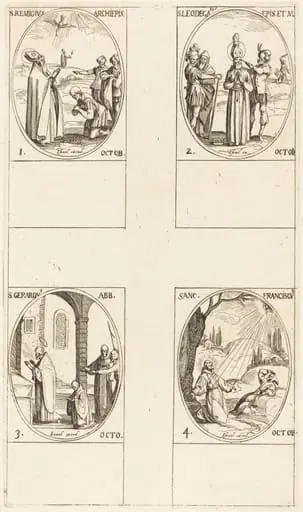 St. Remigius; St. Leodegarius; St. Gerard, Abbot; St. Francis of Assisi
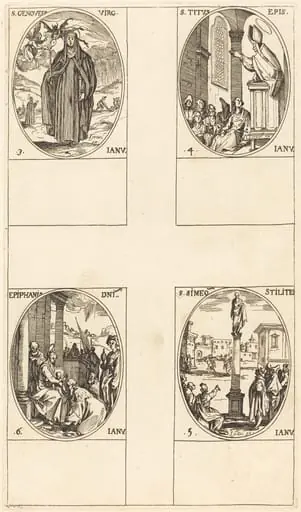 St. Genevieve; St. Titus; St. Simeon Stylites; Epiphany
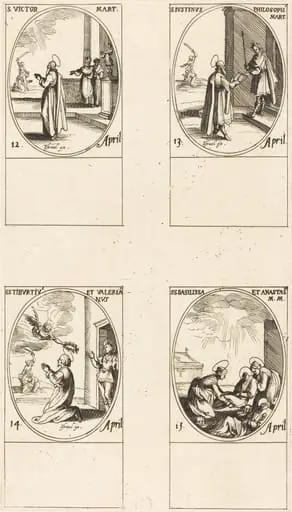 St. Victor; St. Justinus; Sts. Tiburtius and Valerianus; Sts. Basilissa and Anastasia
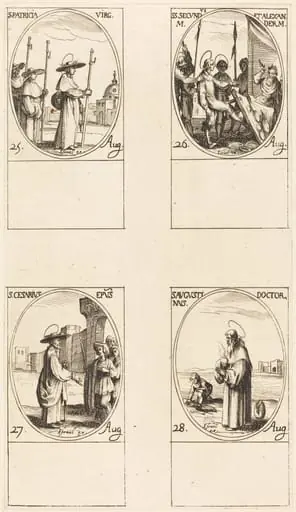 St. Patricia; Sts. Secundus and Alexander; St. Cesarius; St. Augustine
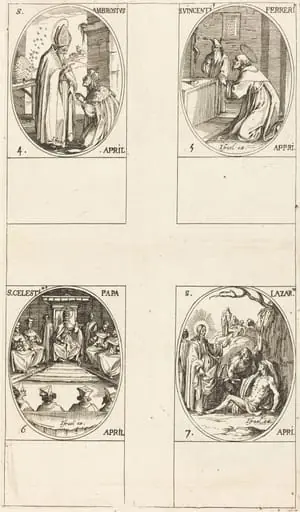 St. Ambrose; St. Vincent Ferrer; St. Celestin; St. Lazarus