Artwork
The Bagpipe Player
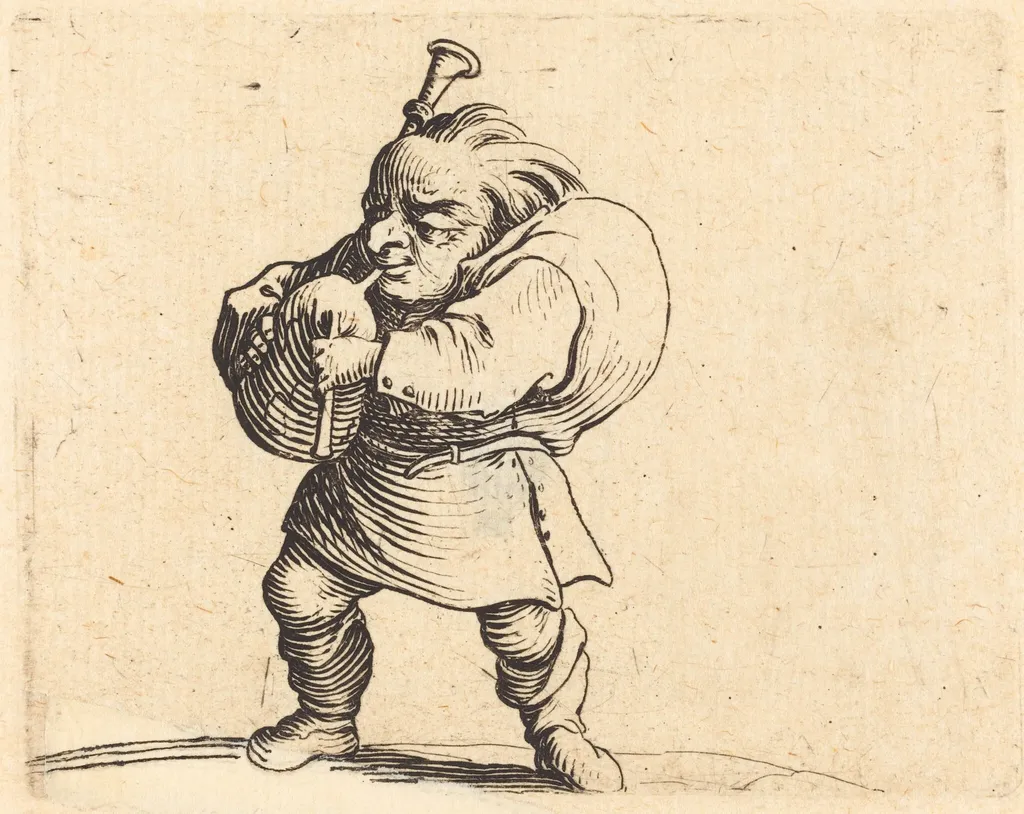
The Bagpipe Player is an ink print by the Baroque artist Jacques Callot. It dates from 1622 and is held in the collection of the National Gallery of Art.
About this work
Overview
The Bagpipe Player is an etching and engraving created by Jacques Callot around 1622. It is one of three prints on an uncut sheet of Lorrainese paper (1949.5.257.a-c), characteristic of the artist's prolific output.
Subject & Meaning
The print depicts a man intently playing a bagpipe, dressed in a long coat and hat. The subject's concentration is emphasized through his facial expression, while the plain background isolates the figure, drawing focus to the musician.
Technique & Style
Callot employed etching and engraving techniques to achieve bold lines and dramatic lighting, hallmarks of the Baroque style. The composition's simplicity contrasts with the intricacy of the musician's rendering.
History & Provenance
Part of a larger body of work documenting 17th-century life, this print reflects Callot's interest in everyday figures, including musicians and commoners. The work is now held as part of a collection (1949.5.257.a-c).
Context
Created in the Duchy of Lorraine, the piece situates within Callot's broader documentation of contemporary European life, often set against detailed landscapes, though here, the focus is solely on the performer.
Legacy
The Bagpipe Player contributes to Callot's legacy as a prolific Baroque printmaker, influencing the representation of everyday life in art. His works, like this, invite exploration of Baroque techniques and the cultural landscape of 17th-century Europe.
Artist & collection
Artist
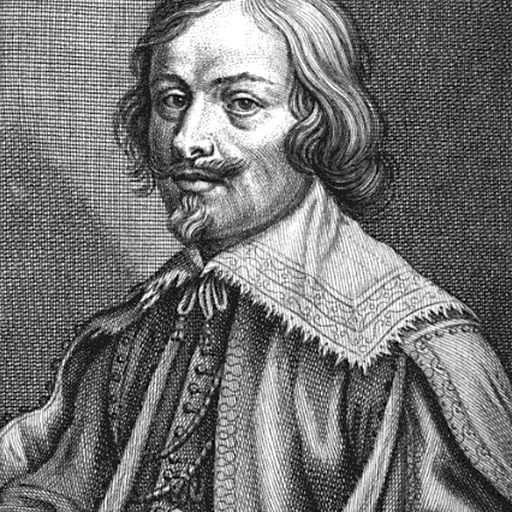
Jacques Callot was a baroque printmaker and draftsman from the Duchy of Lorraine.

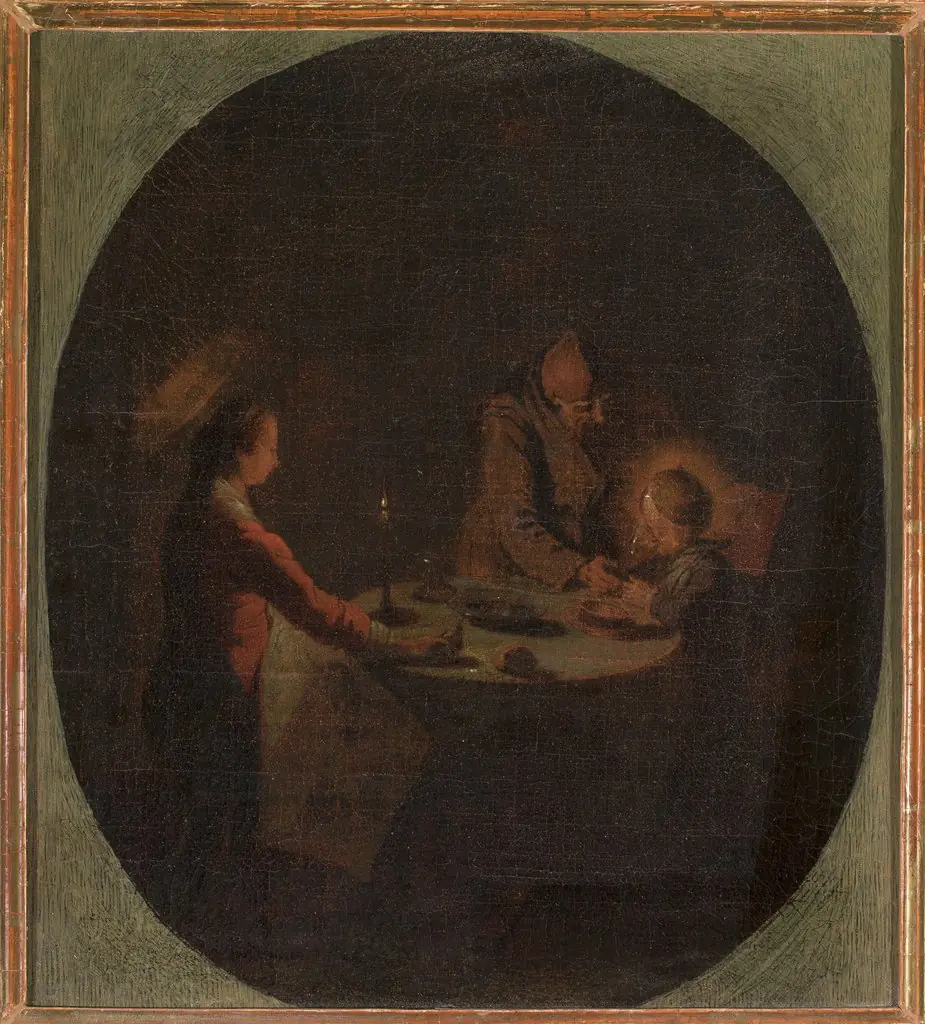 Holy Family at supper
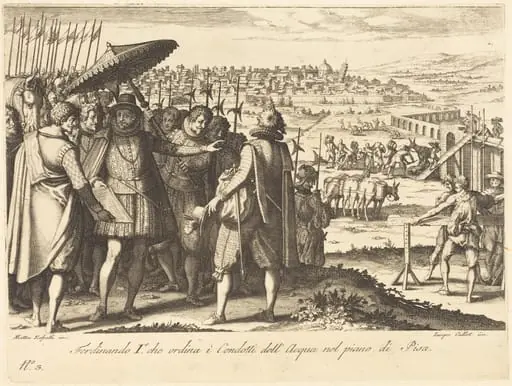 Restoration of the Aqueduct at Pisa
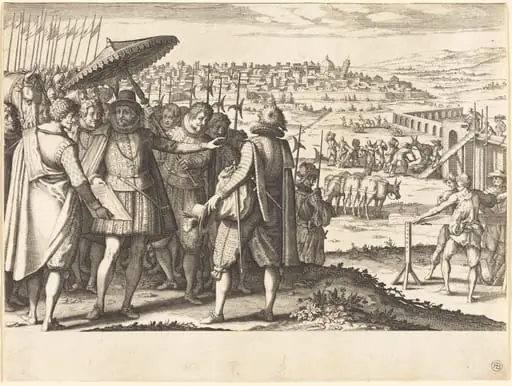 Restoration of the Aqueduct at Pisa
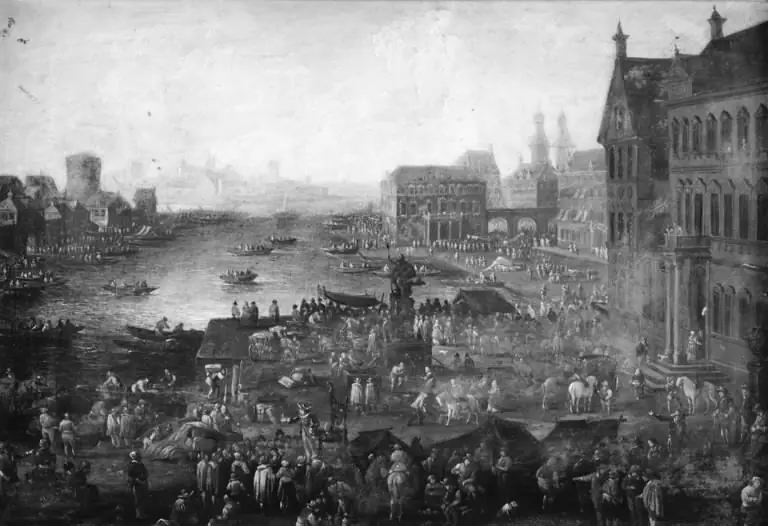 Square in Paris with Many Figures
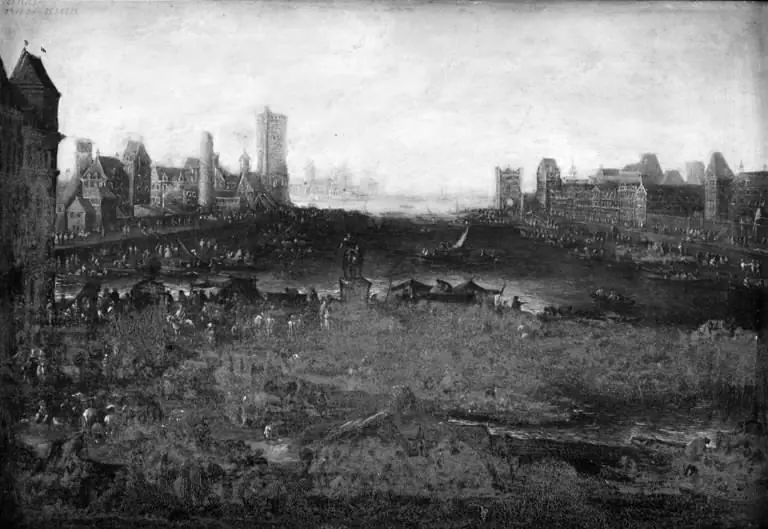 Square in Paris with Many Figures
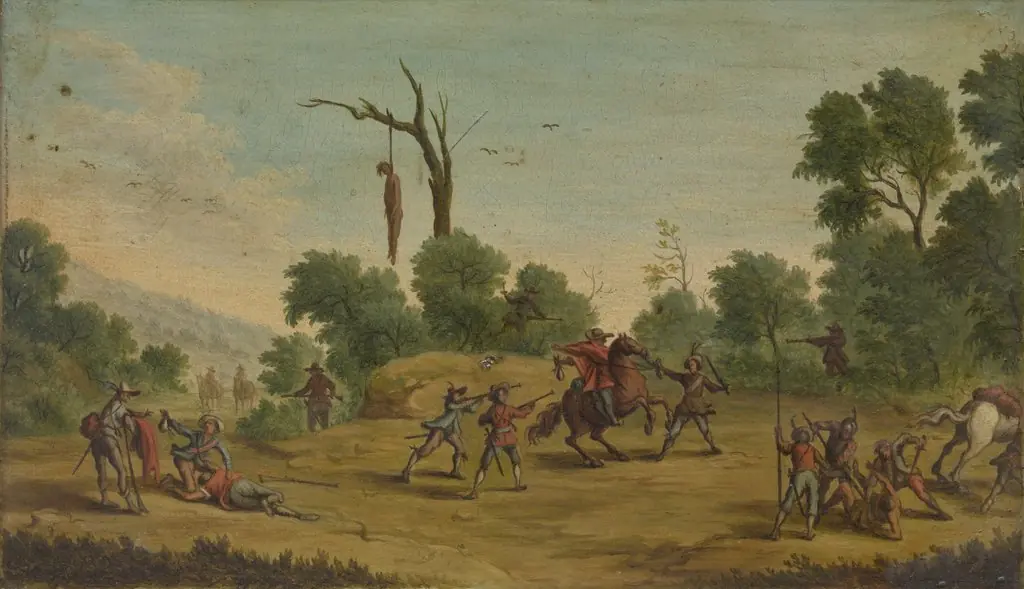 Horsemen Attacked by Robbers
 HOW WILL A COVERED PART BE CORRECTED?HOW WIKA A COVERED HEART DEED CORRECTED?
![Christ Walking on the Water [second plate], by Jacques Callot](https://artifactworldgallery.com/img/jacques-callot--christ-walking-on-the-water-second-plate--2069f3bfe4cb2126-w320.webp) Christ Walking on the Water [second plate]
Christ Walking on the Water [second plate]