Artwork
Masked Man with Twisted Feet
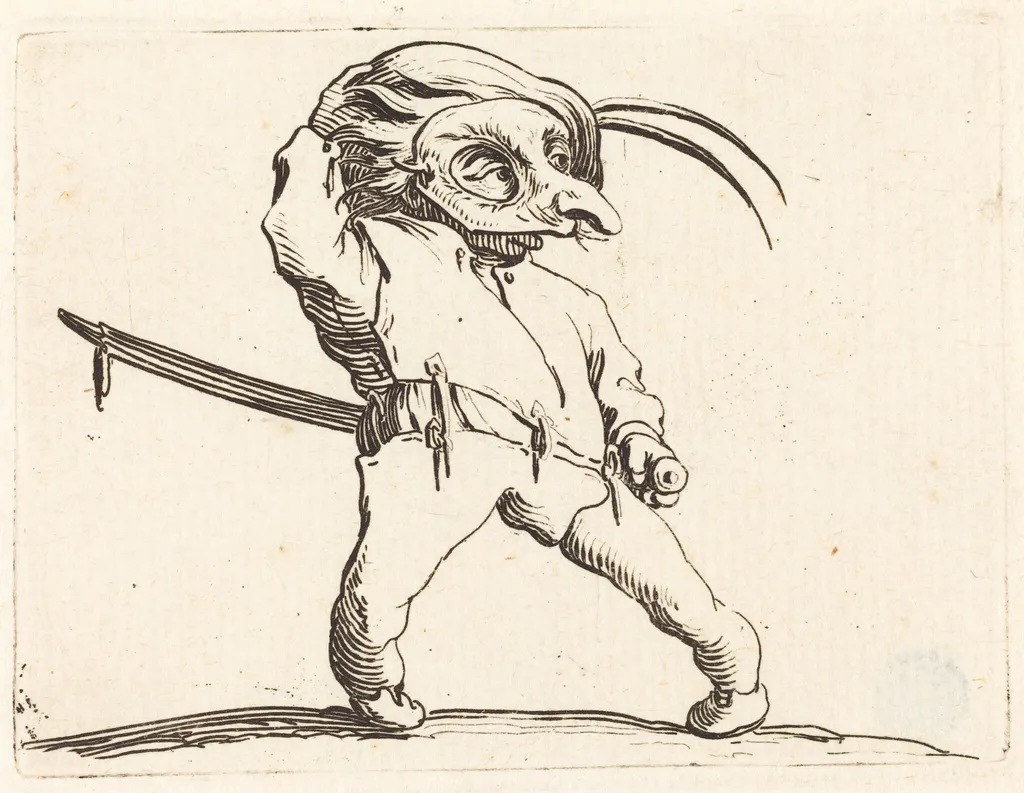
Masked Man with Twisted Feet is an ink print by the Baroque artist Jacques Callot. It dates from 1622 and is held in the collection of the National Gallery of Art.
About this work
Overview
Created around 1622 by Jacques Callot, this print combines etching and engraving on laid paper to depict a peculiar, masked figure with distorted anatomy.
Created around 1622 by Jacques Callot, this print combines etching and engraving on laid paper to depict a peculiar, masked figure with distorted anatomy. Callot, a Lorrainer artist active in the early Baroque period, produced over a thousand prints that captured the fringes of society. This work exemplifies his fascination with the grotesque and the theatrical, rendered with meticulous line work and a keen eye for physical eccentricity.
Subject & Meaning
The figure is a masked performer, possibly a comic or carnival character, with backward-bent feet and rigid, armor-like clothing. The mask obscures identity, amplifying an air of ambiguity and unease. The pole with a small wheel suggests a prop used in street performance or ritual. Callot’s portrayal avoids caricature, instead presenting the subject with a quiet dignity that invites contemplation of social roles and bodily deviation in early modern Europe.
Technique & Style
Callot employed fine, controlled etching lines to define the figure’s contorted form and textured garments, while engraving added sharper accents to the mask and limbs. The paper’s laid texture subtly enhances the tactile quality of the scene. His precision in rendering minute details—such as the wheel’s spokes or the folds of stiff fabric—demonstrates mastery over the medium, allowing narrative nuance to emerge through line alone.
History & Provenance
The print emerged during Callot’s most productive years, when he was based in Florence and later Paris, producing works for collectors and publishers across Europe. Though specific early ownership records are sparse, similar prints from this period circulated widely among aristocratic and intellectual circles. The work survives in multiple institutional collections, reflecting its enduring presence in European print archives since the 17th century.
Context
In early 17th-century Europe, traveling performers and marginalized figures were common sights in cities and courts. Callot’s prints, including this one, respond to a growing interest in the human oddity and the spectacle of everyday life. His work aligns with broader trends in Northern European printmaking that valued observation over idealization, capturing the unvarnished reality of social types often excluded from high art.
Legacy
Callot’s technical innovations in etching influenced generations of printmakers, particularly in the depiction of movement and texture. This print, though not widely reproduced in popular culture, remains a key example of his psychological depth and formal control. Scholars continue to study it as a window into the visual culture of performance and bodily difference in the Baroque era.
Artist & collection
Artist
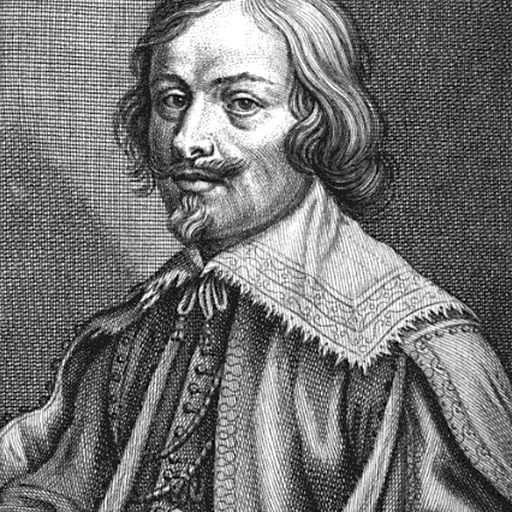
Jacques Callot was a baroque printmaker and draftsman from the Duchy of Lorraine.

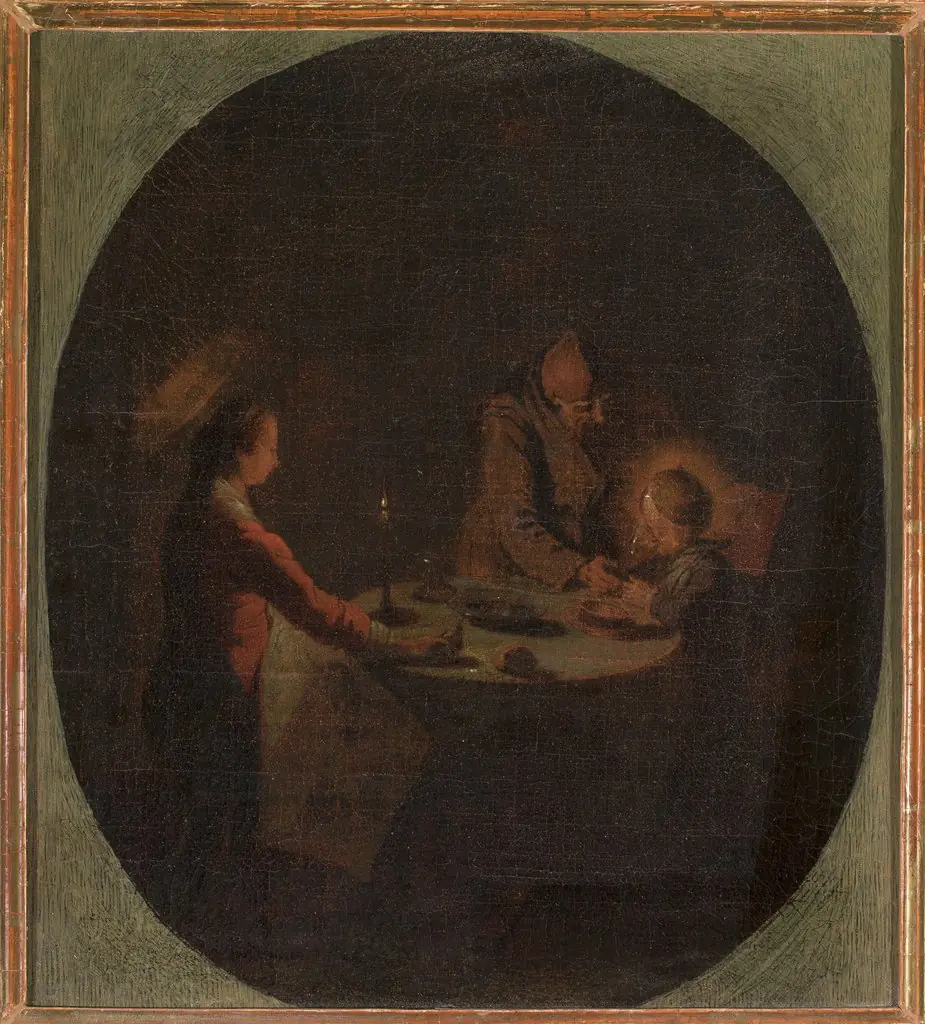 Holy Family at supper
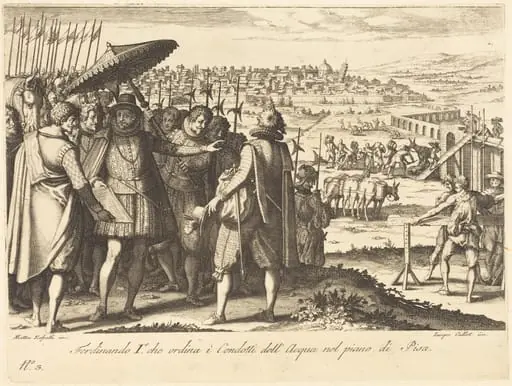 Restoration of the Aqueduct at Pisa
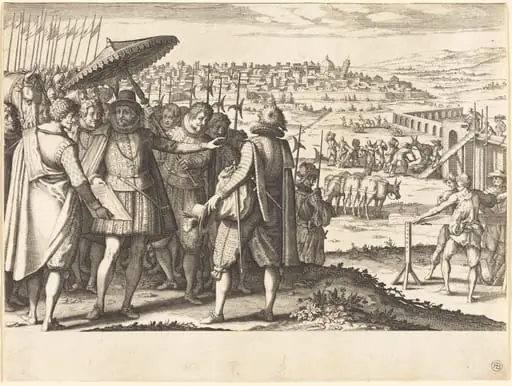 Restoration of the Aqueduct at Pisa
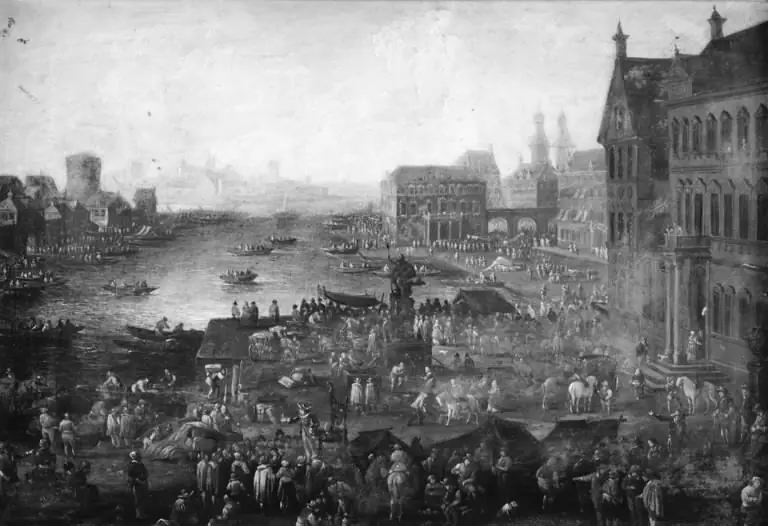 Square in Paris with Many Figures
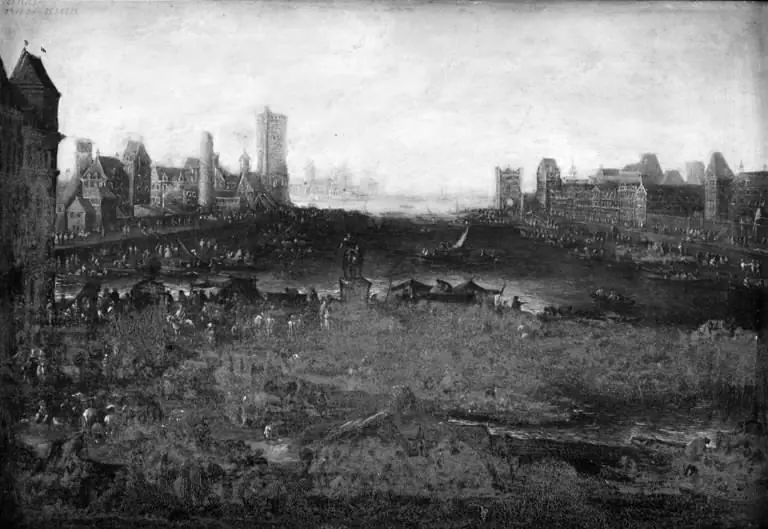 Square in Paris with Many Figures
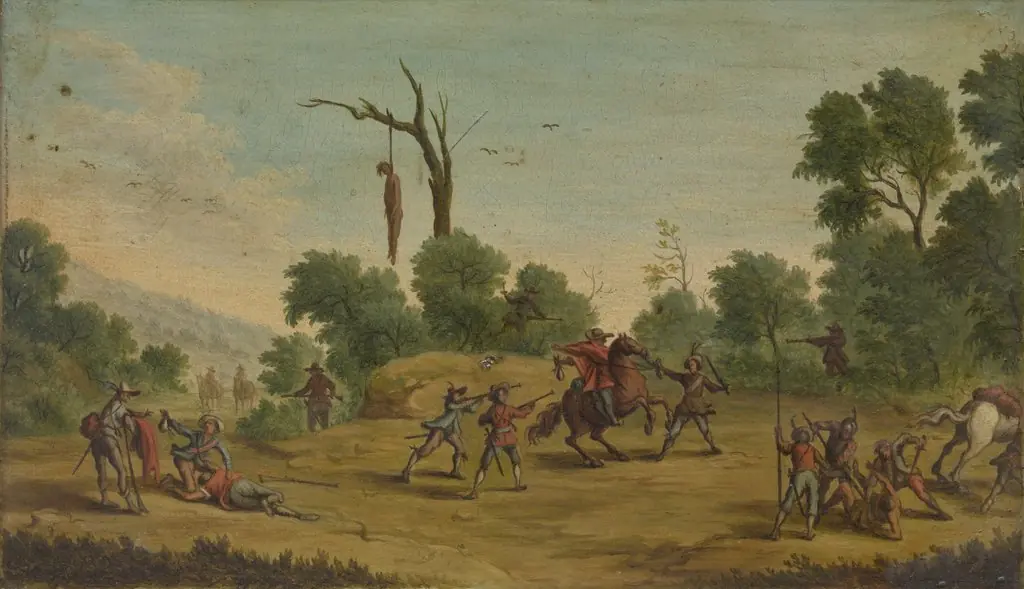 Horsemen Attacked by Robbers
 HOW WILL A COVERED PART BE CORRECTED?HOW WIKA A COVERED HEART DEED CORRECTED?
![Christ Walking on the Water [second plate], by Jacques Callot](https://artifactworldgallery.com/img/jacques-callot--christ-walking-on-the-water-second-plate--2069f3bfe4cb2126-w320.webp) Christ Walking on the Water [second plate]
Christ Walking on the Water [second plate]
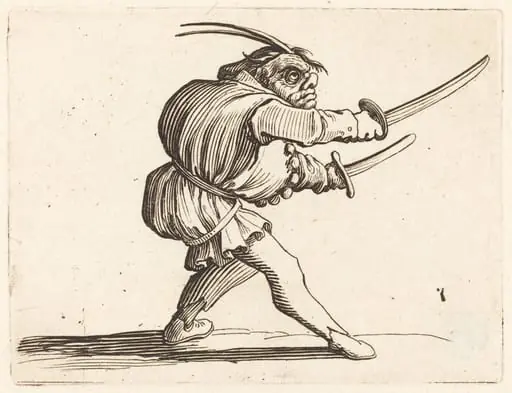 Duellist with Two Sabers
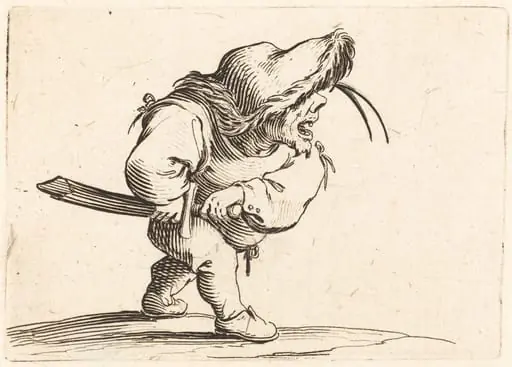 Man Preparing to Draw his Sword
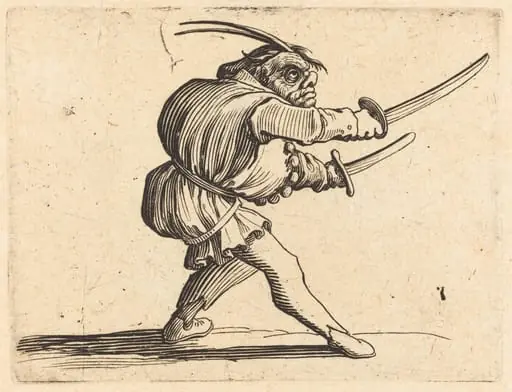 Duellist with Two Sabers
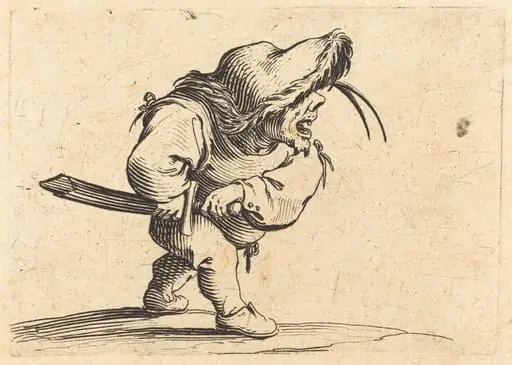 Man Preparing to Draw His Sword
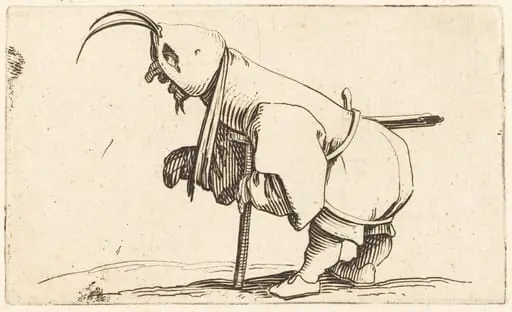 The Hooded Cripple
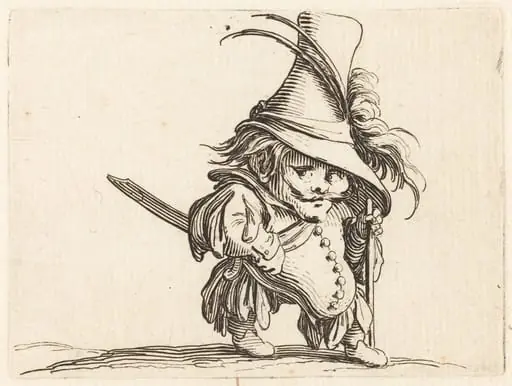 The Potbellied Man with the Tall Hat
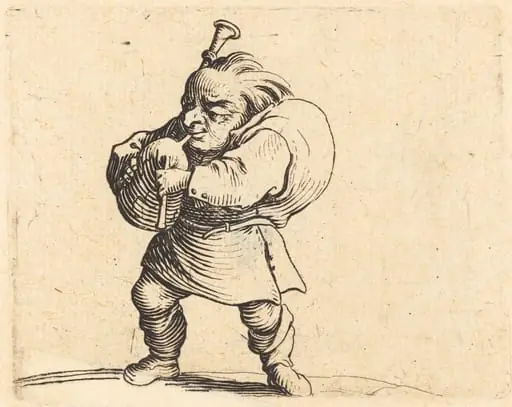 The Bagpipe Player
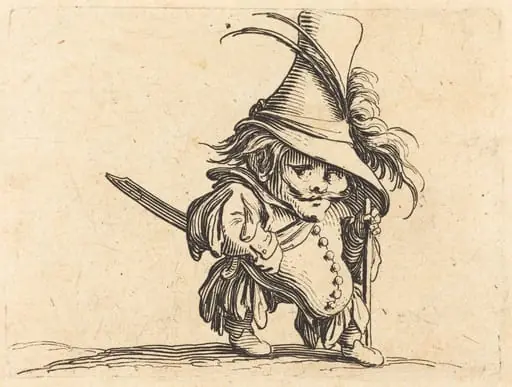 The Potbellied Man with the Tall Hat
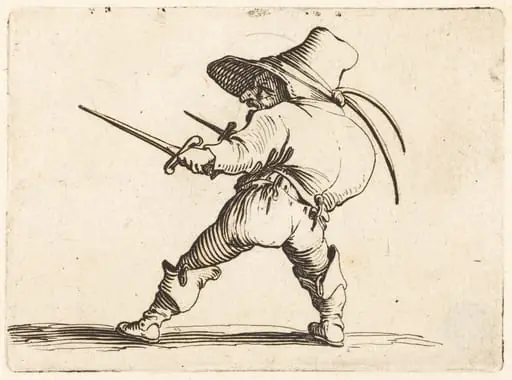 Duellist with Sword and Dagger
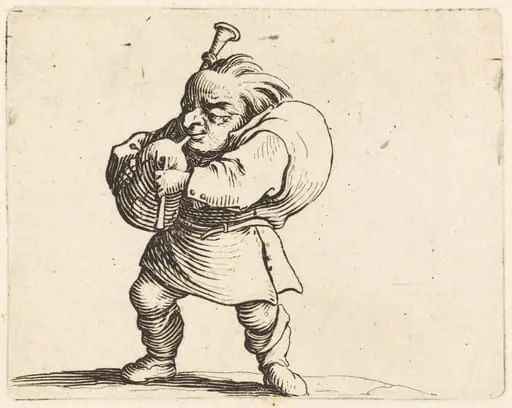 The Bagpipe Player
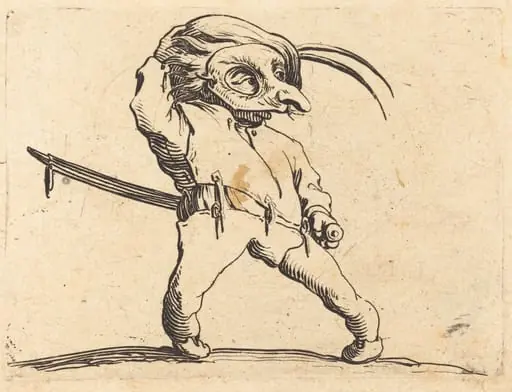 Masked Man with Twisted Feet
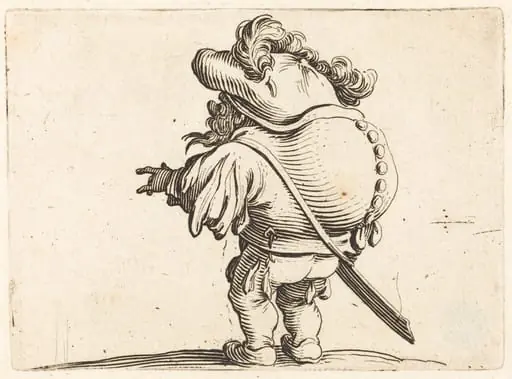 The Hunchback with the Feathered Cap