Artwork
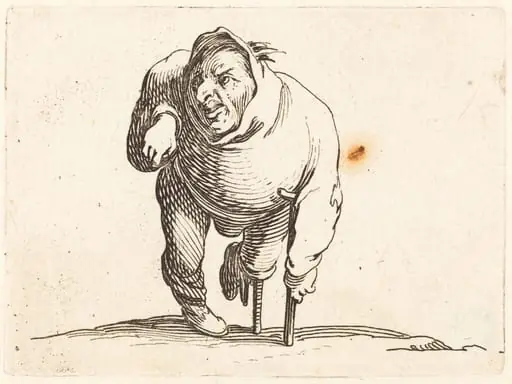
Cripple with Crutch and Wooden Leg
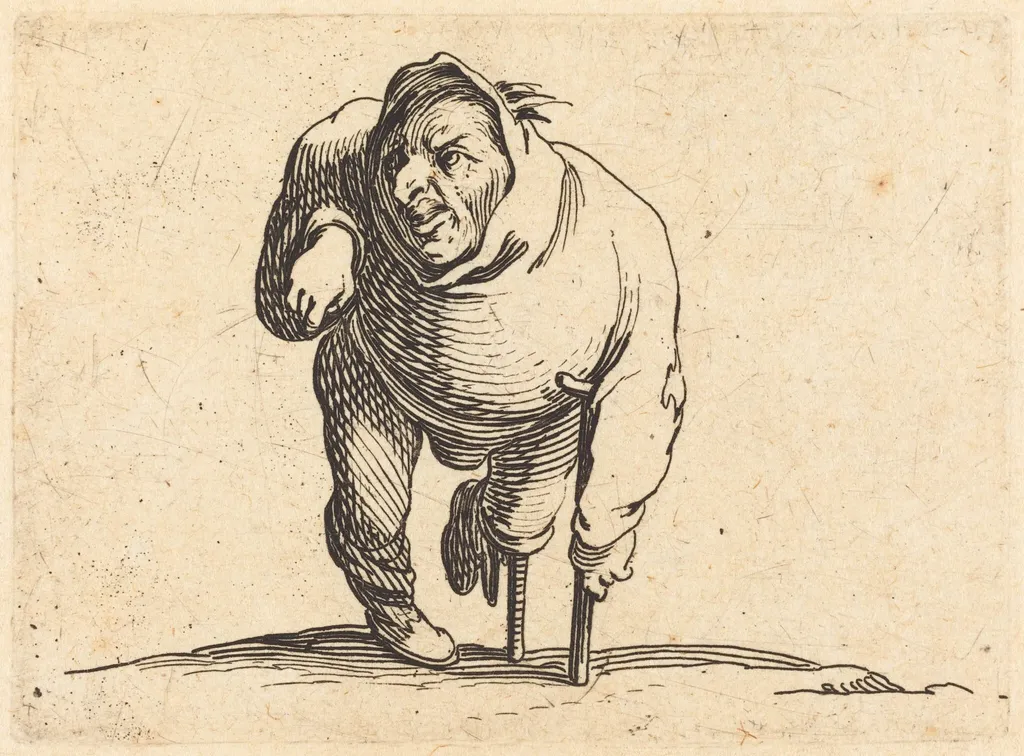
Cripple with Crutch and Wooden Leg is an ink print by the Baroque artist Jacques Callot. It dates from 1622 and is held in the collection of the National Gallery of Art.
About this work
Overview
Executed in etching and engraving, it exemplifies Callot’s meticulous technique and his focus on everyday human conditions.
Created around 1622 by Jacques Callot, this print is one of three etchings on a single uncut sheet of Lorrainese paper. Executed in etching and engraving, it exemplifies Callot’s meticulous technique and his focus on everyday human conditions. The work belongs to a broader series documenting social types, reflecting the artist’s interest in the lives of those on the margins of early 17th-century society.
Subject & Meaning
The figure is a disabled man, depicted with a wooden prosthetic leg and a crutch, his posture strained and face contorted in discomfort. Dressed in a long coat and wide-brimmed hat, he stands on a plain surface, his isolation implied by the lack of context. Callot presents him without overt sentimentality, offering a quiet, unvarnished observation of physical hardship and societal invisibility.
Technique & Style
Callot employed fine, controlled lines to model form and texture, using etching for delicate contours and engraving for sharper details. Subtle gradations of shadow define the volume of the figure’s clothing and the contours of his body, while the roughness of the wooden leg and fabric is rendered with precision. The composition’s simplicity enhances the emotional weight of the subject.
History & Provenance
The print is part of a group of three on a single sheet, preserved in its original uncut state. It entered the collection in 1949 as part of a larger group of Callot’s works. The paper type, identified as Lorrainese, aligns with Callot’s regional origins and the materials available in his workshop in Nancy, where he produced most of his prints during this period.
Context
In early 17th-century Europe, disability was rarely depicted with such directness in art. Callot’s interest in beggars, soldiers, and laborers reflected a growing humanist curiosity about ordinary life. His prints circulated widely, offering viewers a visual record of social realities often ignored by elite art, positioning him as an observational chronicler rather than an idealizer.
Legacy
Callot’s detailed depictions of marginalized figures influenced later generations of printmakers, including Rembrandt and Goya. His commitment to portraying human vulnerability with technical precision helped elevate printmaking as a medium for social commentary. This work remains a quiet testament to his ability to find dignity in the overlooked.
Artist & collection
Artist
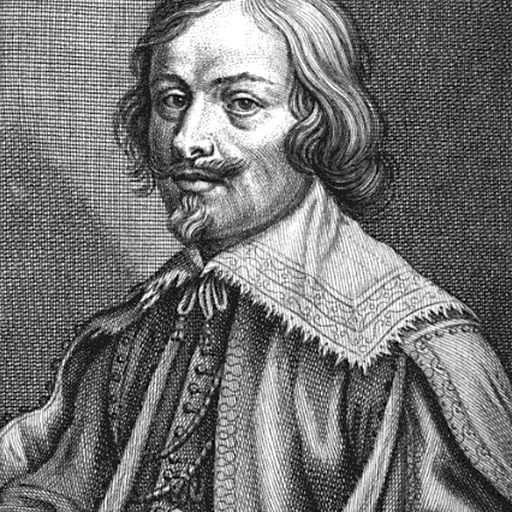
Jacques Callot was a baroque printmaker and draftsman from the Duchy of Lorraine.

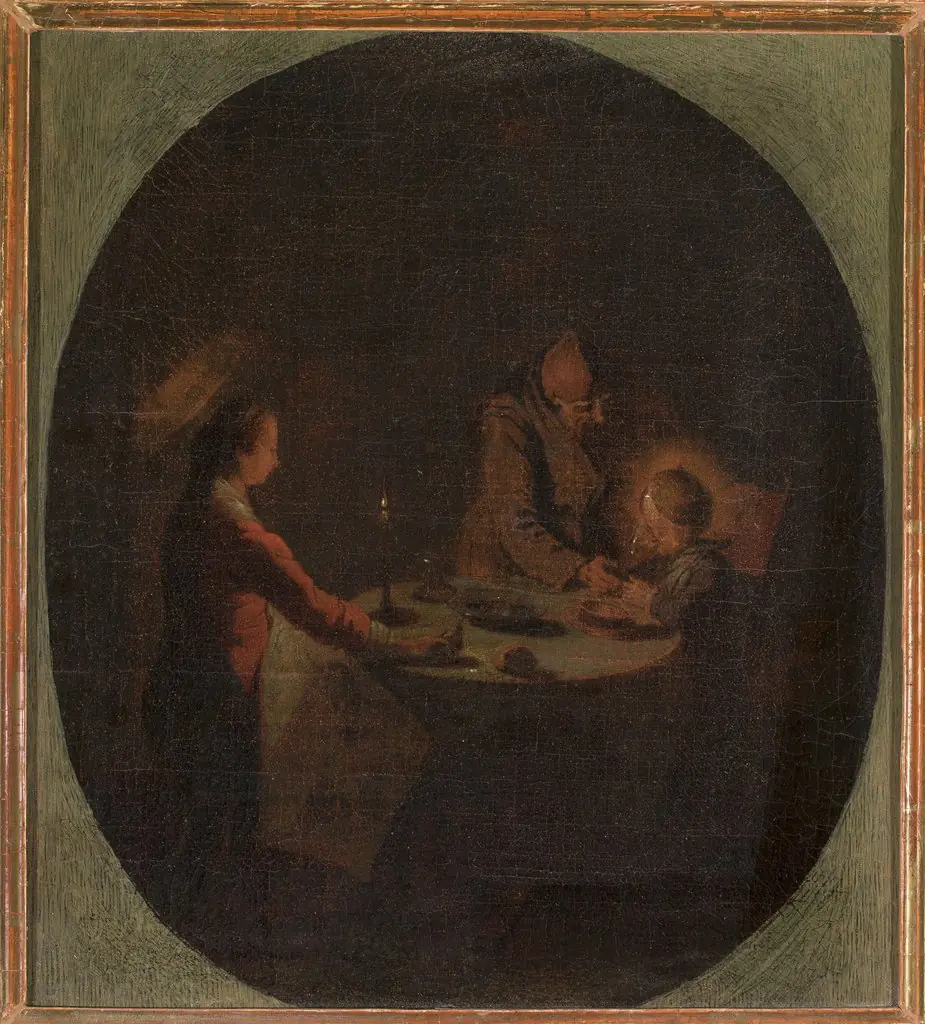 Holy Family at supper
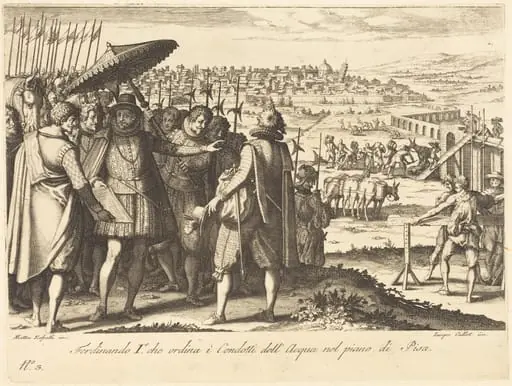 Restoration of the Aqueduct at Pisa
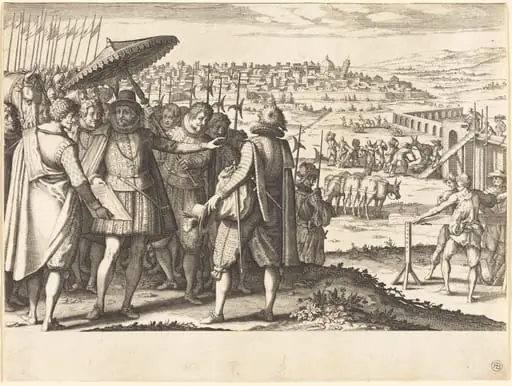 Restoration of the Aqueduct at Pisa
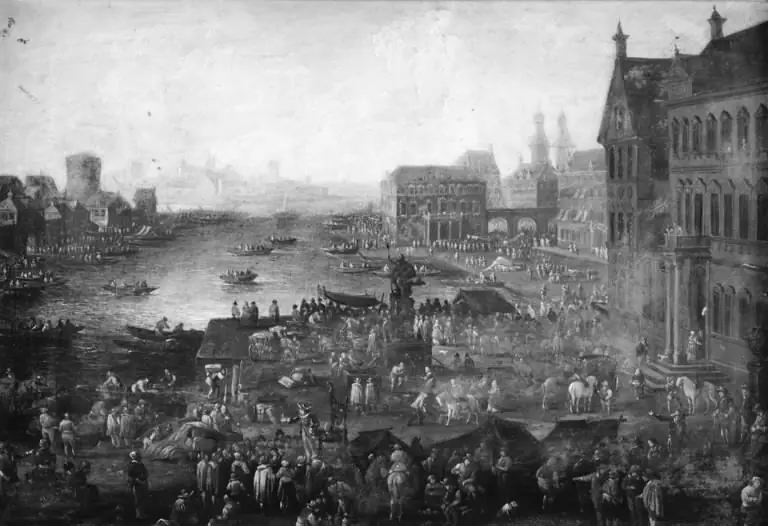 Square in Paris with Many Figures
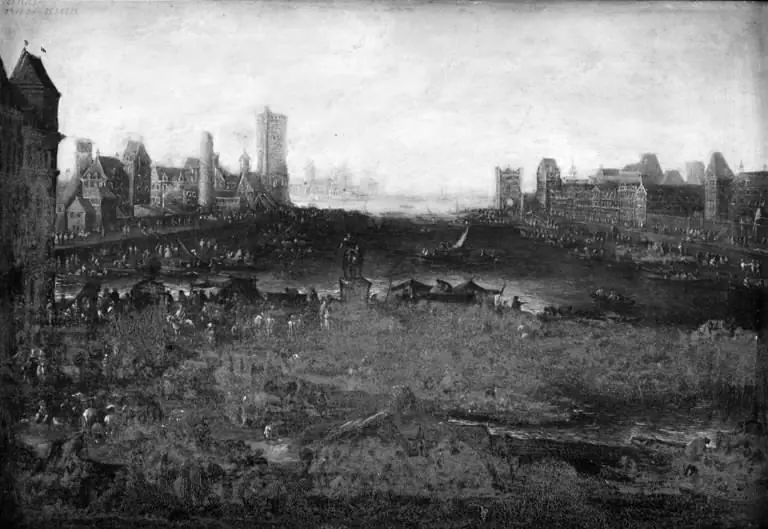 Square in Paris with Many Figures
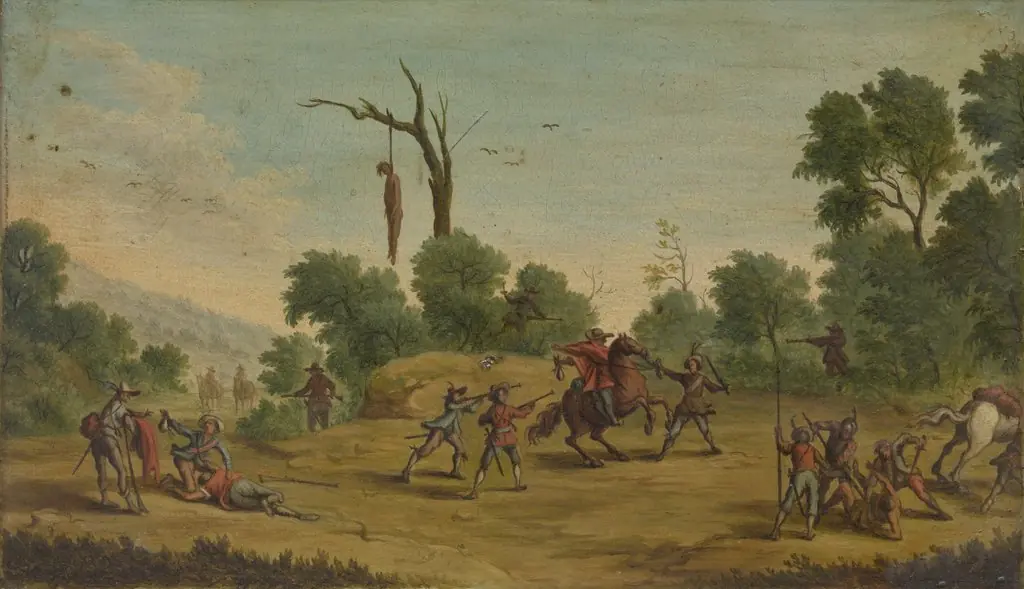 Horsemen Attacked by Robbers
 HOW WILL A COVERED PART BE CORRECTED?HOW WIKA A COVERED HEART DEED CORRECTED?
![Christ Walking on the Water [second plate], by Jacques Callot](https://artifactworldgallery.com/img/jacques-callot--christ-walking-on-the-water-second-plate--2069f3bfe4cb2126-w320.webp) Christ Walking on the Water [second plate]
Christ Walking on the Water [second plate]
 Cripple with Crutch and Wooden Leg
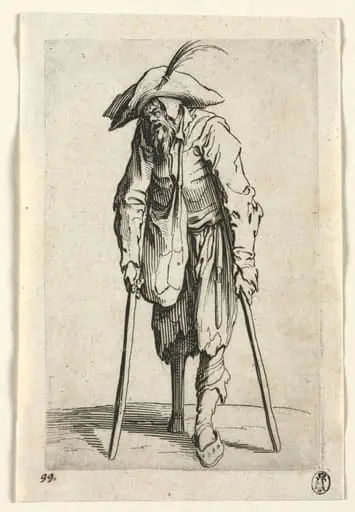
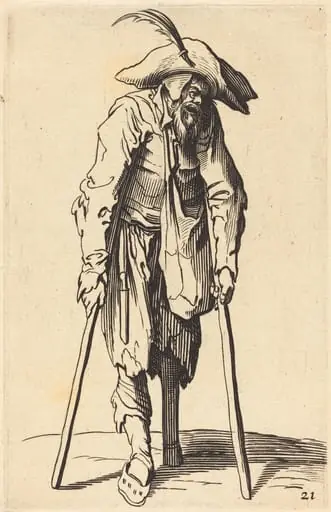 Beggar with Wooden Leg
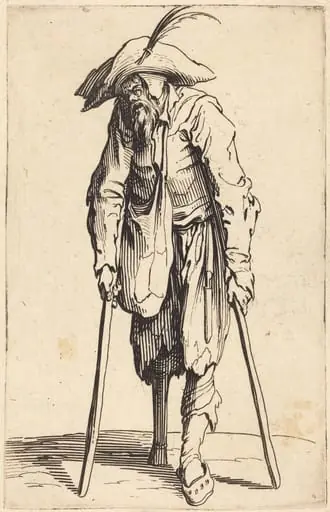 Beggar with Wooden Leg
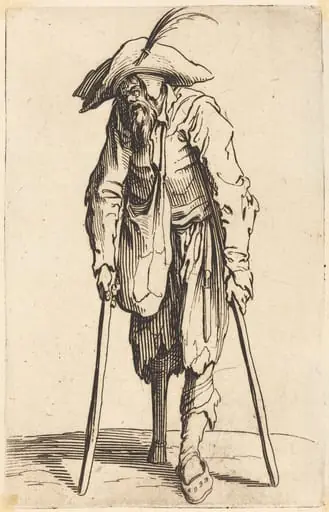 Beggar with Wooden Leg
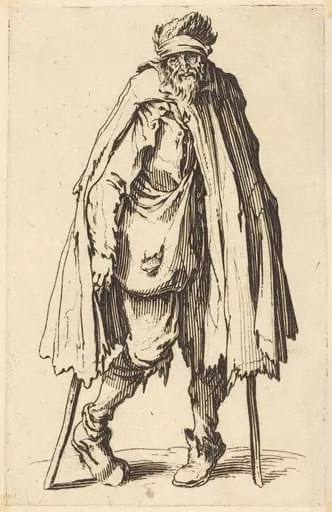
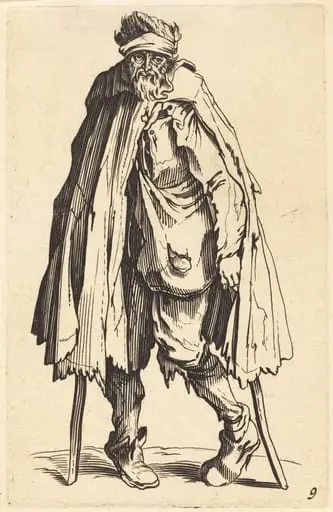 Beggar with Crutches and Sack
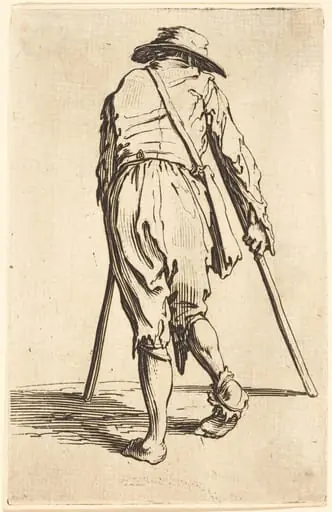
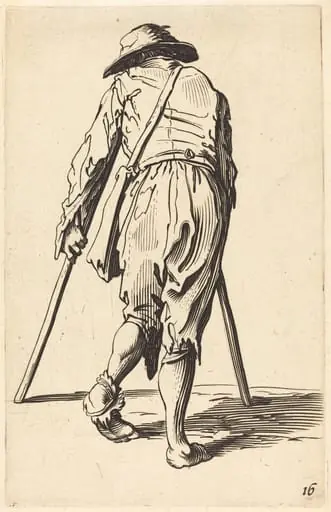 Beggar with Crutches and Hat, Back View
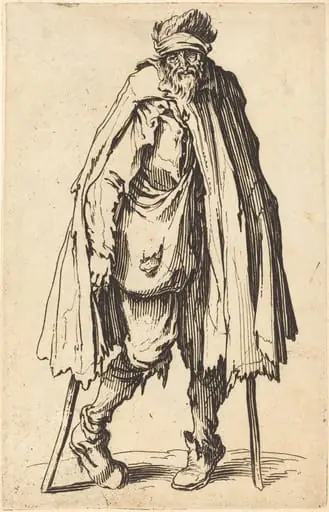 Beggar with Crutches and Sack
 Beggar with Crutches and Hat, Back View
 The Beggars: Beggar with Wooden Leg
 Beggar with Crutches and Cap
 Beggar with Crutches and Sack