Artwork
The Death of Judas
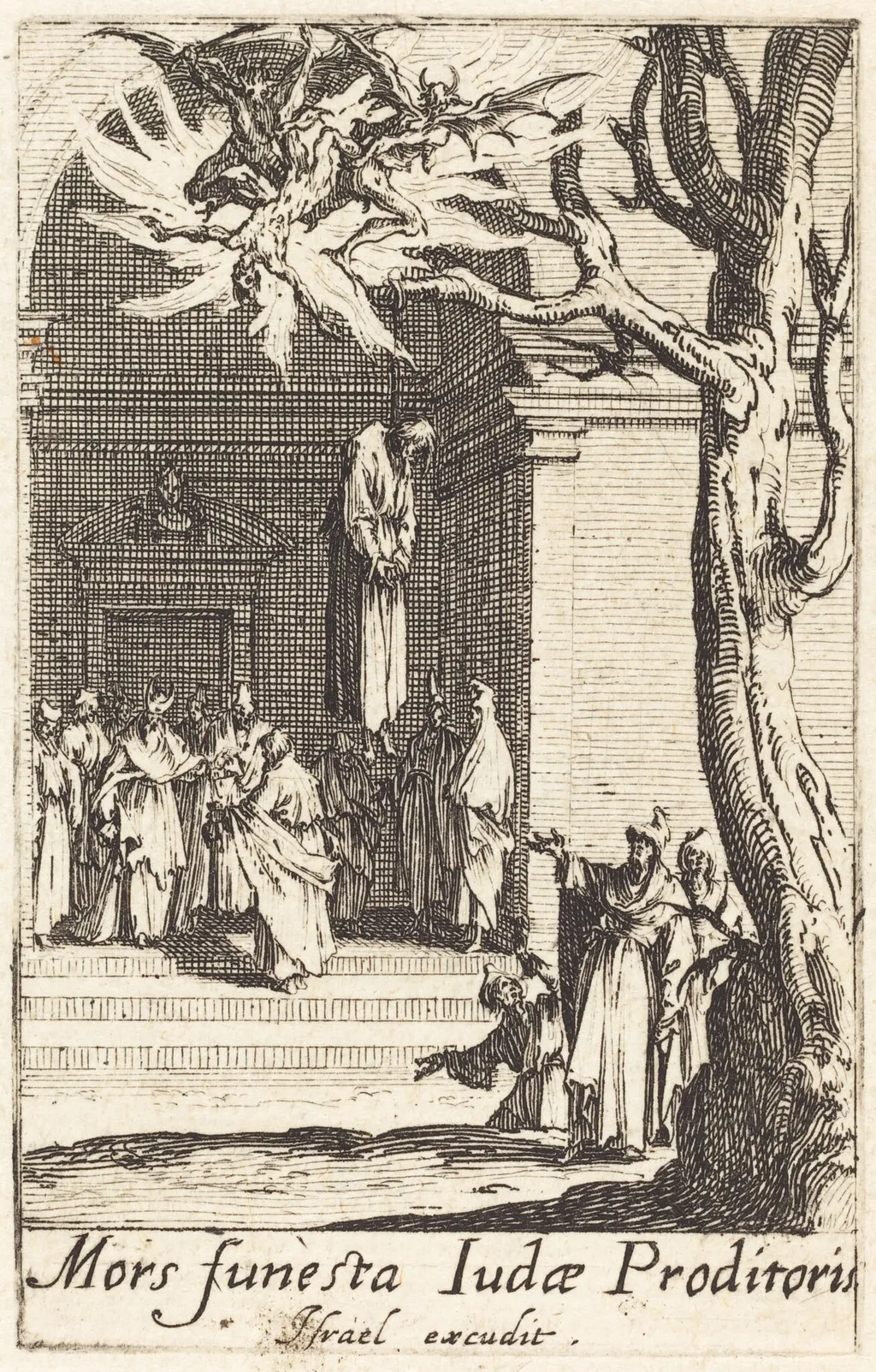
The Death of Judas is an ink print by the Baroque artist Jacques Callot. It dates from 1634 and is held in the collection of the National Gallery of Art.
About this work
Overview
The work is rendered on laid paper, a common support for fine prints of the era, and reflects his mastery of fine line and atmospheric detail.
Jacques Callot produced this etching around 1634, during a period of intense religious printmaking in his career. As a native of the Duchy of Lorraine, he worked extensively in France and Italy, refining the technical possibilities of etching. This piece is one of over 1,400 prints he created, many of which engaged with biblical narratives. The work is rendered on laid paper, a common support for fine prints of the era, and reflects his mastery of fine line and atmospheric detail.
Subject & Meaning
The scene illustrates the aftermath of Judas Iscariot’s suicide, as described in the Gospel of Matthew. His body hangs from a tree, surrounded by figures in clerical robes who react with quiet distress. One man points toward the corpse, while others converse or avert their gaze. The composition avoids melodrama, instead emphasizing moral gravity and collective remorse. The setting suggests a public space near a monumental structure, reinforcing the public nature of Judas’s fate and its theological weight.
Technique & Style
Callot employed fine, controlled etching lines to model form and convey texture, particularly in the folds of garments and the rough bark of the tree. The use of cross-hatching and delicate tonal gradations creates depth without heavy ink washes, characteristic of his refined approach. The figures are rendered with subtle facial expressions, their postures and gestures contributing to a restrained emotional tone. The architectural backdrop, with its arches and columns, is rendered with precision, anchoring the scene in a tangible space.
History & Provenance
The print emerged from Callot’s prolific output in the early 1630s, a time when he was deeply engaged with religious subjects following his return from Italy. It was likely circulated among collectors and clergy familiar with biblical iconography. While no specific early ownership records are widely documented, the work appears in major European print collections by the late 17th century, indicating its early recognition among connoisseurs of Northern printmaking traditions.
Context
In the 1630s, religious imagery remained central to print culture, especially in Catholic regions where visual narratives served devotional and didactic purposes. Callot’s work responded to Counter-Reformation interests in emotionally resonant sacred scenes. Unlike dramatic Baroque paintings, his etchings favored intimate, psychologically nuanced moments. This print aligns with a broader trend of using print media to make biblical stories accessible and morally instructive to a wider audience.
Legacy
Callot’s technical innovations in etching influenced generations of printmakers across Europe. His ability to convey complex narratives with minimal means set a standard for narrative printmaking. *The Death of Judas* exemplifies his skill in balancing emotional gravity with formal restraint, distinguishing his work from more theatrical contemporaries. Though less widely known today than his military scenes, this print remains a significant example of his religious output and the expressive potential of the etched line.
Artist & collection
Artist
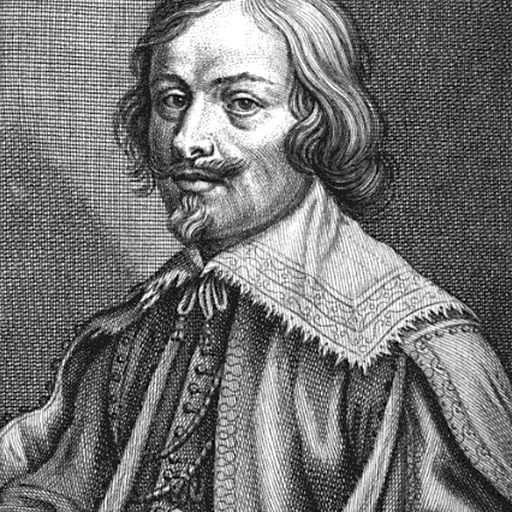
Jacques Callot was a baroque printmaker and draftsman from the Duchy of Lorraine.

 Holy Family at supper
 Restoration of the Aqueduct at Pisa
 Restoration of the Aqueduct at Pisa
 Square in Paris with Many Figures
 Square in Paris with Many Figures
 Horsemen Attacked by Robbers
 HOW WILL A COVERED PART BE CORRECTED?HOW WIKA A COVERED HEART DEED CORRECTED?
![Christ Walking on the Water [second plate], by Jacques Callot](https://artifactworldgallery.com/img/jacques-callot--christ-walking-on-the-water-second-plate--2069f3bfe4cb2126-w320.webp) Christ Walking on the Water [second plate]
Christ Walking on the Water [second plate]