Artwork
The Death of the Virgin
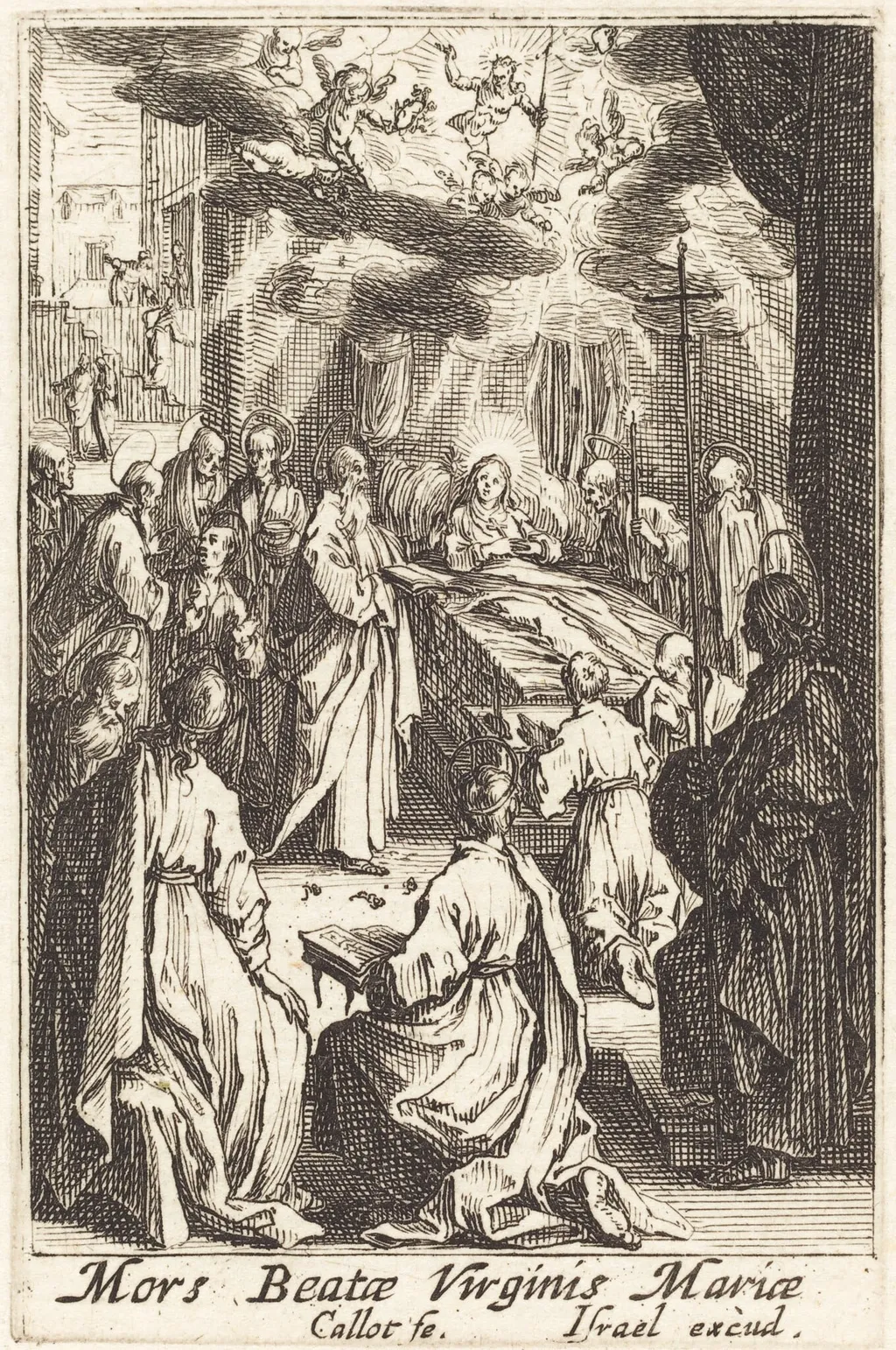
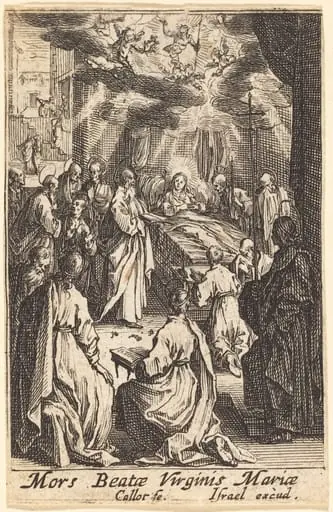
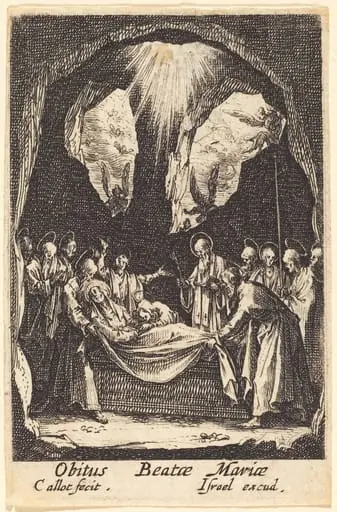
The Death of the Virgin is an ink print by the Baroque artist Jacques Callot. It dates from 1634 and is held in the collection of the National Gallery of Art.
About this work
Overview
Jacques Callot, a printmaker from the Duchy of Lorraine, produced this etching around 1634 as part of his extensive body of work, which includes more than 1,400 prints. Executed on laid paper, the piece depicts a quiet, intimate moment of religious mourning. Unlike many contemporary religious prints, it avoids grandeur in favor of restrained emotion and close observation of human presence.
Subject & Meaning
Her stillness contrasts with the varied postures of those around her—some kneeling, others leaning in, faces turned toward her.
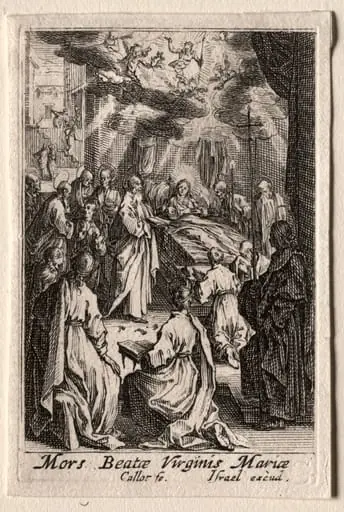
The scene portrays the Virgin Mary at the moment of her death, surrounded by apostles and mourners. The composition emphasizes communal grief rather than divine spectacle. Her stillness contrasts with the varied postures of those around her—some kneeling, others leaning in, faces turned toward her. The absence of angels or heavenly light grounds the moment in earthly sorrow, reinforcing the humanity of the event.
Technique & Style
Callot employed fine, controlled etching lines to render texture and expression. The darkened interior is built through dense hatching, while light falls sharply from above, carving out faces and fabric folds. Some figures are rendered with blurred contours, suggesting movement or emotional blur, while others are sharply defined, drawing attention to individual grief. The precision of the technique enhances the emotional weight without overt dramatization.
History & Provenance
The print was made during Callot’s mature period in Nancy, after years of working in Florence and Paris. It likely circulated among collectors and clergy familiar with devotional imagery. No specific early ownership records are documented, but its survival in multiple institutional collections suggests it was valued for its technical mastery and quiet theological resonance.
Context
In early 17th-century Europe, religious subjects remained central to printmaking, especially in Catholic regions. Callot’s approach diverged from the theatricality of Counter-Reformation art, favoring intimate, observational realism. His focus on ordinary gestures—clasped hands, bowed heads—aligned with emerging devotional trends that emphasized personal piety over public spectacle.
Legacy
Callot’s etching influenced later artists interested in emotional restraint and detailed narrative. While not widely reproduced in his lifetime, its technical refinement and subdued tone contributed to the evolution of religious printmaking beyond baroque excess. It remains a reference for how quiet composition can convey profound spiritual gravity.
Artist & collection
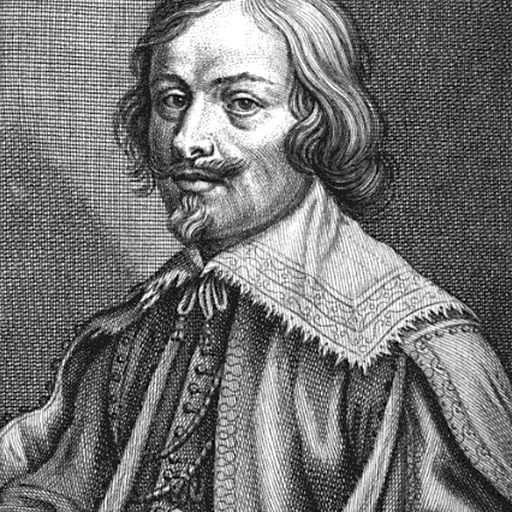
Artist
Jacques Callot was a baroque printmaker and draftsman from the Duchy of Lorraine.

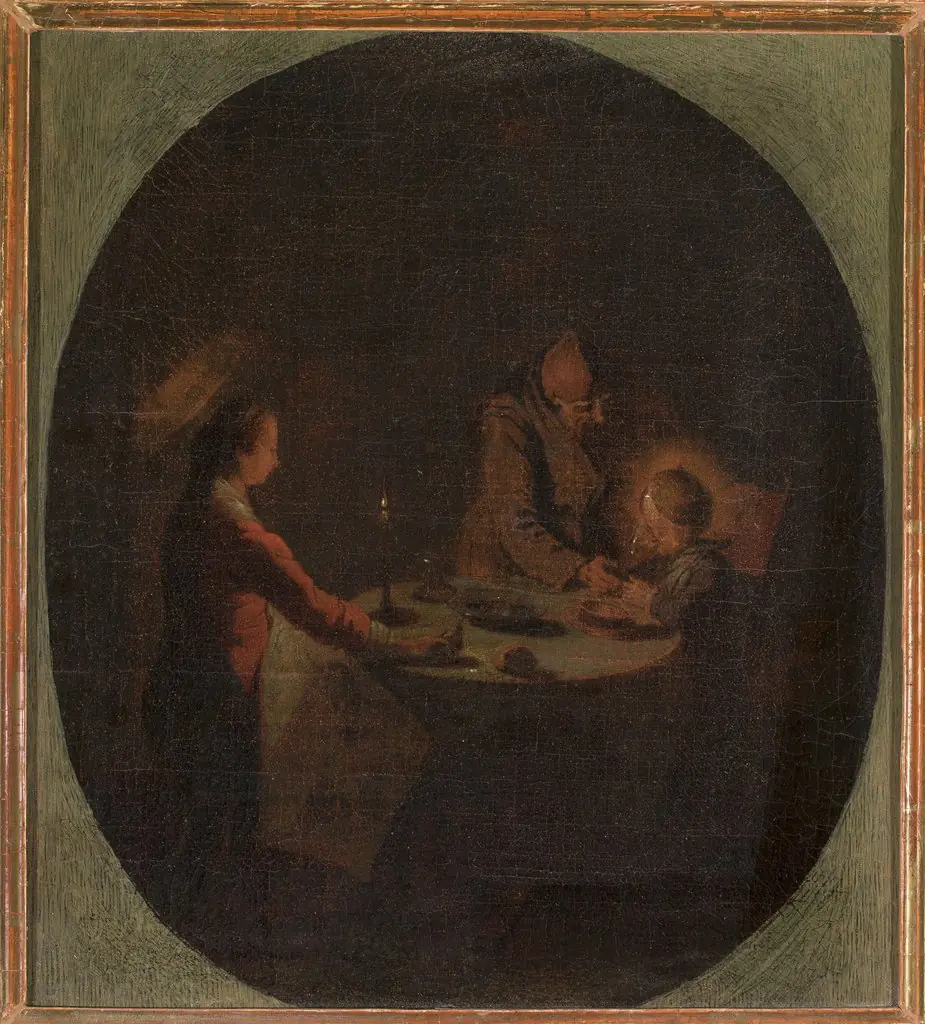 Holy Family at supper
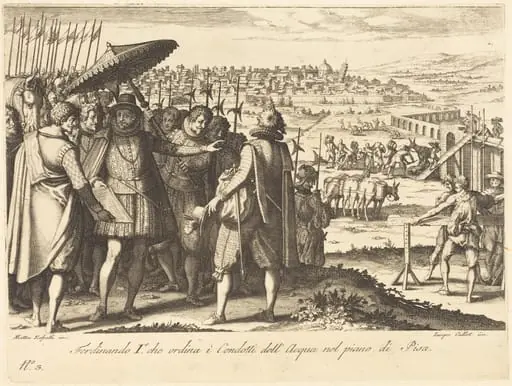 Restoration of the Aqueduct at Pisa
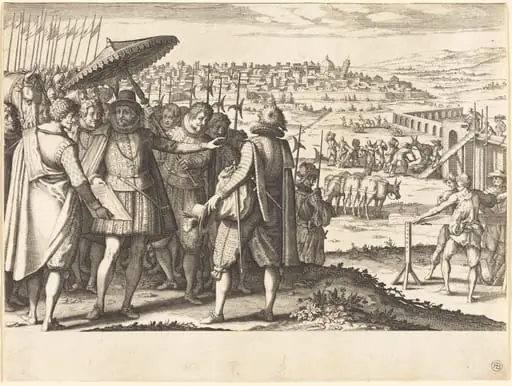 Restoration of the Aqueduct at Pisa
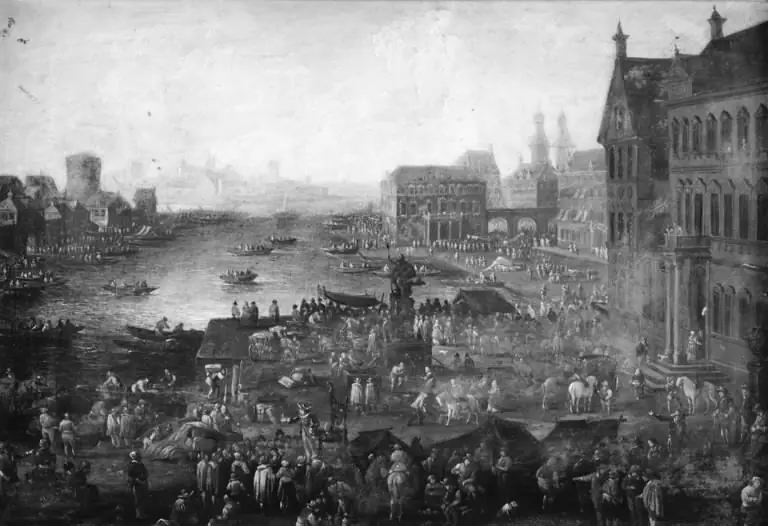 Square in Paris with Many Figures
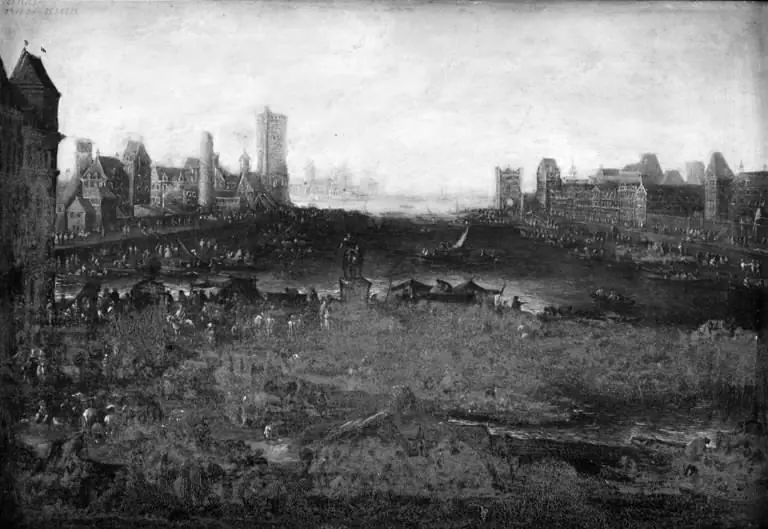 Square in Paris with Many Figures
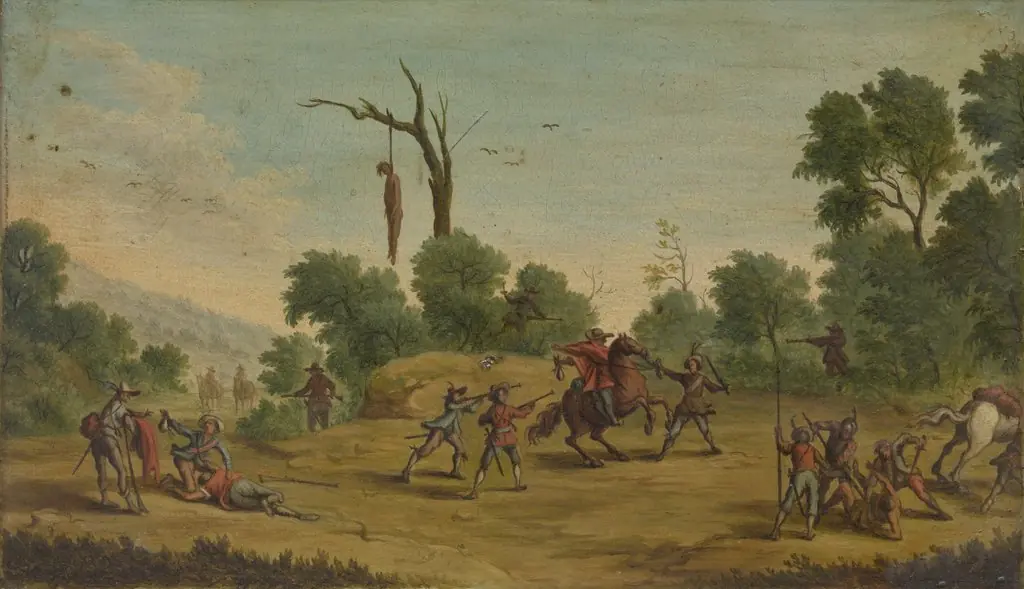 Horsemen Attacked by Robbers
 HOW WILL A COVERED PART BE CORRECTED?HOW WIKA A COVERED HEART DEED CORRECTED?
![Christ Walking on the Water [second plate], by Jacques Callot](https://artifactworldgallery.com/img/jacques-callot--christ-walking-on-the-water-second-plate--2069f3bfe4cb2126-w320.webp) Christ Walking on the Water [second plate]
Christ Walking on the Water [second plate]