Artwork
Death of the Virgin
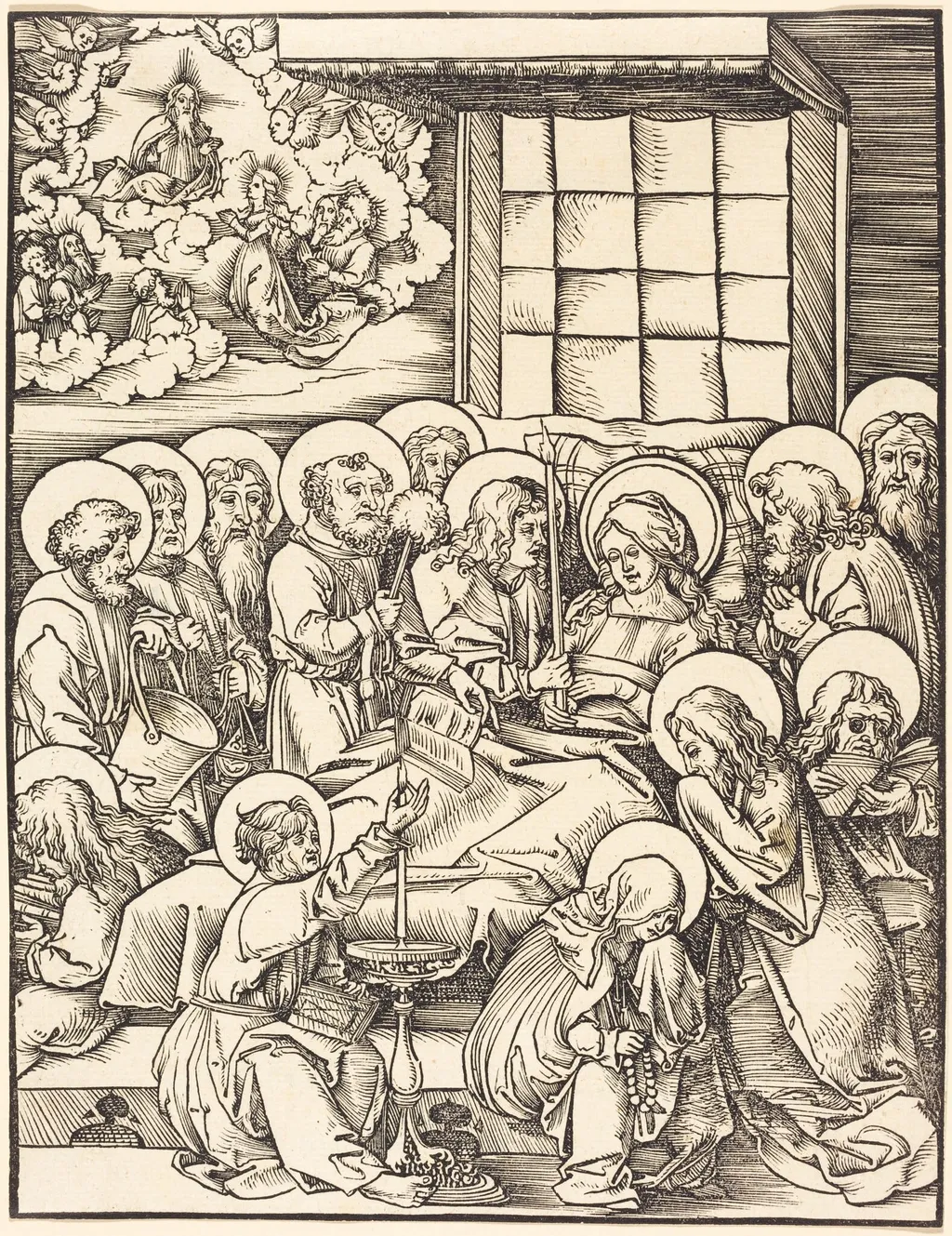
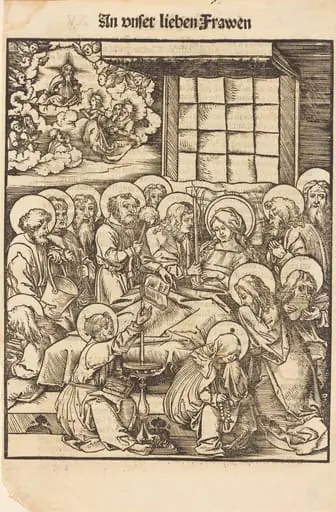
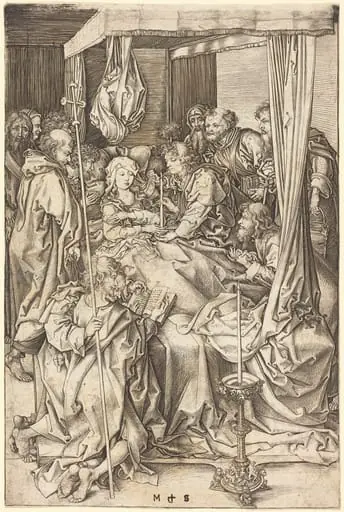
Death of the Virgin is an ink print by the Renaissance artist Hans Wechtlin I. It dates from 1503 and is held in the collection of the National Gallery of Art.
About this work
Overview
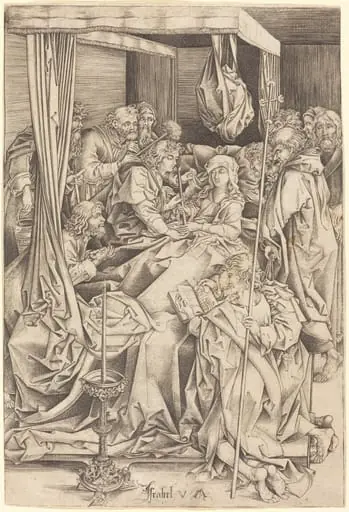
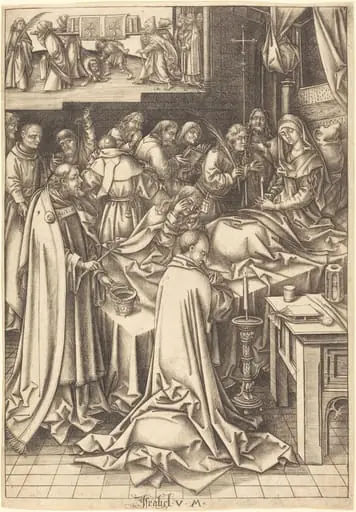
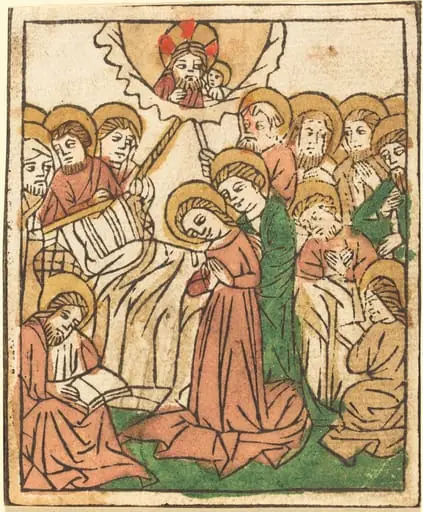
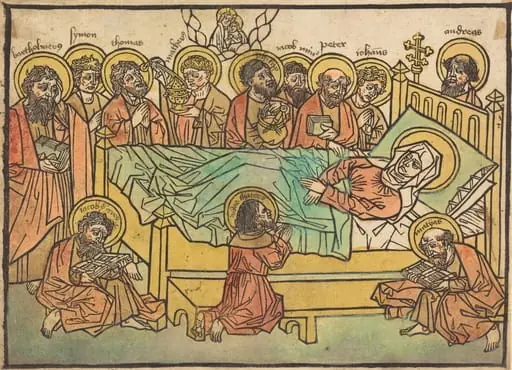
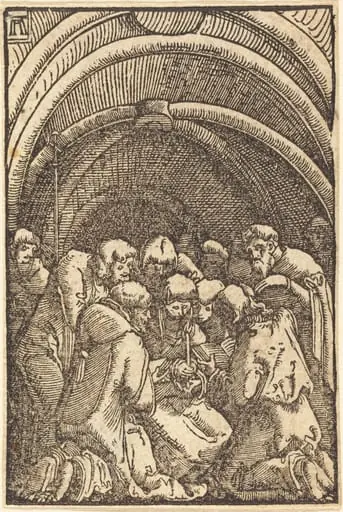
Hans Wechtlin I’s 1503 engraving, a proof impression titled Death of the Virgin, presents a solemn tableau surrounding the deceased Mary. The composition centers on the Virgin’s recumbent form, swathed in a shroud, while mourners in liturgical robes gather around her. A muted sky and distant clouds frame the scene, reinforcing its contemplative atmosphere.
Subject & Meaning
The work illustrates the moment of the Virgin’s passing, a theme common in late medieval devotion. Figures bearing candles and rosaries emphasize prayerful vigilance, while the presence of angels and cherubs in the upper left suggests a celestial witness to her transition, underscoring the belief in her intercessory role beyond death.
Technique & Style
Executed as an engraving, the image relies on fine cross‑hatching to model flesh, drapery, and architectural elements, creating subtle tonal gradations. The delicate line work conveys texture and depth without the use of color, a hallmark of early 16th‑century Northern printmaking that allowed for reproducible devotional images.
History & Provenance
Created in 1503, the print exists as a proof, indicating it was likely a trial before a larger edition. Wechtlin, an active German engraver, produced the work for a market of private collectors and religious institutions, though specific ownership records for this impression remain scarce.
Context
The engraving reflects the period’s heightened focus on Marian piety, coinciding with the spread of printed devotional material across the Holy Roman Empire. Its visual language aligns with contemporary manuscript illumination, while the inclusion of musical angels mirrors liturgical practices associated with funerary rites.
Legacy
Although not as widely reproduced as later prints, the Death of the Virgin exemplifies early German engraving’s capacity to convey complex theological narratives within a compact, portable format, influencing subsequent generations of printmakers who explored similar sacred subjects.
Artist & collection