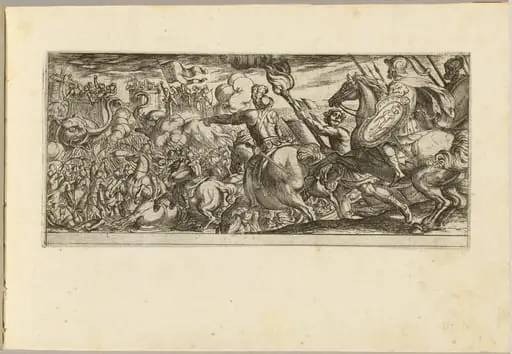
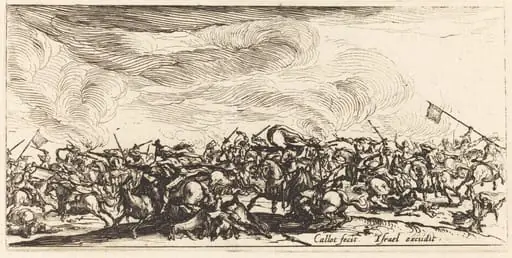
Artwork
The Defeat of the Turkish Cavalry
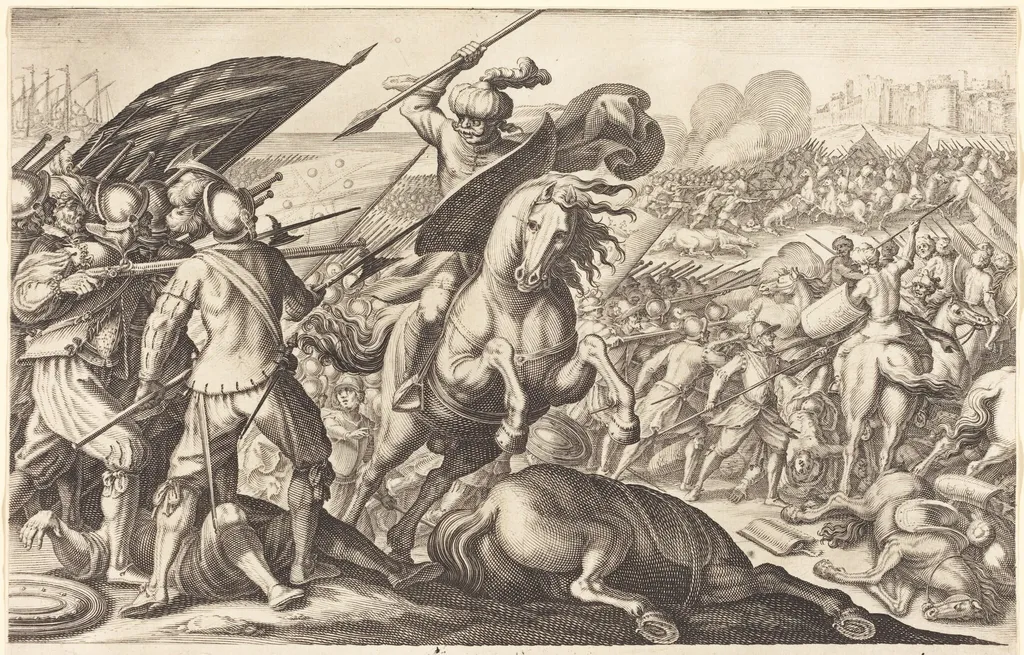
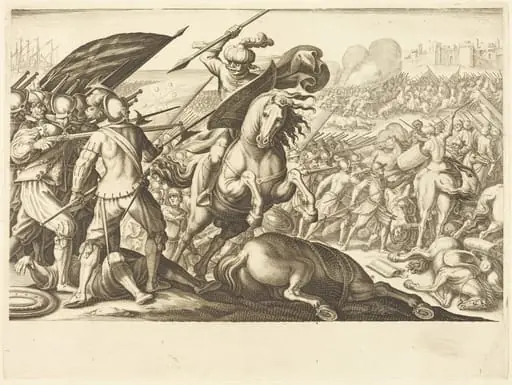
The Defeat of the Turkish Cavalry is an ink print by the Baroque artist Jacques Callot. It dates from 1614 and is held in the collection of the National Gallery of Art.
About this work
Overview
Created around 1614 by Jacques Callot, this engraving on laid paper captures a moment of violent conflict between Turkish cavalry and their adversaries.
Created around 1614 by Jacques Callot, this engraving on laid paper captures a moment of violent conflict between Turkish cavalry and their adversaries. As one of over 1,400 prints by the Lorrainer artist, it exemplifies his dedication to recording military encounters with precision. The work belongs to the European tradition of old master prints, valued for its intricate line work and narrative clarity rather than color or scale.
Subject & Meaning
The scene depicts a chaotic battlefield where mounted and foot soldiers engage in close combat. A central figure on a rearing horse thrusts a spear, while another carries a standard, suggesting leadership amid disorder. Scattered bodies, flying weapons, and swirling smoke imply heavy casualties and confusion. The inclusion of distant ships and a walled city situates the battle within a broader campaign, possibly referencing Ottoman incursions into Central Europe.
Technique & Style
Callot employed fine, controlled engraving lines to render dense activity with remarkable clarity. Each figure, weapon, and animal is meticulously detailed, from facial expressions to the curvature of horse hooves. The composition uses overlapping forms and atmospheric perspective to suggest depth within a crowded frame. The absence of tone relies entirely on line weight and density to convey movement, texture, and drama.
History & Provenance
The print emerged during Callot’s early career in Florence, where he was influenced by Italian military and artistic traditions. It likely circulated among collectors and military observers in Europe, serving both as documentation and artistic commentary. No specific commission is recorded, but its survival in multiple institutional collections indicates early recognition of its technical merit and historical resonance.
Context
In the early 17th century, European powers frequently clashed with the Ottoman Empire along contested frontiers. Callot, though not a soldier, observed military life closely and translated its chaos into print. His work responded to public interest in war imagery, offering a visual record that balanced realism with dramatic composition, distinct from idealized battle paintings of the era.
Legacy
Callot’s detailed engravings influenced later generations of printmakers and war illustrators. His ability to compress complex scenes into single plates set a standard for narrative clarity in printmaking. While not widely exhibited as a standalone work today, *The Defeat of the Turkish Cavalry* remains a key example of how engraving could convey the brutality and scale of early modern warfare with intimate precision.
Artist & collection
Artist
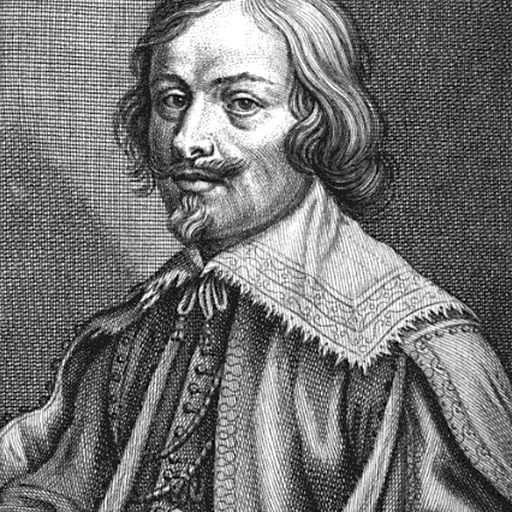
Jacques Callot was a baroque printmaker and draftsman from the Duchy of Lorraine.

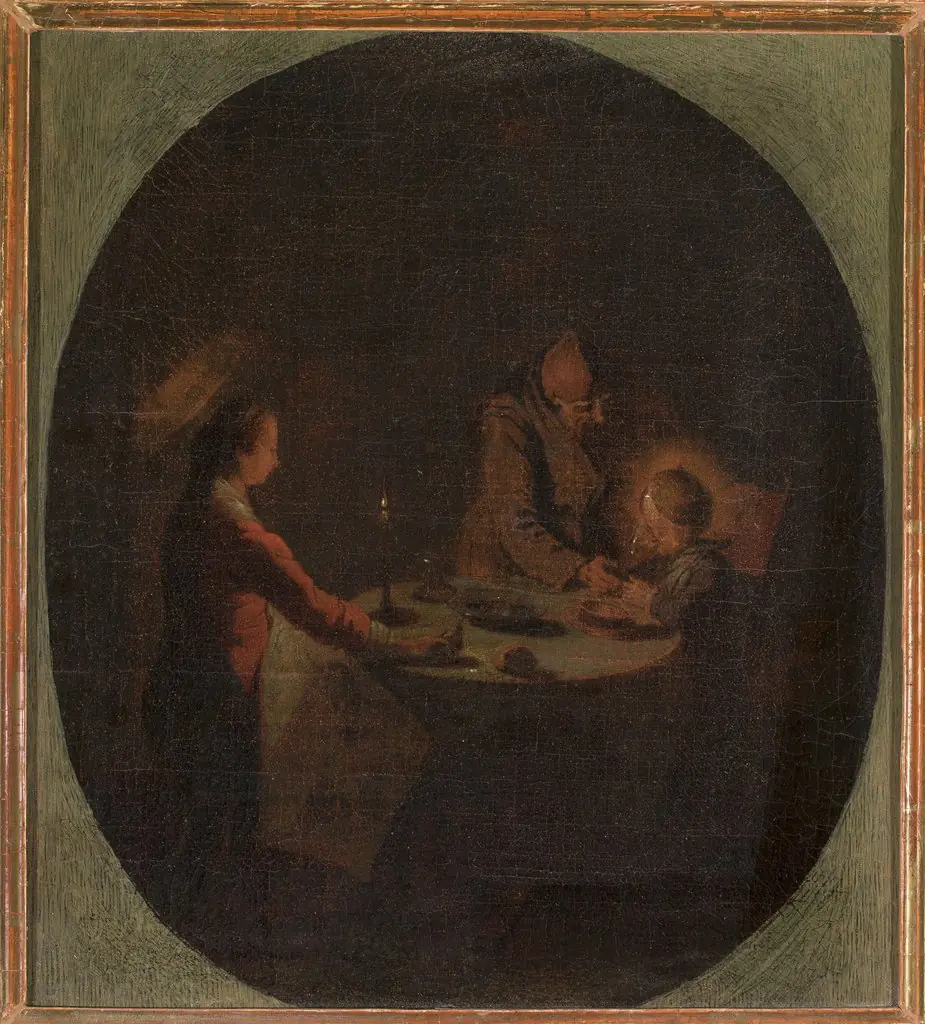 Holy Family at supper
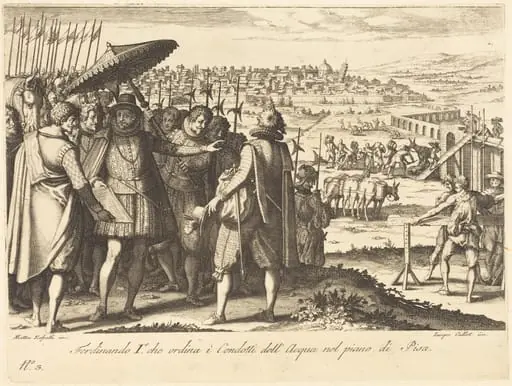 Restoration of the Aqueduct at Pisa
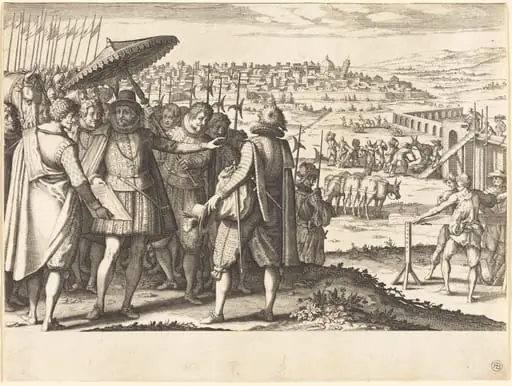 Restoration of the Aqueduct at Pisa
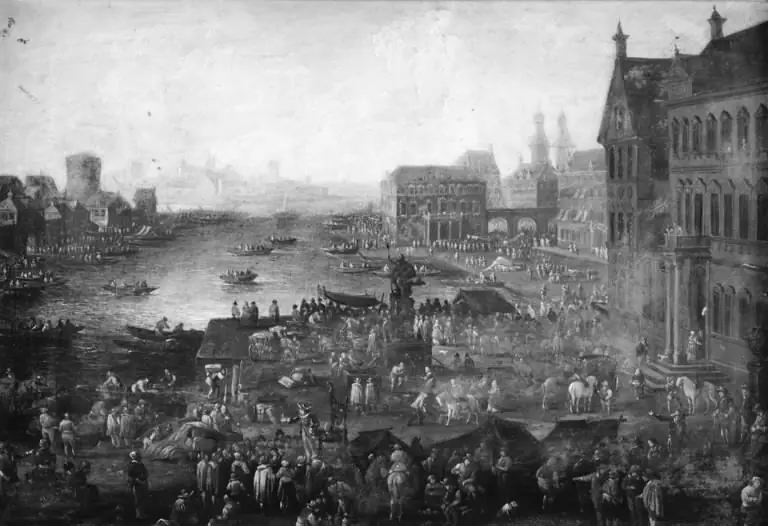 Square in Paris with Many Figures
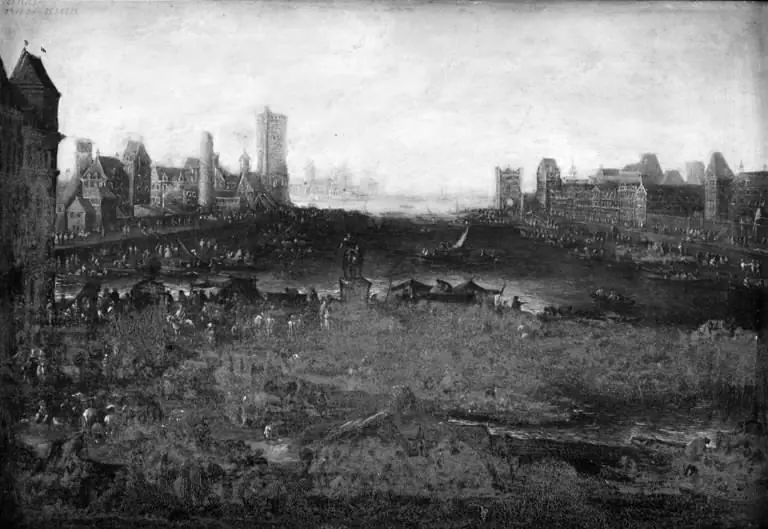 Square in Paris with Many Figures
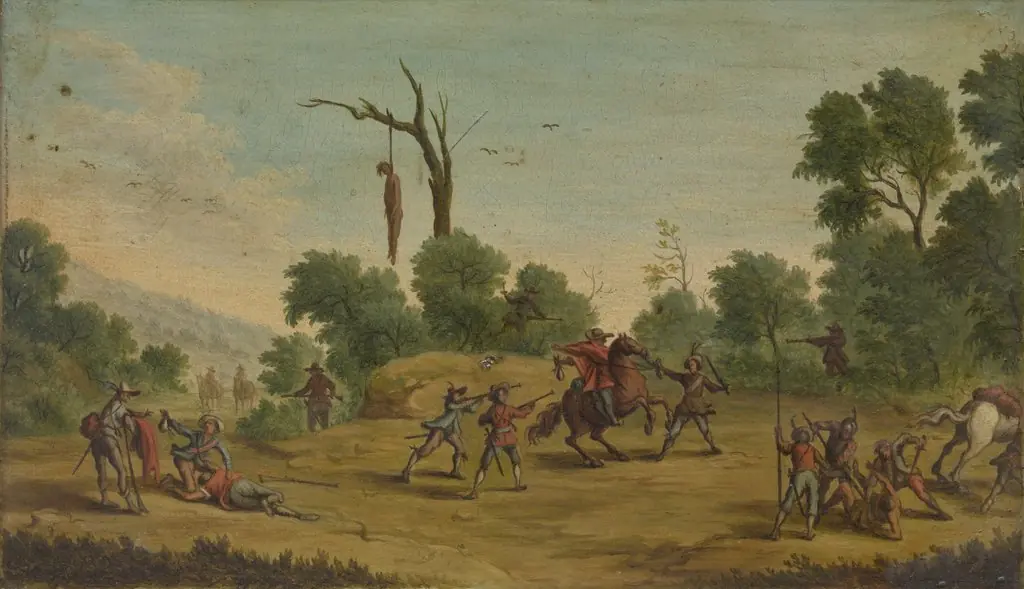 Horsemen Attacked by Robbers
 HOW WILL A COVERED PART BE CORRECTED?HOW WIKA A COVERED HEART DEED CORRECTED?
![Christ Walking on the Water [second plate], by Jacques Callot](https://artifactworldgallery.com/img/jacques-callot--christ-walking-on-the-water-second-plate--2069f3bfe4cb2126-w320.webp) Christ Walking on the Water [second plate]
Christ Walking on the Water [second plate]