Artwork
Defeat of the Ethiopians
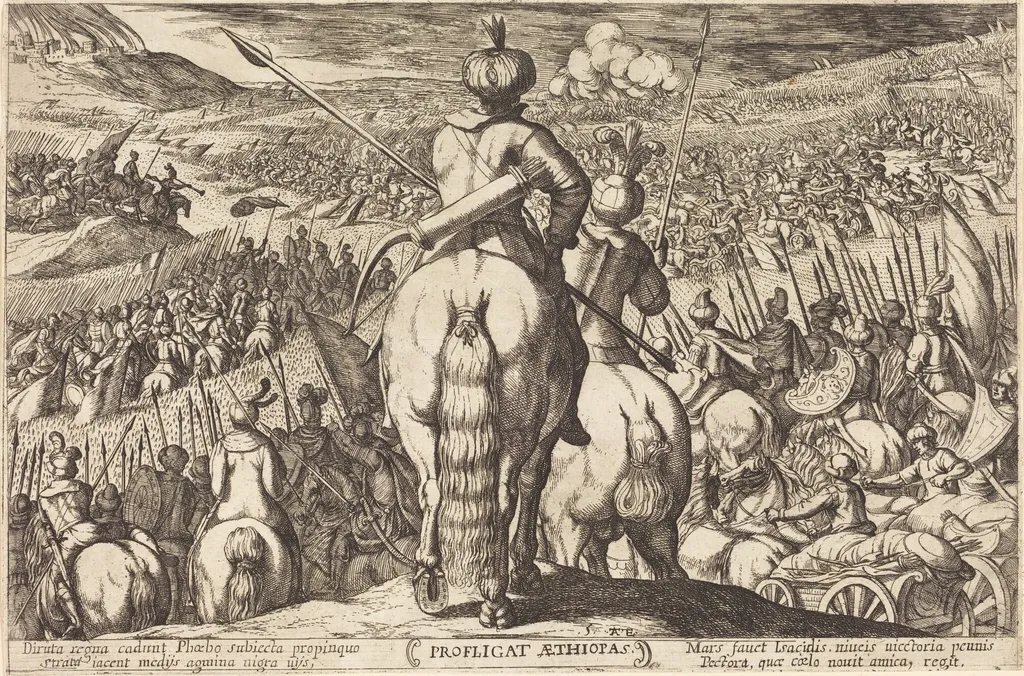
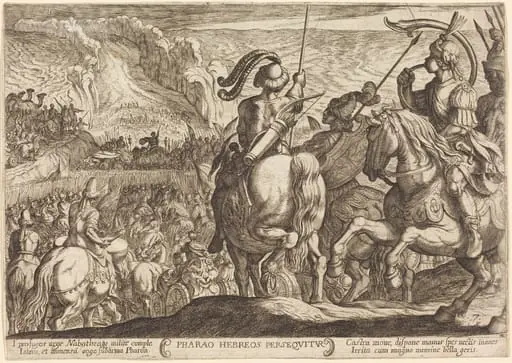
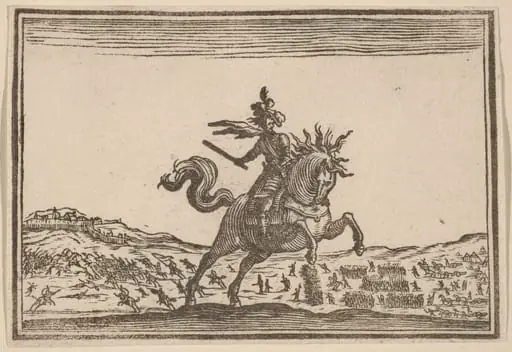
Defeat of the Ethiopians is an ink print by the Baroque artist Antonio Tempesta. It dates from 1613 and is held in the collection of the National Gallery of Art.
About this work
Overview
As an Italian engraver active in Rome, Tempesta specialized in printmaking that combined historical narrative with vigorous composition.
Antonio Tempesta’s 1613 etching, *Defeat of the Ethiopians*, is a dynamic battlefield scene rendered in fine linear detail. As an Italian engraver active in Rome, Tempesta specialized in printmaking that combined historical narrative with vigorous composition. This work exemplifies his skill in translating complex military encounters into monochrome prints, using intricate hatching and overlapping forms to convey motion and disorder.
Subject & Meaning
The print portrays a violent clash involving Ethiopian troops, likely referencing a historical or legendary conflict known in early 17th-century Europe. At its center, a mounted figure with a plumed helmet and loose reins suggests leadership or triumph. The dense, tangled mass of soldiers and horses implies overwhelming force, while the Latin inscription at the base alludes to a specific event, though its exact historical referent remains ambiguous.
Technique & Style
Tempesta employed etching to achieve fine, controlled lines that define armor, hooves, and weaponry with precision. The composition is densely packed, with figures layered in receding planes to simulate depth. His style blends Italian Baroque energy with the detailed realism influenced by Northern European traditions, particularly in the rendering of textures and the chaotic arrangement of bodies.
History & Provenance
Created in Rome during Tempesta’s mature period, the etching was likely produced for a broader European audience interested in military history and exoticized conflicts. Though no early ownership records are widely documented, such prints circulated among collectors and scholars, serving both as artistic objects and as visual records of contemporary perceptions of foreign wars.
Context
In early 17th-century Europe, depictions of non-European armies often reflected mythologized or propagandistic views rather than accurate ethnography. Tempesta’s portrayal aligns with a trend of illustrating distant battles as dramatic spectacles, reinforcing European narratives of dominance. His work was part of a larger print culture that disseminated images of war to audiences with limited direct exposure to such events.
Legacy
Tempesta’s etchings, including this one, contributed to the development of narrative printmaking in Baroque Italy. While not widely studied today, his technical precision and compositional vigor influenced later engravers. The work remains a document of how European artists interpreted and visualized conflicts beyond their borders, blending observation with imaginative reconstruction.
Artist & collection
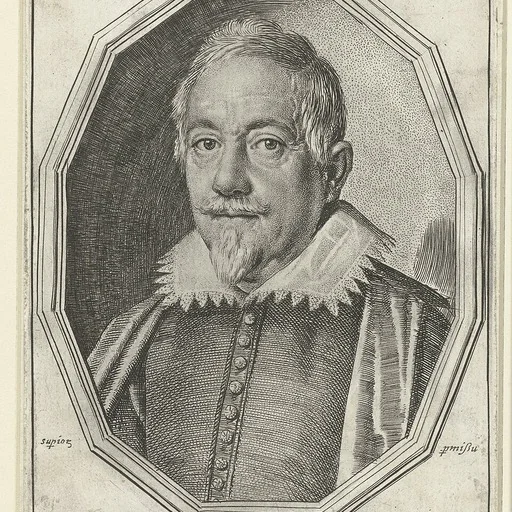
Artist
Antonio Tempesta, also called il Tempestino (1555 – 5 August 1630), was an Italian painter and engraver, whose art acted as a point of connection between Baroque Rome and the culture of Antwerp.

 The Egyptians Pursue the Israelites
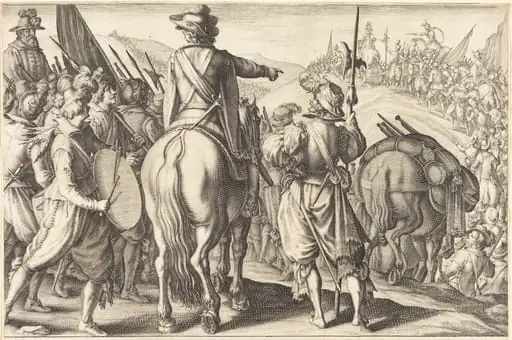 The Troops on the March
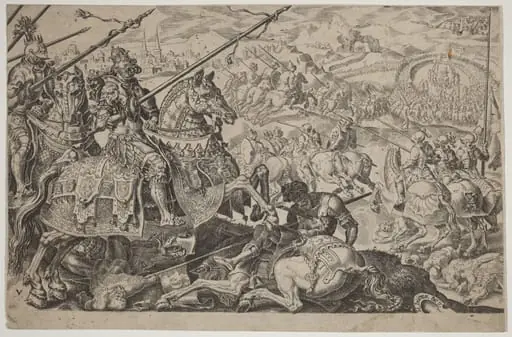 Suleiman the Magnificent Forced to Raise the Siege of Vienna
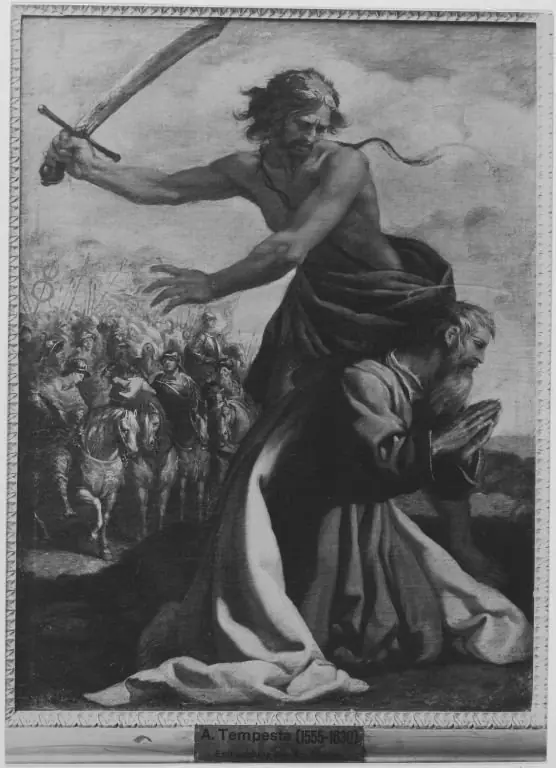
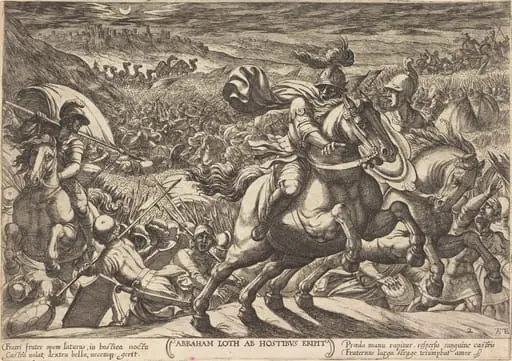 Abraham makes the enemies flee who hold his nephew
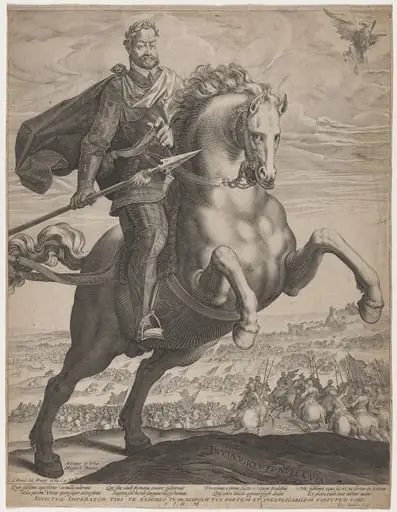 Emperor Rudolph II on Rearing Horse
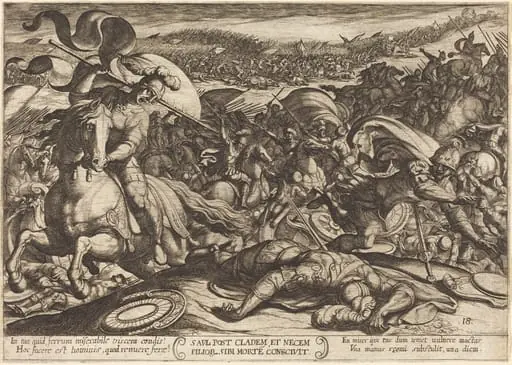 Saul Kills Himself after the Defeat of his Army by the Philistines
 Military Commander on Horseback