Artwork
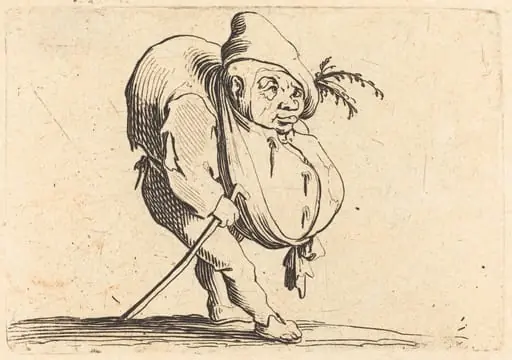
The Hunchback with the Feathered Cap
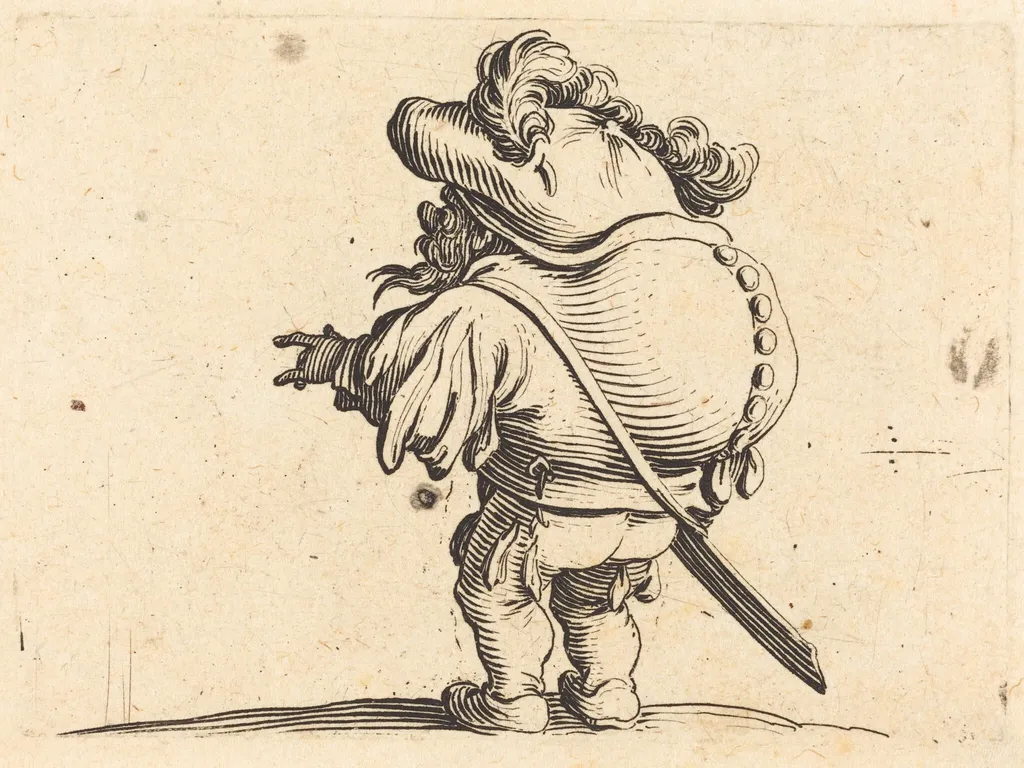
The Hunchback with the Feathered Cap is an ink print by the Baroque artist Jacques Callot. It dates from 1622 and is held in the collection of the National Gallery of Art.
About this work
Overview
Callot, a French artist from the Duchy of Lorraine, specialized in etching and engraving, producing over 1,400 works that captured the textures of daily life.
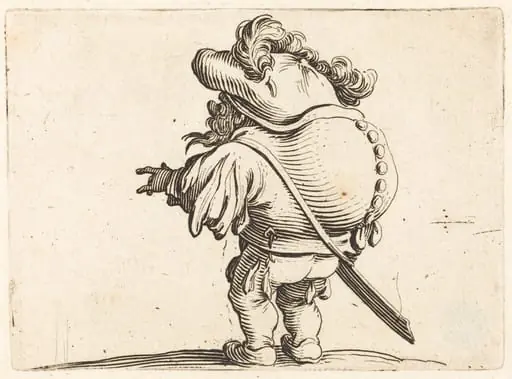
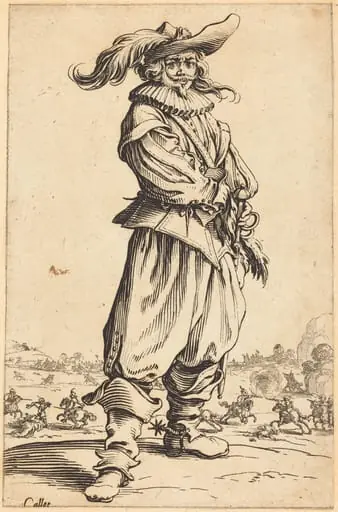
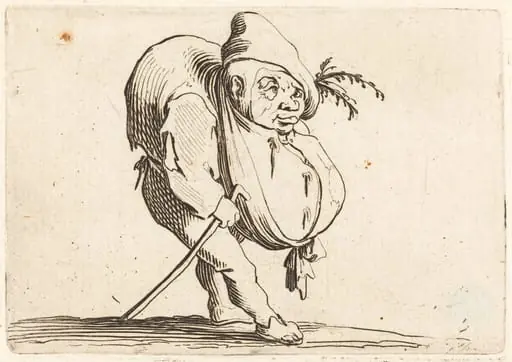
Created around 1622 by Jacques Callot, this print is one of four images on a single sheet of Lorrainese paper. Callot, a French artist from the Duchy of Lorraine, specialized in etching and engraving, producing over 1,400 works that captured the textures of daily life. This particular impression depicts a hunchbacked figure in elaborate, outdated attire, rendered with fine, controlled lines that emphasize posture and fabric.
Subject & Meaning
The figure, viewed from behind, wears a large feathered cap and a stiff, buttoned jacket with exaggerated sleeves. One hand grips a staff, the other extends outward, suggesting movement or gesture. Though not overtly narrative, the portrayal aligns with Callot’s interest in marginalized or eccentric individuals—beggars, jesters, and laborers—rendered with observational precision rather than caricature.
Technique & Style
Callot employed etching and engraving to achieve fine, sharp lines that define the figure’s bent form and the rigid texture of clothing. The background is minimally suggested, focusing attention on the subject’s silhouette and garment details. The paper’s rough surface, likely left untrimmed, retains the tactile quality of hand-printed impressions, enhancing the sense of artisanal craftsmanship.
History & Provenance
The print resides on an uncut sheet, a rare survival from the early 17th century, indicating it was likely kept as a collector’s item rather than separated into individual plates. Its inclusion in the 1949 acquisition (1949.5.259.a-d) confirms its documented provenance, tracing back to European print collections of the 18th and 19th centuries.
Context
Callot worked during a period when printmaking flourished as a medium for documenting social types and urban life. His depictions of dwarfs, beggars, and soldiers reflected broader European interests in human variety and the margins of society. Unlike idealized figures in religious or mythological art, his subjects were grounded in observed reality, often drawn from street scenes and fairs.
Legacy
Callot’s technical innovations in etching influenced generations of printmakers across Europe. His ability to render complex textures and subtle gestures in small-scale works set a standard for narrative detail in prints. This sheet, preserved in its original uncut state, offers insight into how prints were collected and circulated before becoming standardized as individual artworks.
Artist & collection

Artist
Jacques Callot was a baroque printmaker and draftsman from the Duchy of Lorraine.

 Holy Family at supper
 Restoration of the Aqueduct at Pisa
 Restoration of the Aqueduct at Pisa
 Square in Paris with Many Figures
 Square in Paris with Many Figures
 Horsemen Attacked by Robbers
 HOW WILL A COVERED PART BE CORRECTED?HOW WIKA A COVERED HEART DEED CORRECTED?
![Christ Walking on the Water [second plate], by Jacques Callot](https://artifactworldgallery.com/img/jacques-callot--christ-walking-on-the-water-second-plate--2069f3bfe4cb2126-w320.webp) Christ Walking on the Water [second plate]
Christ Walking on the Water [second plate]