Artwork
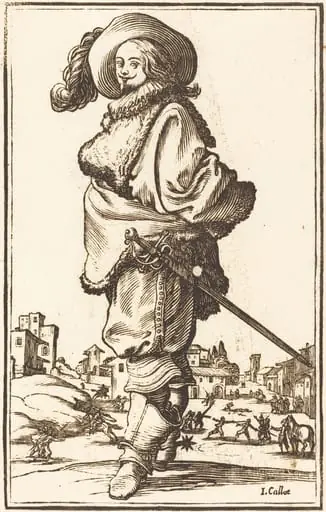
Soldier with Feathered Hat
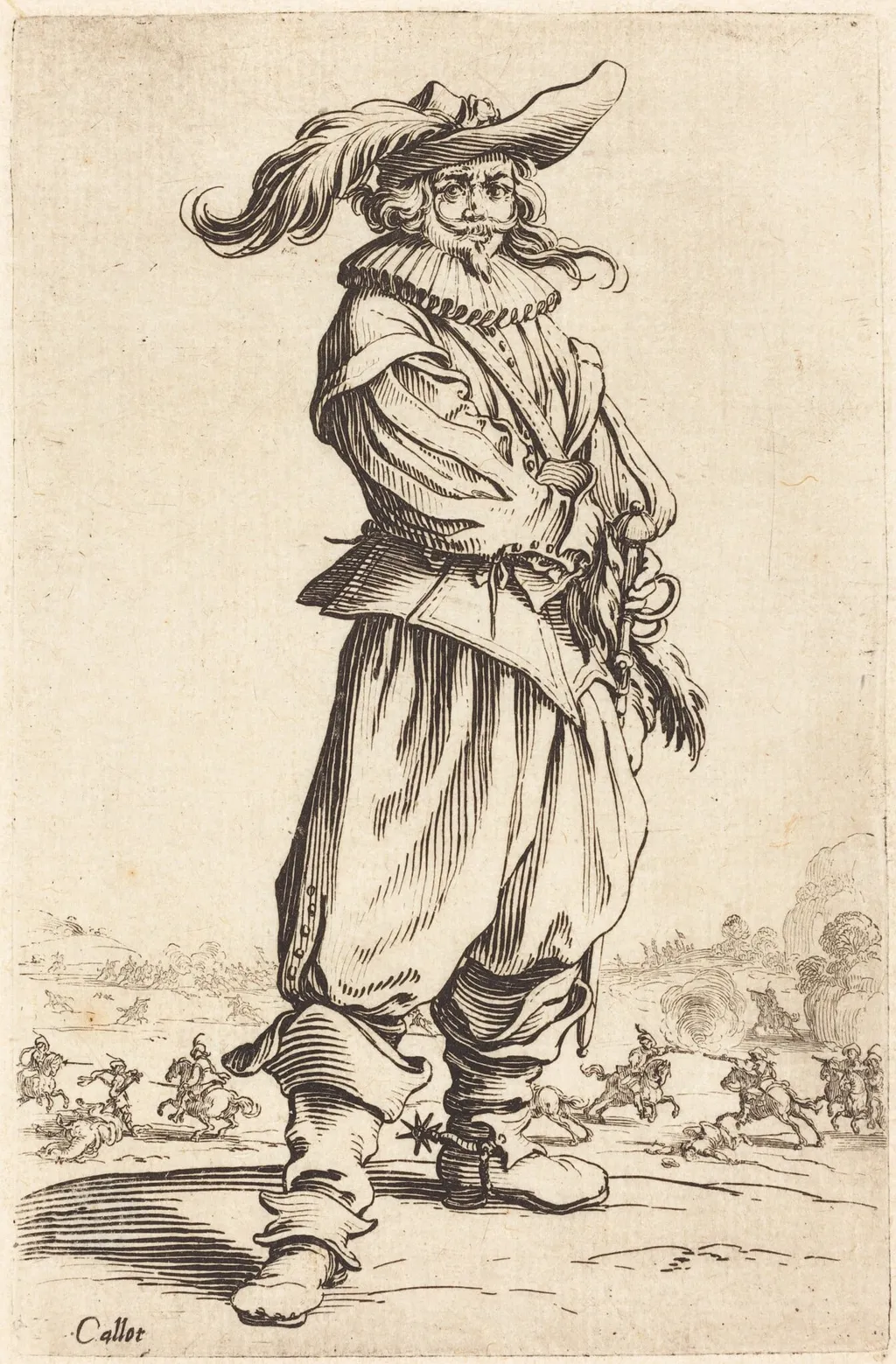
Soldier with Feathered Hat is an ink print by the Baroque artist Jacques Callot. It dates from 1622 and is held in the collection of the National Gallery of Art.
About this work
Overview
As one of over 1,400 prints produced by the Lorrainer artist, it exemplifies his focus on everyday figures amid the turbulence of early 17th-century Europe.
Created around 1622 by Jacques Callot, this etching on laid paper captures a solitary soldier in a distinctive feathered hat. As one of over 1,400 prints produced by the Lorrainer artist, it exemplifies his focus on everyday figures amid the turbulence of early 17th-century Europe. The work belongs to a larger body of prints that record civilian and military life with keen attention to costume and posture.
Subject & Meaning
The figure is a solitary soldier, rendered in a rigid, sideways stance with one foot forward, suggesting pause or vigilance. His bulky attire—rolled stockings, wide sleeves, and a heavy belt—hints at the practical gear of a mercenary. Behind him, distant riders on horseback recede into a blurred landscape, implying movement away from conflict. The image evokes the transient presence of soldiers in wartime society, neither glorified nor vilified.
Technique & Style
Callot employed fine, sharp lines to define the soldier’s stiff form and textured clothing, demonstrating his mastery of etching’s capacity for detail. The background, in contrast, is rendered with looser, quicker strokes, creating a sense of motion and spatial depth without full elaboration. This contrast between foreground precision and atmospheric suggestion reflects his ability to convey narrative through selective draftsmanship.
History & Provenance
The print emerged during Callot’s most productive period, when he was based in Florence and deeply engaged with the visual culture of the Italian court and the broader Habsburg military campaigns. While the exact provenance of this specific impression is undocumented, it aligns with his known practice of producing small, widely circulated prints that circulated among collectors and soldiers alike.
Context
In the early 1620s, Europe was engulfed in the Thirty Years’ War, and mercenary soldiers were a common sight across the continent. Callot, though not a combatant, observed these figures closely, documenting their dress and demeanor with documentary precision. His prints served as both artistic records and social commentaries, reflecting the pervasive presence of military life in civilian spaces.
Legacy
Callot’s etchings, including this one, influenced generations of printmakers through their technical refinement and observational clarity. His ability to capture the mundane aspects of war—individual soldiers, their gear, their pauses—shifted focus from grand battles to human presence within them. This approach laid groundwork for later realist traditions in graphic art.
Artist & collection
Artist
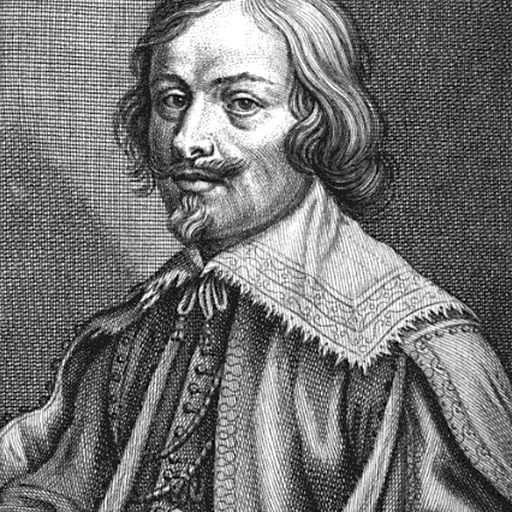
Jacques Callot was a baroque printmaker and draftsman from the Duchy of Lorraine.

 Holy Family at supper
 Restoration of the Aqueduct at Pisa
 Restoration of the Aqueduct at Pisa
 Square in Paris with Many Figures
 Square in Paris with Many Figures
 Horsemen Attacked by Robbers
 HOW WILL A COVERED PART BE CORRECTED?HOW WIKA A COVERED HEART DEED CORRECTED?
![Christ Walking on the Water [second plate], by Jacques Callot](https://artifactworldgallery.com/img/jacques-callot--christ-walking-on-the-water-second-plate--2069f3bfe4cb2126-w320.webp) Christ Walking on the Water [second plate]
Christ Walking on the Water [second plate]
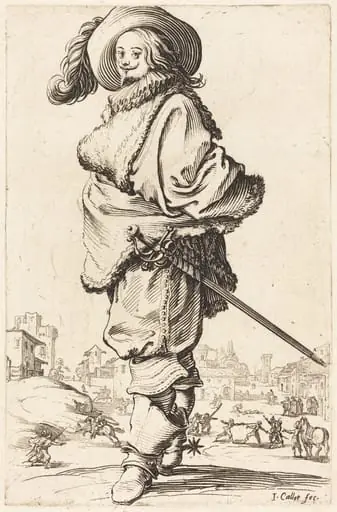 Noble Man with Fur Plastron
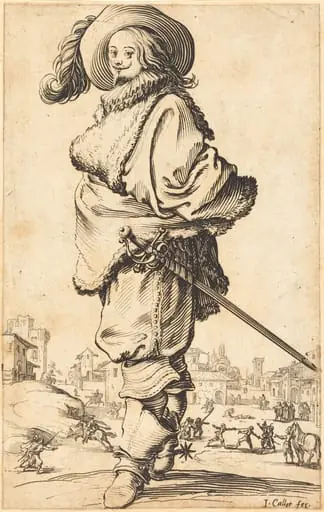 Noble Man with Fur Plastron
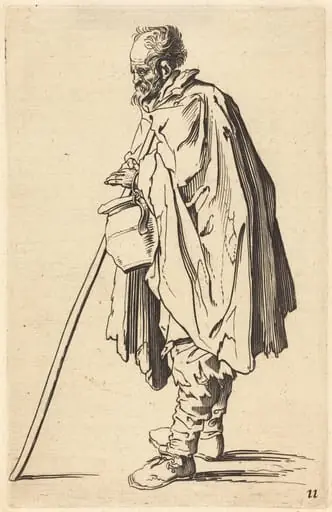 Beggar with Pot
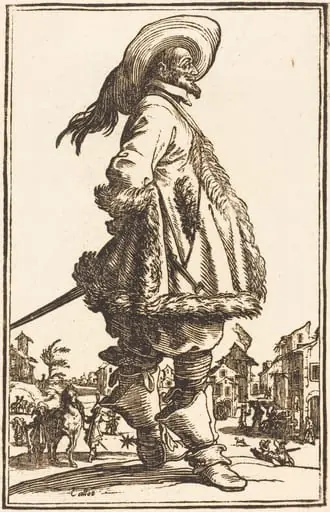 Noble Man with Mantle Trimmed in Fur, Holding his Hands Behind his Back
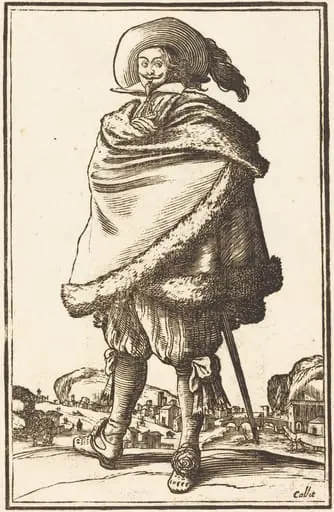 Noble Man Wrapped in a Mantle Trimmed with Fur
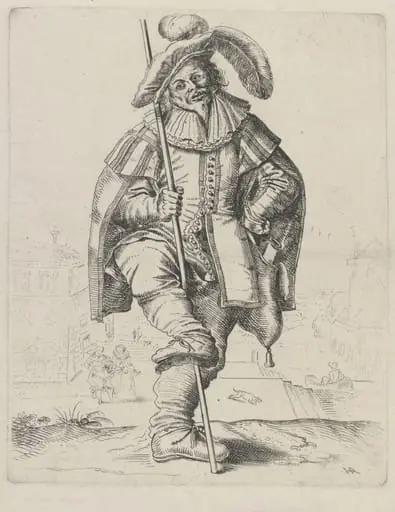 H Beard Print Collection
 Noble Man with Fur Plastron
 A Pike-Man Turned to the Left
 Noble Woman with Large Collar
 Noble Man with Mantle Trimmed in Fur, Holding his Hands Behind his Back