Artwork
The Martyrdom of Saint Matthias
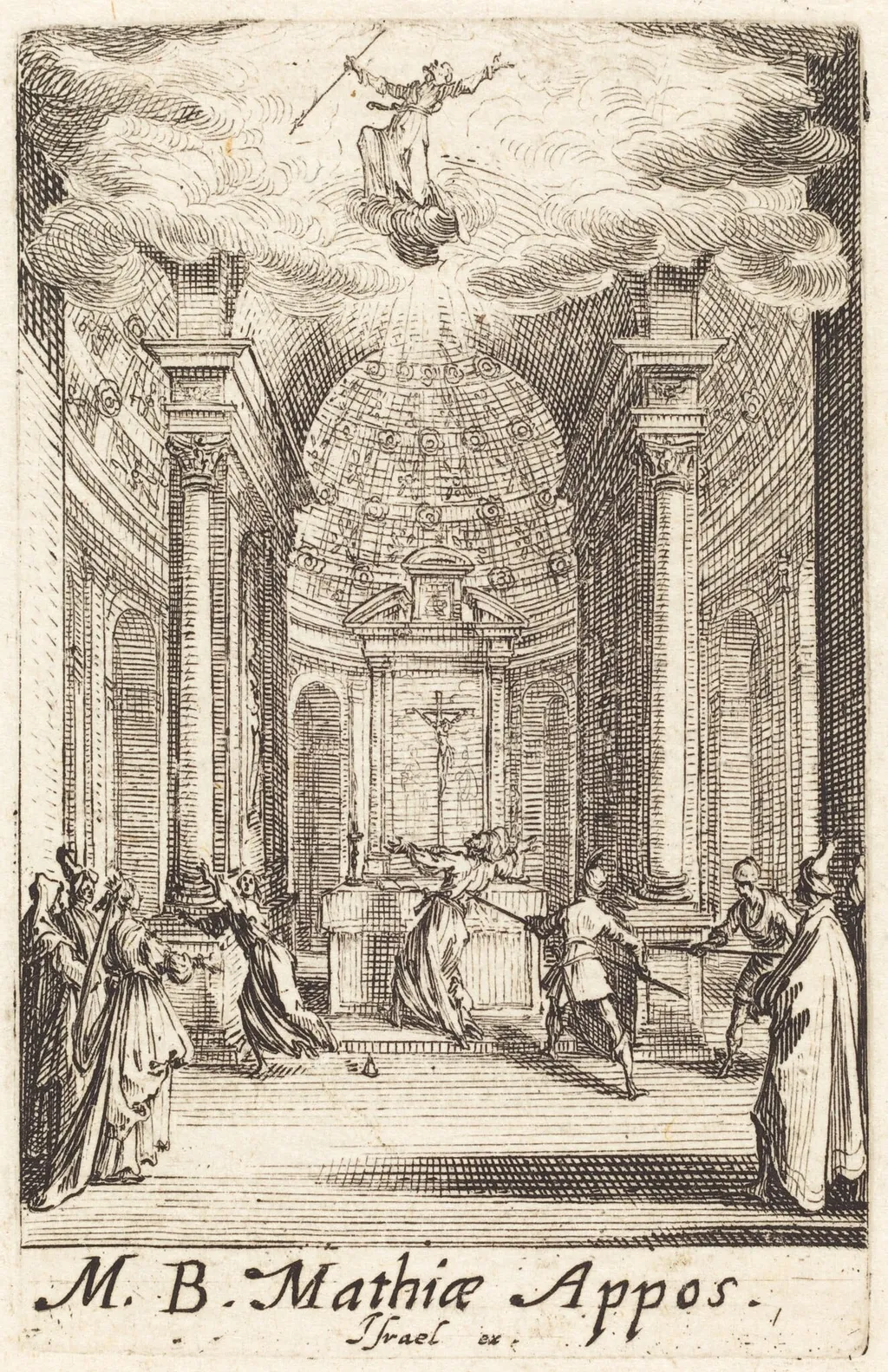
The Martyrdom of Saint Matthias is an ink print by the Baroque artist Jacques Callot. It dates from 1634 and is held in the collection of the National Gallery of Art.
About this work
Overview
As part of a prolific output exceeding 1,400 prints, this piece reflects his focus on religious themes alongside scenes of daily and military life.
Created around 1634, this etching by Jacques Callot captures the violent death of Saint Matthias, one of the earliest Christian martyrs. Executed on laid paper, the work exemplifies Callot’s mastery of the etching technique and his ability to convey intense narrative through fine, controlled lines. As part of a prolific output exceeding 1,400 prints, this piece reflects his focus on religious themes alongside scenes of daily and military life.
Subject & Meaning
The scene portrays Saint Matthias being stoned to death by a crowd, a traditional account of his martyrdom. His body is contorted in agony, emphasizing physical suffering and spiritual endurance. Surrounding figures, some actively hurling stones, others watching, suggest communal participation in the execution. The composition underscores the tension between individual sacrifice and collective violence, a common motif in Counter-Reformation religious imagery.
Technique & Style
Callot employed fine, incised lines to build texture and depth, using cross-hatching and varied line weight to model form and shadow. The background features architectural elements rendered with precision, contrasting with the chaotic foreground. His use of chiaroscuro enhances spatial depth and emotional gravity, directing attention to the saint’s twisted figure while maintaining clarity in the crowded scene.
History & Provenance
The print was produced during Callot’s mature period in Nancy, after years spent in Italy and Florence. It likely circulated among collectors and clergy interested in devotional imagery. Though no specific early ownership is documented, its technical refinement suggests it was intended for a discerning audience familiar with religious iconography and printmaking traditions of the period.
Context
In the early 17th century, religious prints served both devotional and educational roles, especially in regions affected by the Reformation and Counter-Reformation. Callot’s depiction aligns with Catholic efforts to visualize martyrdom as a testament of faith. His detailed backgrounds and dynamic figures reflect broader Baroque trends favoring emotional intensity and narrative clarity over idealized forms.
Legacy
Callot’s etching contributed to the evolution of printmaking as a medium capable of complex storytelling. His precise technique influenced later generations of engravers and illustrators. While not widely reproduced in modern collections, this work remains a significant example of Baroque printmaking’s capacity to merge dramatic subject matter with technical sophistication.
Artist & collection
Artist
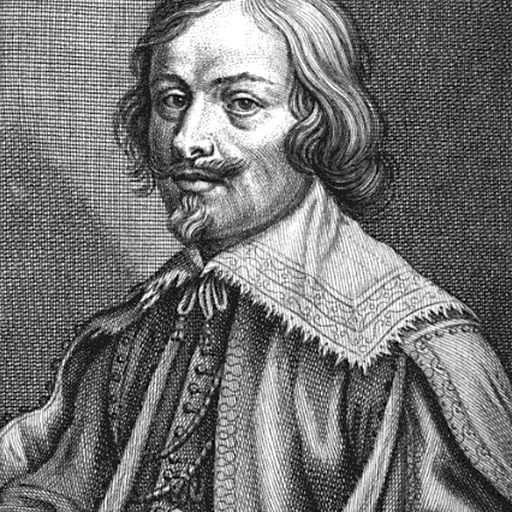
Jacques Callot was a baroque printmaker and draftsman from the Duchy of Lorraine.

 Holy Family at supper
 Restoration of the Aqueduct at Pisa
 Restoration of the Aqueduct at Pisa
 Square in Paris with Many Figures
 Square in Paris with Many Figures
 Horsemen Attacked by Robbers
 HOW WILL A COVERED PART BE CORRECTED?HOW WIKA A COVERED HEART DEED CORRECTED?
![Christ Walking on the Water [second plate], by Jacques Callot](https://artifactworldgallery.com/img/jacques-callot--christ-walking-on-the-water-second-plate--2069f3bfe4cb2126-w320.webp) Christ Walking on the Water [second plate]
Christ Walking on the Water [second plate]
 The Martyrdom of Saint Matthias
 The Martyrdom of the Apostles: St. Matthias
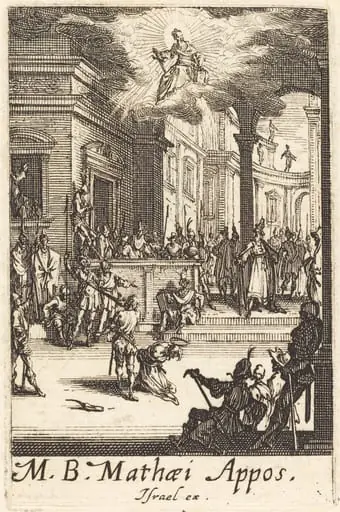 The Martyrdom of Saint Matthew
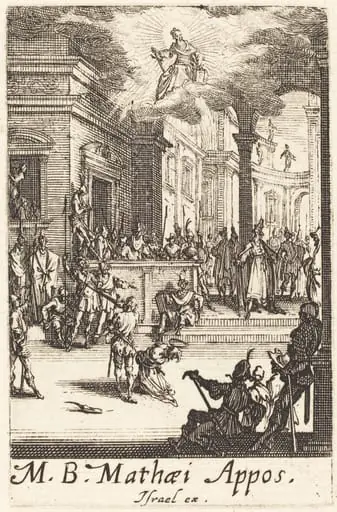 The Martyrdom of Saint Matthew
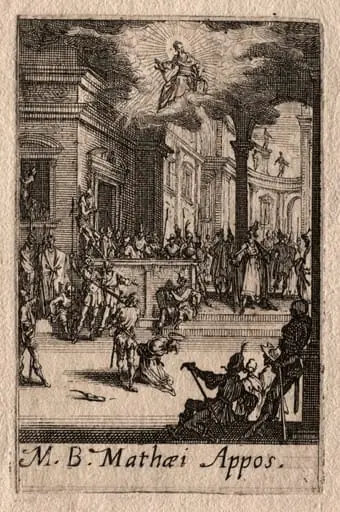 The Martyrdom of the Apostles: St. Matthew
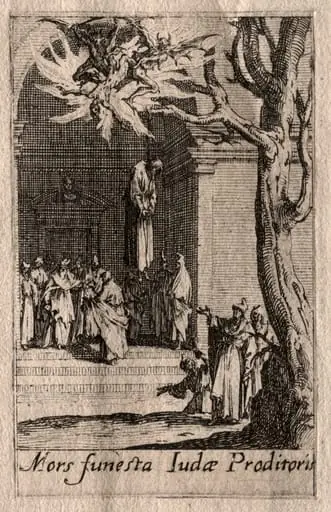 The Martyrdom of the Apostles: The Death of Judas
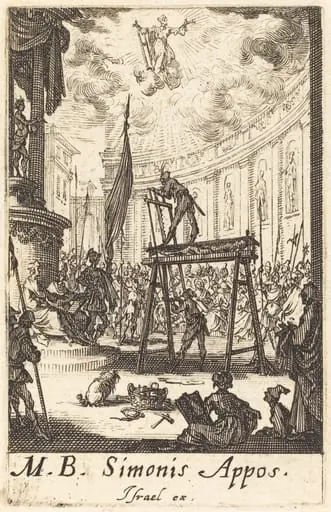 The Martyrdom of Saint Simon
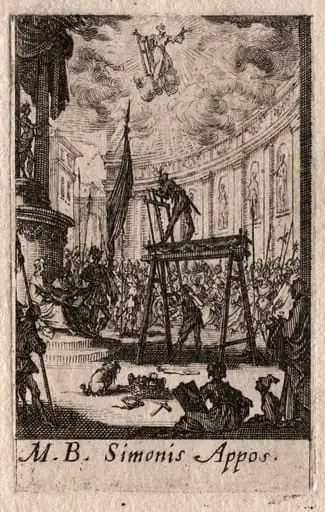 The Martyrdom of the Apostles: St. Simon
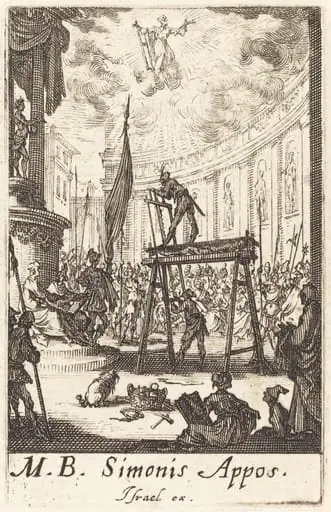 The Martyrdom of Saint Simon