Artwork
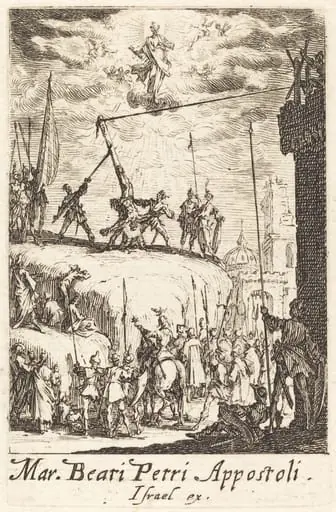
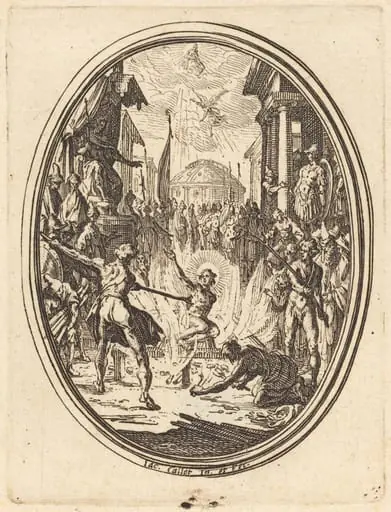
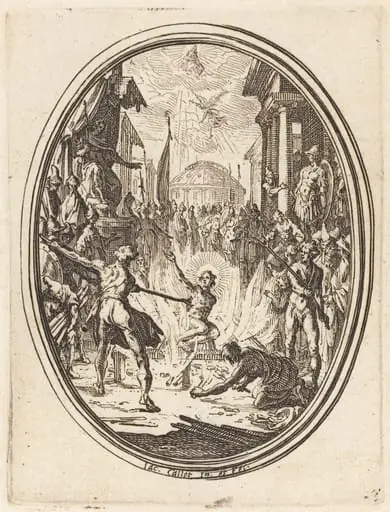
The Martyrdom of Saint Peter
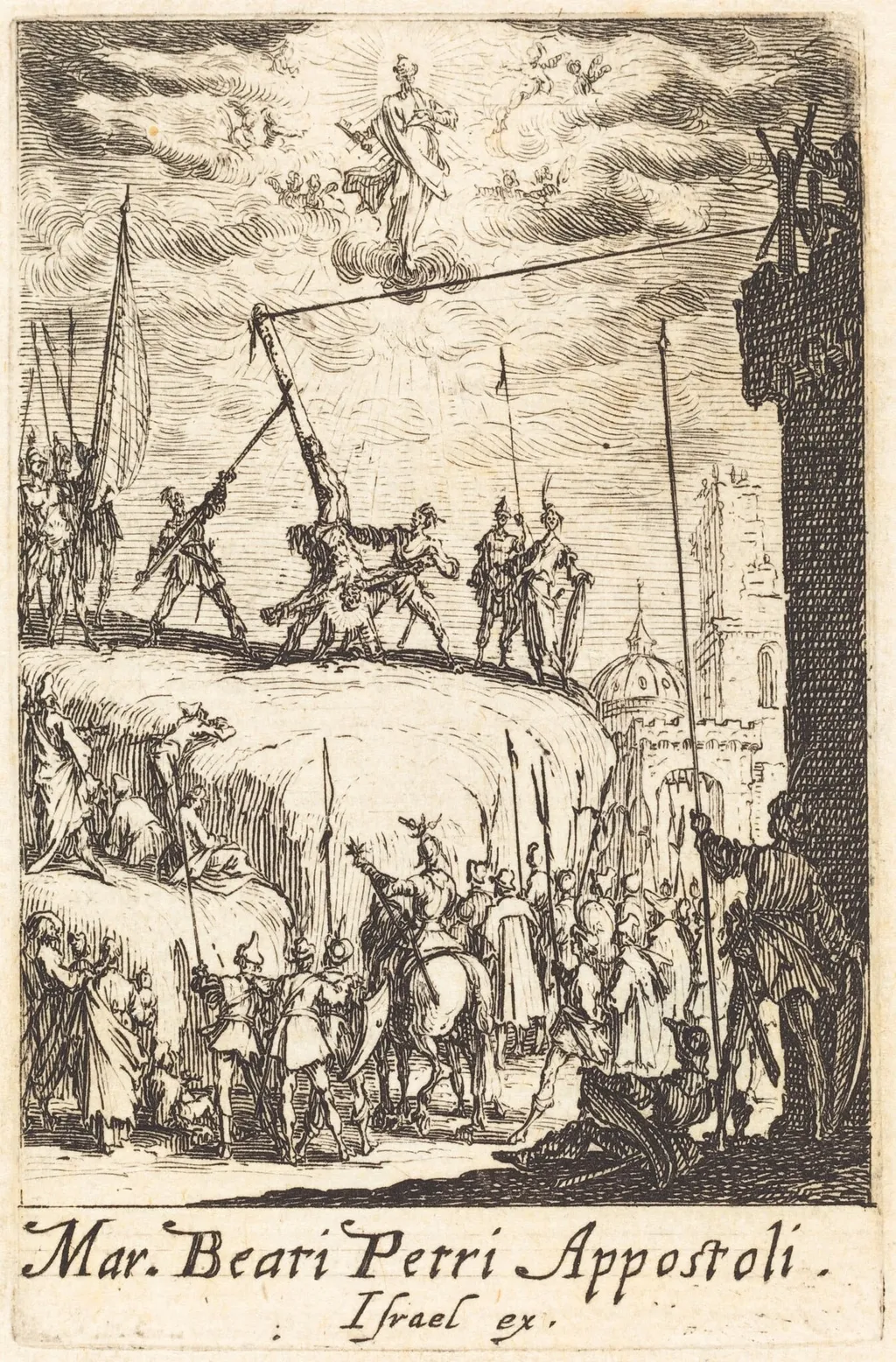
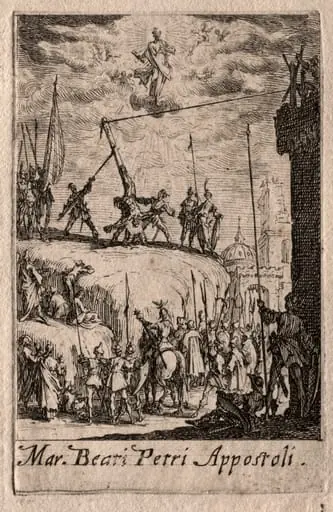
The Martyrdom of Saint Peter is an ink print by the Baroque artist Jacques Callot. It dates from 1634 and is held in the collection of the National Gallery of Art.
About this work
Overview
The Martyrdom of Saint Peter is an etching on laid paper created by Jacques Callot around 1634. It is one of over 1,400 etchings produced by the French baroque printmaker, who was known for capturing a wide range of subjects from his time.
Subject & Meaning
The etching depicts a chaotic scene of Saint Peter's martyrdom, with a crucified figure on a stretcher, a cross being carried, and a crowd gathered around a horse-drawn cart amidst soldiers and onlookers. The composition contrasts the turmoil of the event with the serene backdrop of buildings and a dome.
Technique & Style
Callot's mastery of etching is evident in the sharp lines used to convey movement and emotion in both figures and environmental details, such as swirling smoke or clouds. The work exemplifies his ability to integrate detailed foregrounds with expansive landscapes.
History & Provenance
Created circa 1634, the etching's provenance is not detailed here, though it is part of Callot's prolific output during his career in the Duchy of Lorraine.
Context
This work reflects the baroque period's emphasis on dramatic and emotionally charged scenes. As a print, it was likely disseminated widely, contributing to the broader religious and artistic discourse of 17th-century Europe.
Legacy
The Martyrdom of Saint Peter contributes to Callot's legacy as a prolific and innovative printmaker. His etchings, including this work, have influenced subsequent generations of artists in their technique and thematic range.
Artist & collection
Artist
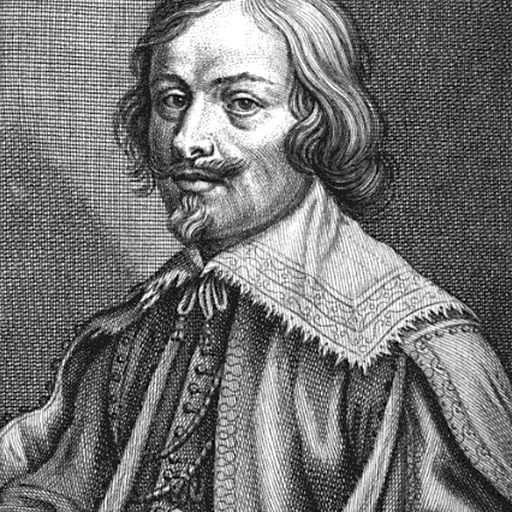
Jacques Callot was a baroque printmaker and draftsman from the Duchy of Lorraine.

 Holy Family at supper
 Restoration of the Aqueduct at Pisa
 Restoration of the Aqueduct at Pisa
 Square in Paris with Many Figures
 Square in Paris with Many Figures
 Horsemen Attacked by Robbers
 HOW WILL A COVERED PART BE CORRECTED?HOW WIKA A COVERED HEART DEED CORRECTED?
![Christ Walking on the Water [second plate], by Jacques Callot](https://artifactworldgallery.com/img/jacques-callot--christ-walking-on-the-water-second-plate--2069f3bfe4cb2126-w320.webp) Christ Walking on the Water [second plate]
Christ Walking on the Water [second plate]