Artwork
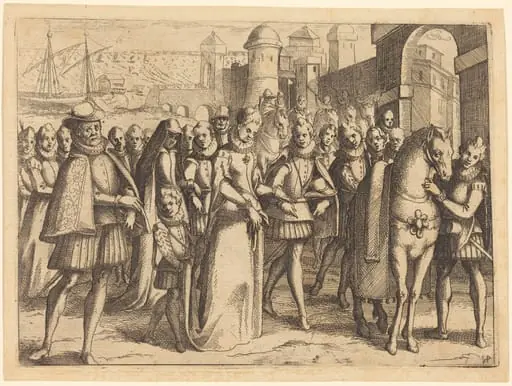
The Queen Laying the First Stone for the Church of the Poor Clares in Spain [verso]
![The Queen Laying the First Stone for the Church of the Poor Clares in Spain [verso], by Jacques Callot, ink, 1612](https://artifactworldgallery.com/img/jacques-callot--the-queen-laying-the-first-stone-for-the-church-of-the-poor--4409b13517e9beb4-w1024.webp)
The Queen Laying the First Stone for the Church of the Poor Clares in Spain [verso] is an ink print by the Baroque artist Jacques Callot. It dates from 1612 and is held in the collection of the National Gallery of Art.
About this work
Overview
Jacques Callot’s 1612 etching records the ceremonial laying of a foundation stone by Queen Margaret of Austria for a Poor Clares convent in Spain. Executed on laid paper, the print captures a formal public event, featuring the queen surrounded by attendants and a backdrop of architectural structures.
Subject & Meaning
The central figure, a richly dressed woman identified as Margaret, is shown placing the inaugural stone, a gesture symbolizing royal patronage of religious foundations. The surrounding participants, including a staff‑bearing official and a kneeling figure, underscore the ritual’s solemnity and the intertwining of monarchical authority with ecclesiastical ambition.
Technique & Style
Callot employs fine, intersecting lines to render textures of fabric, stone, and landscape, creating a sense of depth uncommon in early 17th‑century prints. The composition balances detailed architectural elements with a lively crowd, reflecting his characteristic blend of precise observation and narrative breadth.
History & Provenance
Produced during Callot’s prolific period of documenting courtly and religious occasions, the etching forms part of his extensive oeuvre that advanced the practice of old‑master printmaking in Lorraine. The work has survived on laid paper, a common support for prints of the era, and is catalogued among his known prints of ceremonial subjects.
Context
The event depicted aligns with the Counter‑Reformation’s emphasis on monastic expansion, while Margaret’s involvement illustrates the political role of Habsburg women in promoting Catholic institutions across Europe. Callot’s choice of subject mirrors contemporary interest in recording public spectacles for both propaganda and historical record.
Artist & collection

Artist
Jacques Callot was a baroque printmaker and draftsman from the Duchy of Lorraine.

 Holy Family at supper
 Restoration of the Aqueduct at Pisa
 Restoration of the Aqueduct at Pisa
 Square in Paris with Many Figures
 Square in Paris with Many Figures
 Horsemen Attacked by Robbers
 HOW WILL A COVERED PART BE CORRECTED?HOW WIKA A COVERED HEART DEED CORRECTED?
![Christ Walking on the Water [second plate], by Jacques Callot](https://artifactworldgallery.com/img/jacques-callot--christ-walking-on-the-water-second-plate--2069f3bfe4cb2126-w320.webp) Christ Walking on the Water [second plate]
Christ Walking on the Water [second plate]
![Spanish Duke Before Margaret of Austria [verso], by Antonio Tempesta](https://artifactworldgallery.com/img/antonio-tempesta--spanish-duke-before-margaret-of-austria-verso--9bdf15ebc4e5a042-w320.webp) Spanish Duke Before Margaret of Austria [verso]
Spanish Duke Before Margaret of Austria [verso]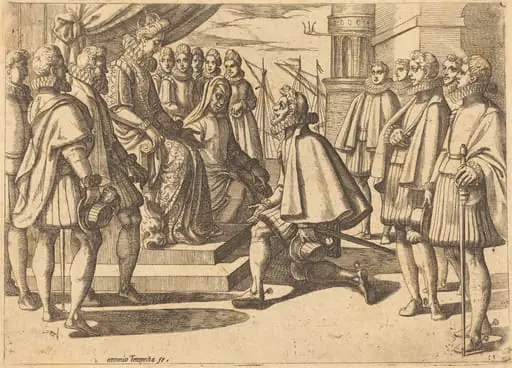 Spanish Duke before Margaret of Austria
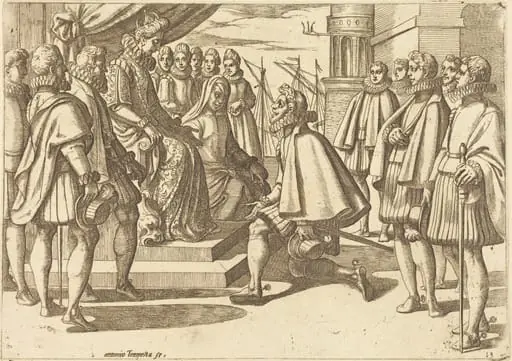 Spanish Duke before Margaret of Austria
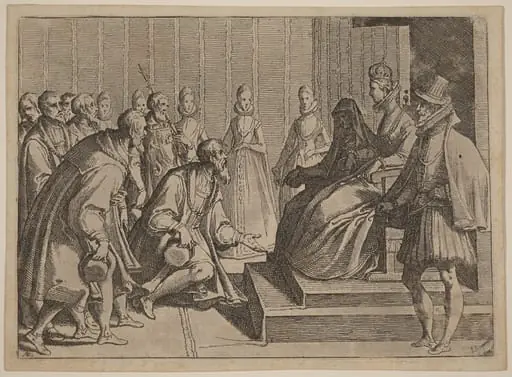 Margaret of Austria Giving Audience to a Nobleman
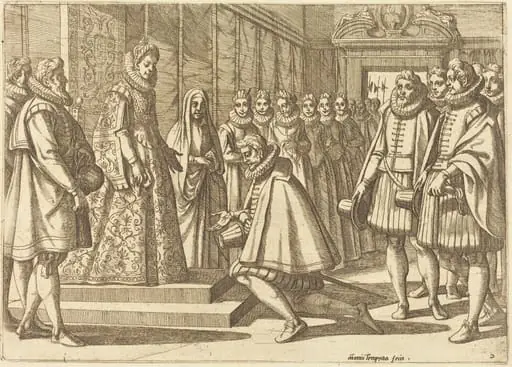 Philip of Spain Before Margaret of Austria
 Arrival at Valencia
![Arrival at Valencia [recto], by Jacques Callot](https://artifactworldgallery.com/img/jacques-callot--arrival-at-valencia-recto--71b2dc540ea6bc48-w320.webp) Arrival at Valencia [recto]
Arrival at Valencia [recto]![Reception at Mantua [recto], by Jacques Callot](https://artifactworldgallery.com/img/jacques-callot--reception-at-mantua-recto--84e33047dd2baf0a-w320.webp) Reception at Mantua [recto]
Reception at Mantua [recto]![The Betrothal of Margaret of Austria to Philip III, King of Spain [verso], by Raffaello Schiaminossi](https://artifactworldgallery.com/img/raffaello-schiaminossi--the-betrothal-of-margaret-of-austria-to-philip-iii-king-of-s--509229b9feb3b80f-w320.webp) The Betrothal of Margaret of Austria to Philip III, King of Spain [verso]
The Betrothal of Margaret of Austria to Philip III, King of Spain [verso]![Papal Audience [verso], by Jacques Callot](https://artifactworldgallery.com/img/jacques-callot--papal-audience-verso--6b0096a1a8cfa8ba-w320.webp) Papal Audience [verso]
Papal Audience [verso]