Artwork
Papal Audience [verso]
![Papal Audience [verso], by Jacques Callot, ink, 1612](https://artifactworldgallery.com/img/jacques-callot--papal-audience-verso--6b0096a1a8cfa8ba-w1024.webp)
Papal Audience [verso] is an ink print by the Baroque artist Jacques Callot. It dates from 1612 and is held in the collection of the National Gallery of Art.
About this work
Overview
Papal Audience [verso] is a 1612 etching on laid paper by Jacques Callot, a prolific French Baroque printmaker. This work exemplifies Callot's practice of documenting contemporary life, capturing the intricacies of a formal papal gathering.
Subject & Meaning
The print depicts a crowded, ornate throne room where dignitaries, identifiable by their elaborate attire, hats, and regalia, engage in a formal ceremony. Central figures kneel or stand, with one prominently holding a book, underscoring the event's solemnity and hierarchical nature.
Technique & Style
Callot's technical prowess is evident in the etching's sharp lines, meticulously rendering intricate details such as clothing folds, facial expressions, and architectural elements. This precision highlights his observational approach and contribution to the evolution of old master printmaking.
History & Provenance
Created in 1612, Papal Audience [verso] is part of Callot's vast oeuvre of over 1,400 etchings. While specific provenance details are not provided, the work aligns with Callot's broader thematic interests in military, courtly, and religious subjects.
Context
This etching reflects early 17th-century European societal norms, particularly the formalities of religious and political gatherings. It stands as a visual record of the era's attire, architecture, and ceremonial practices.
Legacy
Through works like Papal Audience [verso], Callot significantly influenced the development of etching techniques in old master printmaking, ensuring his lasting impact on the medium.
Artist & collection
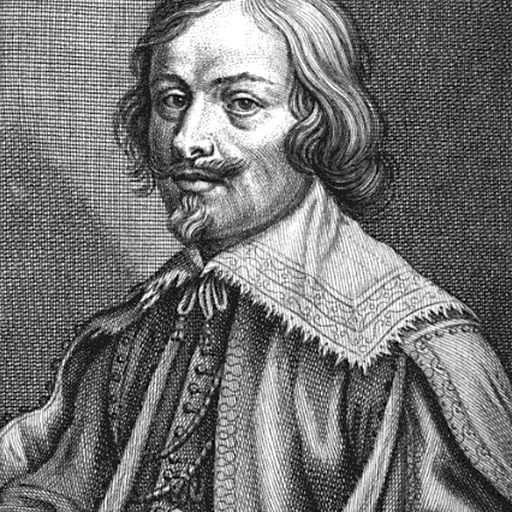
Artist
Jacques Callot was a baroque printmaker and draftsman from the Duchy of Lorraine.

 Holy Family at supper
 Restoration of the Aqueduct at Pisa
 Restoration of the Aqueduct at Pisa
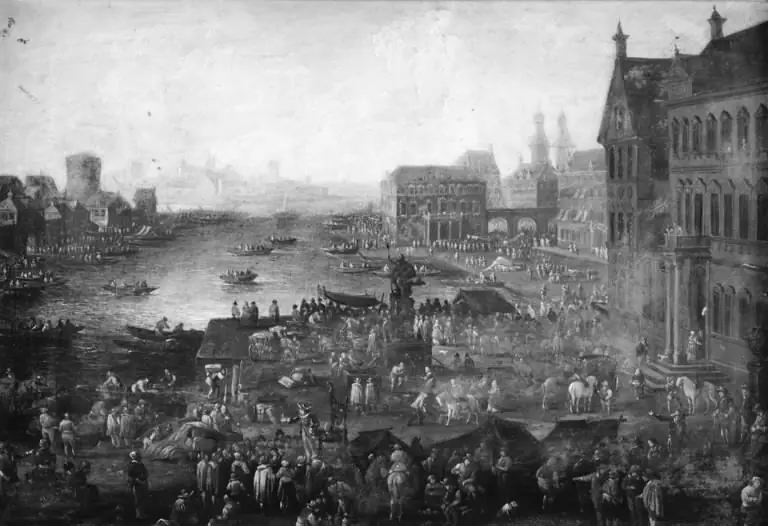 Square in Paris with Many Figures
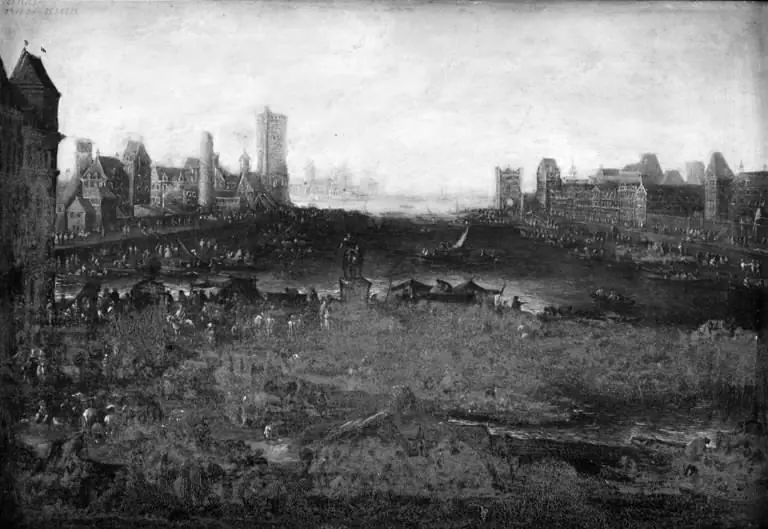 Square in Paris with Many Figures
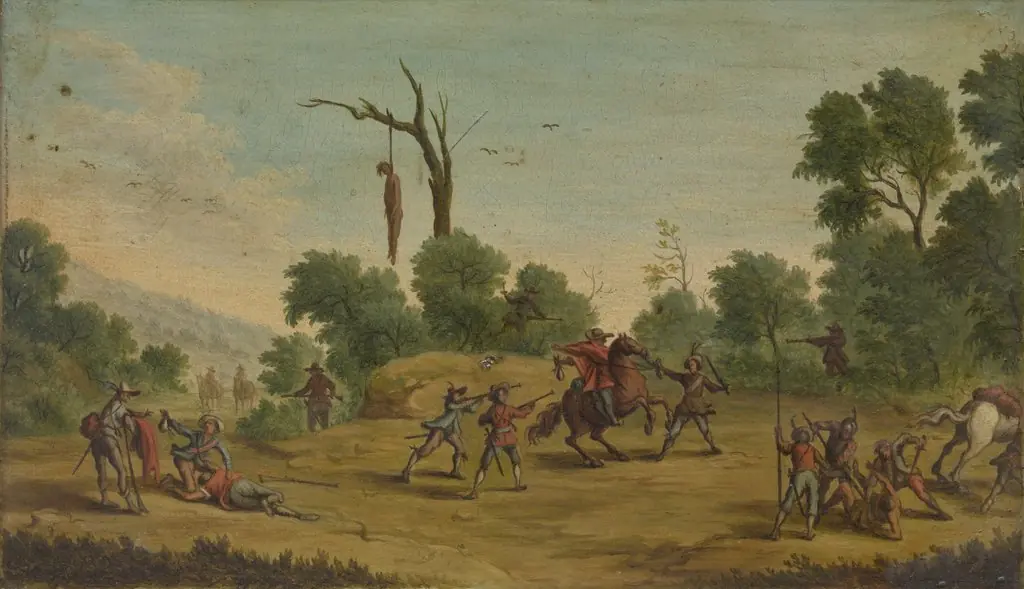 Horsemen Attacked by Robbers
 HOW WILL A COVERED PART BE CORRECTED?HOW WIKA A COVERED HEART DEED CORRECTED?
![Christ Walking on the Water [second plate], by Jacques Callot](https://artifactworldgallery.com/img/jacques-callot--christ-walking-on-the-water-second-plate--2069f3bfe4cb2126-w320.webp) Christ Walking on the Water [second plate]
Christ Walking on the Water [second plate]
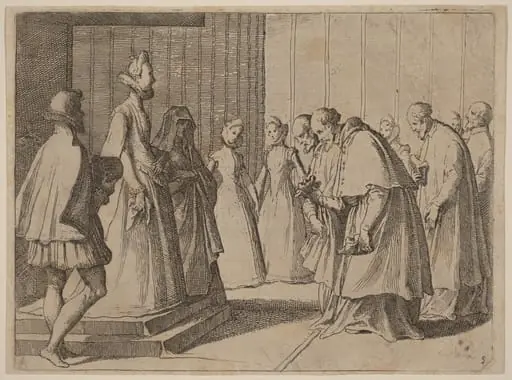 Margaret of Austria Receiving the Homage of Cardinals and Prelates
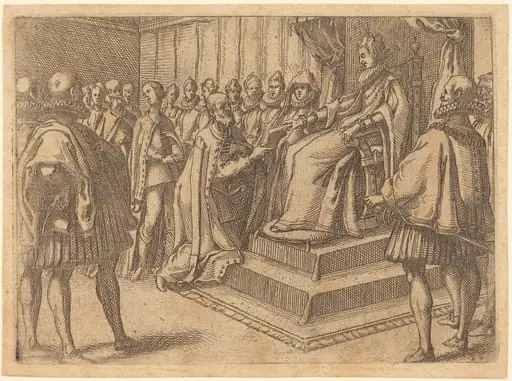 Reception of the Envoy of Poland
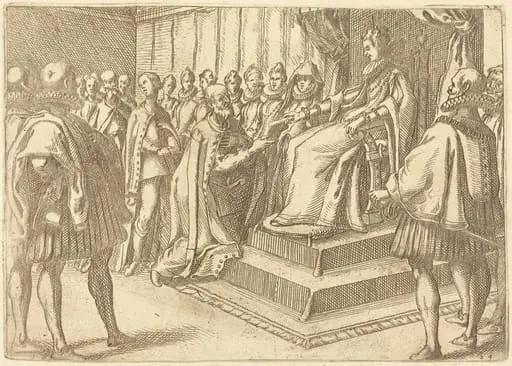 Reception of the Envoy of Poland
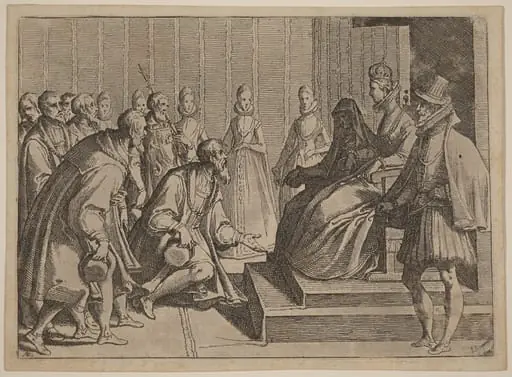 Margaret of Austria Giving Audience to a Nobleman
![Margaret of Austria Giving Audience to a Nobleman [verso], by Raffaello Schiaminossi](https://artifactworldgallery.com/img/raffaello-schiaminossi--margaret-of-austria-giving-audience-to-a-nobleman-verso--86ac2347af277f00-w320.webp) Margaret of Austria Giving Audience to a Nobleman [verso]
Margaret of Austria Giving Audience to a Nobleman [verso]![The Envoy of Tuscany thanking the Queen [verso], by Jacques Callot](https://artifactworldgallery.com/img/jacques-callot--the-envoy-of-tuscany-thanking-the-queen-verso--d1096c23bbbd576f-w320.webp) The Envoy of Tuscany thanking the Queen [verso]
The Envoy of Tuscany thanking the Queen [verso]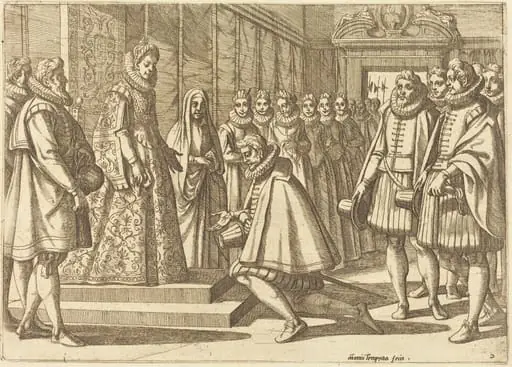 Philip of Spain Before Margaret of Austria
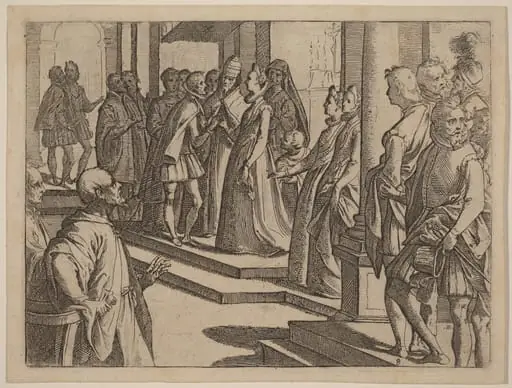 The Betrothal of Margaret of Austria to Philip III, King of Spain
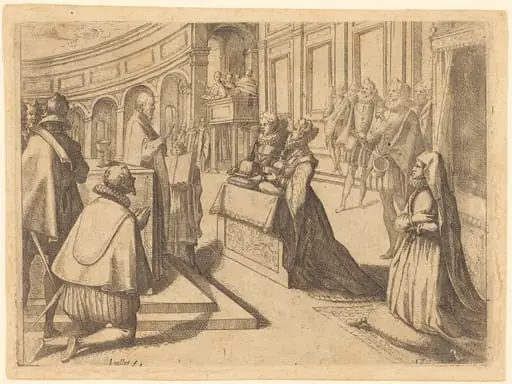 Marriage of Margaret of Austria and Philip III