Artwork
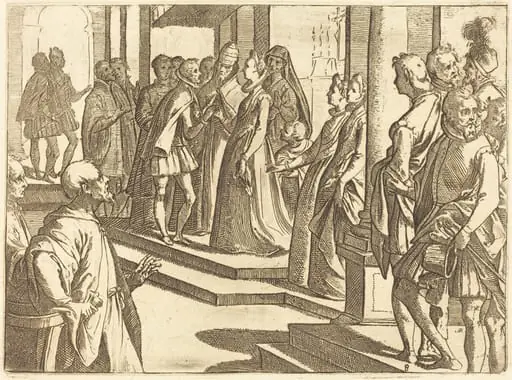
Philip of Spain Before Margaret of Austria
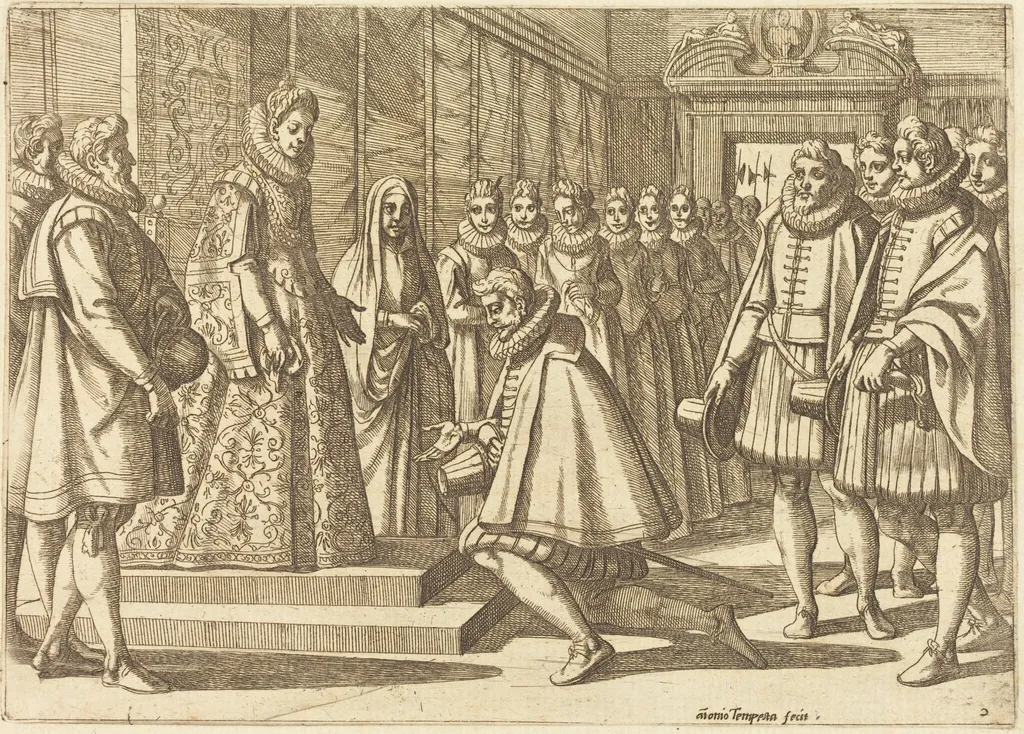
Philip of Spain Before Margaret of Austria is an ink print by the Baroque artist Antonio Tempesta. It dates from 1612 and is held in the collection of the National Gallery of Art.
About this work
Overview
This etching on laid paper, created by Antonio Tempesta in 1612, depicts a formal meeting between Philip III of Spain and his aunt, Margaret of Austria.
This etching on laid paper, created by Antonio Tempesta in 1612, depicts a formal meeting between Philip III of Spain and his aunt, Margaret of Austria. Though originally produced as a print, this version is a later restrike, indicating continued interest in the image. Tempesta, an Italian artist known for his detailed engravings, used etching to capture historical moments with precision, blending Italian technique with Northern European subject matter.
Subject & Meaning
The scene portrays Philip III, then King of Spain, in respectful attendance before Margaret of Austria, a Habsburg regent and influential political figure. Their interaction reflects dynastic hierarchy and familial duty within the Habsburg network. The composition emphasizes formality and restraint, underscoring the ceremonial nature of courtly encounters rather than personal emotion, aligning with the political symbolism common in early 17th-century portraiture.
Technique & Style
Tempesta employed etching to render fine linear details—folds in fabric, architectural backgrounds, and facial expressions—with controlled precision. The use of laid paper, common in early printmaking, adds texture and supports the delicate ink lines. His style merges Italian draftsmanship with the meticulousness of Flemish visual traditions, resulting in a composition that is both orderly and rich in atmospheric depth, characteristic of Baroque print culture.
History & Provenance
The original 1612 impression was part of Tempesta’s broader output documenting Habsburg affairs and military campaigns. This restrike likely dates from the 17th or early 18th century, when demand for historical prints remained steady among collectors. The work’s survival in multiple impressions suggests its role in disseminating political imagery across Europe, particularly within circles interested in Habsburg lineage and court protocol.
Context
Produced during a period of intense Habsburg diplomacy, the print reflects the importance of visual representation in reinforcing dynastic authority. Tempesta’s engagement with Flemish subjects in Rome illustrates the cross-cultural exchange between Italian artists and Northern European patrons. Such prints served as both documentation and propaganda, circulating among elites to affirm political alliances and familial legitimacy.
Legacy
Tempesta’s etching contributed to the tradition of historical printmaking in early modern Europe, influencing later artists who sought to blend narrative clarity with technical refinement. While not widely reproduced today, its existence in institutional collections preserves a tangible link between Baroque print culture and the visual politics of the Habsburg court, offering insight into how power was communicated through image-making.
Artist & collection
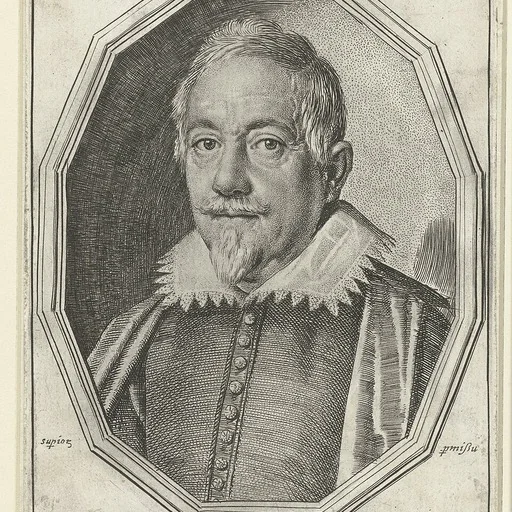
Artist
Antonio Tempesta, also called il Tempestino (1555 – 5 August 1630), was an Italian painter and engraver, whose art acted as a point of connection between Baroque Rome and the culture of Antwerp.

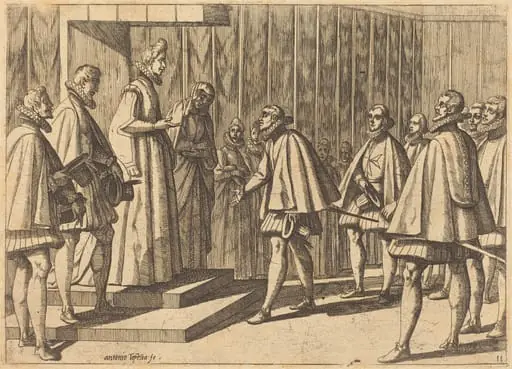
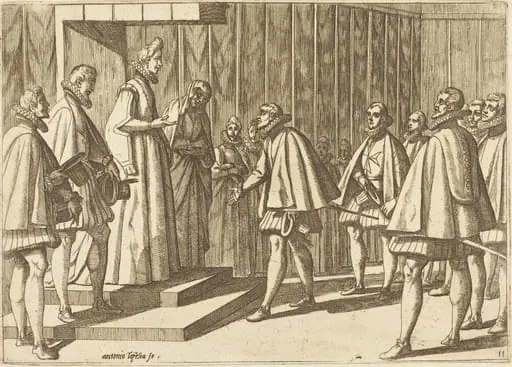 Italian Prince before Margaret of Austria
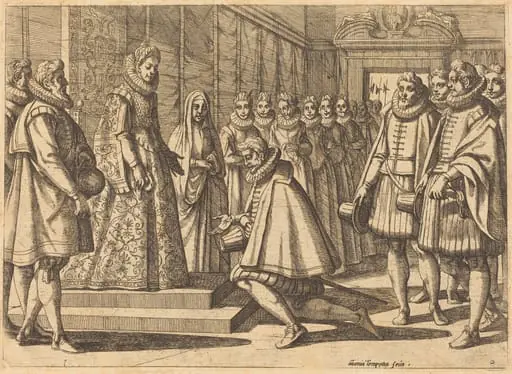 Philip of Spain before Margaret of Austria
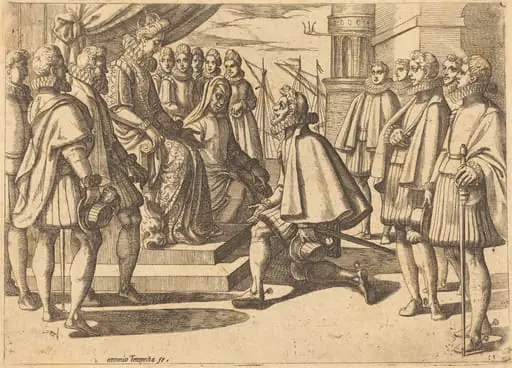 Spanish Duke before Margaret of Austria
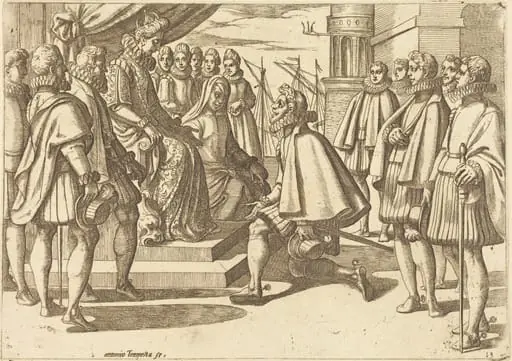 Spanish Duke before Margaret of Austria
![Spanish Duke Before Margaret of Austria [verso], by Antonio Tempesta](https://artifactworldgallery.com/img/antonio-tempesta--spanish-duke-before-margaret-of-austria-verso--9bdf15ebc4e5a042-w320.webp) Spanish Duke Before Margaret of Austria [verso]
Spanish Duke Before Margaret of Austria [verso]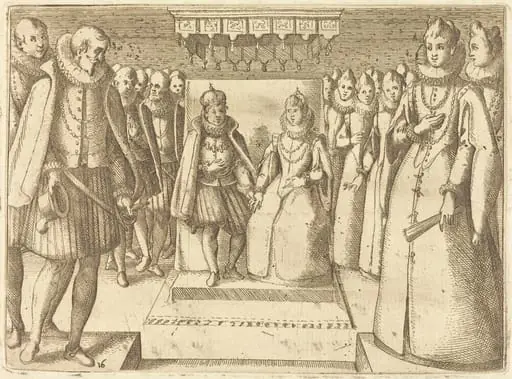 Meeting of Margaret of Austria and Philip III
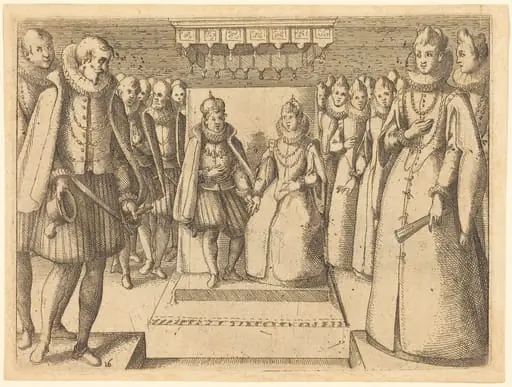 Meeting of Margaret of Austria and Philip III
 The Betrothal of Margaret of Austria to Philip III, King of Spain
 Italian Prince before Margaret of Austria
![Meeting of Margaret of Austria and Philip III [recto], by Jacques Callot](https://artifactworldgallery.com/img/jacques-callot--meeting-of-margaret-of-austria-and-philip-iii-recto--2aafd0c5f9d0b247-w320.webp) Meeting of Margaret of Austria and Philip III [recto]
Meeting of Margaret of Austria and Philip III [recto]![The Betrothal of Margaret of Austria to Philip III, King of Spain [verso], by Raffaello Schiaminossi](https://artifactworldgallery.com/img/raffaello-schiaminossi--the-betrothal-of-margaret-of-austria-to-philip-iii-king-of-s--509229b9feb3b80f-w320.webp) The Betrothal of Margaret of Austria to Philip III, King of Spain [verso]
The Betrothal of Margaret of Austria to Philip III, King of Spain [verso]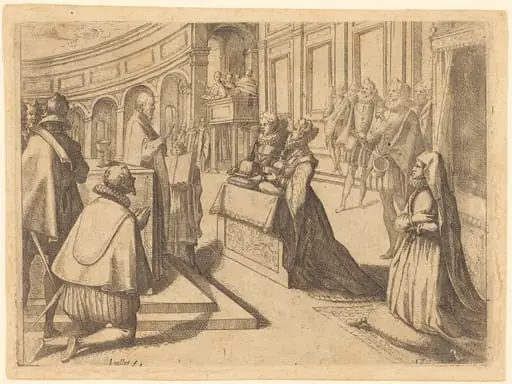 Marriage of Margaret of Austria and Philip III