Artwork
The Re-embarkation of the Troops
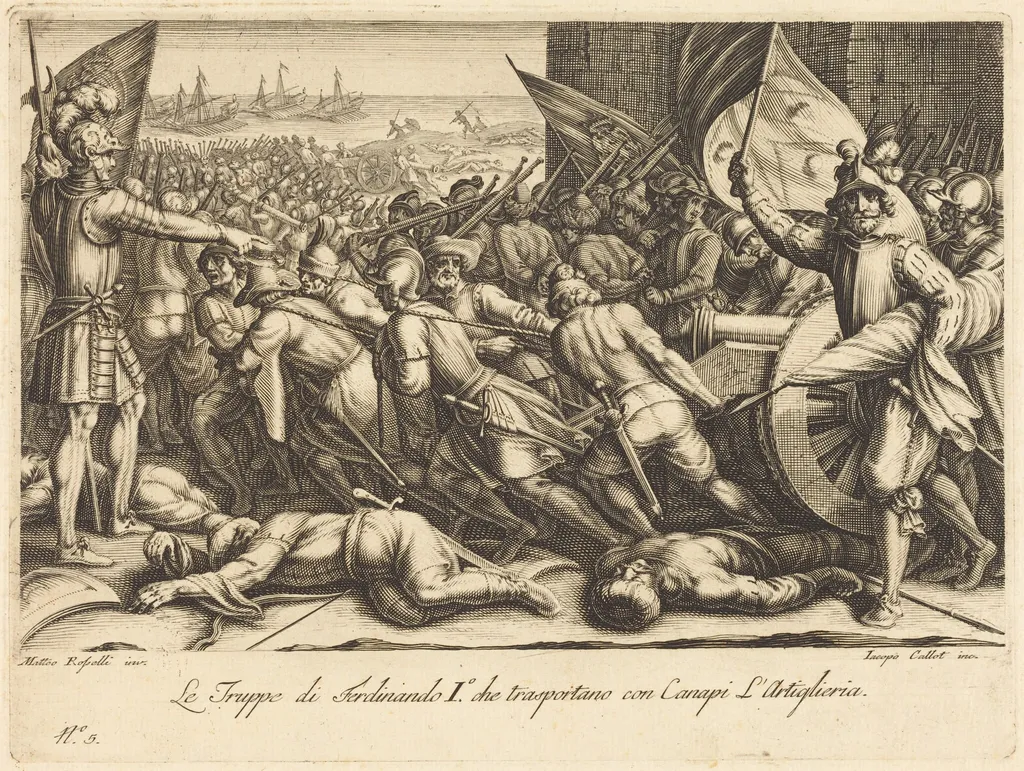
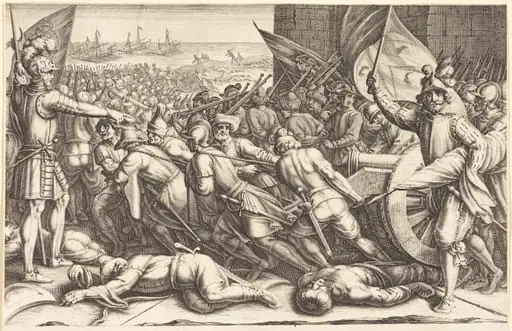
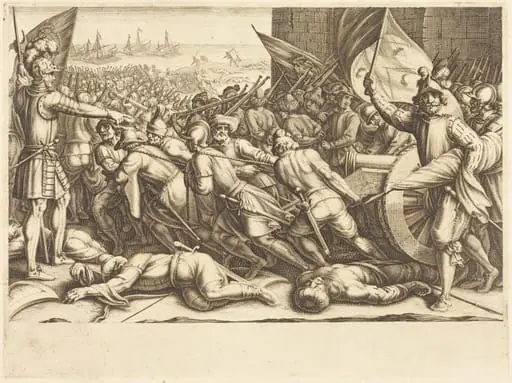
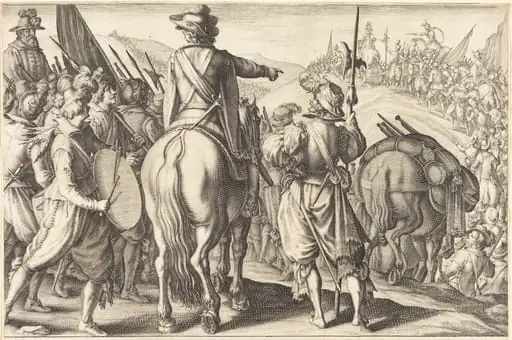
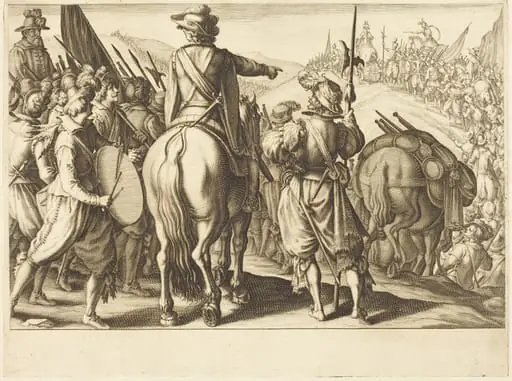
The Re-embarkation of the Troops is an ink print by the Baroque artist Jacques Callot. It dates from 1614 and is held in the collection of the National Gallery of Art.
About this work
Overview
Created circa 1614 by Jacques Callot, a French baroque printmaker from the Duchy of Lorraine, this work is an engraving executed on laid paper. It belongs to Callot’s prolific output of more than 1,400 prints, which often serve as visual records of early‑17th‑century life.
Subject & Meaning
The image captures a tumultuous beach engagement, with infantry and cavalry intermingled amid wounded figures. Ships lie anchored on the near shore, while clouds of smoke or dust fill the sky, suggesting a chaotic withdrawal or re‑embarkation of troops under fire.
Technique & Style
Callot employs fine, intersecting lines to model light, shadow, and texture, creating a sense of depth and movement uncommon in earlier prints. The use of laid paper provides a subtle tooth that enhances the engraving’s intricate detail, aligning the piece with the old master printmaking tradition.
History & Provenance
The print emerged during a period when Callot was documenting contemporary military scenes for a European audience. Though specific ownership records are scarce, the work circulated among collectors of early modern prints and contributed to Callot’s reputation as a chronicler of his era.
Context
In the early 17th century, the Thirty Years’ War and related conflicts heightened interest in visual accounts of warfare. Callot’s engravings, including this one, responded to that demand, offering a blend of artistic skill and documentary precision that informed both patrons and fellow artists.
Artist & collection
Artist
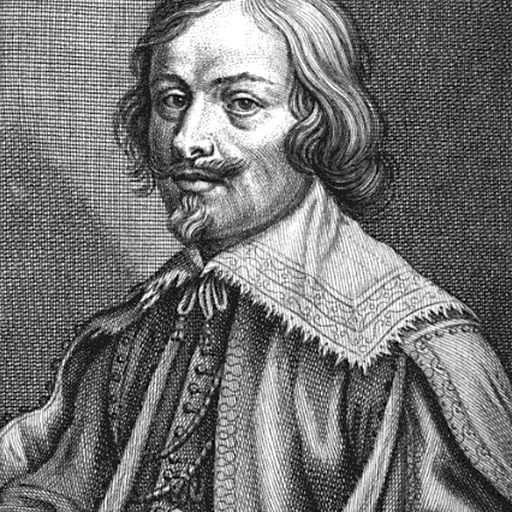
Jacques Callot was a baroque printmaker and draftsman from the Duchy of Lorraine.

 Holy Family at supper
 Restoration of the Aqueduct at Pisa
 Restoration of the Aqueduct at Pisa
 Square in Paris with Many Figures
 Square in Paris with Many Figures
 Horsemen Attacked by Robbers
 HOW WILL A COVERED PART BE CORRECTED?HOW WIKA A COVERED HEART DEED CORRECTED?
![Christ Walking on the Water [second plate], by Jacques Callot](https://artifactworldgallery.com/img/jacques-callot--christ-walking-on-the-water-second-plate--2069f3bfe4cb2126-w320.webp) Christ Walking on the Water [second plate]
Christ Walking on the Water [second plate]