Artwork
Recruitment of Troops
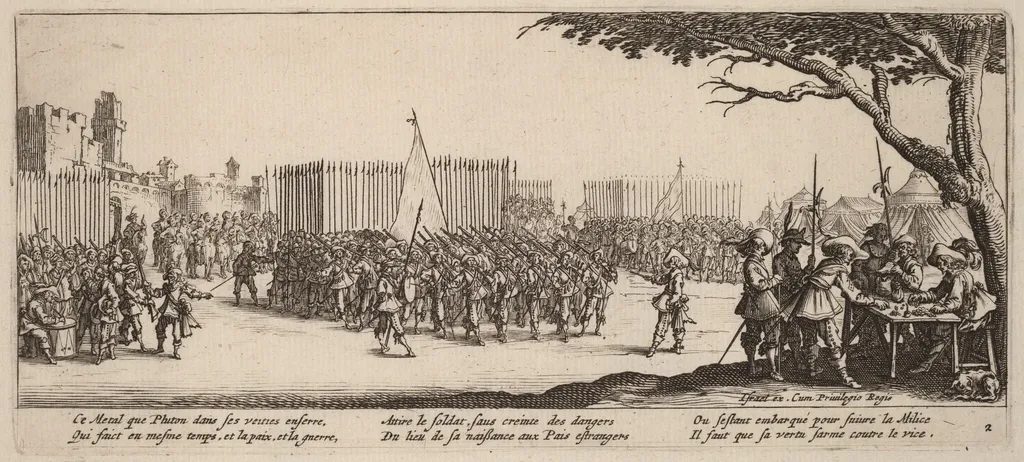
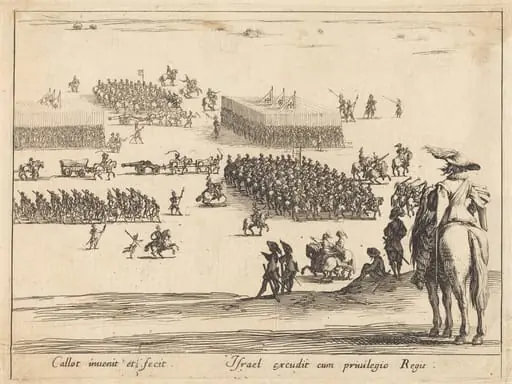
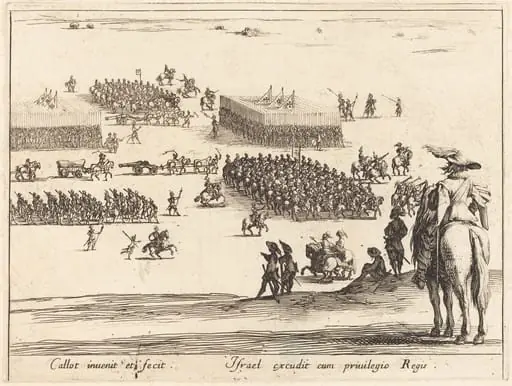
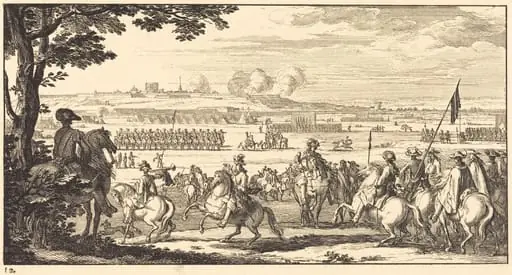
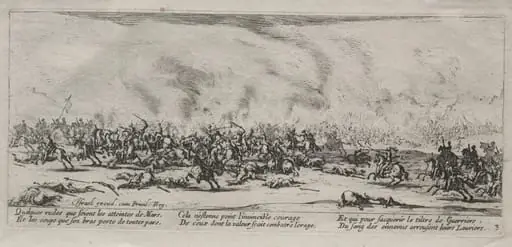
Recruitment of Troops is an ink print by the Baroque artist Gerrit van Schagen. It dates from 1642 and is held in the collection of the National Gallery of Art.
About this work
Overview
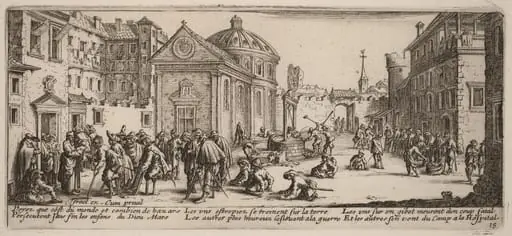
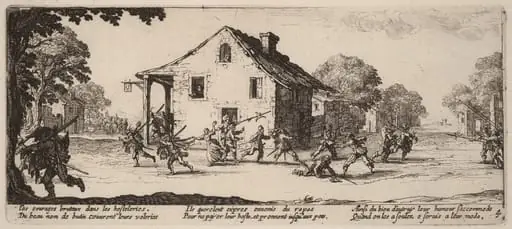
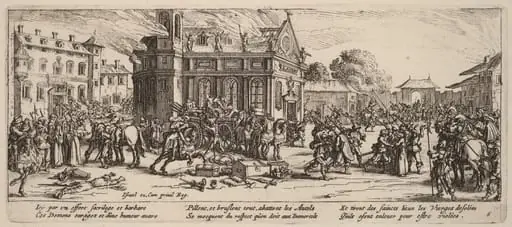
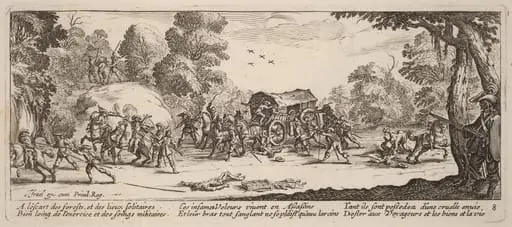
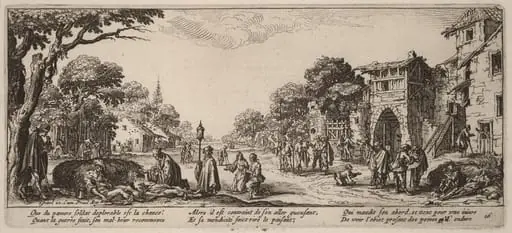
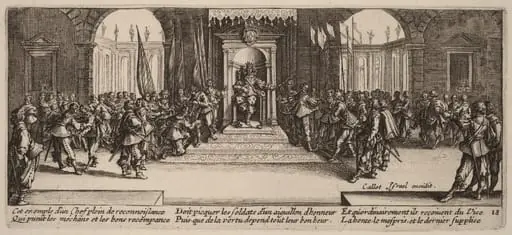
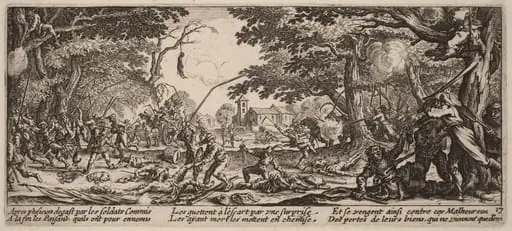
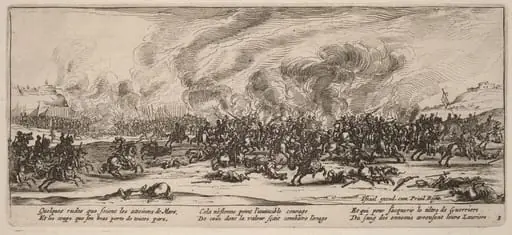
Created in 1642 by the Dutch printmaker Gerrit van Schagen, *Recruitment of Troops* is an engraving executed on laid paper. The work presents a densely populated street scene in which soldiers march in orderly ranks, bearing flags and weapons, while civilians observe from the periphery. The composition is rendered entirely in black line work, without any added color.
Subject & Meaning
The print captures a moment of military mobilization, likely depicting the enlistment of men for a campaign.
The print captures a moment of military mobilization, likely depicting the enlistment of men for a campaign. Figures in contemporary dress gather near a building with a tower, suggesting a civic or municipal setting, while the presence of tents and tables in the background hints at a temporary recruitment office. A French inscription at the bottom reinforces the notion of soldiers departing for service.
Technique & Style
Van Schagen employed a combination of etching and engraving to achieve fine linear detail and varied tonal effects. The use of laid paper, with its characteristic ribbed texture, provides a subtle tonal ground that contrasts with the crisp, black lines. The artist’s handling of crowded figures and architectural elements demonstrates a meticulous approach to spatial organization typical of mid‑17th‑century Dutch printmaking.
History & Provenance
The work is documented as a 1642 print by van Schagen, an engraver active in the Dutch Republic during the early modern period. While specific ownership records are scarce, the print has appeared in several catalogues of Dutch military prints and is held in a number of museum and library collections that specialize in early modern graphic arts.
Context
The early 1640s were marked by ongoing conflicts such as the Thirty Years’ War and the Dutch struggle for independence, which generated a demand for visual representations of military recruitment. Prints like this served both informational and propagandistic purposes, communicating the organization of armed forces to a broad public that included literate and illiterate viewers alike.
Artist & collection