Artwork
The Stopping Place
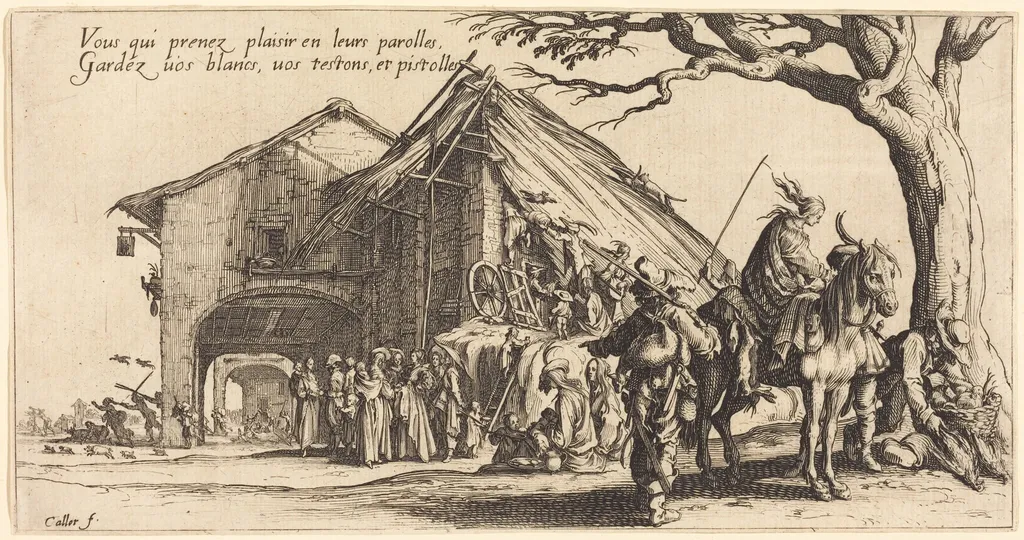
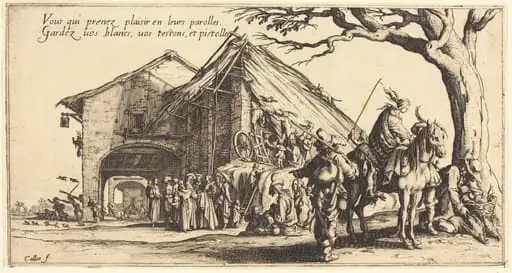
The Stopping Place is an ink print by the Baroque artist Jacques Callot. It dates from 1621 and is held in the collection of the National Gallery of Art.
About this work
Overview
As one of over 1,400 prints produced by the Lorrainer artist, it exemplifies his focus on everyday scenes of travelers, laborers, and itinerant life.
Created in 1621 by Jacques Callot, *The Stopping Place* is an etching and engraving on laid paper that captures a moment of transient activity outside a rural structure. As one of over 1,400 prints produced by the Lorrainer artist, it exemplifies his focus on everyday scenes of travelers, laborers, and itinerant life. The work combines technical precision with narrative observation, reflecting Callot’s role as a chronicler of early 17th-century social conditions.
Subject & Meaning
The scene depicts a cluster of figures gathered near a large barn-like building, some on horseback, others carrying tools or bags, while animals are tended nearby. The dark sky and bare trees frame the composition, enhancing a sense of isolation. Above the image, a French inscription warns viewers against trusting empty promises, linking the visual chaos to a moral caution about deception in transient encounters—perhaps referencing the unreliable promises of peddlers or soldiers.
Technique & Style
Callot employed fine etching and engraving to render intricate details across a crowded composition. His use of cross-hatching and delicate line work defines individual figures, animals, and architectural elements with clarity. The layered textures of clothing, wood, and foliage demonstrate his mastery of the medium. Unlike many contemporaries, he avoided idealization, instead capturing the gritty realism of rural transit points with unembellished observation.
History & Provenance
Produced during Callot’s most active period in Nancy, the print likely circulated among collectors and civic elites familiar with his depictions of military and peasant life. While its early ownership is undocumented, it aligns with a broader trend in early modern print culture where such images served both artistic and didactic purposes. The work survives in multiple institutional collections, attesting to its enduring presence in European print archives.
Context
In the early 1600s, the Thirty Years’ War disrupted travel and trade across Europe, increasing the visibility of displaced populations and transient markets. Callot’s prints, including this one, reflect the social instability of the era. The barn as a stopping point suggests a hub for merchants, soldiers, or pilgrims—spaces where trust was often exploited. His choice to include a moralizing inscription situates the image within a tradition of didactic visual culture.
Legacy
Callot’s detailed, narrative-driven prints influenced generations of printmakers across Europe, particularly in the depiction of ordinary life. *The Stopping Place* exemplifies his contribution to elevating printmaking as a medium for social commentary. Though not widely exhibited today, it remains a reference point in studies of early modern visual culture, illustrating how art could document and critique the margins of society.
Artist & collection
Artist
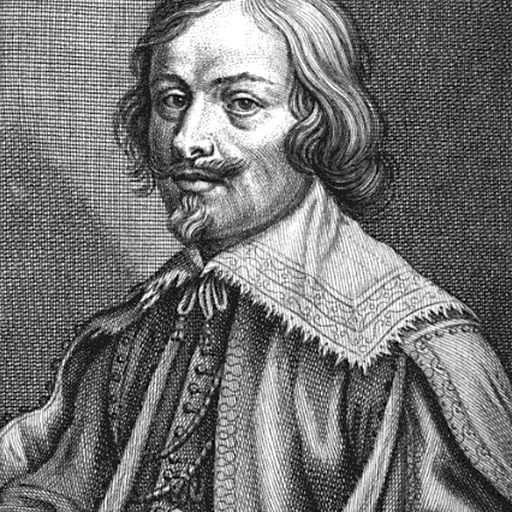
Jacques Callot was a baroque printmaker and draftsman from the Duchy of Lorraine.

 Holy Family at supper
 Restoration of the Aqueduct at Pisa
 Restoration of the Aqueduct at Pisa
 Square in Paris with Many Figures
 Square in Paris with Many Figures
 Horsemen Attacked by Robbers
 HOW WILL A COVERED PART BE CORRECTED?HOW WIKA A COVERED HEART DEED CORRECTED?
![Christ Walking on the Water [second plate], by Jacques Callot](https://artifactworldgallery.com/img/jacques-callot--christ-walking-on-the-water-second-plate--2069f3bfe4cb2126-w320.webp) Christ Walking on the Water [second plate]
Christ Walking on the Water [second plate]
 The Stopping Place: The Fortune Teller
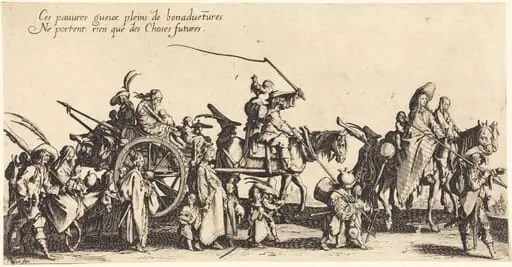 The Bohemians Marching: The Rear Guard
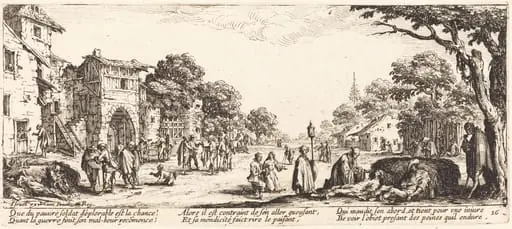 Dying Soldiers by the Roadside
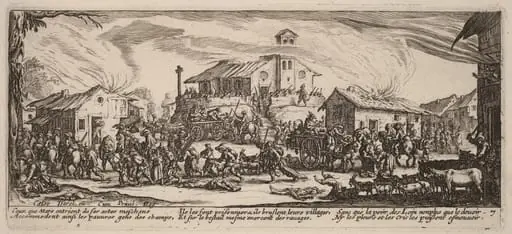 Plundering and Burning a Village
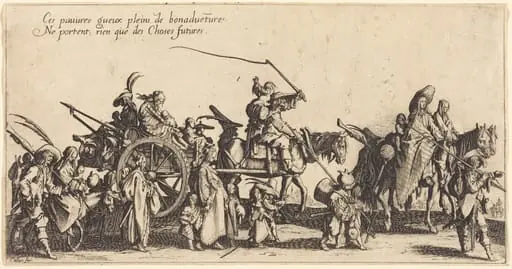 The Bohemians Marching: The Rear Guard
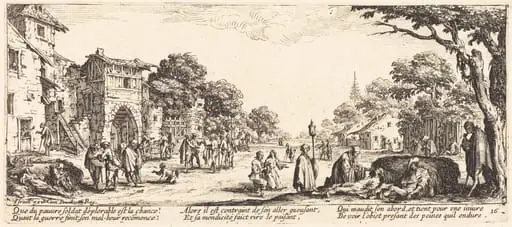 Dying Soldiers by the Roadside
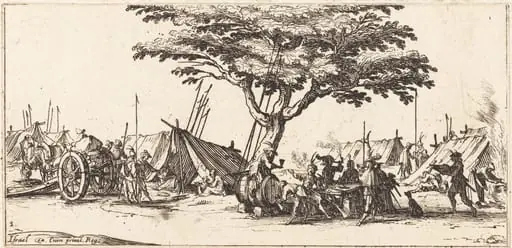 The Camp
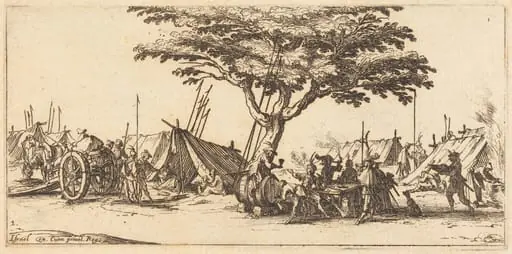 The Camp
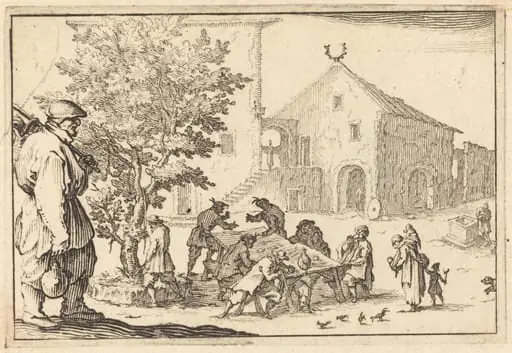 Tavern
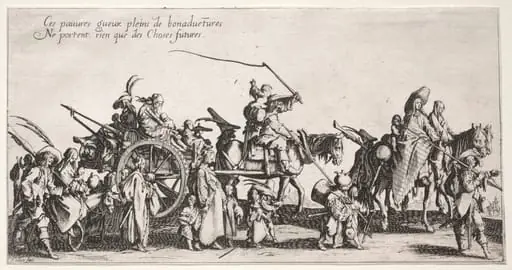 The Bohemians: The Bohemians Marching: The Rear Guard
 The Canal
 The Stopping Place