Artwork
Two Beggar Women
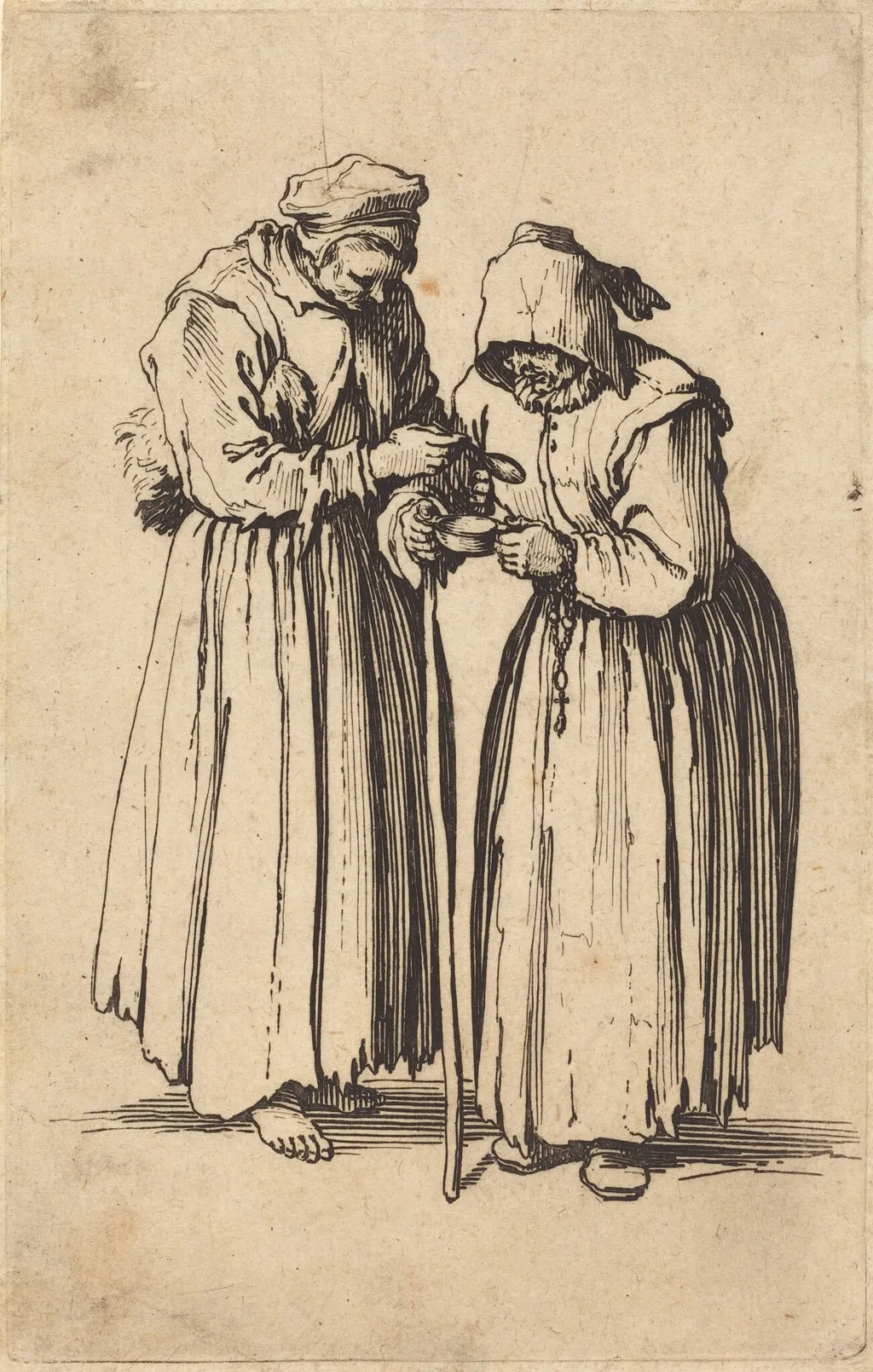
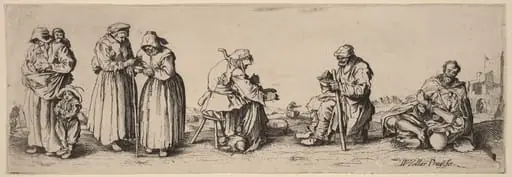
Two Beggar Women is an ink print by the Baroque artist Jacques Callot. It dates from 1622 and is held in the collection of the National Gallery of Art.
About this work
Overview
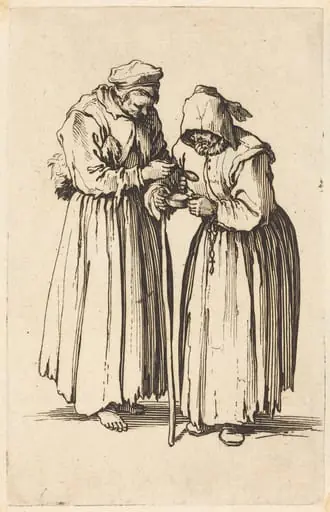
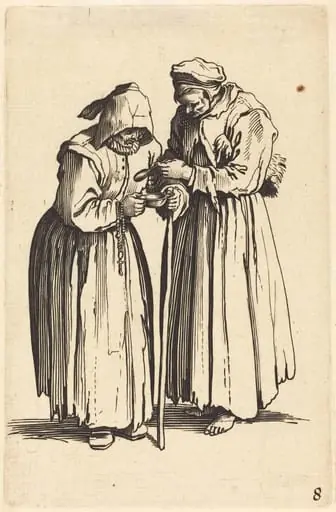
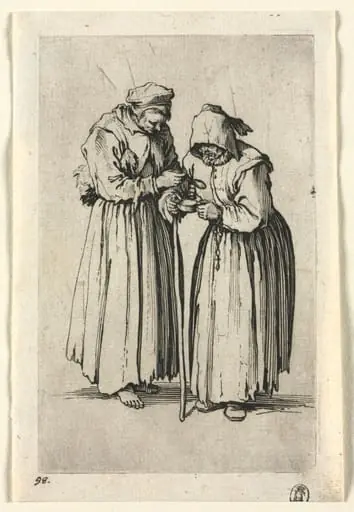
Created around 1622 by Jacques Callot, this etching depicts two women in poverty, rendered in fine linear detail on laid paper. As one of over 1,400 prints by the Lorrainer artist, it exemplifies his interest in observing the lives of society’s overlooked members. The composition is stripped of ornament or narrative distraction, focusing solely on the figures and their quiet presence.
Subject & Meaning
The two women, their faces concealed by hoods, are rendered without individualizing features, emphasizing their anonymity and social invisibility. Their worn garments and minimal posture suggest hardship and resignation. The absence of context or interaction implies a broader condition rather than a specific moment, inviting reflection on the quiet endurance of those excluded from public life.
Technique & Style
Callot employed fine, controlled etching lines to define the ragged edges of fabric and the weight of draped cloth. The lack of background elements directs attention to texture and form, with sharp contrasts between the dark folds and the pale paper. His precision in rendering worn textiles reveals a keen eye for material decay, characteristic of his documentary approach to printmaking.
History & Provenance
The print emerged during Callot’s most productive period in Nancy and Paris, when he was refining his technique and expanding his repertoire of social types. While its early ownership is unrecorded, it entered broader circulation through the artist’s commercial print trade. Surviving impressions are held in major European collections, reflecting its enduring recognition among print scholars.
Context
In early 17th-century Europe, economic instability and war displaced many, increasing visible poverty in urban and rural areas. Callot’s prints, including this one, responded to these conditions not with sentimentality but with observational clarity. His depictions of beggars, soldiers, and laborers formed part of a growing visual record of social reality beyond aristocratic or religious themes.
Legacy
Callot’s unembellished portrayals of marginalized figures influenced later generations of printmakers, including Goya and Daumier, who similarly turned to everyday suffering as subject matter. This etching, though modest in scale, contributed to a shift in printmaking from idealized imagery toward empathetic documentation, establishing a precedent for social realism in graphic art.
Own this work as a print
Artist & collection
Artist
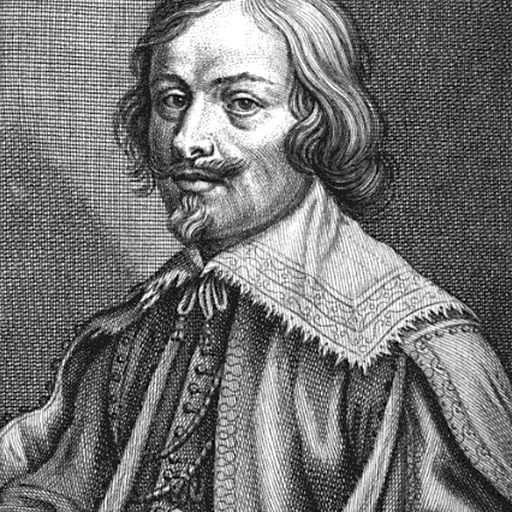
Jacques Callot was a baroque printmaker and draftsman from the Duchy of Lorraine.

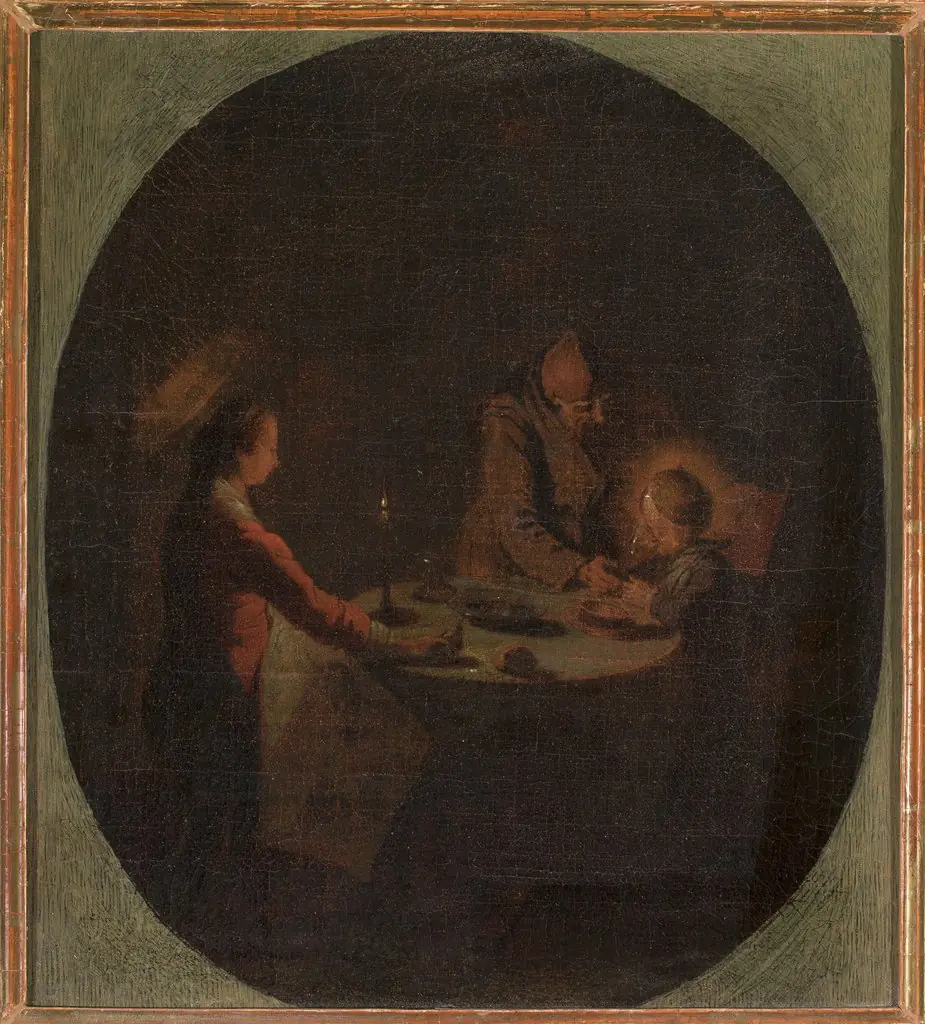 Holy Family at supper
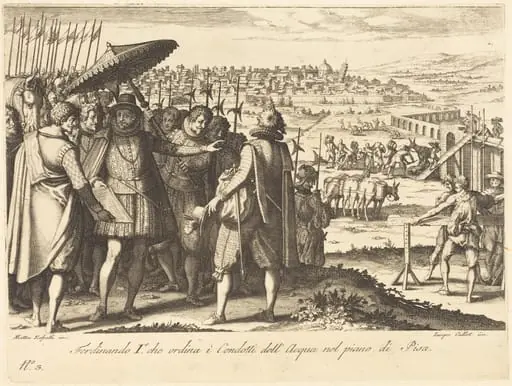 Restoration of the Aqueduct at Pisa
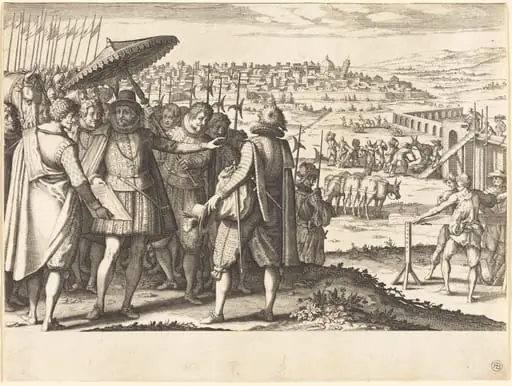 Restoration of the Aqueduct at Pisa
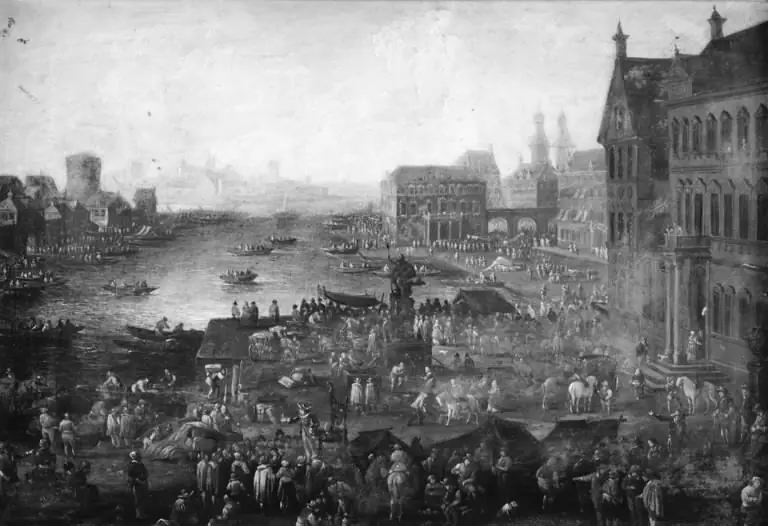 Square in Paris with Many Figures
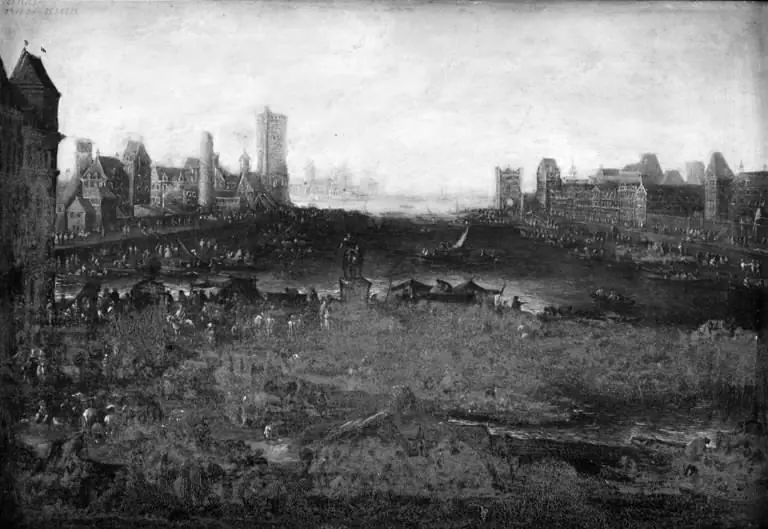 Square in Paris with Many Figures
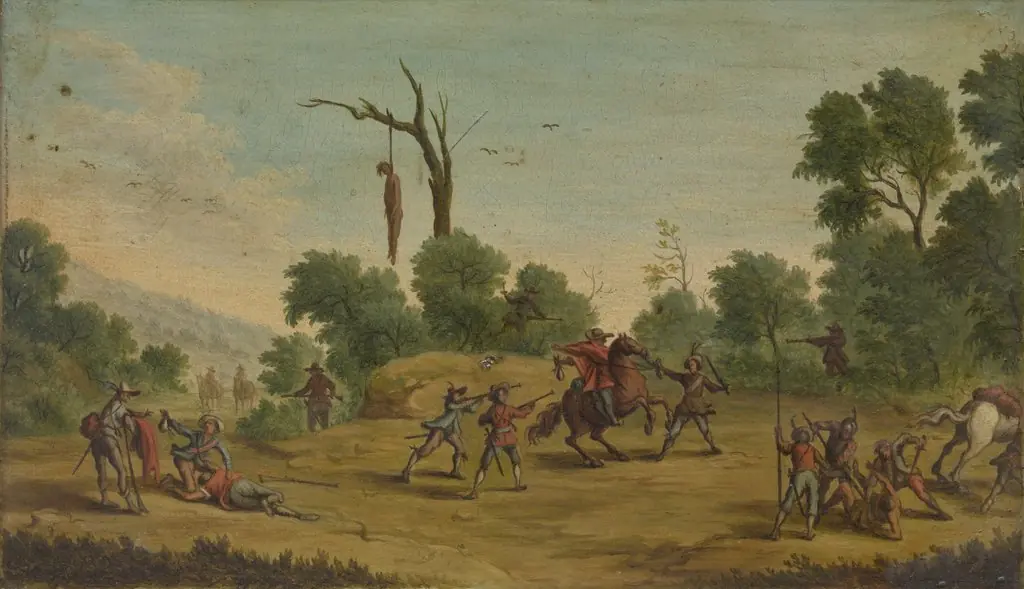 Horsemen Attacked by Robbers
 HOW WILL A COVERED PART BE CORRECTED?HOW WIKA A COVERED HEART DEED CORRECTED?
![Christ Walking on the Water [second plate], by Jacques Callot](https://artifactworldgallery.com/img/jacques-callot--christ-walking-on-the-water-second-plate--2069f3bfe4cb2126-w320.webp) Christ Walking on the Water [second plate]
Christ Walking on the Water [second plate]
 Two Beggar Women
 Two Beggar Women
 The Beggars: Two Beggar Women
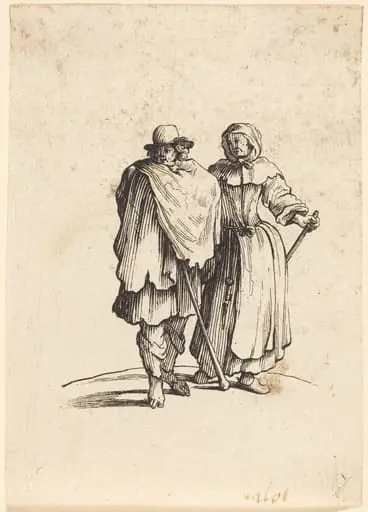 Beggar Couple
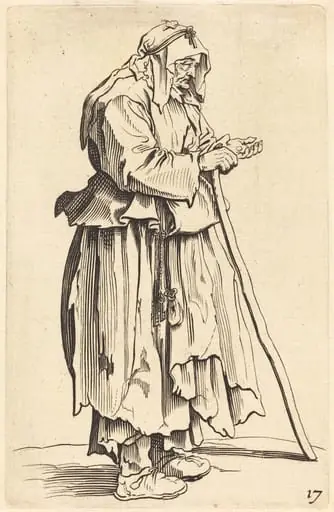 Beggar Woman Receiving Charity
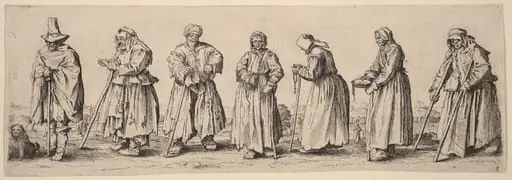 Men and Women Beggars
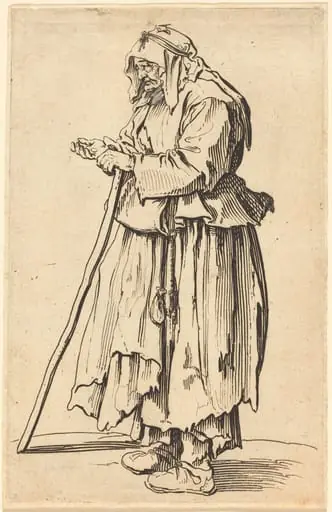 Beggar Woman Receiving Charity
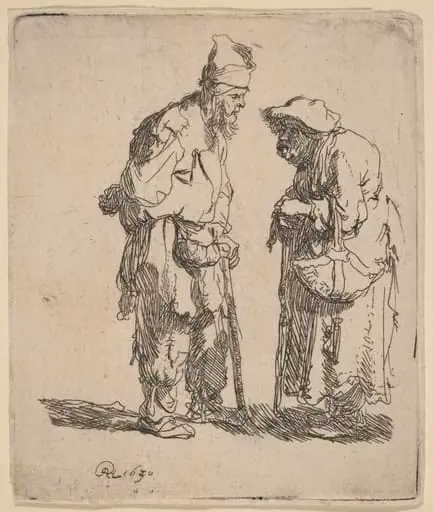 Beggar Man and Beggar Woman Conversing
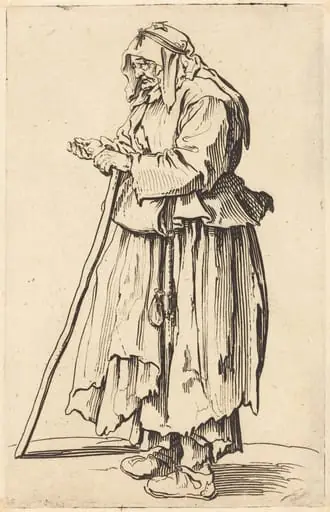 Beggar Woman Receiving Charity
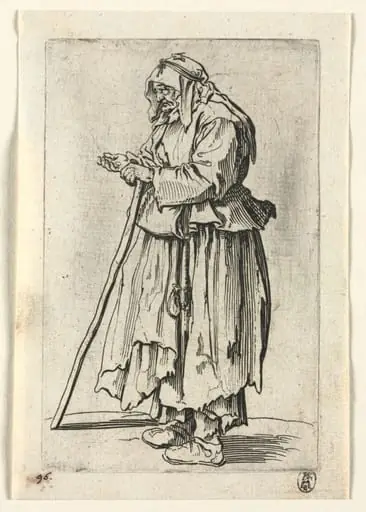 The Beggars: Beggar Woman Coming to Receive Alms
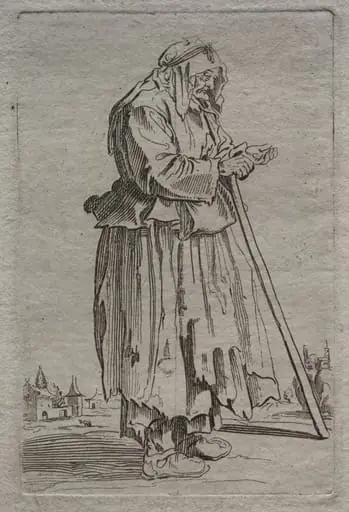 Old Beggar Woman
 Six Men and Women Beggars