Artwork
Two Seated Figures
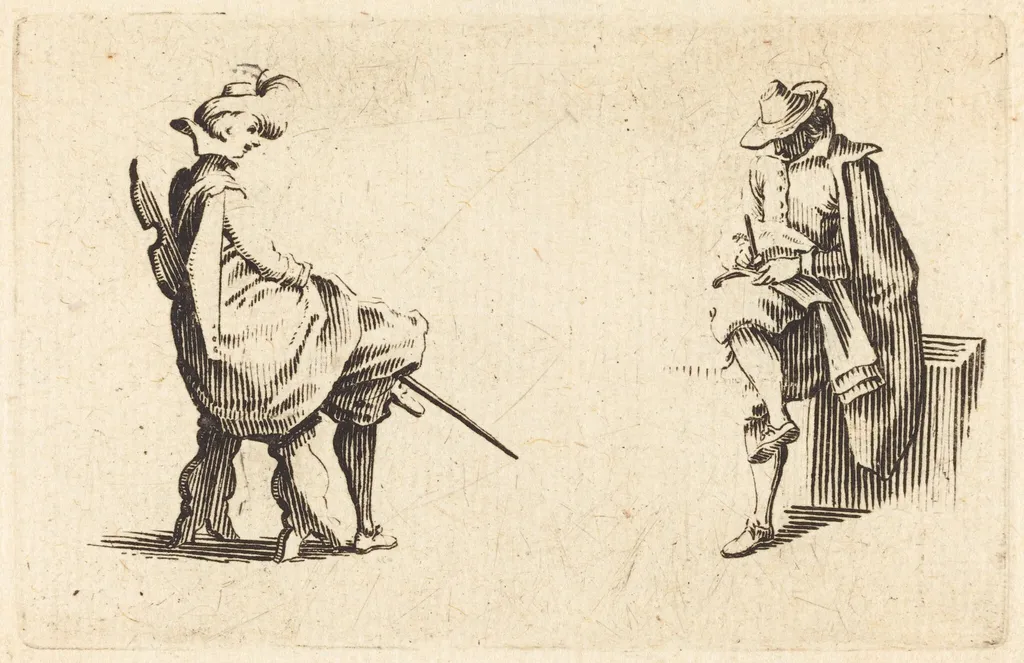
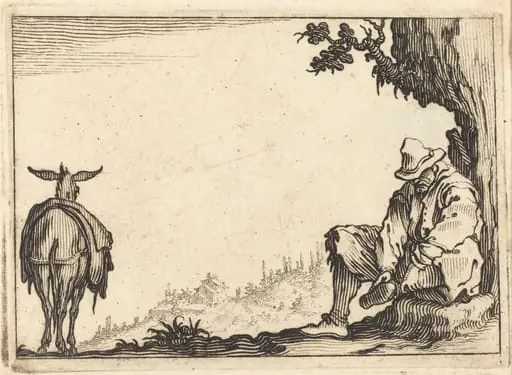
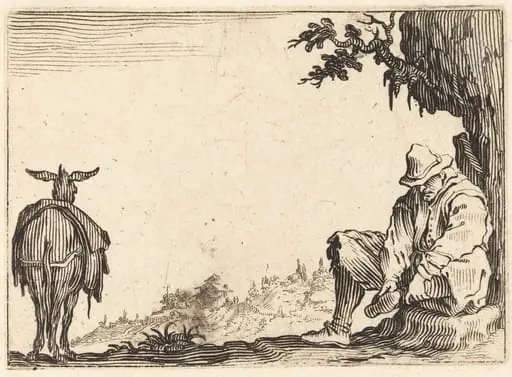
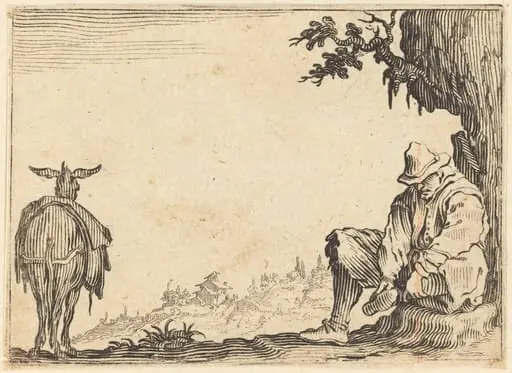
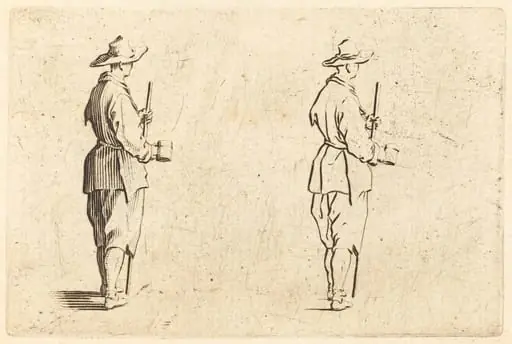
Two Seated Figures is an ink print by the Baroque artist Jacques Callot. It dates from 1622 and is held in the collection of the National Gallery of Art.
About this work
Overview
Created circa 1622, *Two Seated Figures* is an etching on laid paper by Jacques Callot, a French artist from the Duchy of Lorraine.
Created circa 1622, *Two Seated Figures* is an etching on laid paper by Jacques Callot, a French artist from the Duchy of Lorraine. Known for his prolific output in printmaking, Callot used etching to record everyday life with precision. This small work exemplifies his interest in quiet, unidealized human moments, rendered through fine, deliberate lines that capture texture and mood without embellishment.
Subject & Meaning
The two men, seated side by side on a plain bench, wear distinct headgear—a tall hat and a simple cap—suggesting differing social standings. Their postures and expressions convey weariness or introspection, not performance. Callot avoids narrative drama, instead focusing on the quiet dignity of ordinary individuals, a recurring theme in his depictions of laborers, soldiers, and the marginalized.
Technique & Style
Callot employed etching, using a needle to incise lines into a metal plate coated with wax. Ink was pressed into these grooves, transferring the image onto damp paper. The scratchy, controlled lines reveal his mastery of fine detail and tonal variation. The texture of the laid paper enhances the tactile quality of the ink, making each stroke visible and deliberate, emphasizing process over polish.
History & Provenance
The work dates from the early phase of Callot’s career, shortly after his return to Nancy from Florence. While no specific early ownership records are documented, it aligns with his broader practice of producing small, intimate prints for collectors and artists. It was likely circulated among patrons familiar with his depictions of social types, part of a growing market for printed imagery in early 17th-century Europe.
Context
Callot worked during a time when printmaking was becoming a respected medium for social observation. His depictions of beggars and laborers, such as those in *Les Gueux*, resonated with contemporary interest in human diversity and class. Unlike grand historical scenes, his focus on unremarkable figures reflected a shift toward realism and empathy in visual culture, influenced by Flemish and Dutch precedents.
Legacy
Callot’s etchings, including *Two Seated Figures*, influenced later generations of printmakers through their technical precision and humanistic focus. His ability to convey psychological nuance with minimal means set a standard for narrative economy in print. Though less celebrated than his larger series, such intimate works remain vital for understanding the breadth of his observational practice.
Artist & collection
Artist
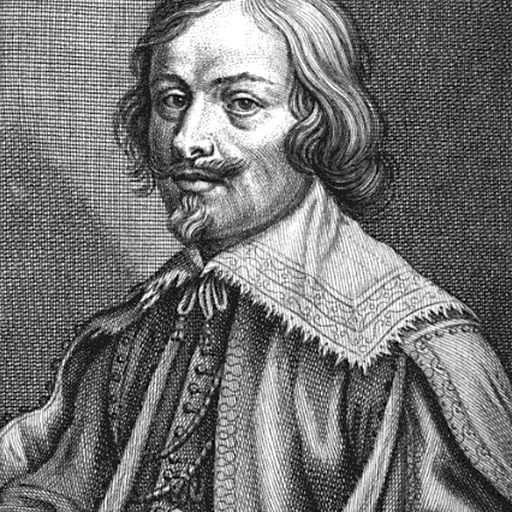
Jacques Callot was a baroque printmaker and draftsman from the Duchy of Lorraine.

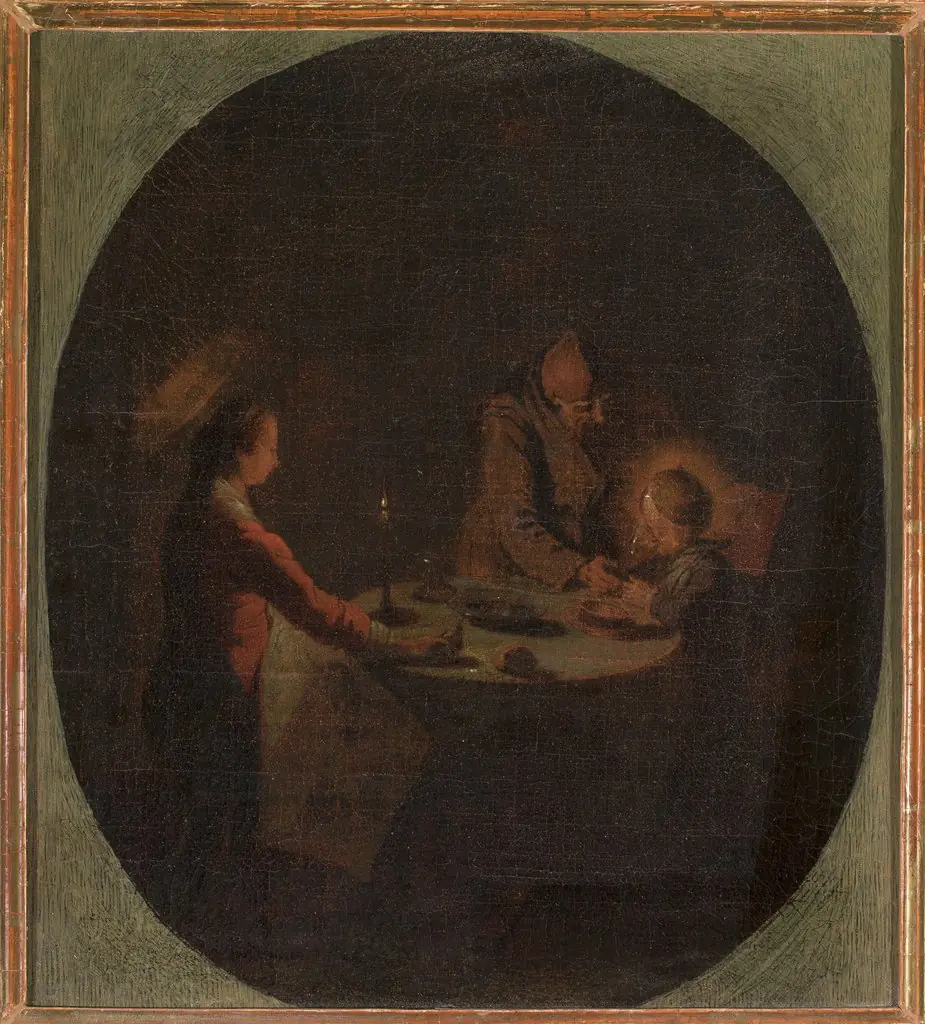 Holy Family at supper
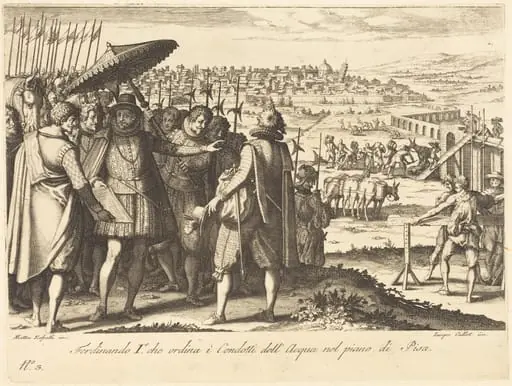 Restoration of the Aqueduct at Pisa
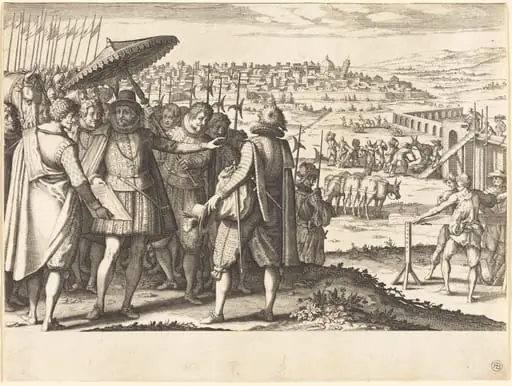 Restoration of the Aqueduct at Pisa
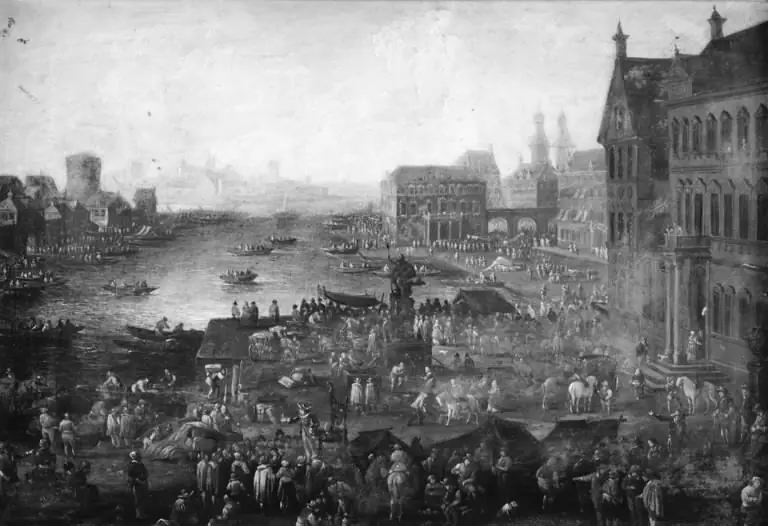 Square in Paris with Many Figures
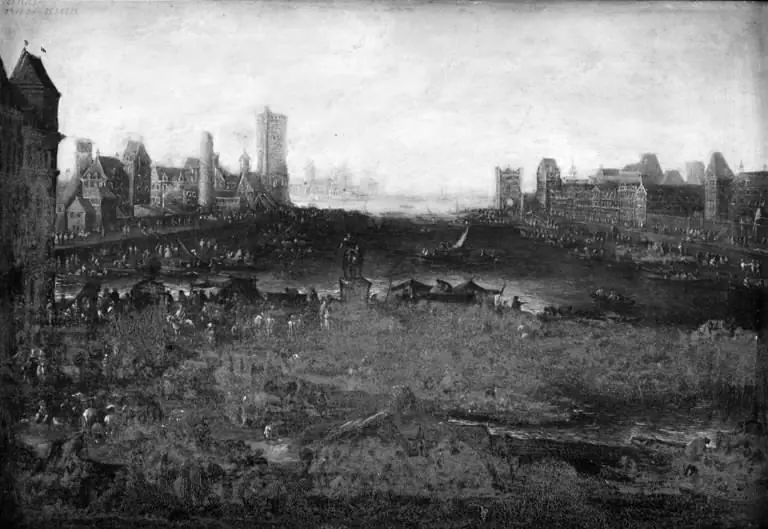 Square in Paris with Many Figures
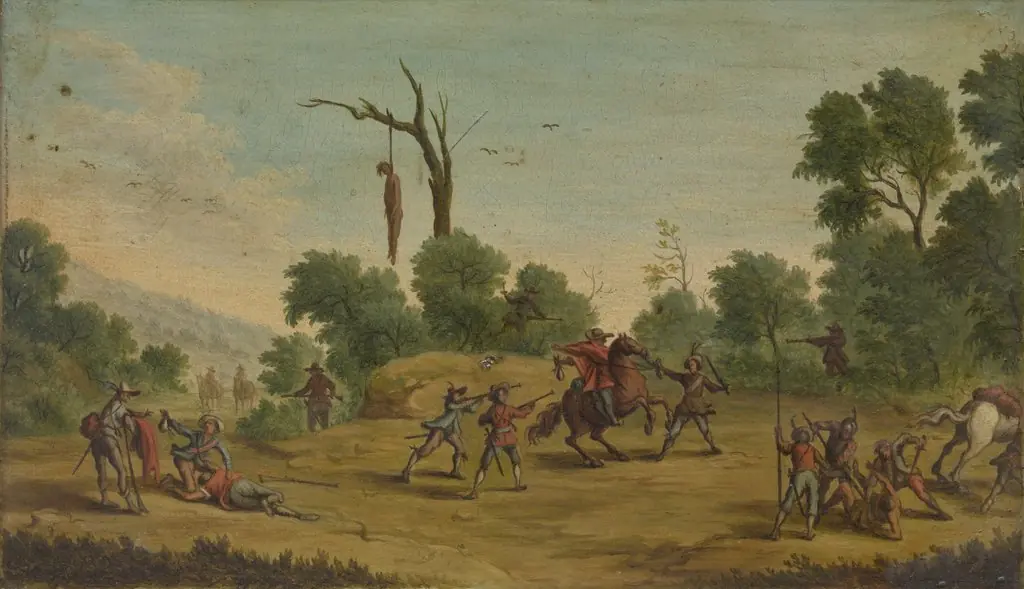 Horsemen Attacked by Robbers
 HOW WILL A COVERED PART BE CORRECTED?HOW WIKA A COVERED HEART DEED CORRECTED?
![Christ Walking on the Water [second plate], by Jacques Callot](https://artifactworldgallery.com/img/jacques-callot--christ-walking-on-the-water-second-plate--2069f3bfe4cb2126-w320.webp) Christ Walking on the Water [second plate]
Christ Walking on the Water [second plate]