Artwork
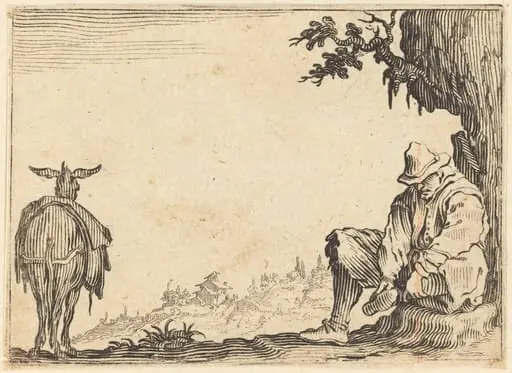
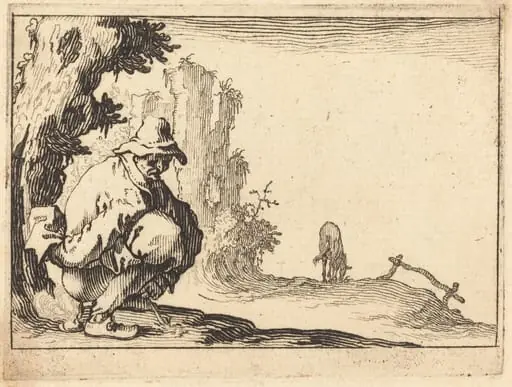
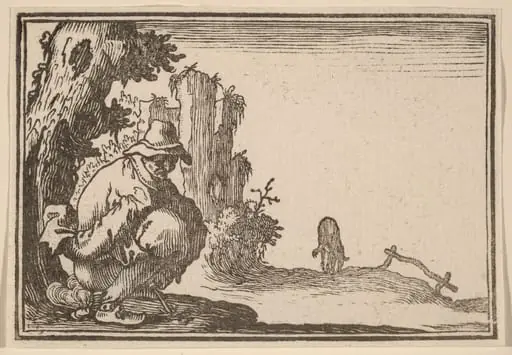
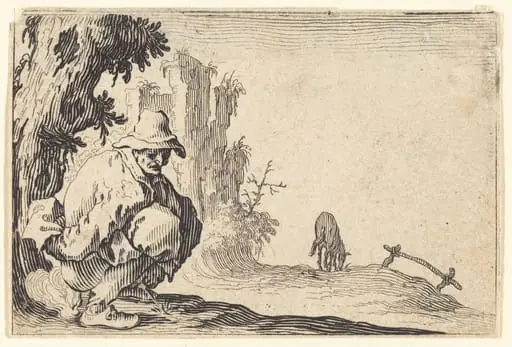
Peasant Removing His Shoe
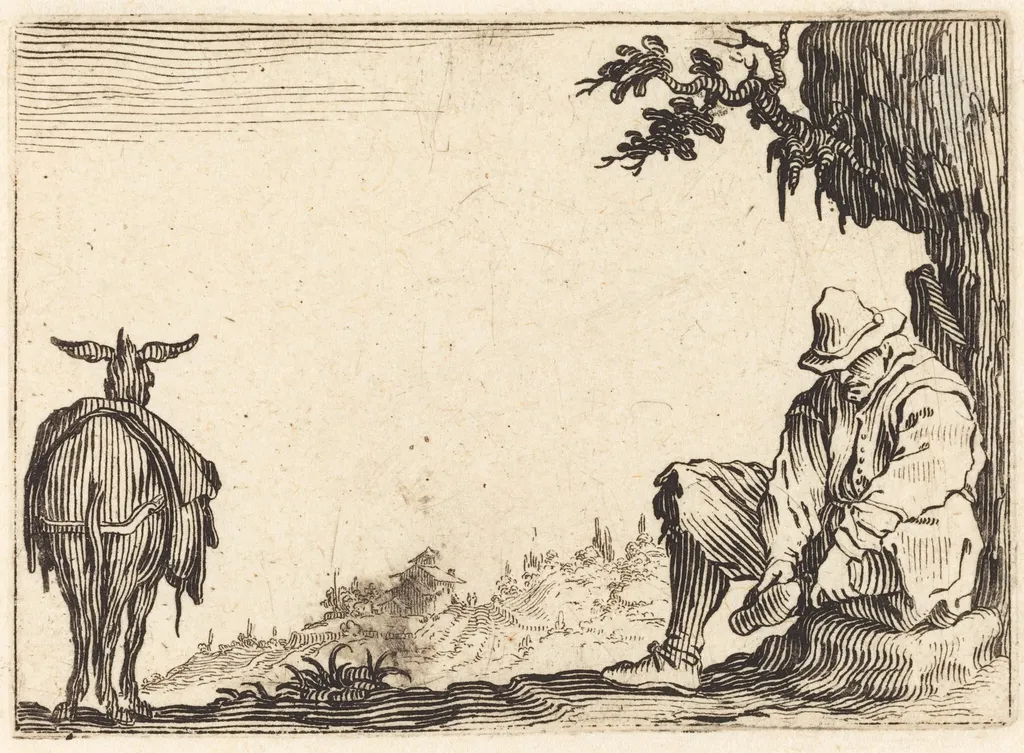
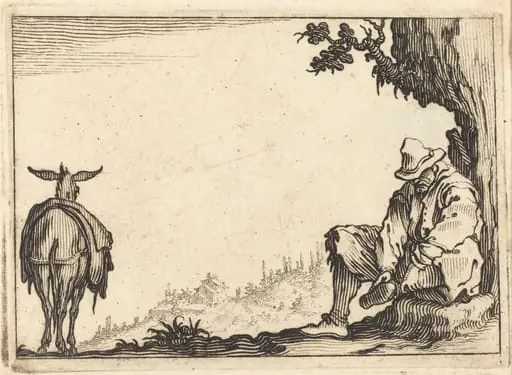
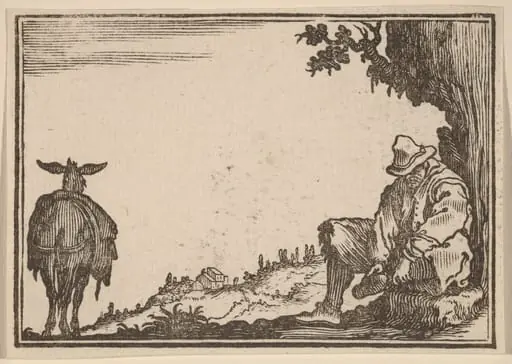
Peasant Removing His Shoe is an ink print by the Baroque artist Jacques Callot. It dates from 1622 and is held in the collection of the National Gallery of Art.
About this work
Overview
Peasant Removing His Shoe is an etching on laid paper created by French Baroque artist Jacques Callot around 1622. The black-and-white print depicts a rural scene with two men, one removing his shoe and the other standing beside a cow, set against a detailed landscape of trees, bushes, and uneven ground.
Subject & Meaning
The subject focuses on everyday life, specifically humble, working-class individuals in a natural setting. The composition highlights ordinary activities and social types, characteristic of Callot's documentary approach to 17th-century life.
Technique & Style
Callot utilized sharp, detailed etching techniques to achieve textured, nearly three-dimensional effects, evident in the cow's fur and tree bark. The style emphasizes realism and attention to everyday detail.
History & Provenance
Created circa 1622, this etching is part of Callot's prolific output of over 1,400 works. Specific provenance details are not provided, but it aligns with his practice of capturing contemporary social and rural scenes.
Context
This work reflects the Baroque period's interest in everyday life and the emergence of printmaking as a medium for documenting social realities. Callot's Lorraine background may have influenced his focus on rural themes.
Artist & collection

Artist
Jacques Callot was a baroque printmaker and draftsman from the Duchy of Lorraine.

 Holy Family at supper
 Restoration of the Aqueduct at Pisa
 Restoration of the Aqueduct at Pisa
 Square in Paris with Many Figures
 Square in Paris with Many Figures
 Horsemen Attacked by Robbers
 HOW WILL A COVERED PART BE CORRECTED?HOW WIKA A COVERED HEART DEED CORRECTED?
![Christ Walking on the Water [second plate], by Jacques Callot](https://artifactworldgallery.com/img/jacques-callot--christ-walking-on-the-water-second-plate--2069f3bfe4cb2126-w320.webp) Christ Walking on the Water [second plate]
Christ Walking on the Water [second plate]