Artwork
Virgin and Child with Saints James and Jerome
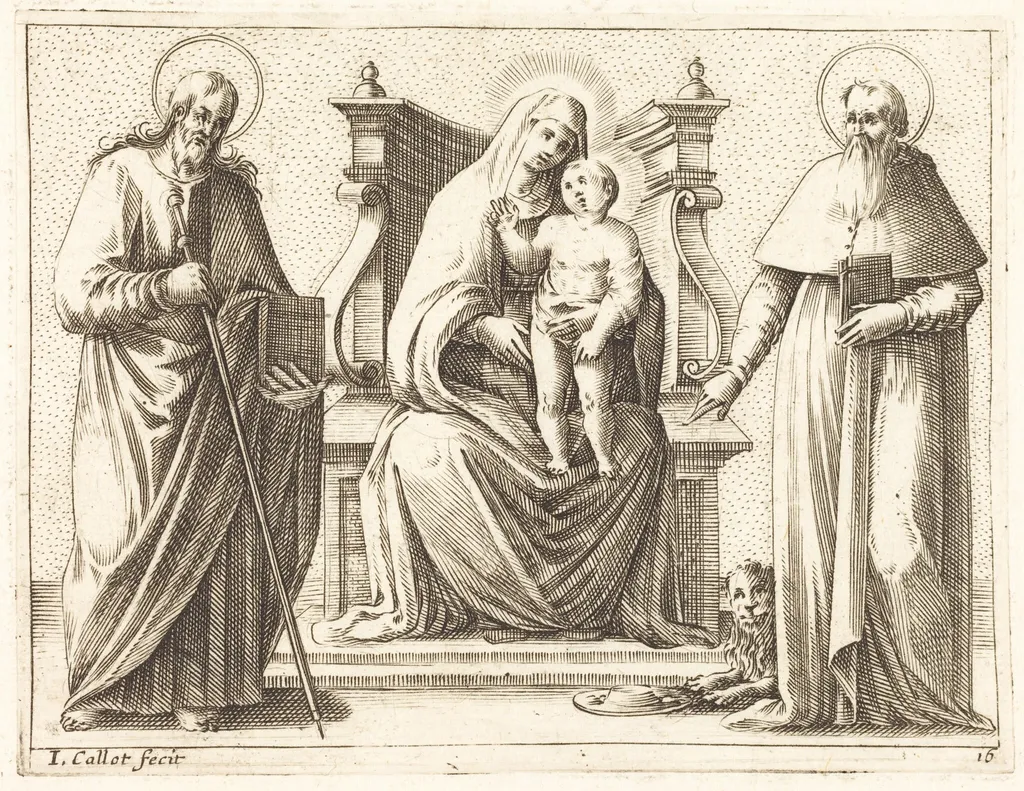
Virgin and Child with Saints James and Jerome is an ink print by the Baroque artist Jacques Callot. It dates from 1610 and is held in the collection of the National Gallery of Art.
About this work
Overview
Jacques Callot, a French artist from the Duchy of Lorraine, produced this engraving in 1610 as part of his extensive body of religious and secular prints.
Jacques Callot, a French artist from the Duchy of Lorraine, produced this engraving in 1610 as part of his extensive body of religious and secular prints. Executed in fine lines on laid paper, the work exemplifies his mastery of engraving, a technique that allowed precise control over tone and texture. Though small in scale, the image conveys complex spiritual figures through meticulous draftsmanship, reflecting Callot’s reputation as a leading printmaker of the early Baroque period.
Subject & Meaning
The composition centers on the Virgin Mary seated on a simple throne, holding the Christ Child who stands on her lap. To her left, Saint James the Greater is identified by his pilgrim’s staff and book; to her right, Saint Jerome, scholar of the Bible, holds a volume and wears a cardinal’s red hat, his halo marking his sanctity. The grouping reflects devotional traditions of the time, emphasizing intercession and sacred learning, with no extraneous elements to distract from the sacred figures.
Technique & Style
Callot employed fine, controlled engraving lines to model form and texture, using cross-hatching to suggest volume and shadow. The figures emerge from a flat, unadorned background, drawing attention to their gestures and drapery. The precision of the lines captures the weight of fabric, the softness of skin, and the texture of books and staffs, demonstrating his ability to render depth and detail without color or landscape context.
History & Provenance
Created in 1610 during Callot’s early career, this print likely circulated among collectors and religious institutions in northern Europe. Though its specific early ownership is undocumented, it aligns with the broader dissemination of devotional prints in the early 17th century. Callot’s reputation as a prolific and technically refined engraver ensured wide circulation of such works, contributing to their presence in major print collections today.
Context
In early 17th-century Europe, religious imagery remained central to private devotion, especially in Catholic regions. Callot’s engagement with sacred subjects paralleled the Counter-Reformation’s emphasis on visual piety. While many artists turned to grand altarpieces, Callot’s small-scale engravings offered accessible, intimate representations, making sacred narratives available beyond church walls to individuals and households.
Legacy
Callot’s technical innovations in engraving influenced generations of printmakers across Europe. His ability to convey emotional gravity and detail in miniature formats helped elevate printmaking as a serious artistic medium. Though less celebrated than his battle scenes or genre works, this engraving exemplifies his consistent skill in rendering sacred subjects with clarity and reverence, securing his place in the history of print.
Artist & collection
Artist
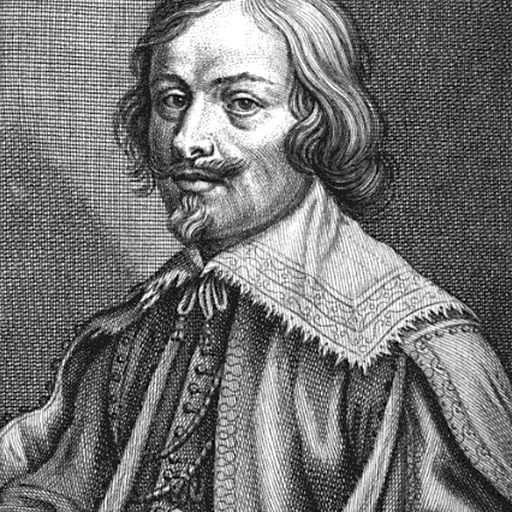
Jacques Callot was a baroque printmaker and draftsman from the Duchy of Lorraine.

 Holy Family at supper
 Restoration of the Aqueduct at Pisa
 Restoration of the Aqueduct at Pisa
 Square in Paris with Many Figures
 Square in Paris with Many Figures
 Horsemen Attacked by Robbers
 HOW WILL A COVERED PART BE CORRECTED?HOW WIKA A COVERED HEART DEED CORRECTED?
![Christ Walking on the Water [second plate], by Jacques Callot](https://artifactworldgallery.com/img/jacques-callot--christ-walking-on-the-water-second-plate--2069f3bfe4cb2126-w320.webp) Christ Walking on the Water [second plate]
Christ Walking on the Water [second plate]
 The Virgin with a Fish
 Presentation of Christ
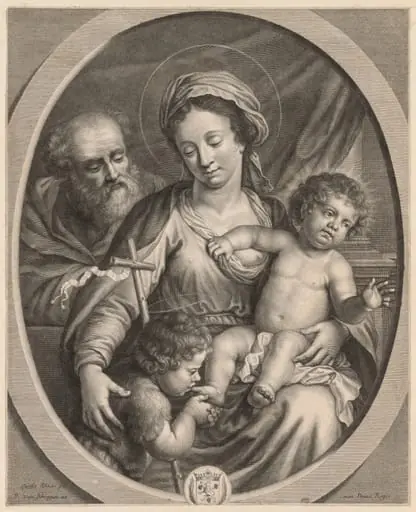 Holy Family and S. John
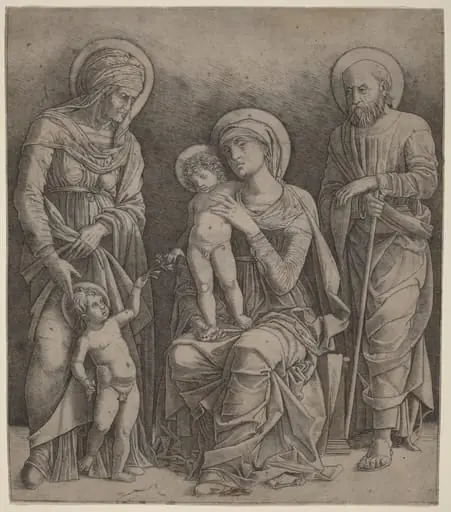 Holy Family with Saint Elizabeth and the Infant Saint John
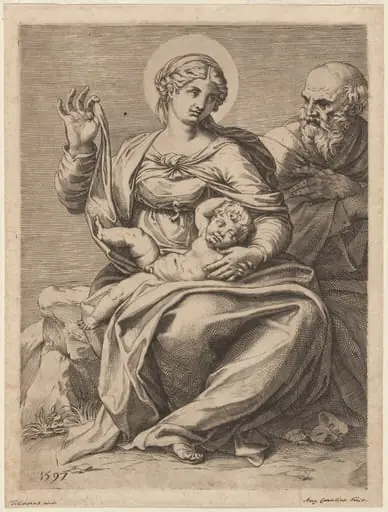 The Holy Family
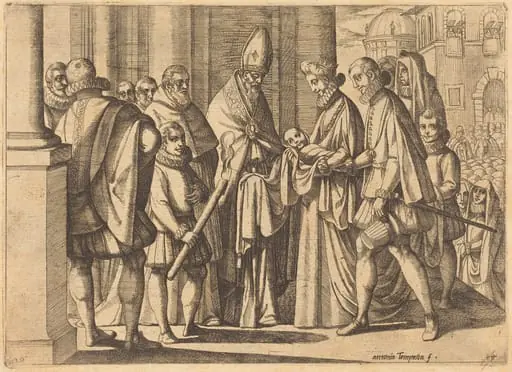 Philip as a Boy before Margaret of Austria
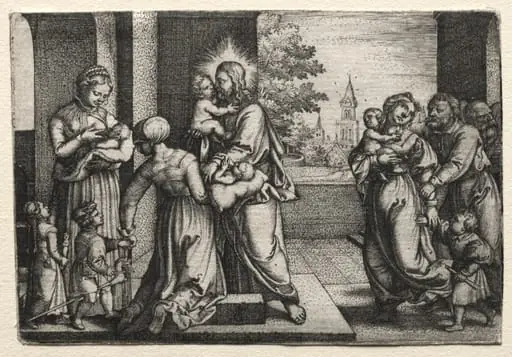 Christ with Little Children
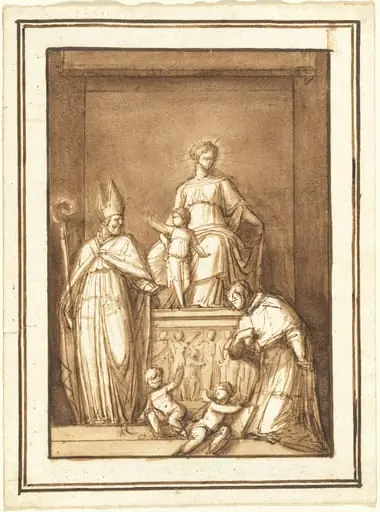 The Madonna and Child Enthroned with a Bishop Saint and a Kneeling Ecclesiastic
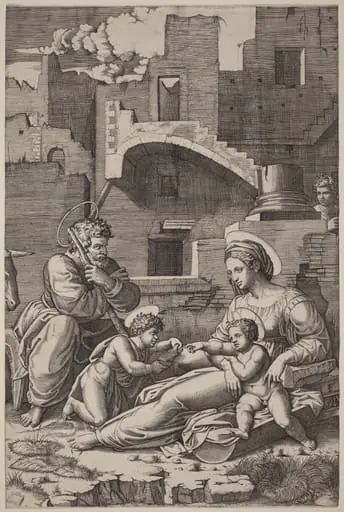 The Holy Family with the Young Saint John the Baptist (The Madonna of the Long Thigh)
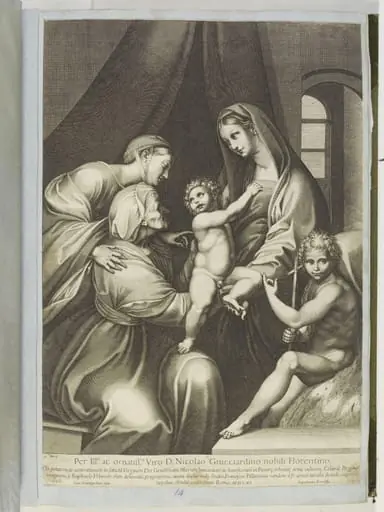 Untitled
 Untitled
 Madonna and Child with Saints Elizabeth and John the Baptist (La Madonna della Scodella)