Artwork
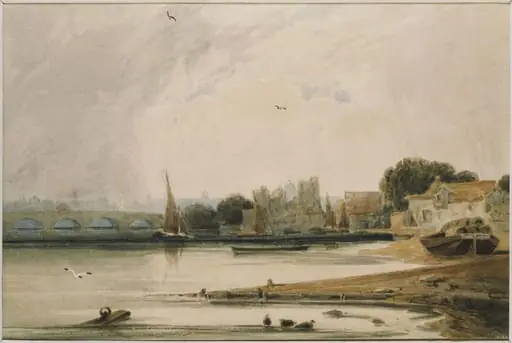
Distant View of Paris from the Seine
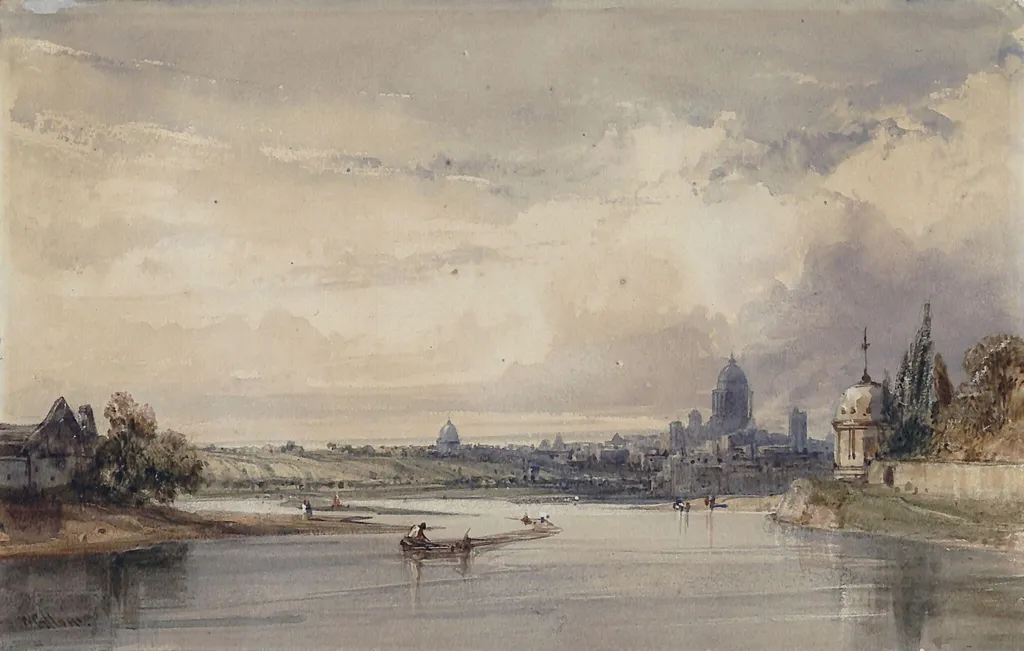
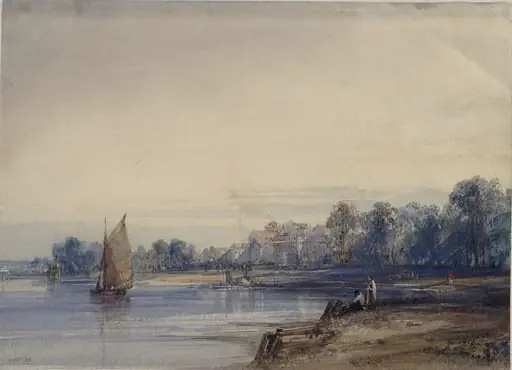
Distant View of Paris from the Seine is a watercolor work on paper by the British Romanticist artist William Callow. It dates from 1825 and is held in the collection of the Victoria and Albert Museum.
About this work
Overview
The city’s architecture is rendered with subtle detail, avoiding sharp definition to preserve the atmosphere of quiet observation.
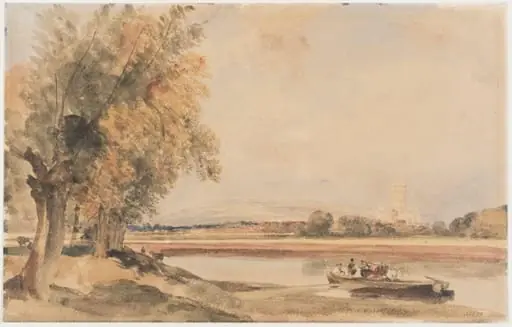
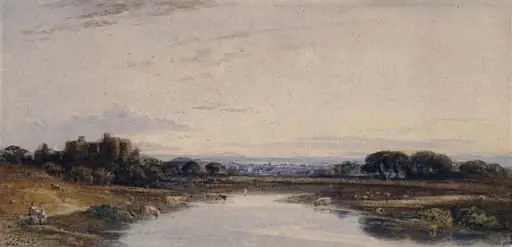
Painted in 1825, William Callow’s watercolour captures a tranquil stretch of the Seine with Paris visible on the horizon. The scene is rendered in soft, translucent washes that suggest early morning light. A few modest boats drift gently on the water, while trees frame the river’s edge. The city’s architecture is rendered with subtle detail, avoiding sharp definition to preserve the atmosphere of quiet observation.
Subject & Meaning
The painting presents Paris not as a bustling urban center but as a distant, serene silhouette. The focus lies in the harmony between nature and the built environment, with the river acting as a reflective mediator. The dome-shaped structure likely represents the Panthéon or Invalides, subtly anchoring the view in a recognizable landmark without dominating the composition. The mood is contemplative, emphasizing stillness over activity.
Technique & Style
Callow employed transparent watercolour washes to achieve a hazy, atmospheric effect. Layers of diluted pigment blend seamlessly, softening edges between sky, water, and buildings. The absence of sharp lines and the gentle gradation of tones reflect a preference for tonal harmony over detail. This method aligns with contemporary British watercolour practices, where luminosity and subtlety were valued over boldness.
History & Provenance
Created during Callow’s early career, the work dates to a period when he was traveling and sketching along the Seine. It likely originated as a study for later, more finished pieces. The painting remained in private collections in Britain for much of the 19th century before entering institutional holdings. Its survival reflects its status as a representative example of topographical watercolour from the era.
Context
This work emerges within the broader Romantic tradition, which favored emotional resonance over strict realism. Artists of the time sought to evoke mood through light, atmosphere, and natural forms. Callow’s depiction of Paris aligns with this ethos, presenting the city not as a monument to progress but as a quiet presence within a larger, tranquil landscape—echoing contemporary interests in the sublime and the pastoral.
Legacy
Callow’s watercolour exemplifies the British tradition of topographical art that influenced later landscape practices. While not widely known today, such works contributed to the development of watercolour as a serious medium in the 19th century. Its restrained aesthetic and emphasis on atmosphere continue to inform how artists approach the depiction of urban environments from a distance.
Own this work as a print
Artist & collection