Artwork
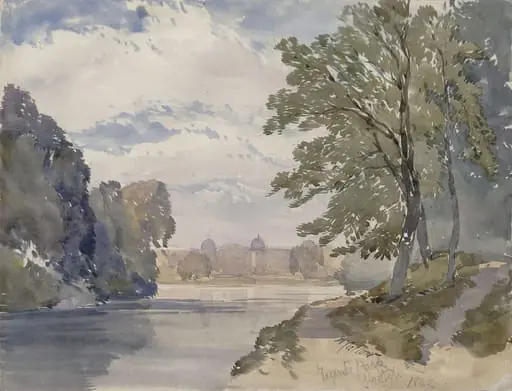
West end of the Serpentine in Kensington Gardens
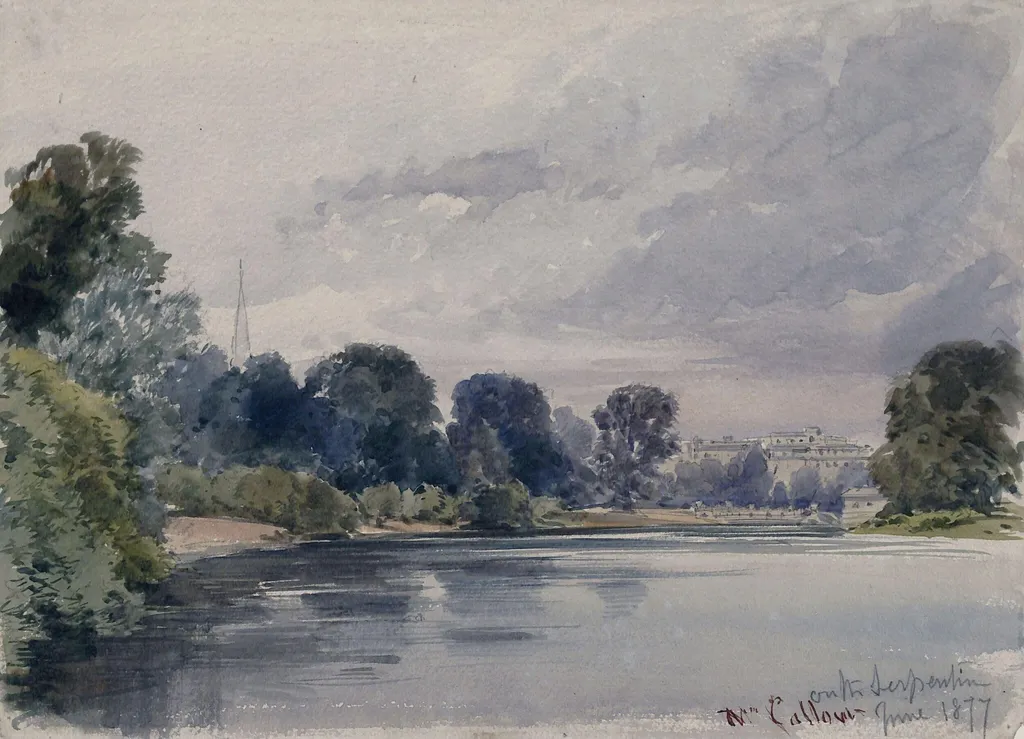
West end of the Serpentine in Kensington Gardens is a watercolor work on paper by the British Romanticist artist William Callow. It dates from 1847 and is held in the collection of the Victoria and Albert Museum.
About this work
Next, look up Romanticism to see how this style often focuses on nature and feeling.
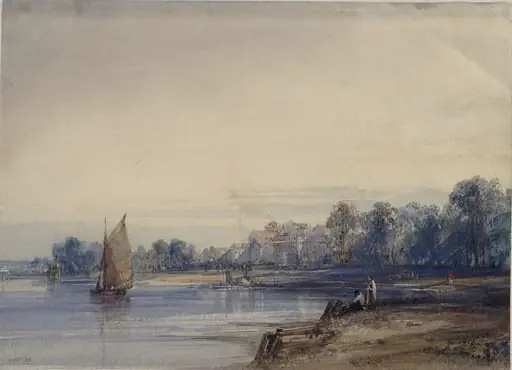
This painting shows a calm river with trees on both sides. The water is smooth, reflecting the sky. In the distance, there’s a building with columns and a fence behind it. The sky is light and fluffy, with some darker clouds. The trees are green, but not too bright.
The artist painted this in 1847. It’s a quiet scene of nature, with no people in sight. The colors are soft and gentle.
Next, look up Romanticism to see how this style often focuses on nature and feeling.
Overview
This watercolour by William Callow captures a serene scene of the western end of the Serpentine in Kensington Gardens, characterized by a calm river, surrounding trees, and a distant building, all set beneath a varied sky.
Subject & Meaning
The painting presents a tranquil, uninhabited natural setting, emphasizing the beauty of the landscape and potentially evoking feelings of peacefulness, in line with the emphasis on nature and emotion typical of Romanticism.
Technique & Style
Callow employs soft, gentle colors and smooth brushwork to convey the serenity of the scene, with the calm water reflecting the sky, suggesting a focus on capturing atmosphere and light.
History & Provenance
Signed by the artist, the work is dated to 1847, with a noted potential discrepancy suggesting an originally recorded date of 1877, which is considered an error.
Context
Created during a period influenced by Romanticism, the painting aligns with the movement's themes of nature appreciation and emotional resonance, though its calmness also hints at a softer, more serene interpretation of these ideals.
Own this work as a print
Artist & collection