Artwork
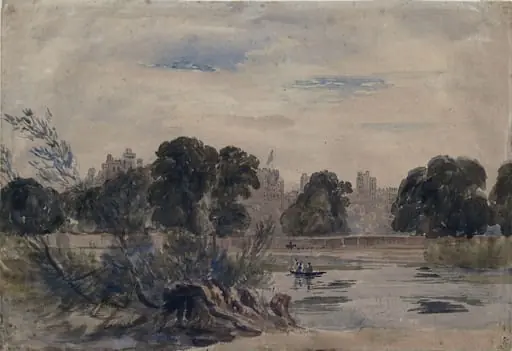
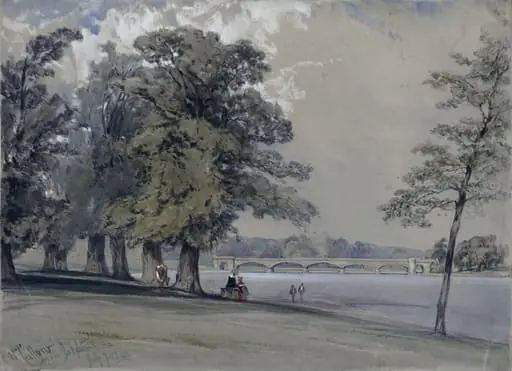
The Serpentine, Kensington Gardens
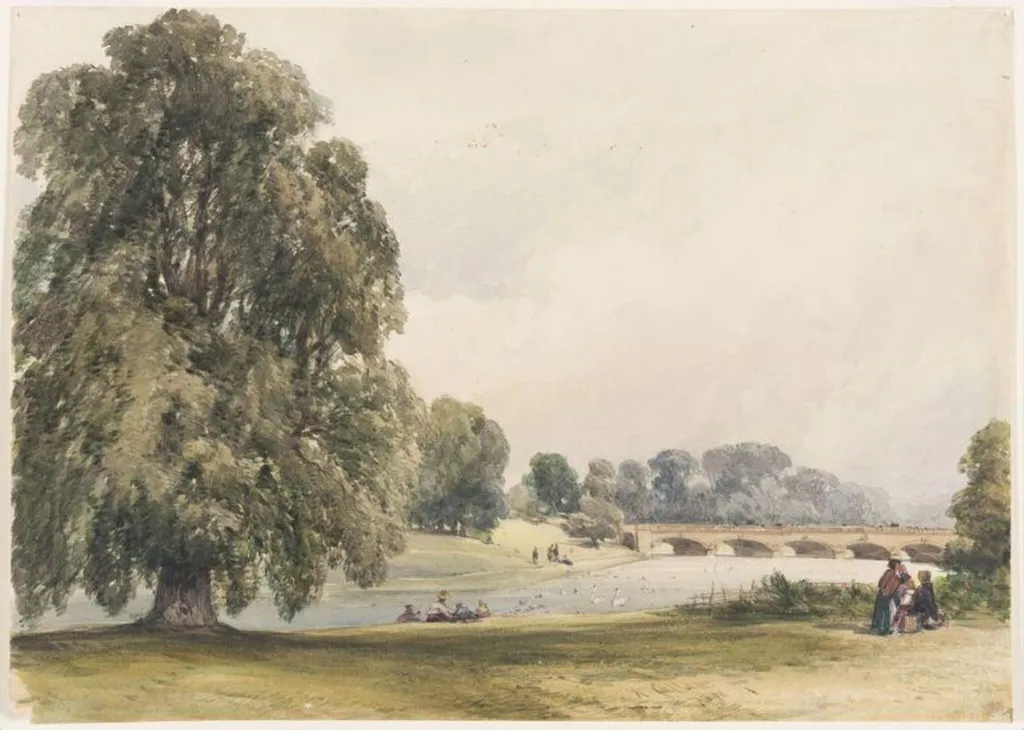
The Serpentine, Kensington Gardens is a watercolor work on paper by the British Romanticist artist Callow. It dates from 1846 and is held in the collection of the Victoria and Albert Museum.
About this work
Overview
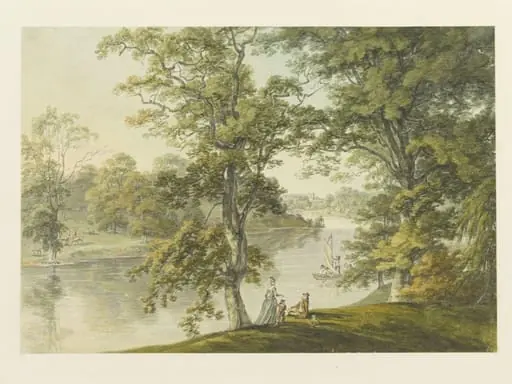
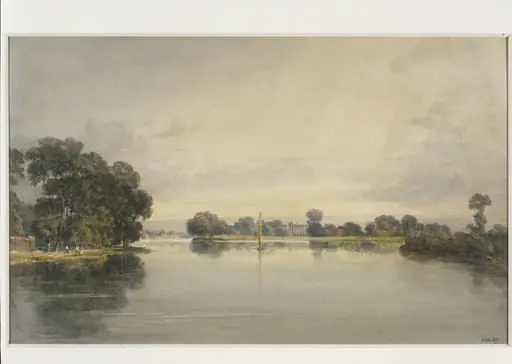
John Callow’s watercolour, executed in 1846 but later mis‑dated as 1876, presents a tranquil view of Kensington Gardens. The composition balances natural elements—a prominent tree and a distant water body—with a small gathering of figures along the shore, conveying a leisurely park scene typical of mid‑nineteenth‑century London.
Subject & Meaning
The painting foregrounds a mature tree whose branches extend toward the viewer, framing a calm stretch of water that recedes into the garden’s landscape. Figures positioned at the water’s edge suggest genteel recreation, emphasizing the park’s role as a public space for relaxation and social interaction during the Romantic era.
Technique & Style
Rendered in muted watercolour tones, Callow employs delicate washes to model light and atmosphere. The subdued palette softens the foliage and water, while fine brushwork captures the tree’s intricate branching and the subtle reflections on the surface, reinforcing the work’s serene mood.
History & Provenance
Created in 1846, the work was later labeled with the erroneous date 1876, a mistake that has appeared in some catalogues. It remains part of the Victoria and Albert Museum’s collection, where it contributes to the institution’s representation of Romantic landscape painting.
Own this work as a print
Artist & collection
Artist
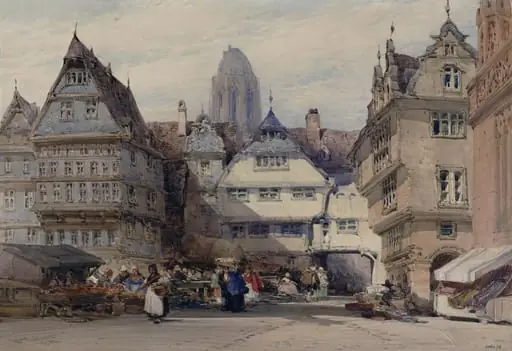
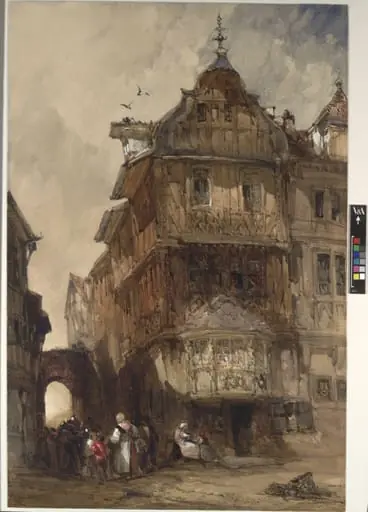
These watercolours capture towns and buildings in Europe through the 1800s. Look at the lively pencil lines and soft washes in Market Place, Frankfort (1863) or the warm brick tones of Old Houses, Berncastel, on the…