Artwork
West end of the Serpentine, Kensington Gardens
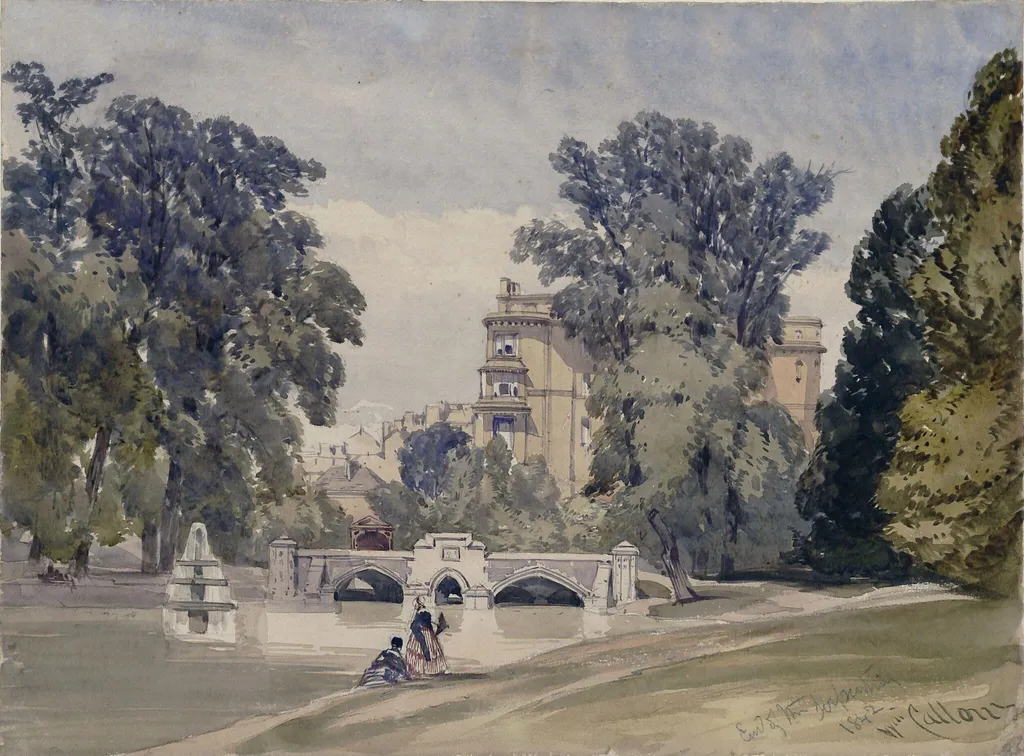
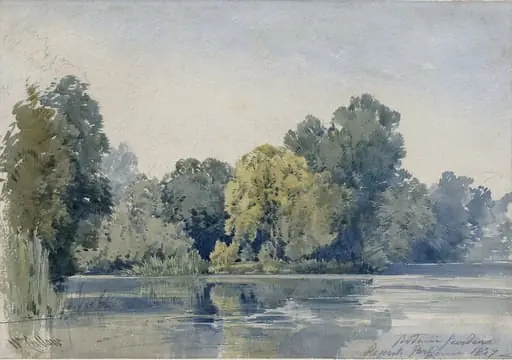
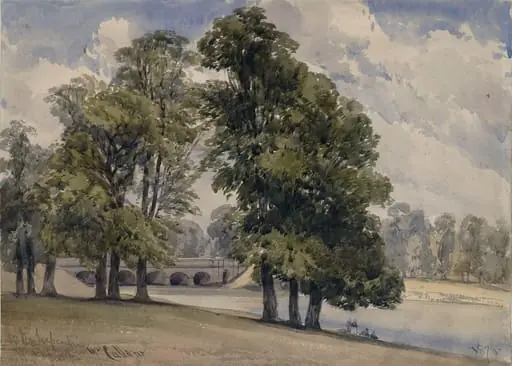
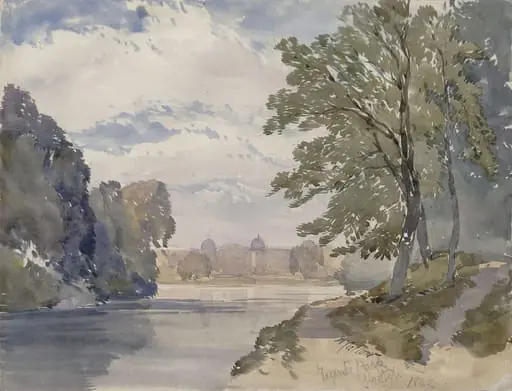
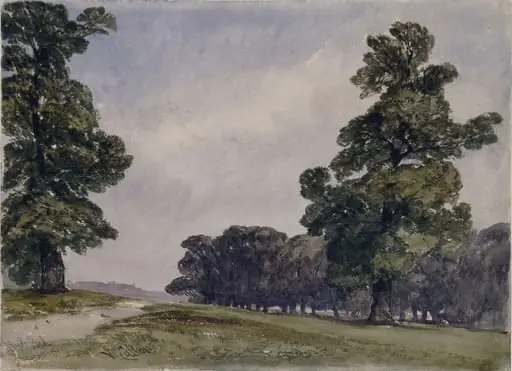
West end of the Serpentine, Kensington Gardens is a watercolor work on paper by the British Romanticist artist William Callow. It dates from 1843 and is held in the collection of the Victoria and Albert Museum.
About this work
Overview
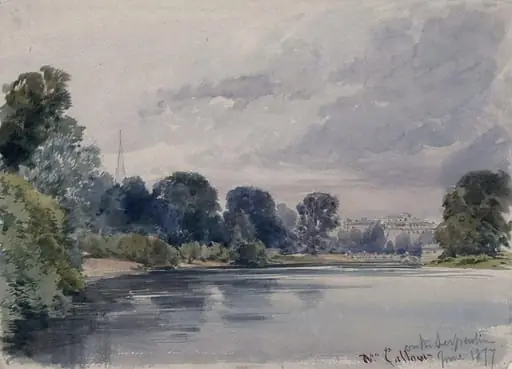
Painted in 1843, this watercolour by William Callow captures the western stretch of the Serpentine in Kensington Gardens. The work is signed and dated by the artist, confirming its origin and timing. Rendered in delicate washes, the scene conveys a tranquil, everyday moment in a London park, emphasizing natural light and quiet human presence without dramatic flourish.
Subject & Meaning
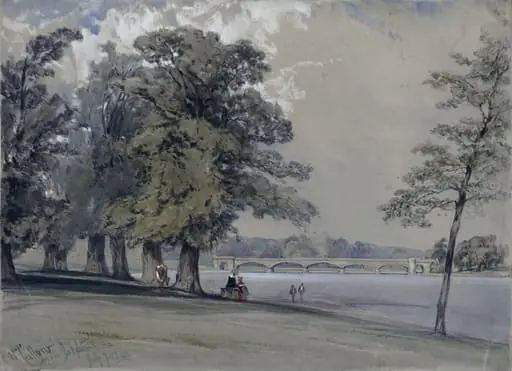
The composition centers on a winding path leading toward a modest bridge crossing the water, flanked by two figures seated on the grass.
The composition centers on a winding path leading toward a modest bridge crossing the water, flanked by two figures seated on the grass. Dressed in period attire, they are absorbed in quiet repose, suggesting leisure rather than narrative. The distant towered building anchors the scene in its real-world context, while the stillness of the figures and the gentle curve of the water evoke a meditative, contemplative mood.
Technique & Style
Callow employed transparent watercolour washes to suggest atmospheric depth and soft transitions between light and shadow. The foliage is rendered with loose, fluid strokes that imply movement and texture without detailed definition. The bridge and figures are minimized in scale, reinforcing the dominance of nature and the subtle interplay of light across grass, water, and tree canopies.
History & Provenance
Created during a period when British watercolour painting was gaining recognition as a serious medium, this work reflects Callow’s consistent focus on topographical landscapes. It was likely made for private collectors interested in picturesque English scenery. The artist’s signature and date indicate its authenticity and place within his documented body of work from the 1840s.
Context
Kensington Gardens, then a fashionable retreat for London’s middle and upper classes, was increasingly shaped by public access and landscape design. Callow’s depiction aligns with contemporary interest in urban green spaces as sites of quiet escape. The painting reflects a broader cultural shift toward valuing nature within the city, even as industrialization transformed the surrounding world.
Legacy
Callow’s watercolours, including this one, contributed to the tradition of British topographical art that prioritized accuracy and mood over idealization. While not widely celebrated in his time, his works remain valuable records of 19th-century landscape aesthetics and the evolving relationship between urban dwellers and their cultivated natural surroundings.
Own this work as a print
Artist & collection