Artwork
Χωρίς τίτλο
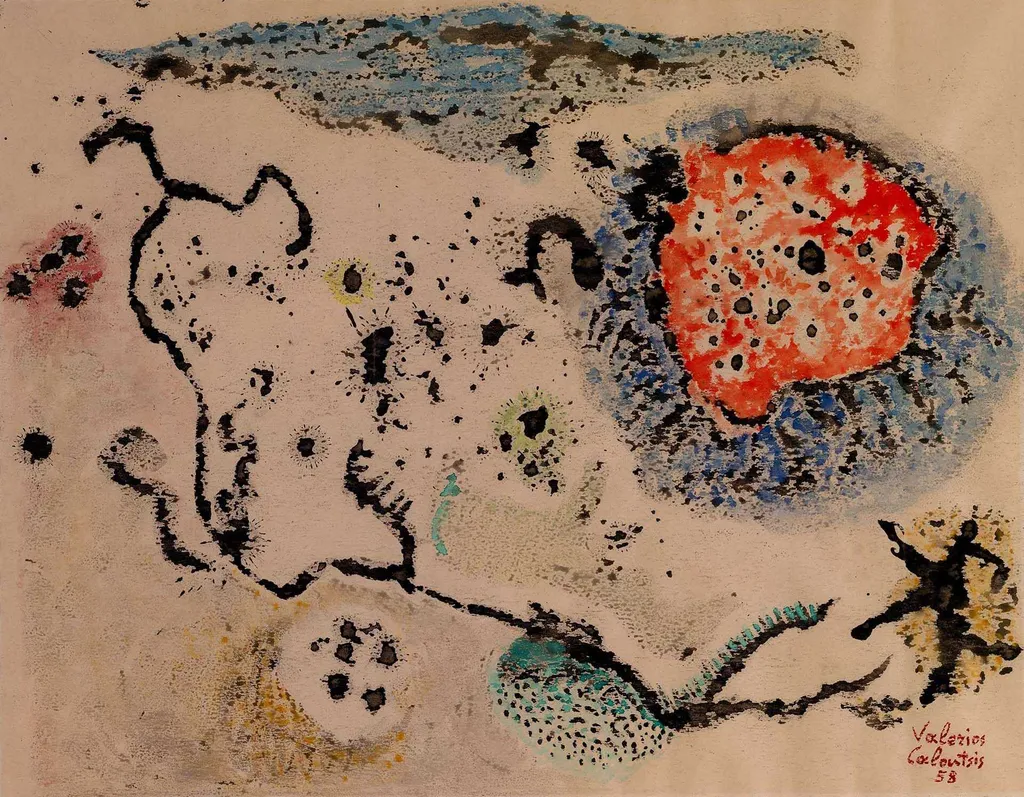
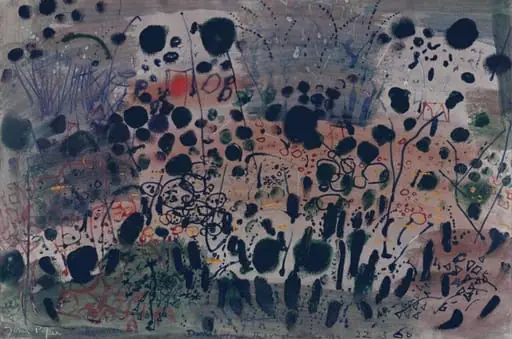
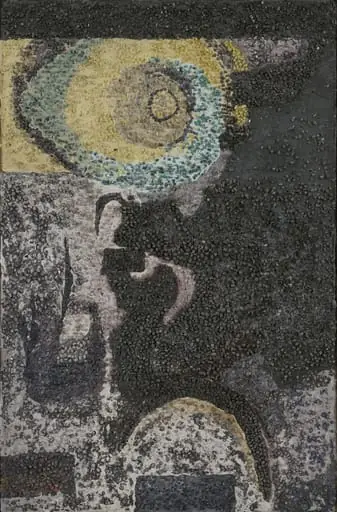
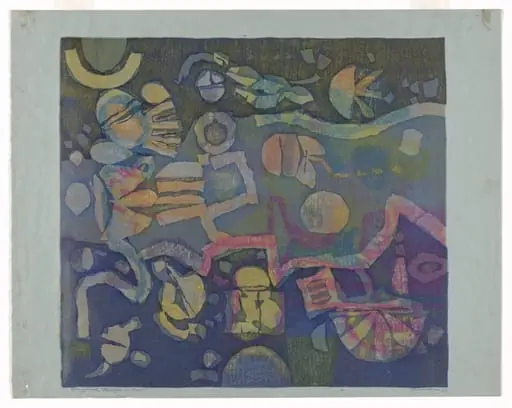
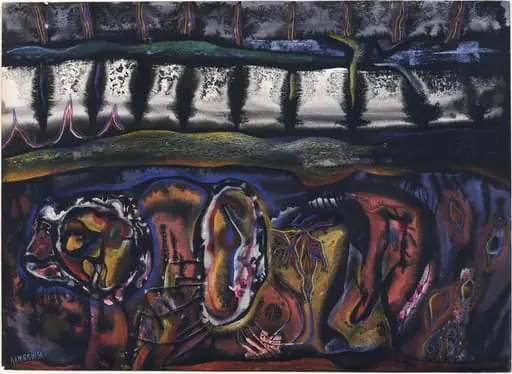
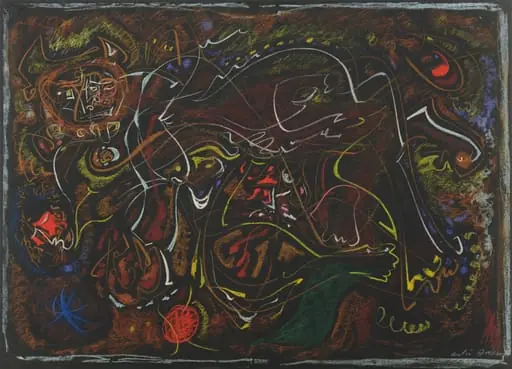
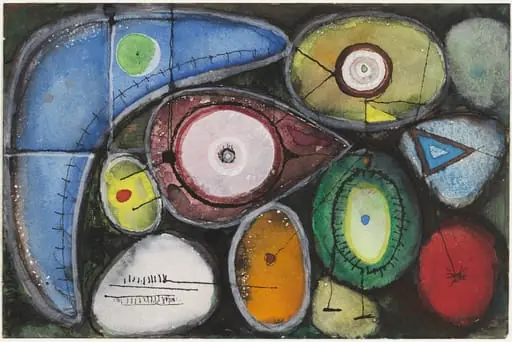
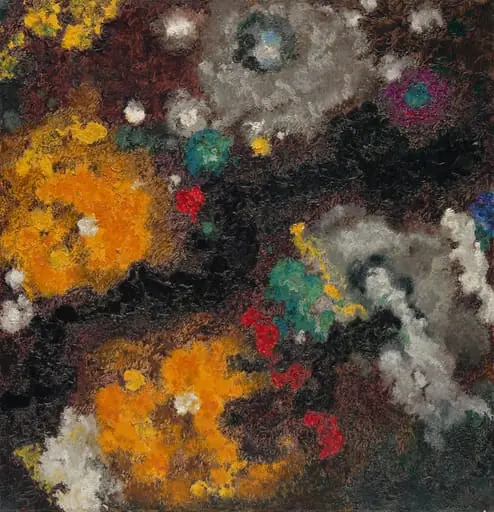
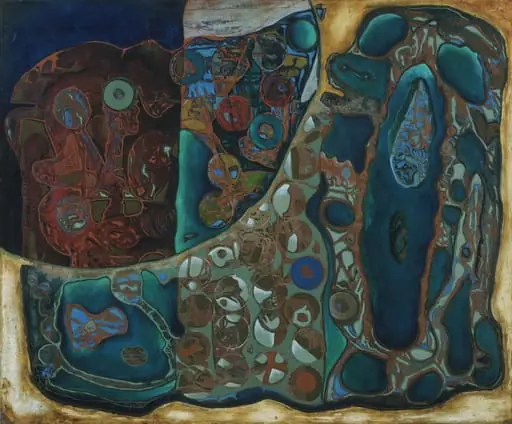
Χωρίς τίτλο is an unspecified work on paper by the Abstract Expressionist artist Caloutsis Valerios. It dates from 1958 and is held in the collection of the Metropolitan Organisation of Museums of Visual Arts of Thessaloniki – MOMus. Valerios Kaloutsis’s watercolor, titled “Untitled,” presents an entirely non‑representational field of color and form.
About this work
This watercolor shows swirling colors—browns, blues, and blacks—like faded echoes of a place.
This watercolor shows swirling colors—browns, blues, and blacks—like faded echoes of a place. The brushstrokes feel rough, as if the artist wanted to erase what came before. You can almost feel the weight of memory in every mark.
The artist worked in Greece in the 1950s, when abstract art was still new there. He layered thin, see-through washes of paint called glazing to build depth. It’s not a picture of anything real, but it suggests ruins or a dream.
Look up Caloutsis Valerios (1927–2014) next.
Overview
Valerios Kaloutsis’s watercolor, titled “Untitled,” presents an entirely non‑representational field of color and form. Dominated by muted browns, blues and blacks, the work unfolds as a turbulent, almost mural‑like expanse that hints at a landscape after a cataclysmic event. The composition is devoid of recognizable objects, inviting viewers to contemplate an ambiguous sense of place and memory.
Subject & Meaning
Although no literal scene is depicted, the painting suggests the lingering traces of a devastated environment. The interwoven swirls and eroded marks evoke ruins, shadows of structures, or the residue of a forgotten terrain. This abstraction can be read as an exploration of loss, the passage of time, and the fragile imprint of human activity on the land.
Technique & Style
Kaloutsis employed thin, translucent washes—glazing—to build layers of depth across the paper. Rough, gestural brushstrokes create a sense of abrasion, as if the surface is being stripped away. The overall aesthetic aligns with mid‑century abstract tendencies, echoing mural‑scale compositions while retaining the delicate, fluid qualities characteristic of watercolor.
History & Provenance
Created in Greece during the 1950s, the work belongs to a period when abstract art was only beginning to gain traction in the country. Kaloutsis, active in the post‑war Greek art scene, produced this piece amid a broader shift toward non‑figurative expression. The painting remains in a private collection, its provenance documented through the artist’s estate records.
Context
The 1950s in Greece were marked by reconstruction after World War II and the civil war, a climate that fostered experimental artistic approaches. Kaloutsis’s abstraction reflects this milieu, channeling collective trauma and the desire to forge new visual languages beyond traditional figurative painting.
Artist & collection
Museum
Metropolitan Organisation of Museums of Visual Arts of Thessaloniki – MOMus
Continue through works from the same source collection.