Artwork
Fair on a Sunny Afternoon, Dieppe
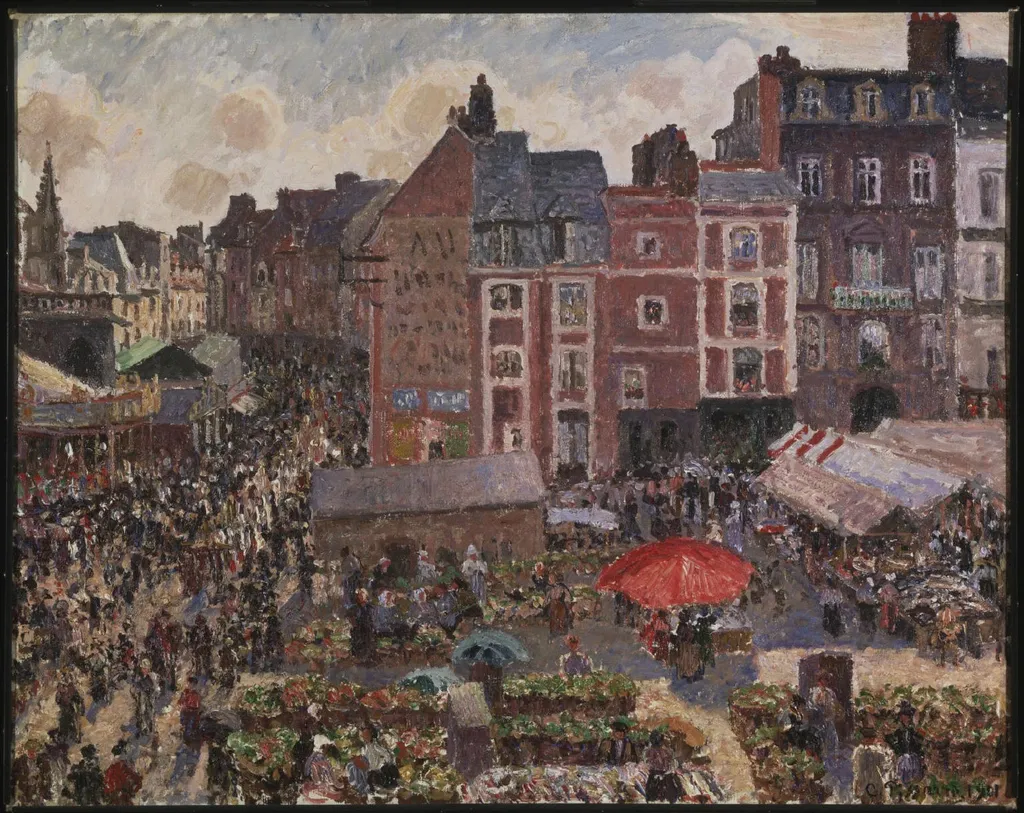
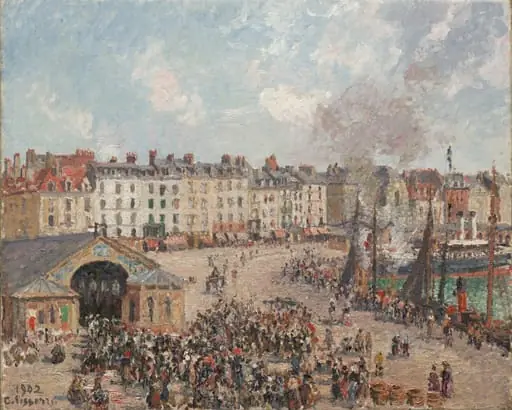
Fair on a Sunny Afternoon, Dieppe is an oil painting by the Impressionist artist Camille Pissarro. It dates from 1901 and is held in the collection of the Philadelphia Museum of Art.
About this work
Overview
Painted in 1901, *Fair on a Sunny Afternoon, Dieppe* is an oil-on-canvas work by Camille Pissarro capturing a weekday market in the Normandy port town.
Painted in 1901, *Fair on a Sunny Afternoon, Dieppe* is an oil-on-canvas work by Camille Pissarro capturing a weekday market in the Normandy port town. The scene reflects Pissarro’s sustained interest in everyday urban life, rendered with the observational precision of his later years. Though rooted in Impressionist principles, the painting shows subtle influences from his earlier experiments with pointillism, evident in the structured yet luminous brushwork.
Subject & Meaning
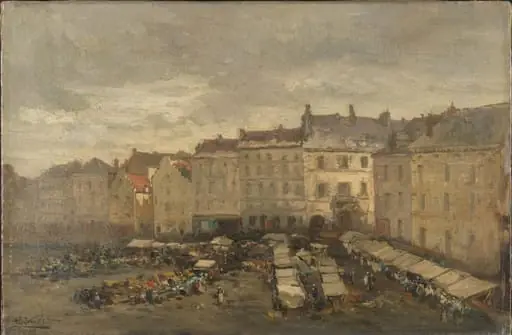
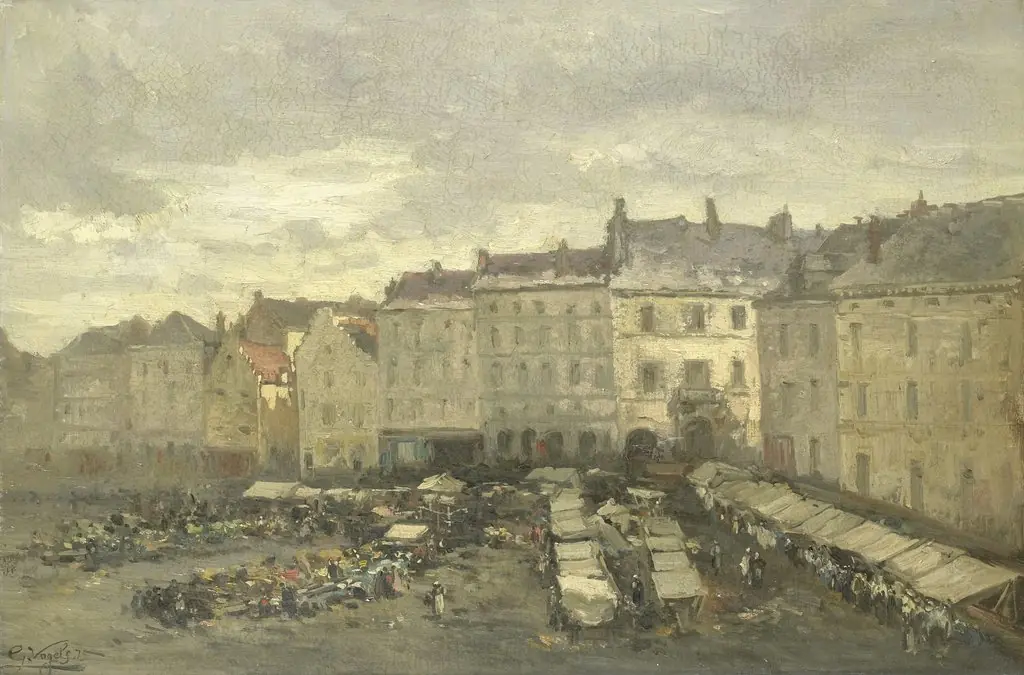
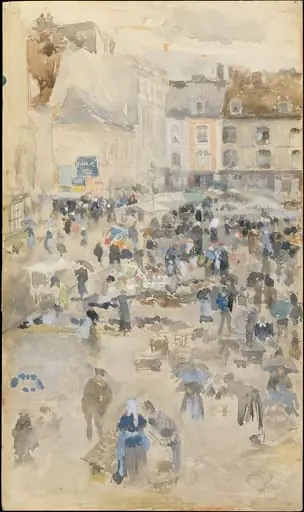
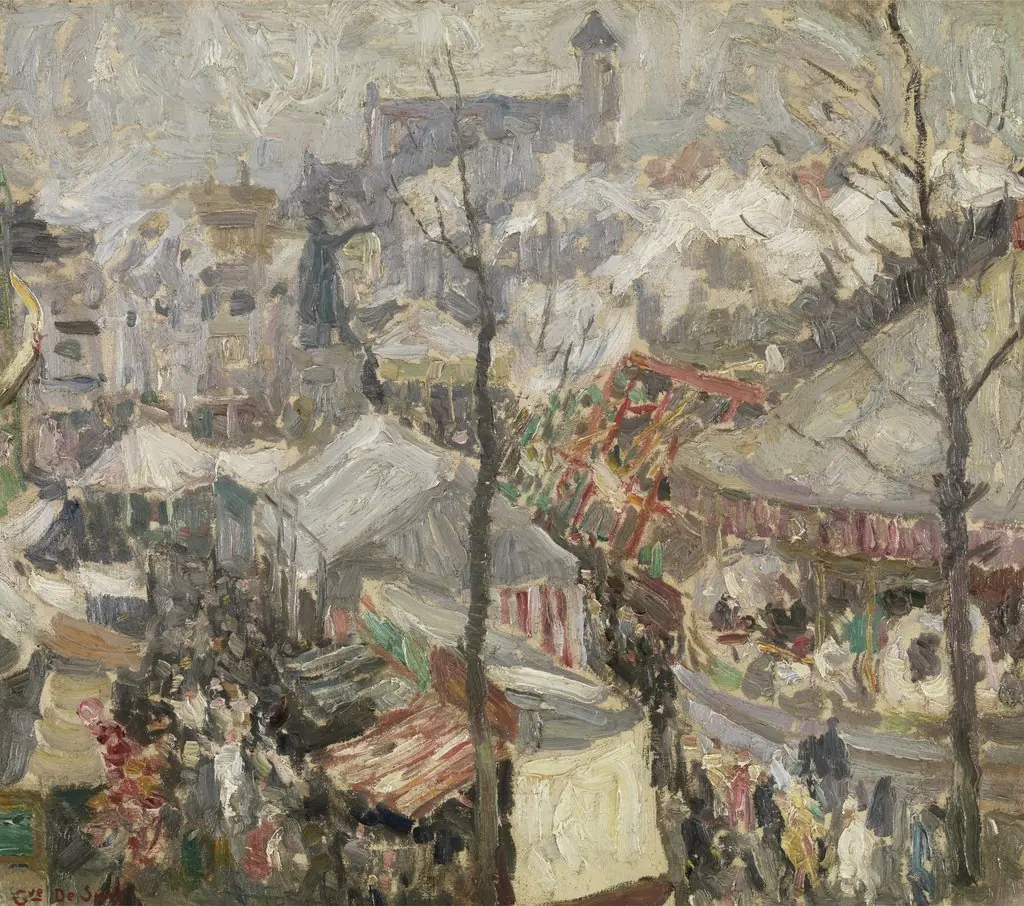
The painting portrays a lively outdoor market in Dieppe, with vendors, shoppers, and strollers moving among stalls under open skies. No single narrative dominates; instead, the focus is on the rhythm of ordinary commerce and social interaction. The red umbrella in the foreground acts as a visual anchor, guiding attention without disrupting the scene’s natural flow. The work conveys quiet dignity in routine activity, a recurring theme in Pissarro’s oeuvre.
Technique & Style
Pissarro applied oil paint with a modified Impressionist technique, blending loose strokes with controlled, almost mosaic-like touches inherited from his Neo-Impressionist phase. Light is rendered through layered hues rather than hard outlines, creating a sense of atmospheric depth. The composition is deliberately unstructured, mirroring the spontaneity of a real market, yet carefully balanced to sustain visual harmony across the canvas.
History & Provenance
Created during Pissarro’s final decade, the painting remained in private hands until acquired by the Philadelphia Museum of Art. It reflects his late-career return to plein-air subjects after years of urban and rural studies. Though not exhibited widely during his lifetime, its inclusion in the museum’s collection underscores its significance as a representative example of his mature style and enduring engagement with French provincial life.
Context
In 1901, Pissarro was among the last surviving founders of Impressionism, observing the rise of Post-Impressionism and Fauvism. While younger artists pursued abstraction or bold color, he continued documenting the rhythms of small-town France. Dieppe, a working port with seasonal fairs, offered him accessible, unidealized subjects. This painting aligns with his lifelong commitment to portraying labor and community without romanticization.
Legacy
Though less celebrated than his earlier works, *Fair on a Sunny Afternoon, Dieppe* exemplifies Pissarro’s consistent dedication to observing modern life with integrity. It stands as a quiet testament to his evolution from radical innovator to thoughtful chronicler. The painting contributes to a broader understanding of late 19th- and early 20th-century French painting, where the mundane became a subject worthy of sustained attention.
Artist & collection
Artist
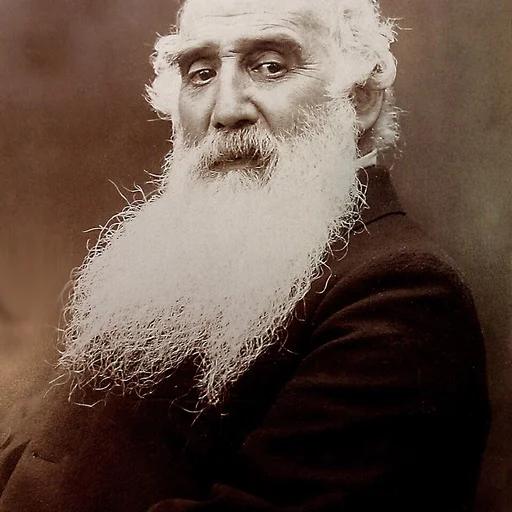
Jacob Abraham Camille Pissarro ( piss-AR-oh; French: ; 10 July 1830 – 13 November 1903) was a Danish-French Impressionist and Neo-Impressionist painter born on the island of Saint Thomas (now in the US Virgin Islands, but then in the…