Artwork
Fishmarket
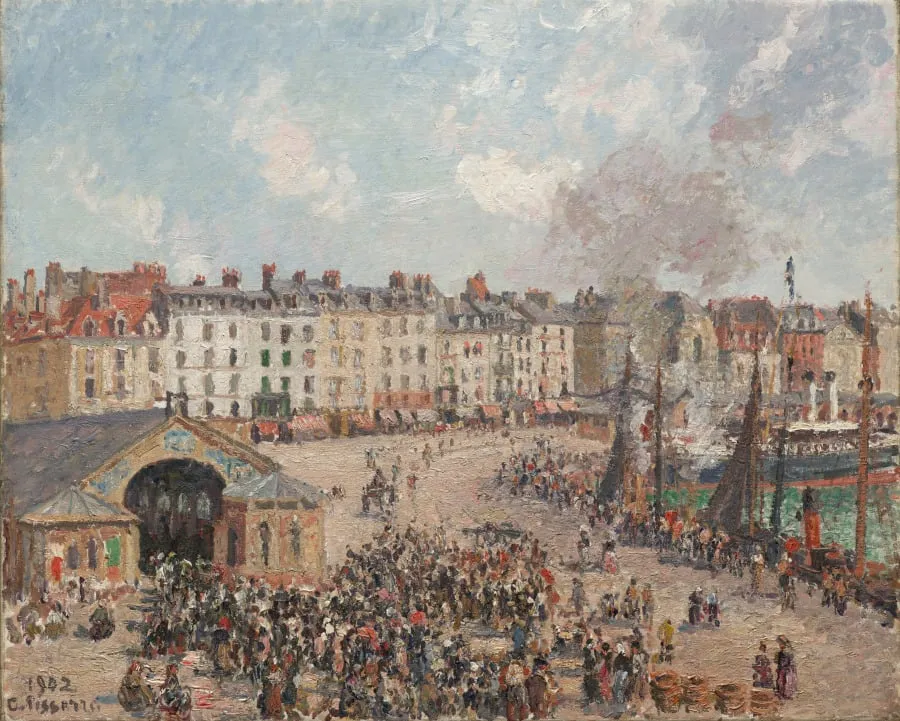
Fishmarket is an unspecified painting by the Impressionist artist Camille Pissarro. It dates from 1902 and is held in the collection of the Cleveland Museum of Art. Painted in the summer of 1902, this work captures the lively harbor of Dieppe through a high-angle perspective.
About this work
Overview
Painted in the summer of 1902, this work captures the lively harbor of Dieppe through a high-angle perspective. It is one of several canvases Pissarro produced during his stay there, focusing on the daily rhythms of a working waterfront. The composition emphasizes movement and transience, rendered with a heightened sensitivity to light and atmospheric conditions typical of his late period.
Subject & Meaning
The scene centers on a fish market teeming with activity—boats moored along the quay, stacked crates, and figures moving with purpose. Rather than idealizing the labor, Pissarro presents it as an unvarnished part of urban life. The mingling of steam from vessels and drifting clouds suggests a quiet tension between industry and nature, grounded in observation rather than narrative.
Technique & Style
Pissarro employed thick, broken brushstrokes and impasto to convey texture and motion, avoiding smooth blending. Colors are applied in distinct dabs, creating vibrancy through optical mixing rather than tonal gradation. The high vantage point flattens perspective slightly, enhancing the sense of a spontaneous, observed moment rather than a staged composition.
History & Provenance
Created during Pissarro’s final years, this painting emerged from a focused series of Dieppe harbor views painted over a few weeks in 1902. It remained in the artist’s possession until his death, later entering a private collection before being acquired by a public institution. Its provenance reflects its status as a personal, experimental work rather than a commercial commission.
Context
At this stage in his career, Pissarro was refining his Impressionist approach while engaging with emerging Post-Impressionist concerns for structure and materiality. His choice of a working harbor aligned with his longstanding interest in everyday labor and urban transformation, positioning him apart from contemporaries who favored rural or leisurely subjects.
Legacy
The painting exemplifies Pissarro’s commitment to capturing transient effects through direct observation. Its energetic brushwork and unidealized subject matter influenced later artists exploring urban realism and expressive pigment application. Though not widely exhibited in his lifetime, it now stands as a testament to his sustained inquiry into light, labor, and modern life.
Artist & collection
Artist
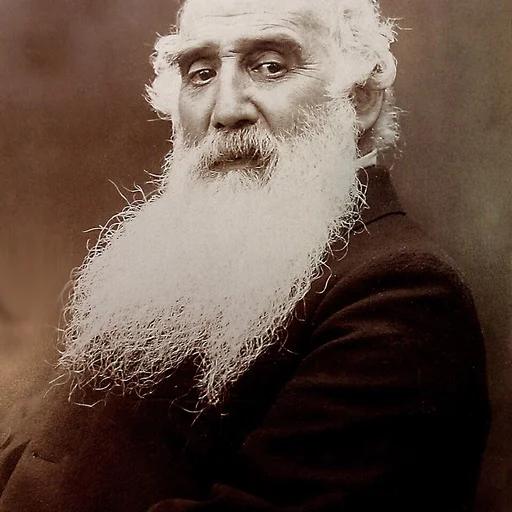
Jacob Abraham Camille Pissarro ( piss-AR-oh; French: ; 10 July 1830 – 13 November 1903) was a Danish-French Impressionist and Neo-Impressionist painter born on the island of Saint Thomas (now in the US Virgin Islands, but then in the…

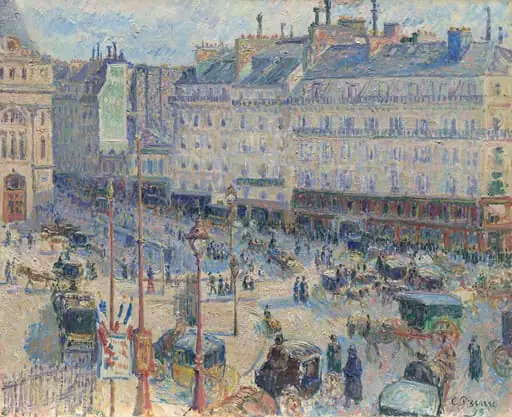 The Place du Havre, Paris
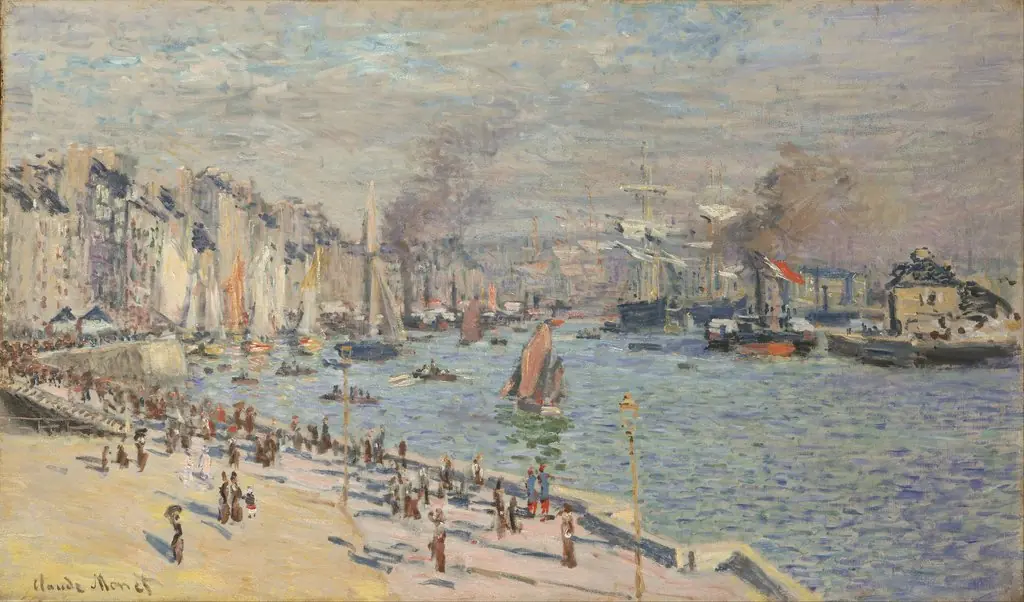 Port of Le Havre
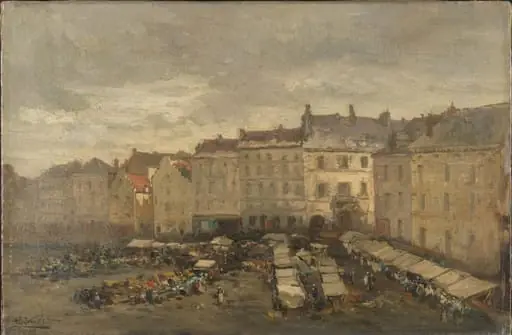 The Grote Zavel (Grand Sablon), Brussels
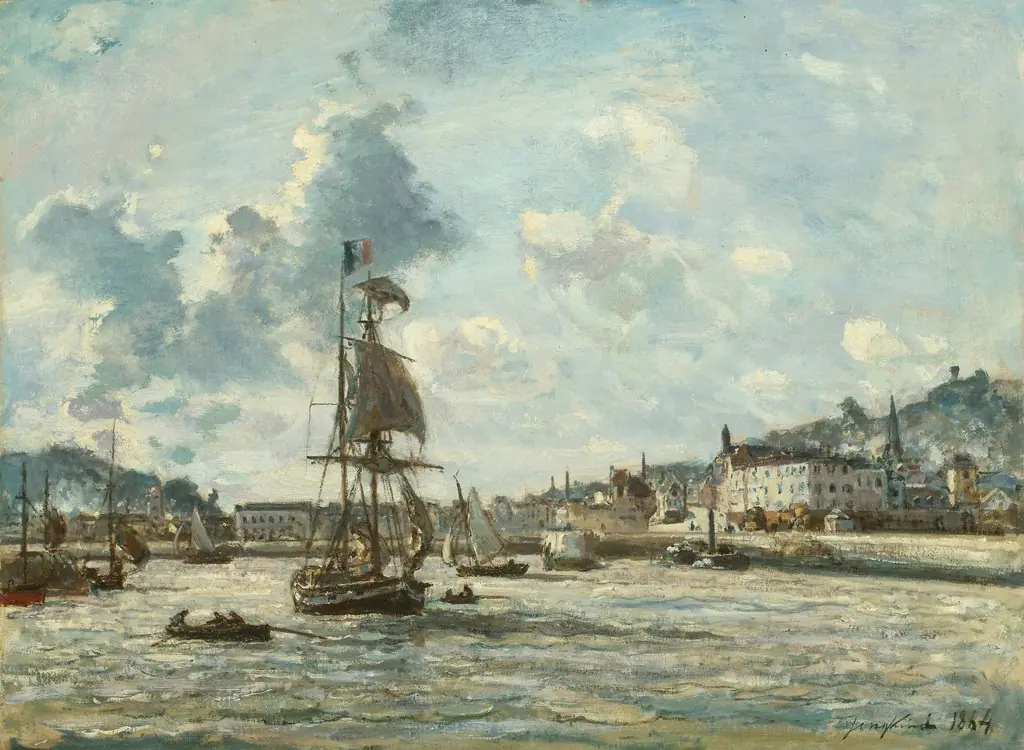 Entrance to the Port of Honfleur
 Entrance to the Port of Honfleur
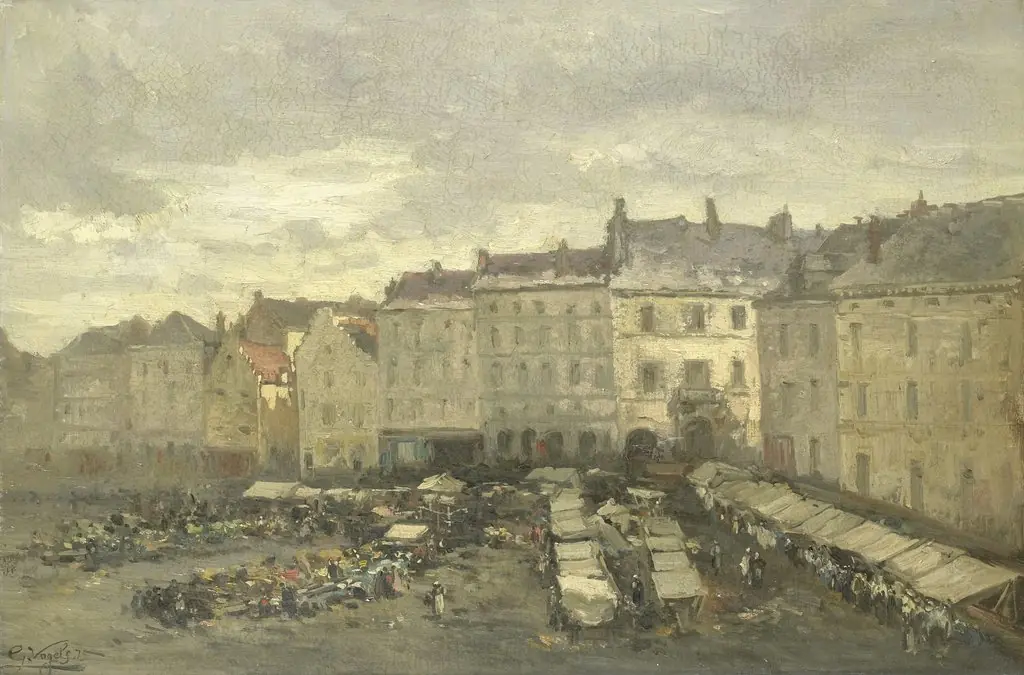 The Grote Zavel (Grand Sablon), Brussels
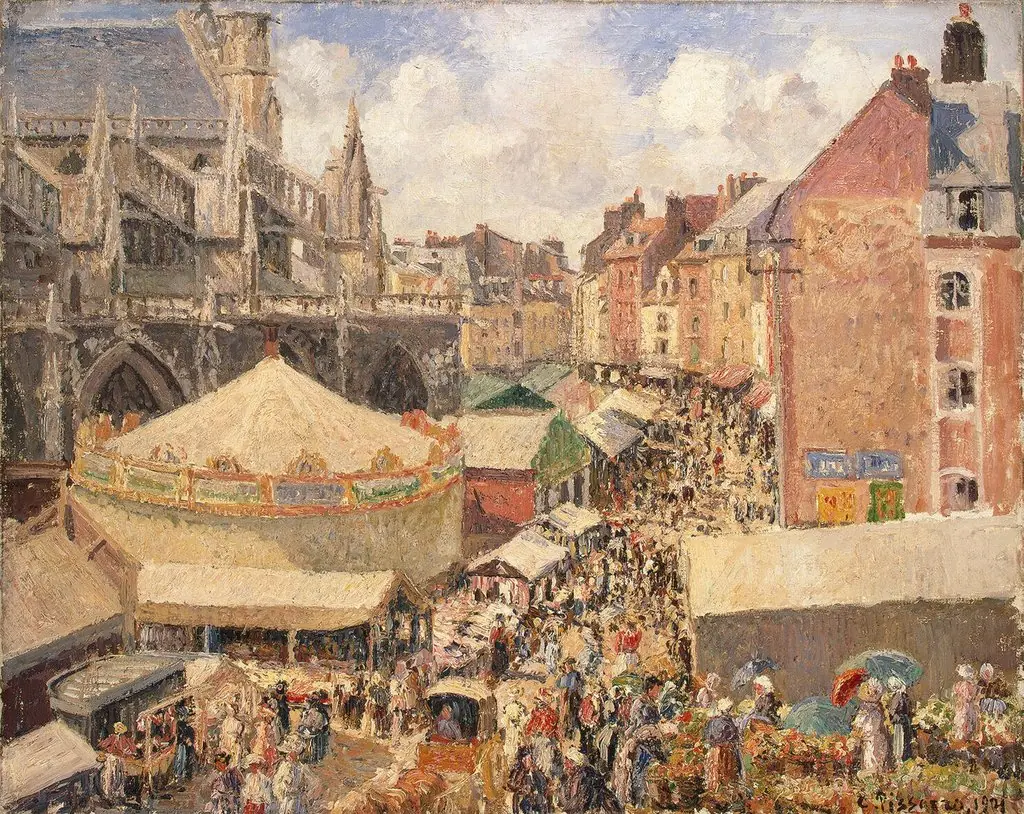 The Town Fair by the Church of Saint-Jacques in Dieppe, Morning, Sunlight
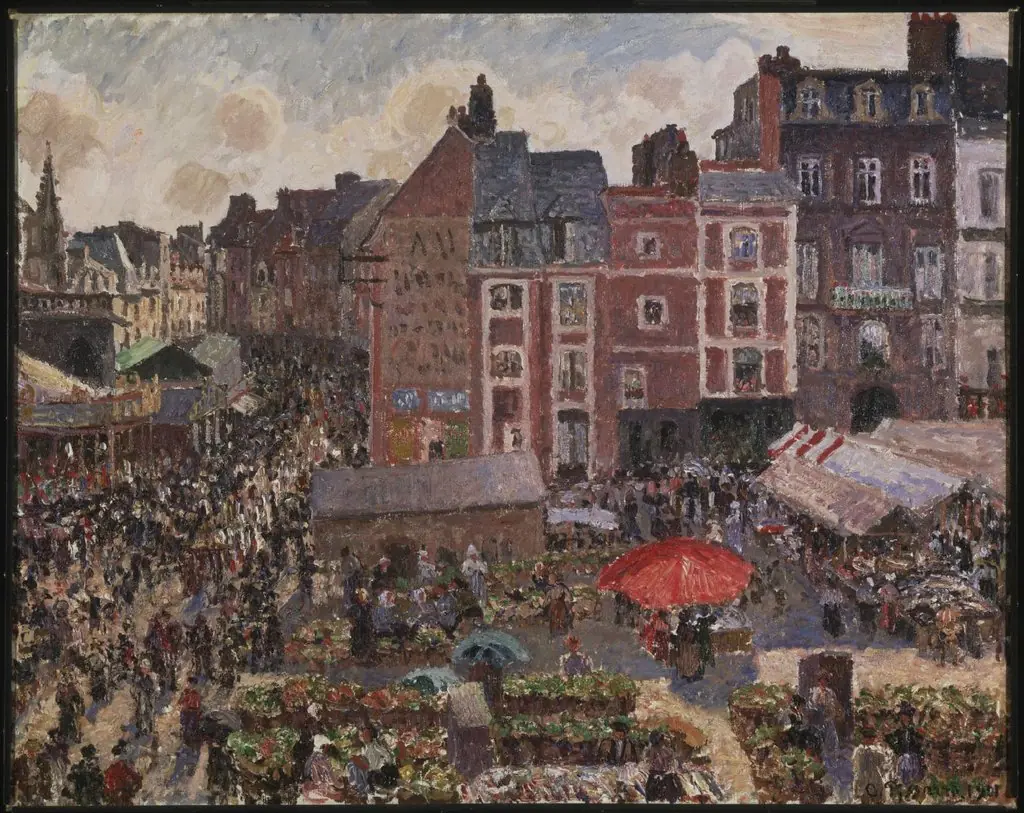 Fair on a Sunny Afternoon, Dieppe
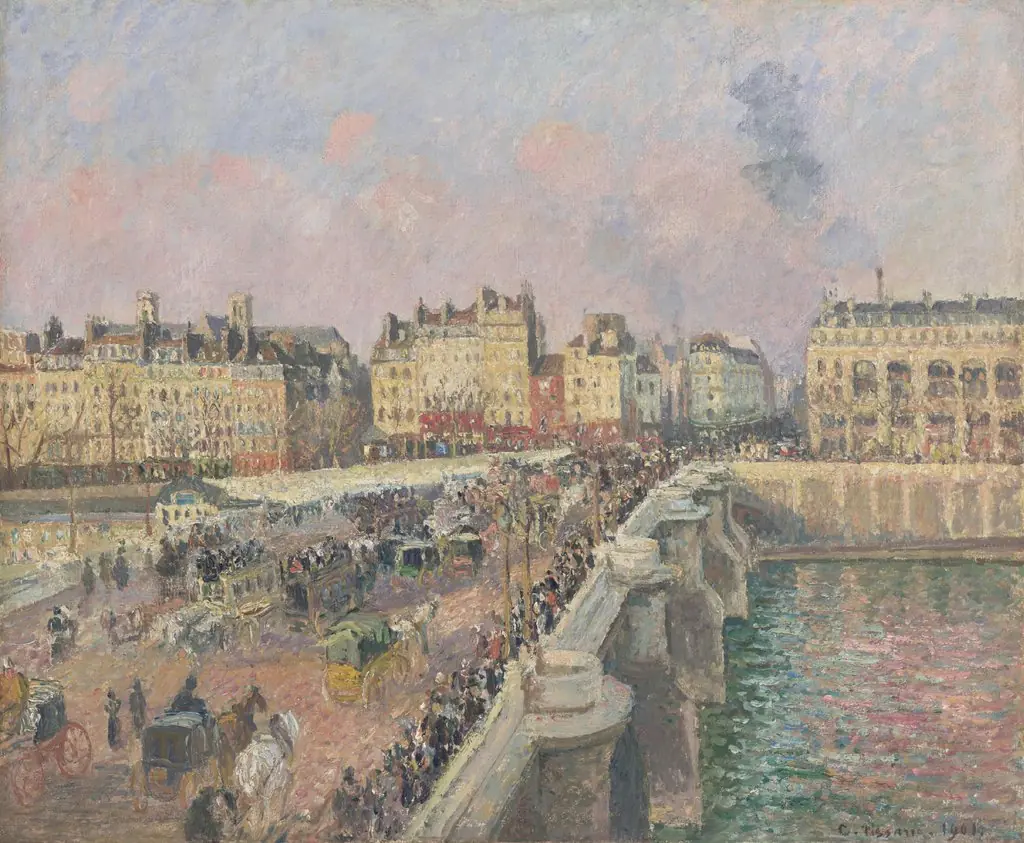 Afternoon Sunshine, Pont Neuf
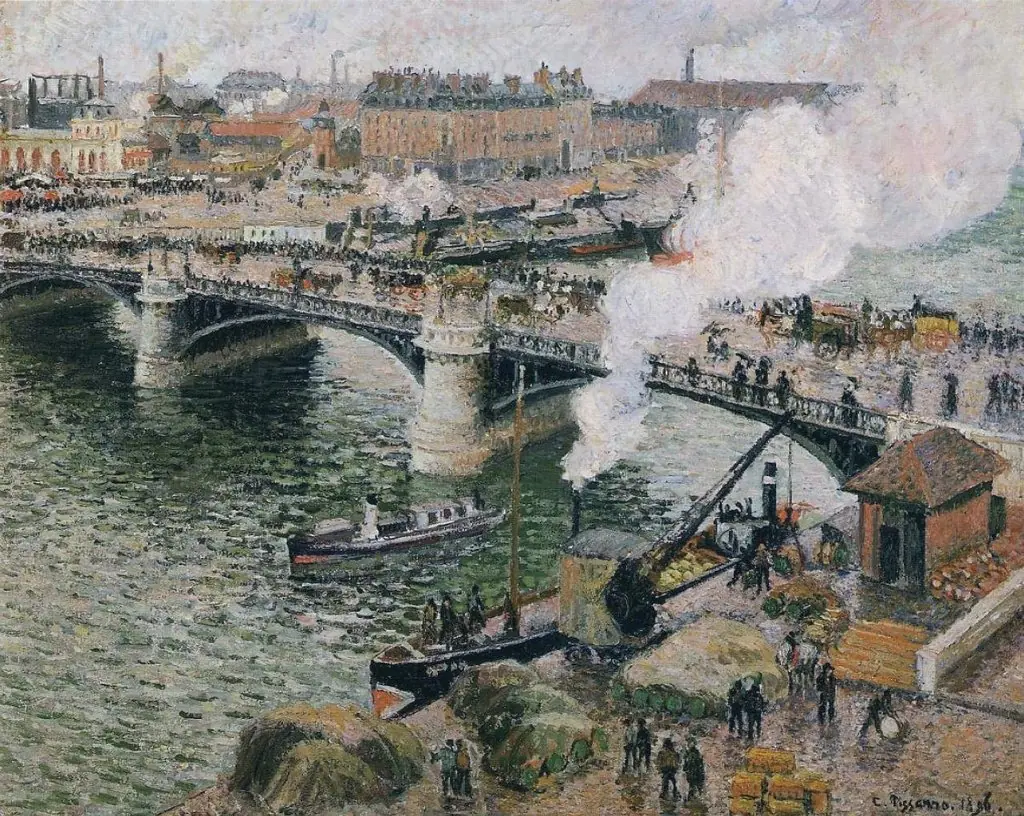 Pont Boieldieu in Rouen, Rainy Weather
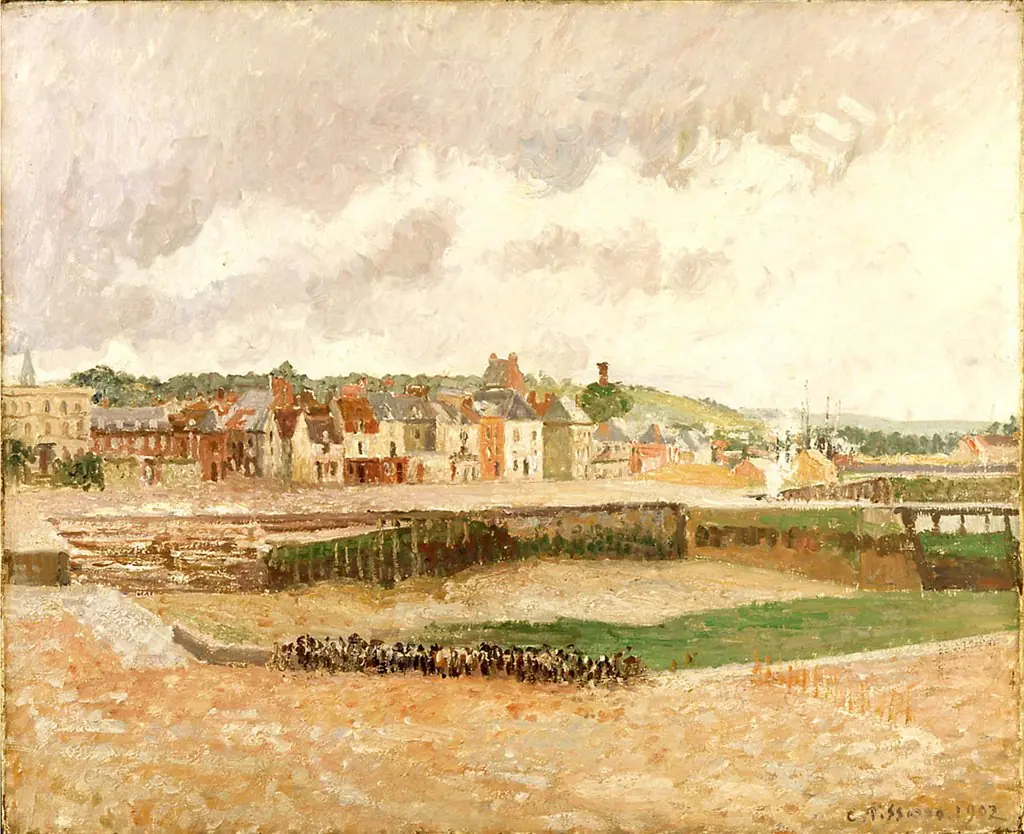 Dieppe. Darse de pêche, marée basse
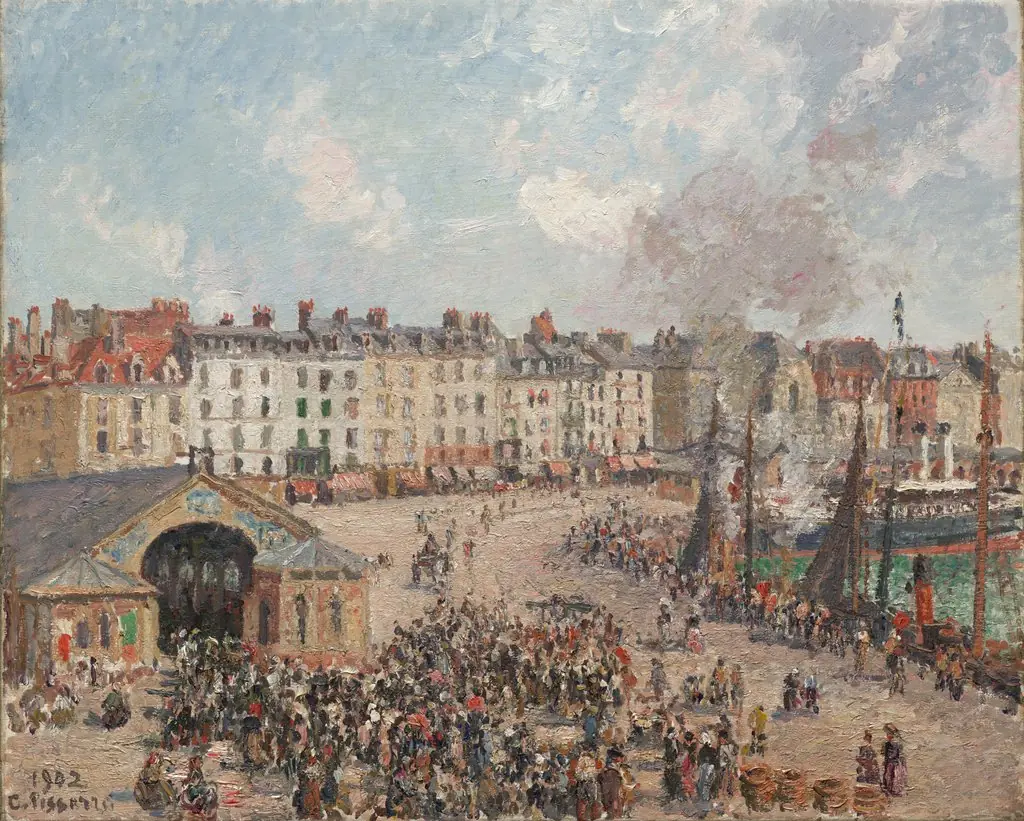 Fishmarket