Artwork
The Grote Zavel (Grand Sablon), Brussels
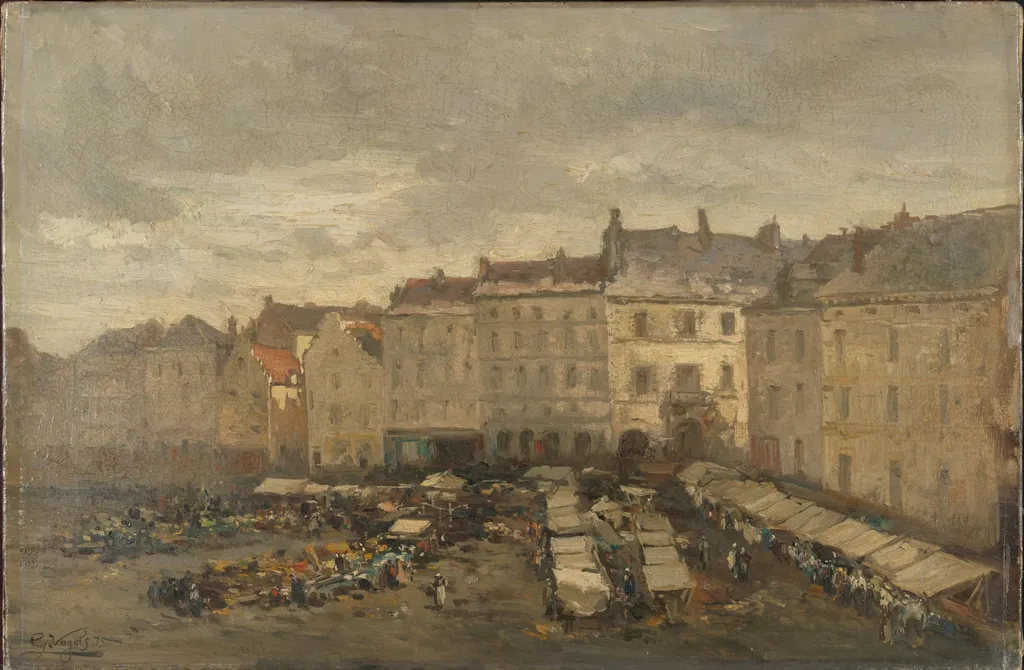
The Grote Zavel (Grand Sablon), Brussels is an unspecified painting by the Realist artist Unknown. It dates from 1875 and is held in the collection of the Rijksmuseum. Painted in 1875, this work depicts the bustling Grote Zavel market square in Brussels.
About this work
It’s rare to find such a clear, everyday scene from this time—most paintings then were grand or fancy.
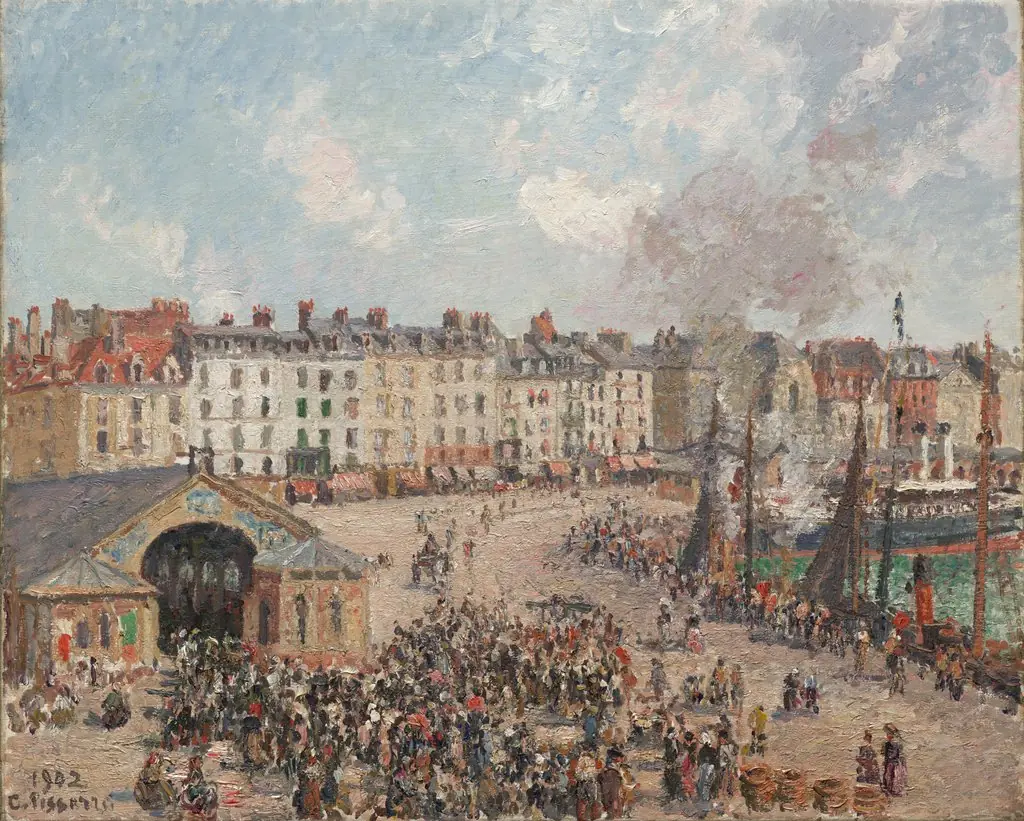
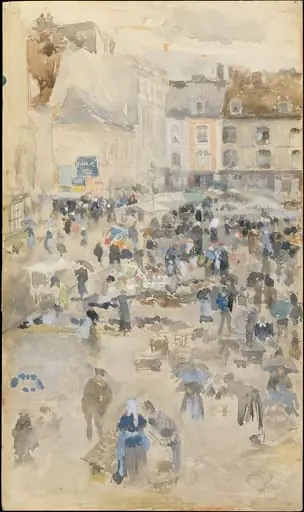
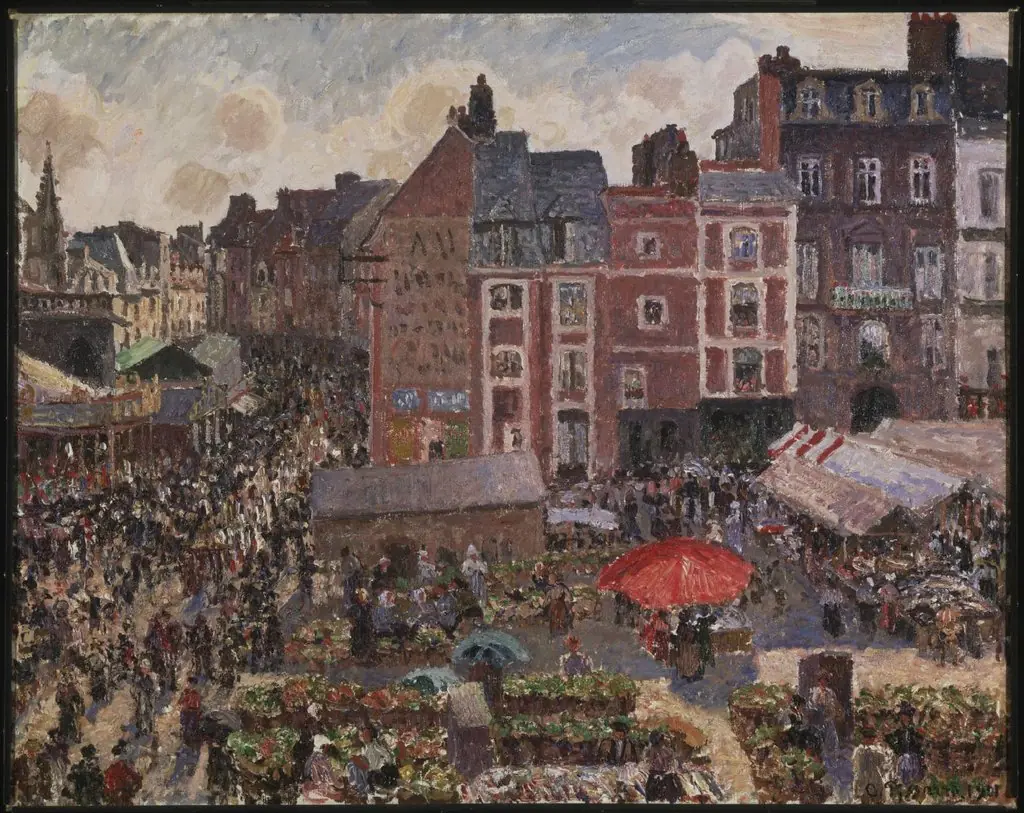
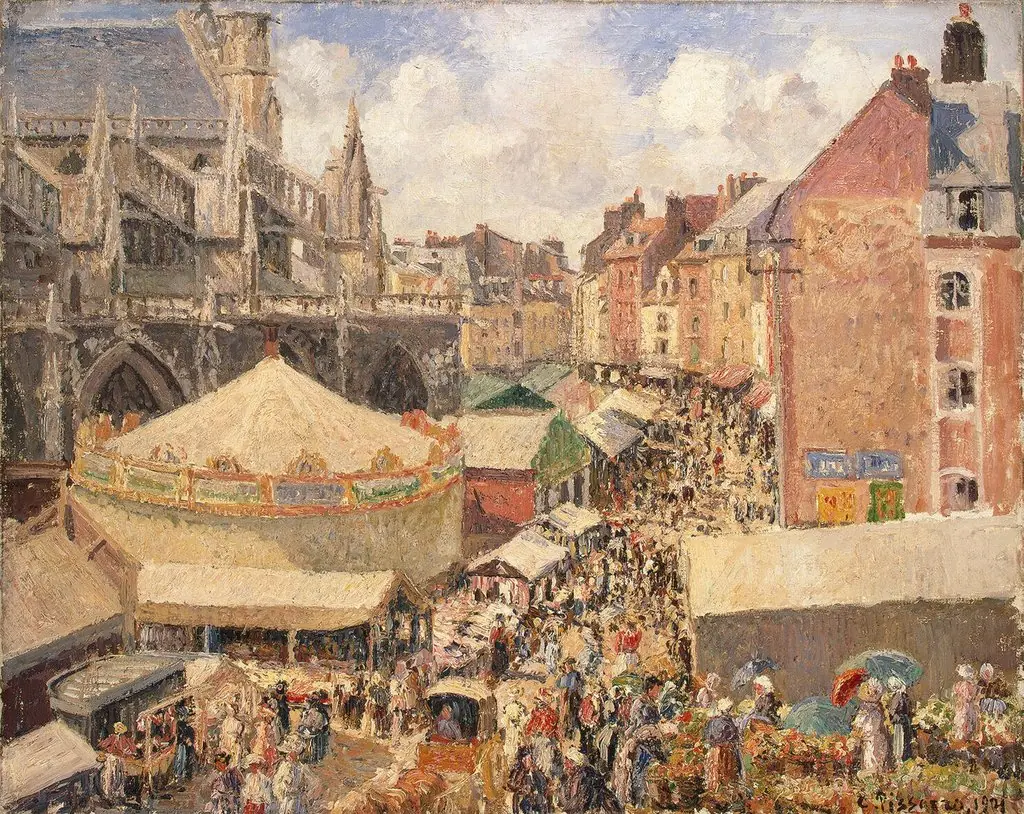
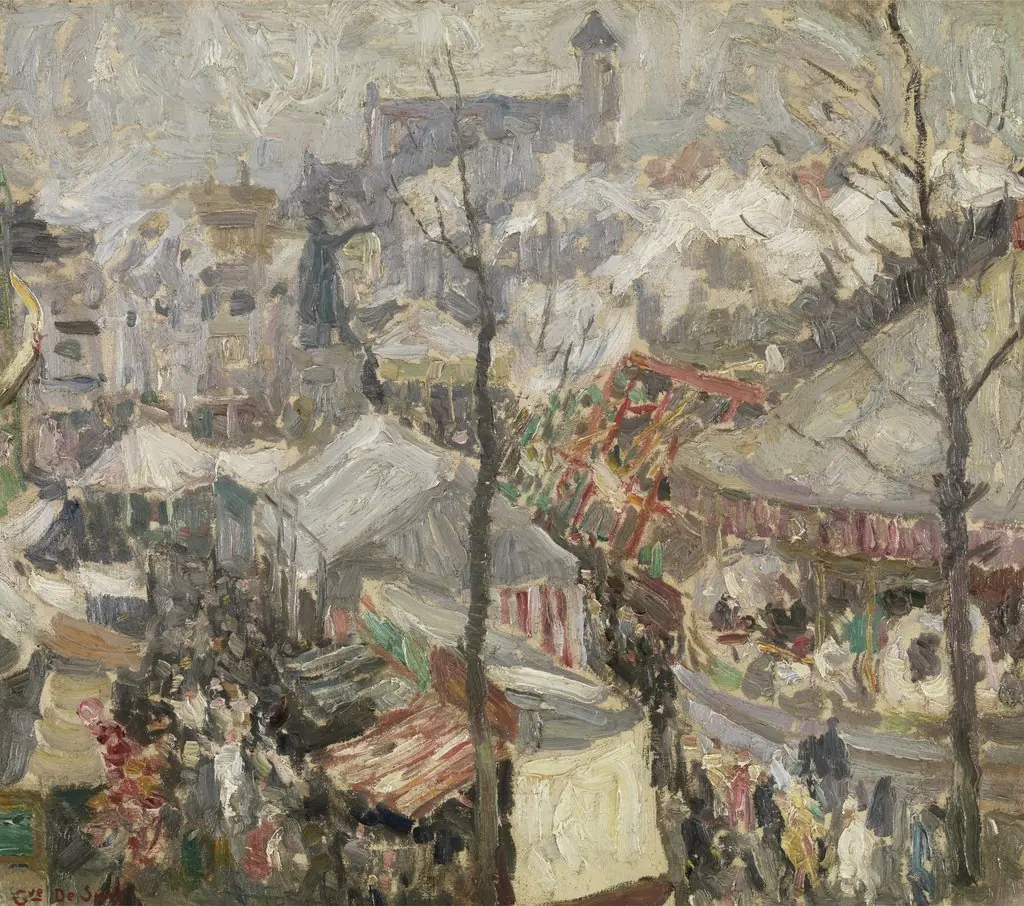
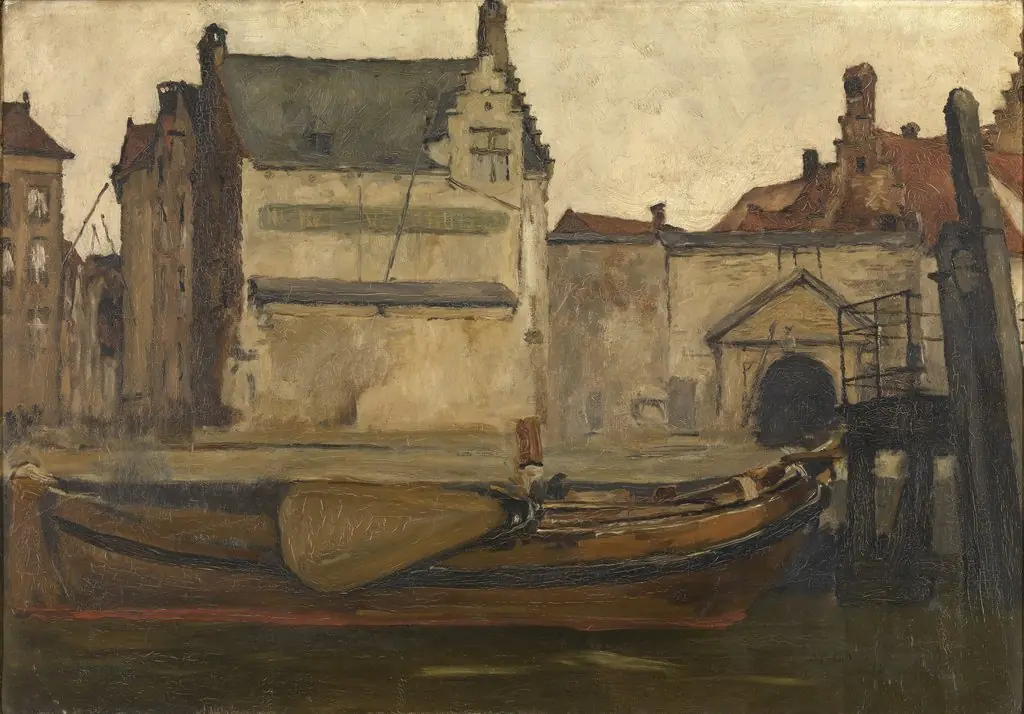
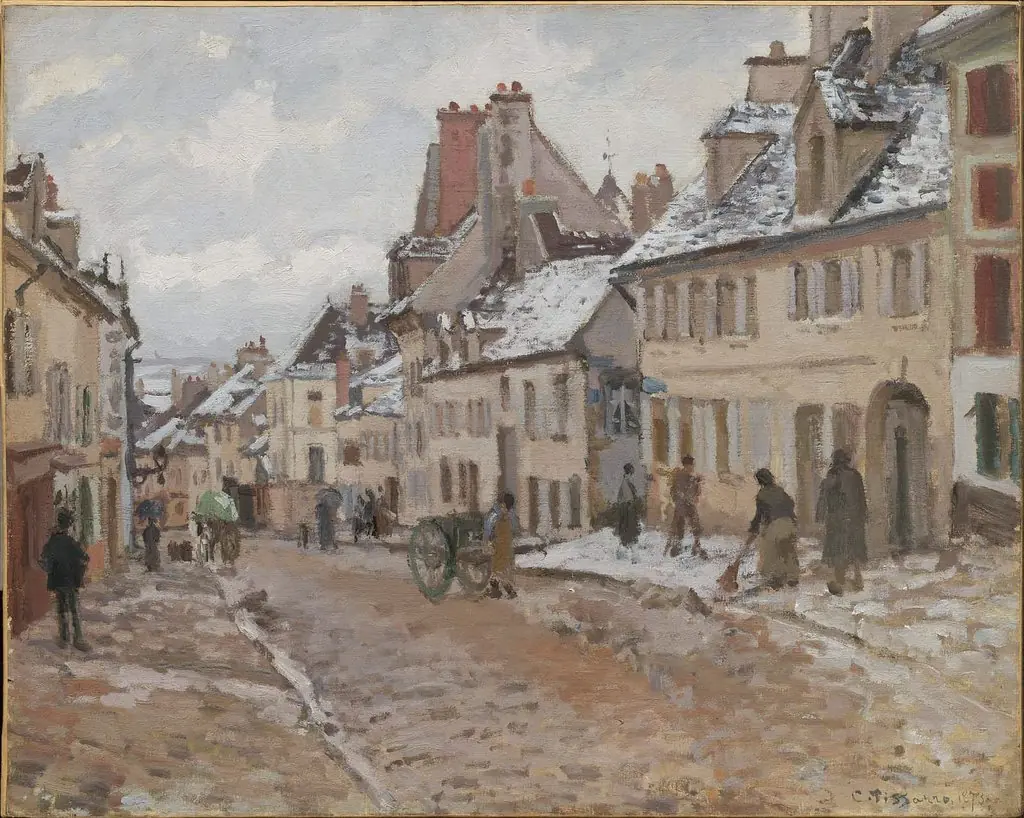
You see a busy square in Brussels, packed with market stalls and people in old-fashioned clothes. The buildings loom in the background, their windows tiny and dark.
This painting was made in 1875, but the artist’s name is lost. It’s rare to find such a clear, everyday scene from this time—most paintings then were grand or fancy. Here, the focus is on ordinary life, with no heroes or drama.
To see more city scenes like this, visit the Rijksmuseum.
Overview
Painted in 1875, this work depicts the bustling Grote Zavel market square in Brussels. The artist remains unidentified, and the piece stands out for its unembellished portrayal of daily urban life. Unlike contemporaneous works that favored historical or idealized subjects, this painting captures the quiet rhythm of commerce and crowd movement without narrative flourish or heroic figures.
Subject & Meaning
The scene centers on a crowded open-air market, with vendors arranged beneath temporary stalls and pedestrians moving through narrow aisles. The absence of prominent individuals or dramatic events underscores a focus on collective, mundane activity. The painting reflects a quiet appreciation for the ordinary rhythms of 19th-century urban existence, valuing authenticity over spectacle.
Technique & Style
The composition uses muted tones and loose brushwork to convey the texture of cloth, wood, and stone. Buildings recede into the background with minimal detail, their windows appearing as dark, uniform openings. Light falls evenly across the scene, avoiding dramatic contrasts. The style prioritizes observational clarity over emotional intensity, aligning with emerging realist tendencies of the period.
History & Provenance
The painting’s origin is undocumented, and its early ownership history is unknown. It likely remained in private hands in Belgium before entering a public collection. Its survival is notable, as similar genre scenes from this era were often overlooked or discarded. The lack of an artist’s signature has hindered attribution and scholarly study.
Context
In the 1870s, European art was dominated by academic traditions and romanticized history painting. This work diverges by treating a local market as worthy of representation, reflecting a broader shift toward documenting everyday life. Similar depictions of urban markets emerged in France and the Netherlands, but such subjects remained uncommon in Belgian art of the time.
Legacy
Though not widely exhibited or studied, the painting contributes to a growing archive of 19th-century urban realism. It offers a rare visual record of Brussels’ commercial culture before modernization transformed its streets. Its preservation allows contemporary viewers to encounter the city’s past not through monuments, but through the quiet persistence of daily commerce.
Artist & collection

 Domestic Scene
 Giacomo and Cardinal Marco, investing Andrea, Abbot of San Zeno, with his Benefice
 The Nymph of Fontainebleau
 Portrait of a Woman
 Madonna and Child with Saints in the Enclosed Garden
 Venus and Minerva
 Family Group of Four on Sofa
 Wall painting from Room H of the Villa of P. Fannius Synistor at Boscoreale