Artwork
La Roche-Guyon
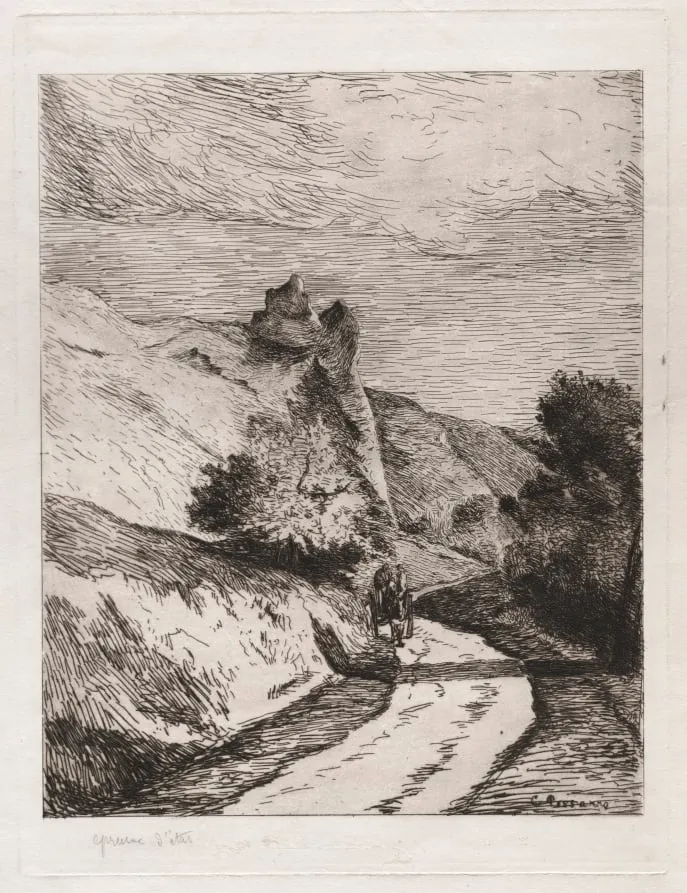
La Roche-Guyon is a print by the Impressionist artist Camille Pissarro. It dates from 1866 and is held in the collection of the Cleveland Museum of Art.
About this work
Overview
Depicting the limestone cliffs near La Roche-Guyon, it reflects his interest in translating the effects of natural light into a linear medium.
Created in the early 1860s, this etching by Camille Pissarro is among his first experiments in printmaking. Depicting the limestone cliffs near La Roche-Guyon, it reflects his interest in translating the effects of natural light into a linear medium. Unlike traditional etchings that rely solely on defined lines, Pissarro manipulated ink residue on the plate to suggest atmosphere and luminosity, foreshadowing his later approach to painting.
Subject & Meaning
The scene captures a quiet village nestled beneath a towering cliff face, its vertical mass dominating the composition. The absence of human figures emphasizes the enduring presence of the landscape. Pissarro’s focus on geological form and ambient light suggests an early engagement with the relationship between nature and perception, a theme that would define his mature work. The stillness of the village contrasts with the energetic texture of the rock, hinting at tension between permanence and transience.
Technique & Style
Pissarro employed etching not as a rigid reproductive method but as a spontaneous drawing tool. He used varied line density and deliberately retained ink on the plate’s surface to generate gradations of tone, mimicking the play of sunlight and shadow. This technique, uncommon in printmaking at the time, gave the image a tactile, painterly quality. The scratchy, energetic lines convey movement and immediacy, aligning the print with his emerging interest in optical realism.
History & Provenance
This work dates from Pissarro’s formative years, before his association with the Impressionist group solidified. It was likely made during a stay in the Île-de-France region, where he explored rural landscapes away from Paris. The print remained in private hands for much of the 19th century and entered major collections only in the 20th, as scholars began to recognize the significance of his graphic work alongside his paintings.
Context
In the early 1860s, French printmaking was dominated by academic traditions emphasizing precision and clarity. Pissarro’s experimental approach—using ink residue to suggest atmosphere—challenged these norms. His work aligned with broader shifts in artistic practice, where artists sought to capture transient effects of light and weather. This etching reflects a quiet rebellion against conventional techniques, anticipating the radical methods of the Impressionists.
Legacy
La Roche-Guyon stands as a pivotal early example of Pissarro’s integration of drawing and light into printmaking. It influenced later artists who sought to break printmaking’s ties to reproduction, treating it instead as a medium for personal expression. The work’s emphasis on tonal nuance over linearity helped expand the expressive potential of etching, bridging his graphic and painted oeuvres.
Artist & collection
Artist
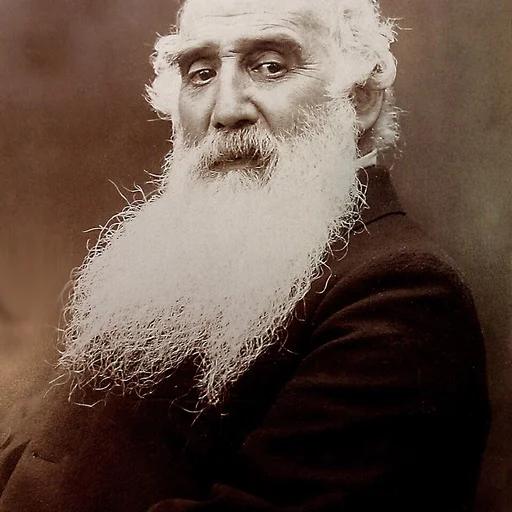
Jacob Abraham Camille Pissarro ( piss-AR-oh; French: ; 10 July 1830 – 13 November 1903) was a Danish-French Impressionist and Neo-Impressionist painter born on the island of Saint Thomas (now in the US Virgin Islands, but then in the…

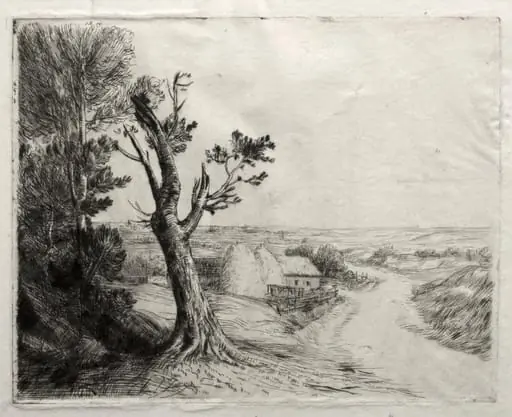 Landscape with Strawstacks
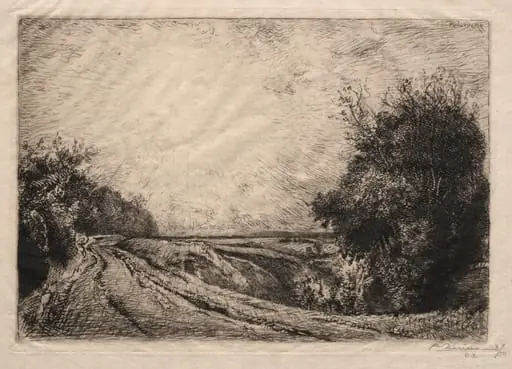 La Route de la Houssoye
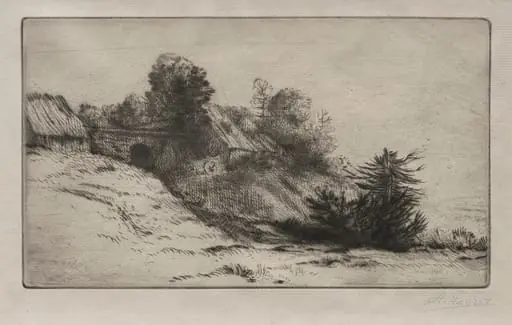 La ferme de Bienheureux (2nd Plate)
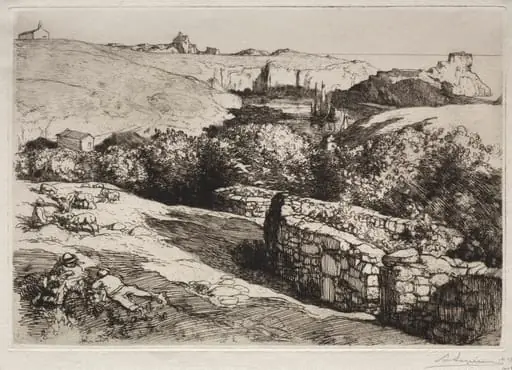 Vue du Port de la Meule
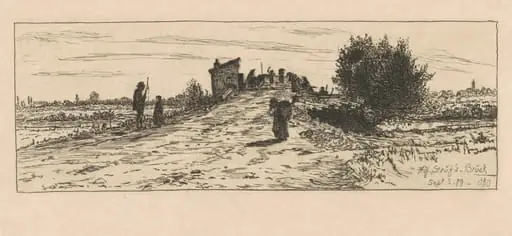 Aŭf Staŭfá Brŭck
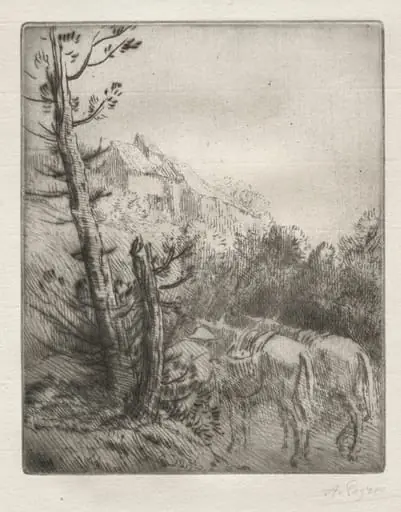 The Farm on the Hill
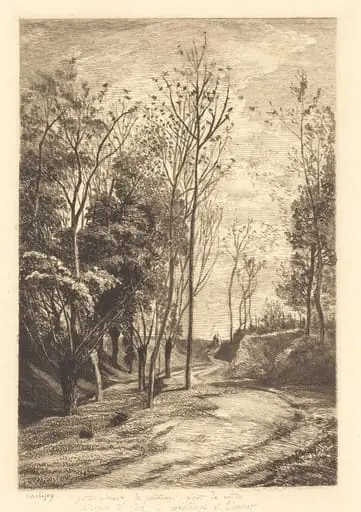 Little Birds (Les Petits oiseaux)
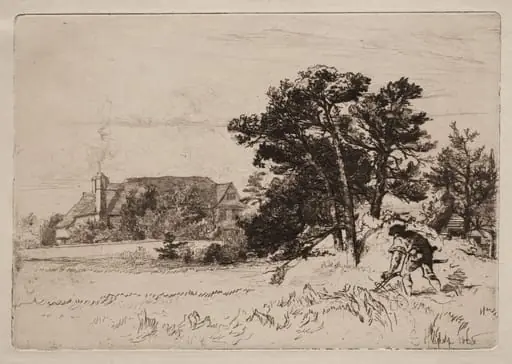 Old Willesley House
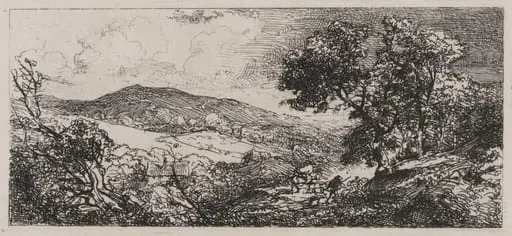 Valley View, Man with a Donkey and a Dog
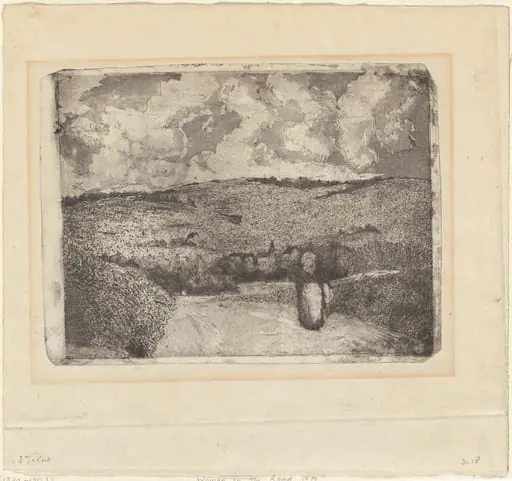 A Woman Walking along a Country Road (La Femme sur la Route)
 Souvenir of Italy
 My Farm