Artwork
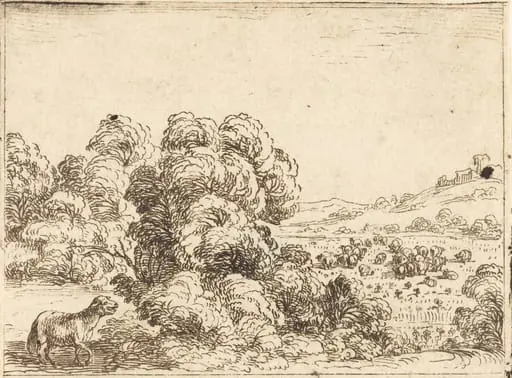
Valley View, Man with a Donkey and a Dog
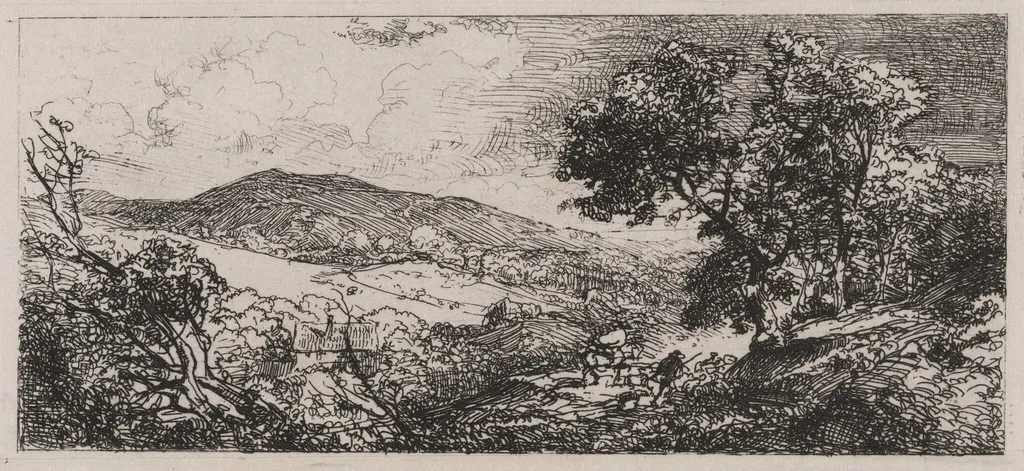
Valley View, Man with a Donkey and a Dog is an ink print by the Romanticist artist Caspar Johann Nepomuk Scheuren. It dates from 1842 and is held in the collection of the National Gallery of Art.
About this work
Overview
The print belongs to the tradition of 19th-century European landscape prints, where intimate scenes of rural life were rendered with technical precision.
Valley View, Man with a Donkey and a Dog is an 1842 etching by Caspar Johann Nepomuk Scheuren. It depicts a solitary traveler guiding a donkey and dog along a winding path through a rural valley. The composition emphasizes quiet movement and natural topography, rendered entirely through hand-drawn lines. The print belongs to the tradition of 19th-century European landscape prints, where intimate scenes of rural life were rendered with technical precision.
Subject & Meaning
The figure, accompanied by a donkey and dog, suggests a humble journey through the countryside. No narrative is overtly stated, but the stillness of the scene and the isolation of the traveler evoke contemplation. The absence of buildings or other people reinforces a sense of solitude, aligning the image with Romantic-era ideals of nature as a space for quiet reflection rather than activity.
Technique & Style
Scheuren employed etching to create fine, controlled lines across the plate, using crosshatching to build shadow and volume. The sky is rendered with loose, rapid strokes that suggest drifting clouds, contrasting with the denser, more deliberate lines of the hills and vegetation. This method of layering lines to simulate depth was standard in printmaking of the period, allowing subtle tonal variation without ink washes or color.
History & Provenance
Created in 1842, the print likely circulated among collectors of German Romantic-era prints. Scheuren, active in the Rhineland, produced numerous topographical and landscape works during this time. While specific ownership records are not widely documented, the piece aligns with the broader market for small-scale, hand-printed landscapes favored by middle-class patrons seeking art that reflected natural beauty and rural life.
Context
In the early 1840s, etching experienced a revival in Central Europe as artists sought alternatives to mass-produced engravings. Scheuren’s work reflects this trend, blending observational detail with poetic atmosphere. His focus on unremarkable rural scenes mirrored a wider cultural interest in the everyday, influenced by Romanticism and the growing appreciation for nature as a subject worthy of artistic attention.
Legacy
Though not widely known today, Scheuren’s etchings contributed to the continuity of landscape printmaking in 19th-century Germany. Valley View exemplifies how technical discipline in etching could convey emotional resonance without dramatic flair. His approach influenced later generations of printmakers who valued subtlety and precision over spectacle, preserving a quiet tradition within the broader history of graphic arts.
Artist & collection

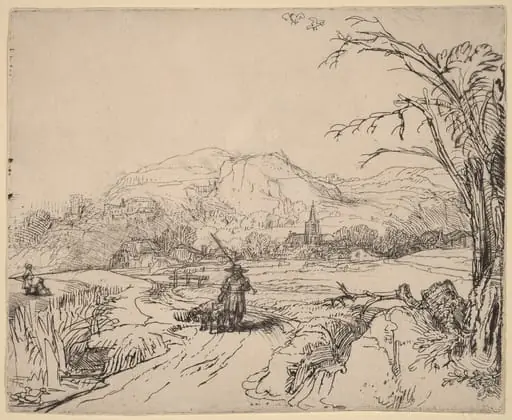 Landscape with Sportsman and Dog
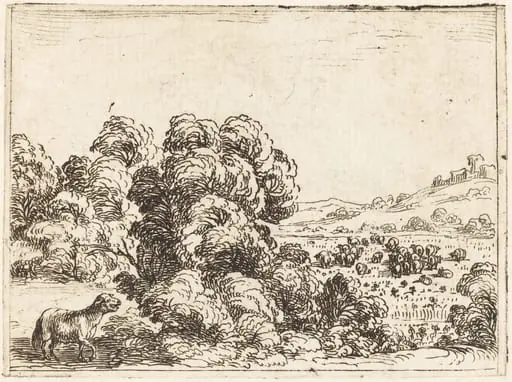 Sheep Calling Lamb
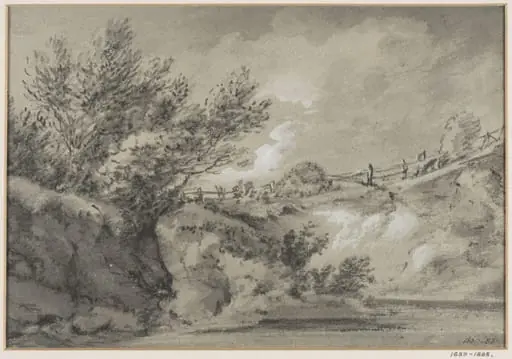 Landscape with high bank and railings
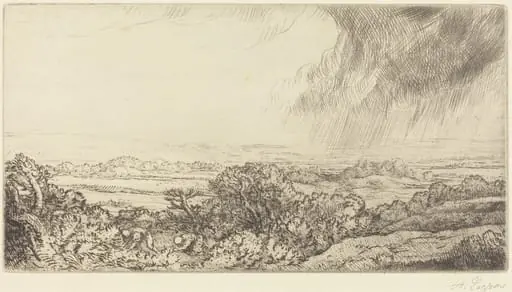 Mushroom Gatherers (Les ramasseurs de champignons)
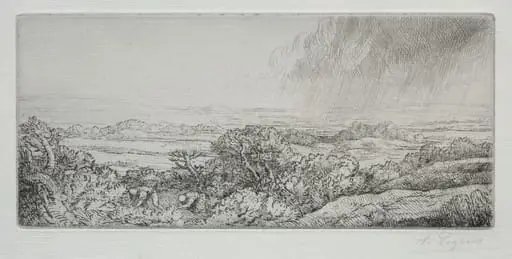 Les Ramasseurs des Champignons
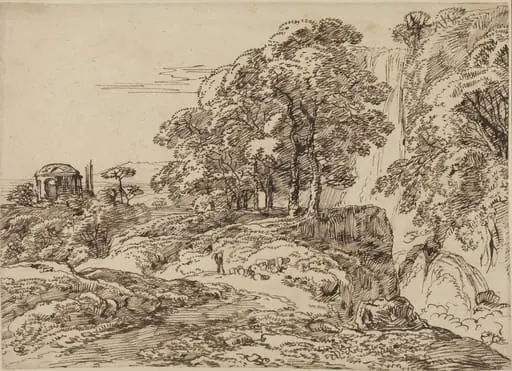 Pastoral Landscape with a Waterfall and a Temple
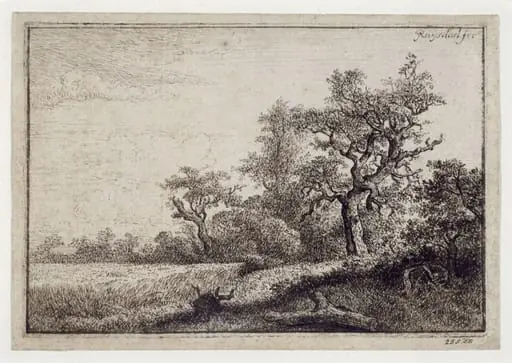 The Wheatfield. After Jacob Ruysdael
 Valley of Veronne (La vallee de Veronne)
 My Farm
 The Stream
 The Flight into Egypt: Altered from Seghers
 Sheep Calling Lamb