Artwork
A Woman Walking along a Country Road (La Femme sur la Route)
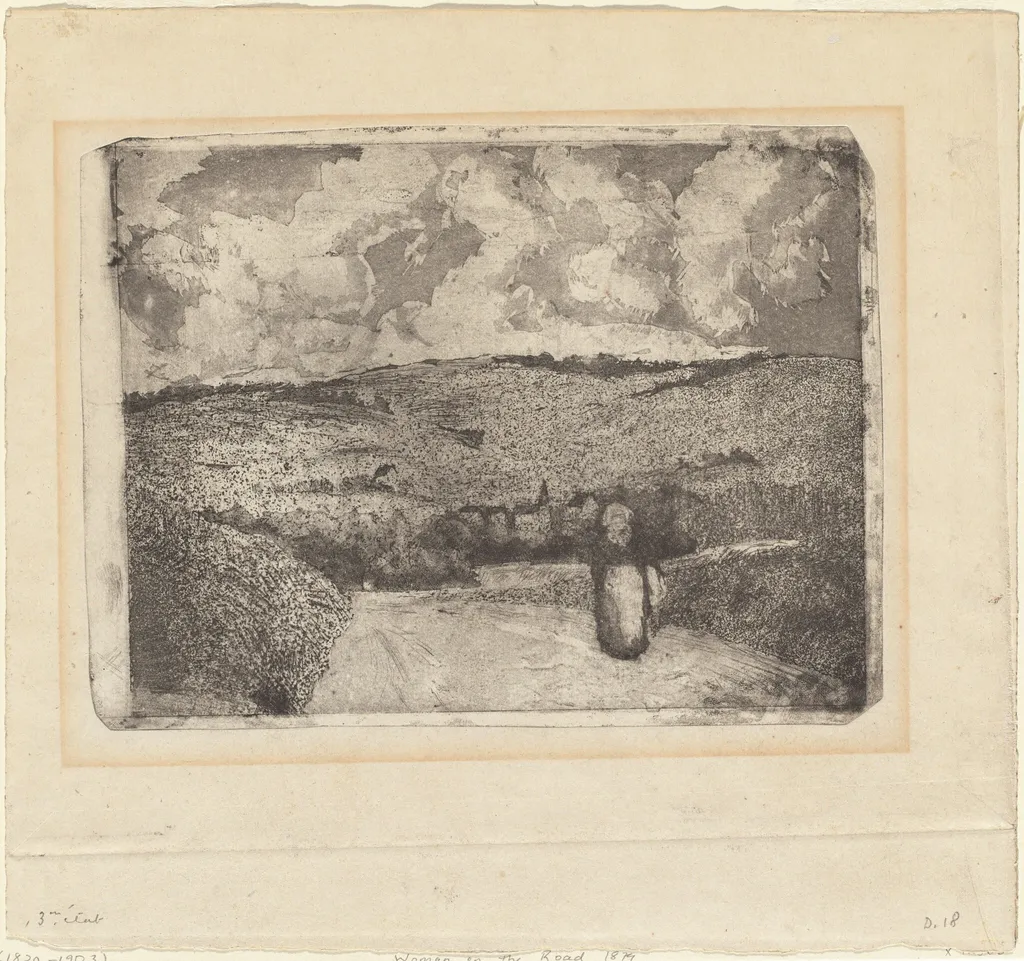
A Woman Walking along a Country Road (La Femme sur la Route) is an ink print by the Impressionist artist Camille Pissarro. It dates from 1879 and is held in the collection of the National Gallery of Art.
About this work
Overview
Unlike a painting, the image was produced by incising a metal plate, inked, and pressed onto paper, allowing multiple impressions.
Created in 1879, this print by Camille Pissarro is an etching, aquatint, and drypoint on wove paper. It captures a solitary woman traversing a rural path, rendered through delicate line work and tonal gradations. Unlike a painting, the image was produced by incising a metal plate, inked, and pressed onto paper, allowing multiple impressions. The quiet atmosphere and unembellished subject reflect Pissarro’s interest in everyday rural life.
Subject & Meaning
The figure is a lone woman, dressed in a long coat and hat, carrying an object in her right hand as she walks along a narrow dirt road. Her anonymity and unremarkable activity emphasize the ordinary rhythm of rural existence. No narrative or drama is imposed; the scene invites contemplation of solitude and routine. The absence of other figures or landmarks reinforces a sense of quiet, uneventful passage through the landscape.
Technique & Style
Pissarro employed etching for fine lines, aquatint for soft tonal areas, and drypoint for rich, textured shadows. The combination creates subtle variations in light and atmosphere, particularly in the sky and foliage. The wove paper absorbs ink evenly, enhancing the delicate gradations. The composition avoids dramatic perspective, favoring a flattened, intimate view that aligns with the Impressionist focus on transient moments and natural light.
History & Provenance
Made during Pissarro’s time in Pontoise, this print belongs to a series of works he produced in the late 1870s exploring rural labor and landscape. It was likely printed in small editions, common for artists experimenting with printmaking. While specific early ownership records are sparse, it entered institutional collections in the 20th century as interest grew in Pissarro’s graphic work beyond his paintings.
Context
In the late 1870s, Pissarro was deeply engaged with rural subjects and printmaking as a means to reach broader audiences. He was influenced by Japanese woodcuts and contemporaries like Degas, who also explored etching. This work reflects a shift from urban scenes to the countryside, aligning with his anarchist sympathies and belief in the dignity of peasant life, rendered without romanticism or idealization.
Legacy
This print exemplifies Pissarro’s commitment to modest, unadorned observation and his innovative use of print media to extend his artistic vision. Though less known than his paintings, his graphic works influenced later generations of printmakers seeking naturalism and technical subtlety. The piece remains a quiet testament to his belief in art rooted in everyday experience.
Artist & collection


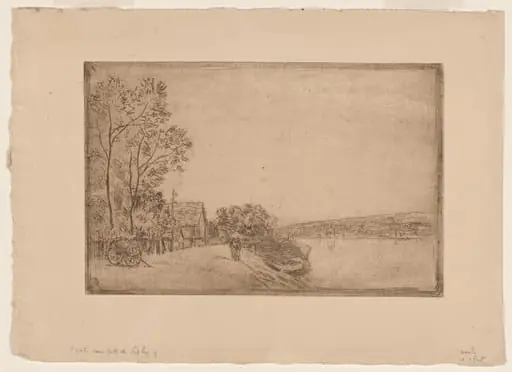 On the Banks of the Loing: The Cart
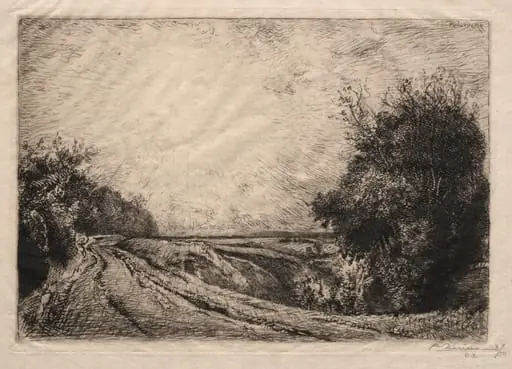 La Route de la Houssoye
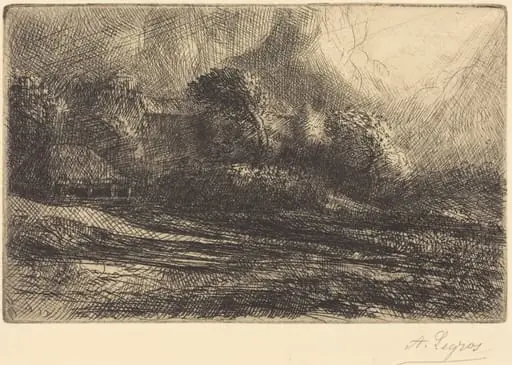 Chailli Seen in a Storm (Chailli: Effet d'orage)
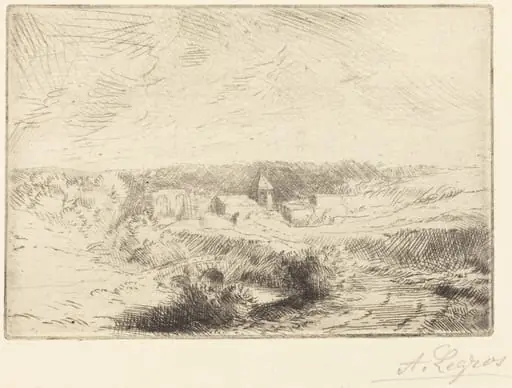 Village of Wimille, near Boulogne (Village de Wimille, pres Boulogne)
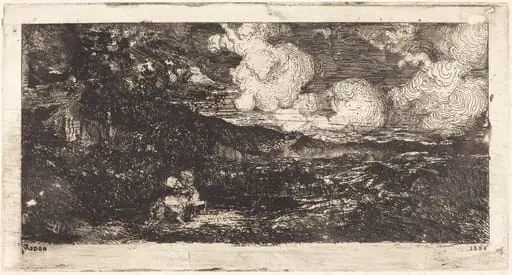 Cavalier Galopant (Galloping Horseman)
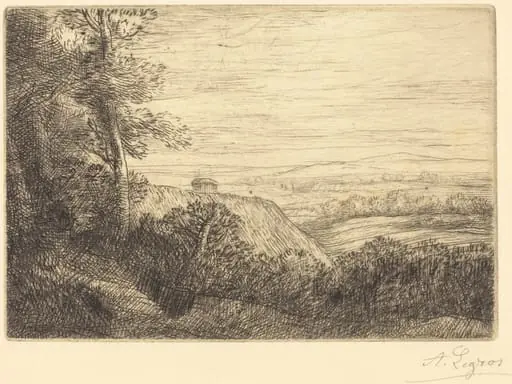 Last Rays (Les derniers rayons)
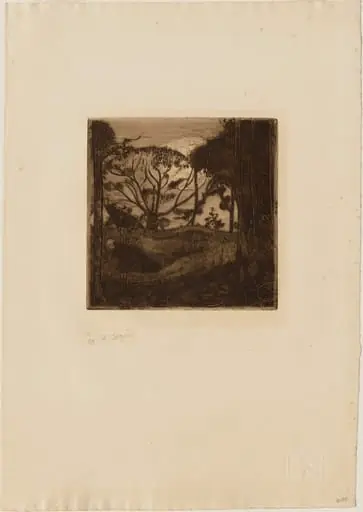 Evening (Le Soir)
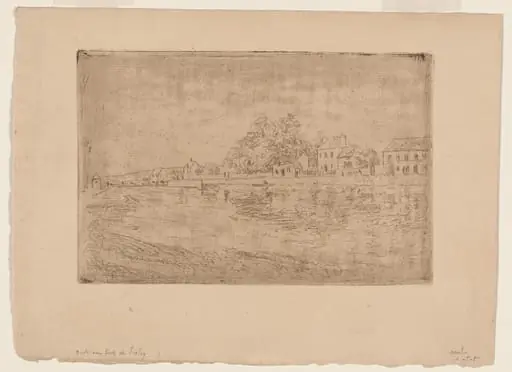 On the Banks of the Loing: Houses by the Water
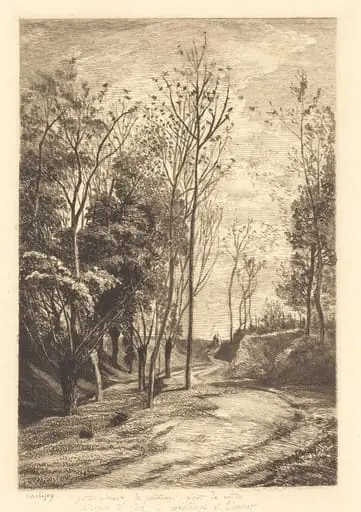 Little Birds (Les Petits oiseaux)
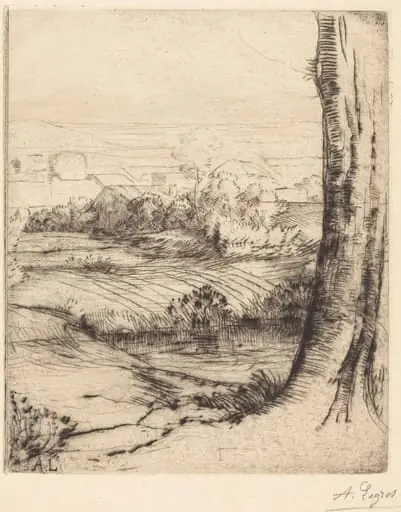 View of Reeds (Coin de roseau)