Artwork
L'Île Lacroix, Rouen (The Effect of Fog)
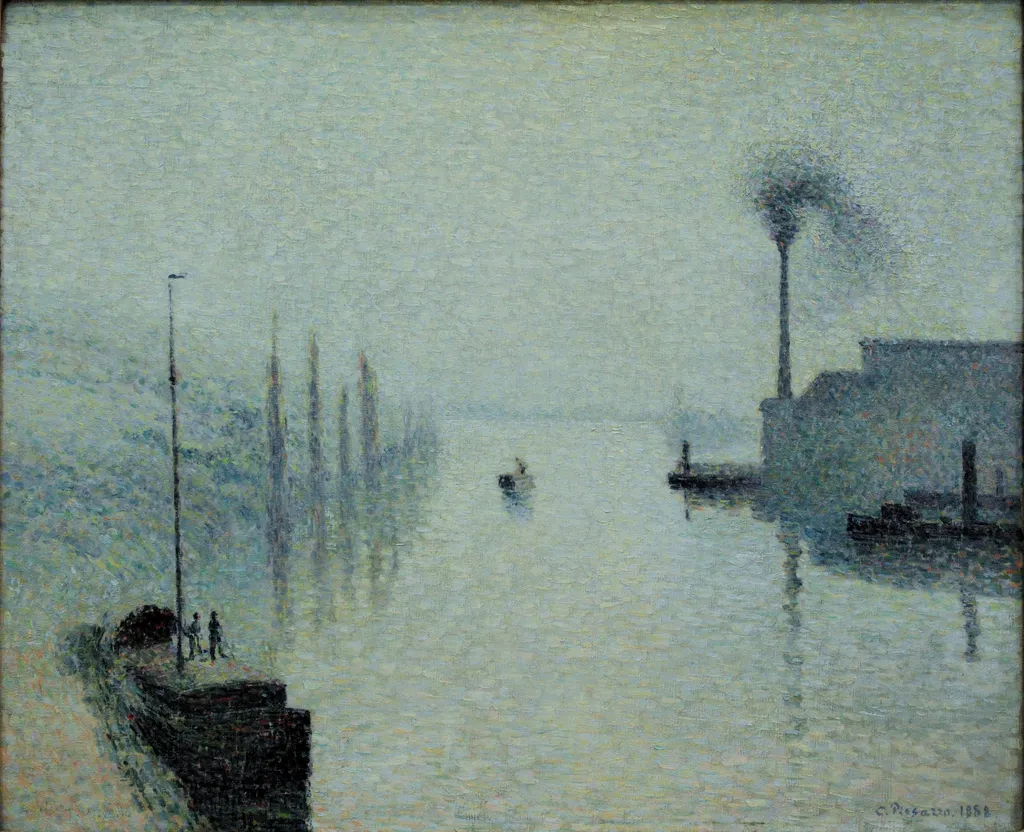
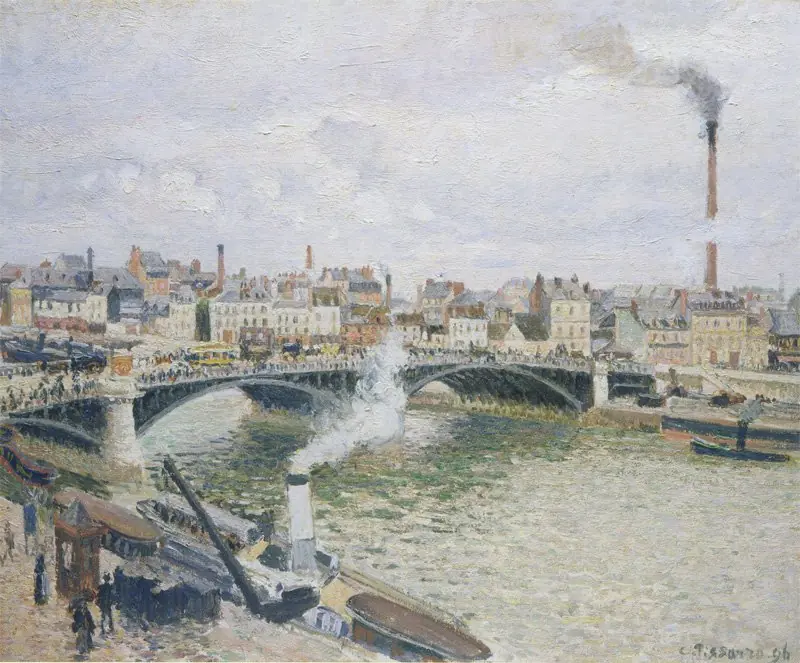
L'Île Lacroix, Rouen (The Effect of Fog) is an oil painting by the Impressionist artist Camille Pissarro. It dates from 1894 and is held in the collection of the Philadelphia Museum of Art.
About this work
Overview
The work reflects his engagement with atmospheric conditions and urban-rural transitions, blending observational precision with a softened, diffused palette.
Painted in 1894, L'Île Lacroix, Rouen (The Effect of Fog) is an oil-on-canvas landscape by Camille Pissarro, capturing a quiet moment along the Seine near Rouen. The work reflects his engagement with atmospheric conditions and urban-rural transitions, blending observational precision with a softened, diffused palette. It resides in the Philadelphia Museum of Art as part of its permanent collection of late 19th-century French painting.
Subject & Meaning
The scene portrays the Île Lacroix, a small island in the Seine, veiled in morning fog. Boats drift lazily, figures move faintly along the bank, and distant buildings emerge as muted silhouettes. The streetlamp in the foreground suggests human presence without narrative, emphasizing quietude over action. The fog becomes more than weather—it transforms the landscape into a meditative space, where form dissolves into light and atmosphere.
Technique & Style
Pissarro employed loose, deliberate brushwork to convey the permeating haze, using layered strokes of blue, gray, and muted ochre to suggest depth without sharp definition. The technique aligns with Impressionist principles but shows a refined restraint, avoiding the pointillist dots of his Neo-Impressionist phase. Light is diffused, not broken into facets; form is suggested through tone rather than line, creating a sense of quiet cohesion.
History & Provenance
Created during Pissarro’s later years, the painting emerged from a series of works he made in Rouen between 1883 and 1895, drawn to its industrial riverfront and shifting weather. It was acquired by the Philadelphia Museum of Art in the early 20th century, likely through a private collector familiar with French Impressionism. Its provenance reflects the growing American interest in French modernism during that period.
Context
In the 1890s, Pissarro was navigating between his earlier Impressionist methods and the structured brushwork of Neo-Impressionism. This painting represents a synthesis: it retains the immediacy of plein air observation but with a subdued, almost monochromatic harmony. Rouen’s industrial landscape, often painted by Monet and others, was a subject of contemporary interest, yet Pissarro’s focus on fog distinguished his approach as more introspective.
Legacy
L'Île Lacroix, Rouen exemplifies Pissarro’s enduring commitment to capturing transient natural effects without romanticizing them. Its quiet composition influenced later artists interested in mood over spectacle, particularly those exploring urban landscapes in adverse weather. The work remains a quiet testament to his belief in painting as a record of perception, not idealization.
Artist & collection
Artist
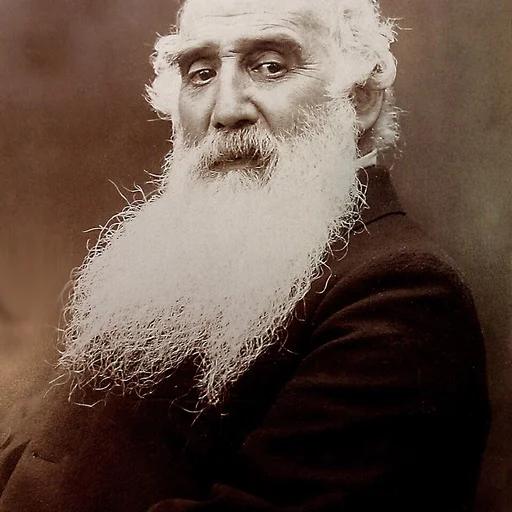
Jacob Abraham Camille Pissarro ( piss-AR-oh; French: ; 10 July 1830 – 13 November 1903) was a Danish-French Impressionist and Neo-Impressionist painter born on the island of Saint Thomas (now in the US Virgin Islands, but then in the…