Artwork
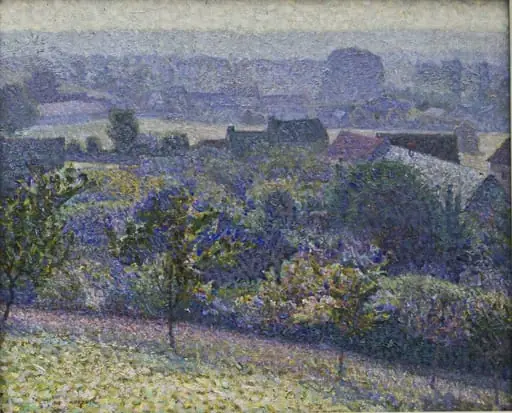
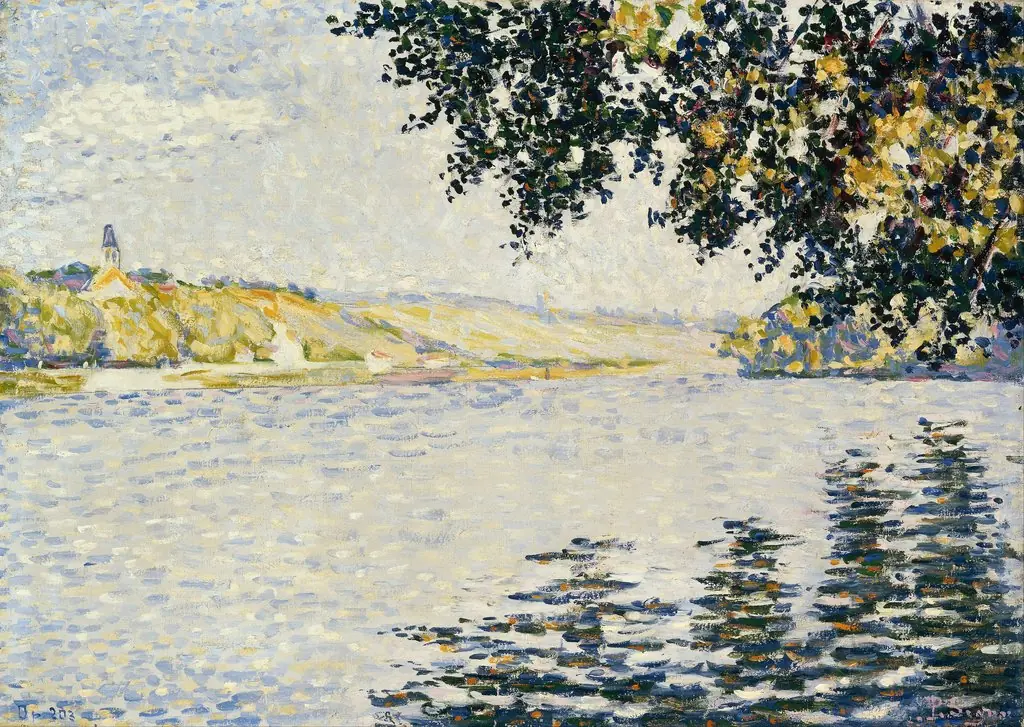
Samois, the riverbank, morning
Samois, the riverbank, morning is an oil painting by the Post-Impressionist artist Paul Signac. It dates from 1901 and is held in the collection of the Montreal Museum of Fine Arts.
About this work
Overview
Though rooted in the Neo-Impressionist movement, the painting reflects a more lyrical tone than his earlier, more systematic pointillist works.
Paul Signac painted *Samois, the riverbank, morning* in 1901, capturing a quiet stretch of the Seine near the village of Samois-sur-Seine. Executed in oil, the work belongs to his mature period, when he refined his approach to color and light. Though rooted in the Neo-Impressionist movement, the painting reflects a more lyrical tone than his earlier, more systematic pointillist works. It is held in the collection of the Montreal Museum of Fine Arts.
Subject & Meaning
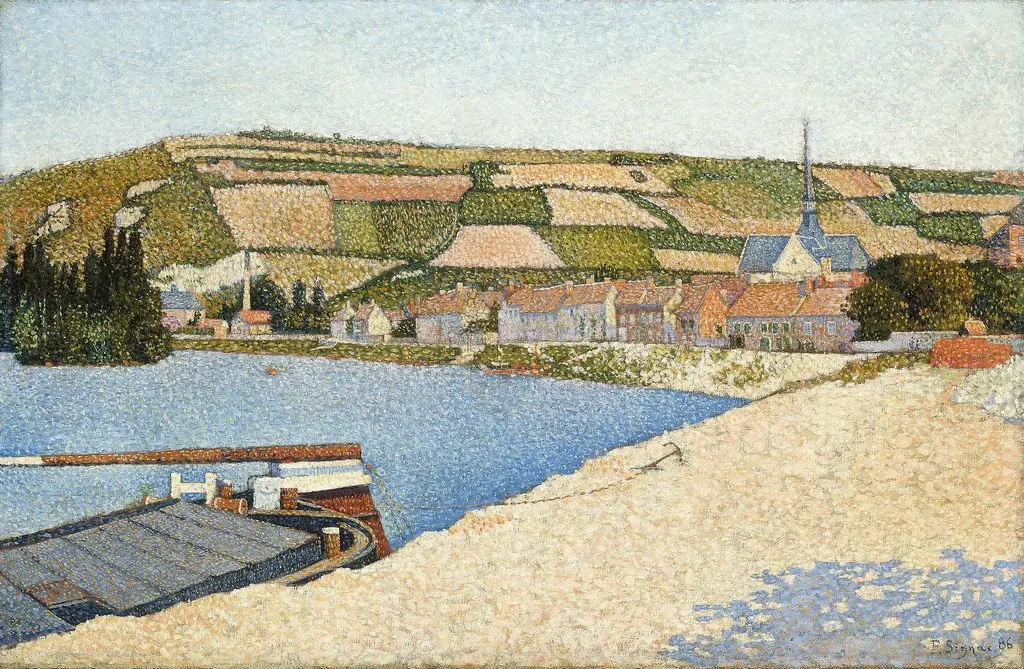
The scene depicts a tranquil riverside at daybreak, with calm water reflecting the pale hues of dawn. Moored boats, sparse trees, and distant buildings suggest a quiet, working landscape rather than a tourist destination. Signac avoids narrative or drama, instead emphasizing stillness and the subtle rhythms of nature. The absence of human figures enhances the sense of solitude, inviting contemplation rather than storytelling.
Technique & Style
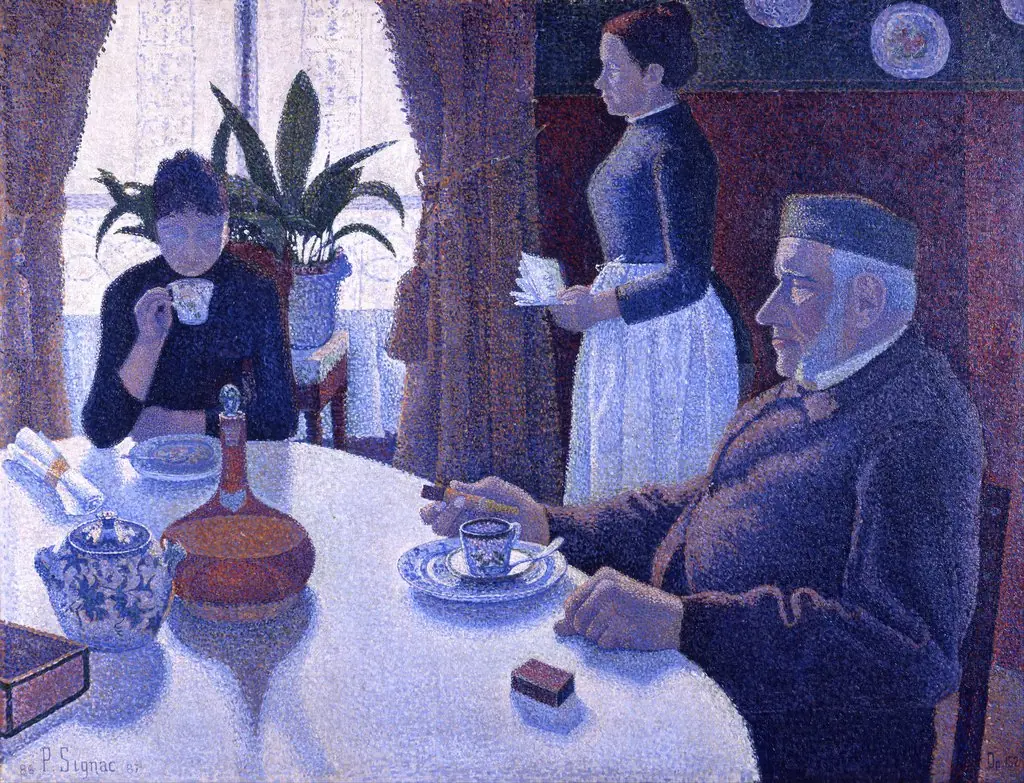
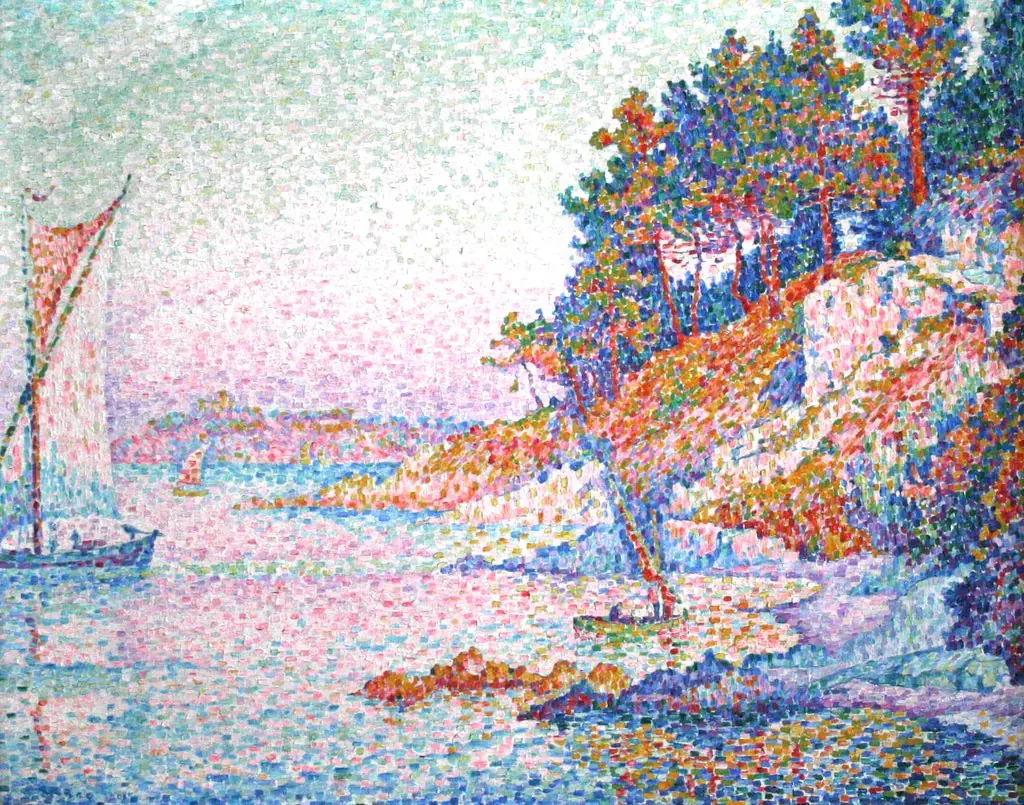
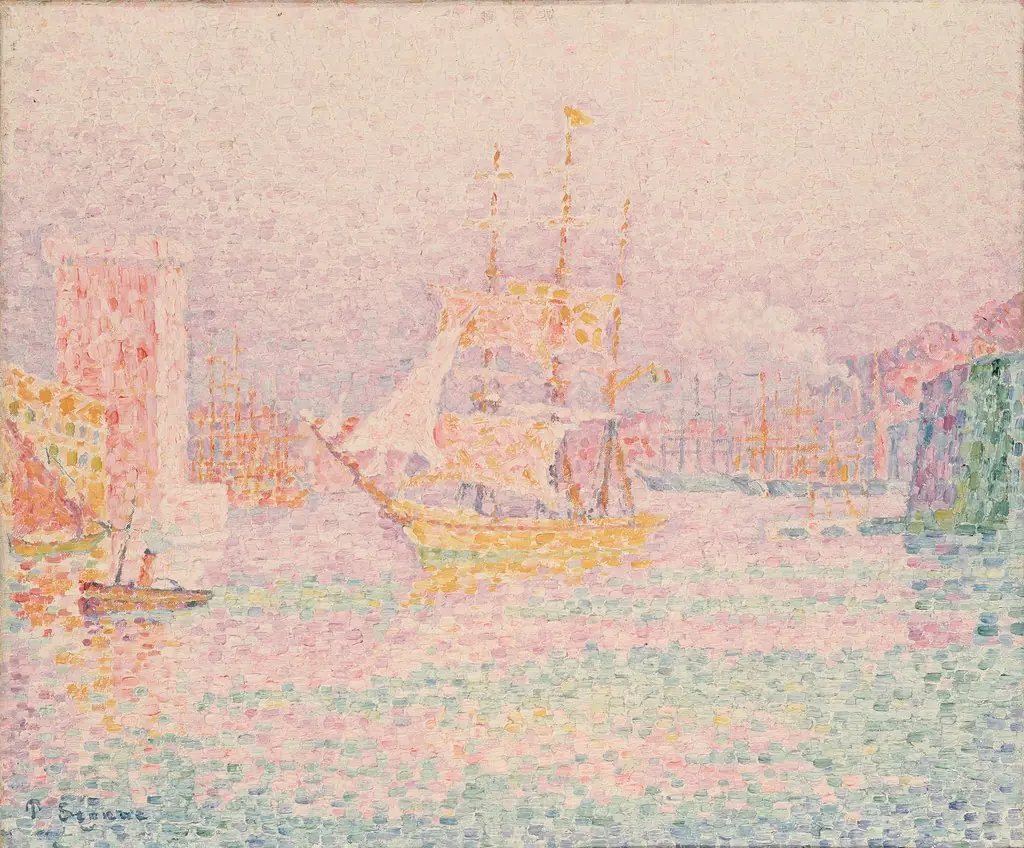
Signac employs a modified pointillist technique, using small, deliberate strokes of unmixed pigment to build form and atmosphere. Unlike his earlier, rigid dot patterns, here the brushwork is looser, blending color optically with greater fluidity. The reflections on the water are rendered through layered tones of blue, lavender, and pale green, creating a luminous surface that responds to the morning light without artificial sharpness.
History & Provenance
Painted during Signac’s travels along the Seine, this work emerged from a period when he increasingly favored landscapes over port scenes. It remained in private hands until acquired by the Montreal Museum of Fine Arts in the 20th century. Its journey from a French countryside sketch to a public collection reflects broader interest in Neo-Impressionism outside Europe during the postwar era.
Context
In 1901, Signac was distancing himself from the strict scientific theories of pointillism he once championed with Seurat. He turned toward more expressive, atmospheric compositions, influenced by his travels and a growing interest in harmony between color and mood. *Samois* aligns with this shift, showing how Neo-Impressionist methods could serve poetic observation rather than theoretical precision.
Legacy
The painting exemplifies Signac’s evolution from rigid technique to a more intuitive use of color and light. While not as widely recognized as his seascapes, *Samois* illustrates how Post-Impressionist artists reimagined everyday landscapes as vessels for quiet emotional resonance. Its presence in Montreal underscores the international reach of French modernism in the early 20th century.
Artist & collection

Artist
Paul Victor Jules Signac ( seen-YAHK, French: ; 11 November 1863 – 15 August 1935) was a French Neo-Impressionist painter who, with Georges Seurat, helped develop the artistic technique Pointillism.