Artwork
Modesty and Vanity
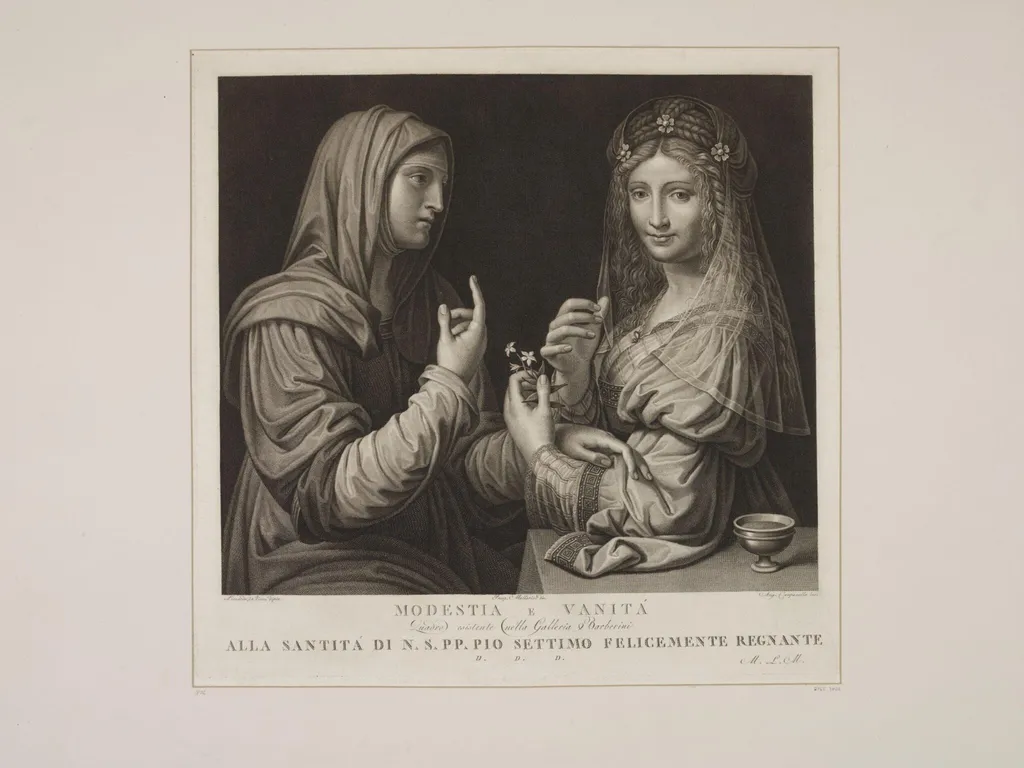
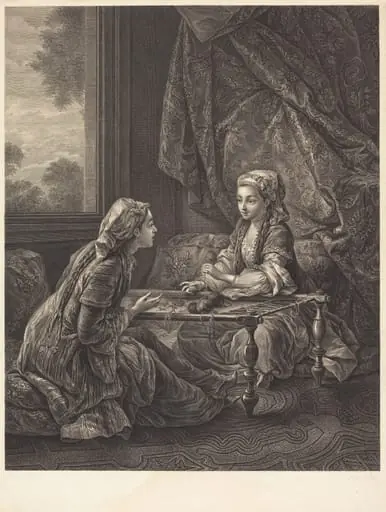
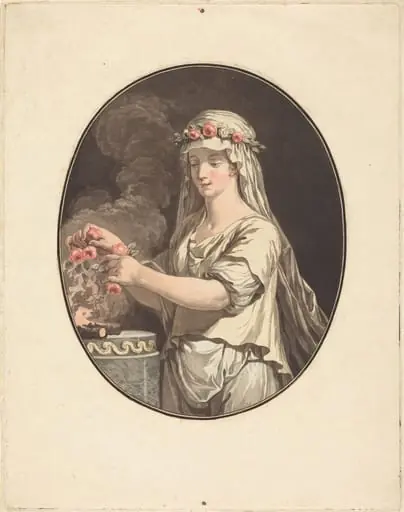
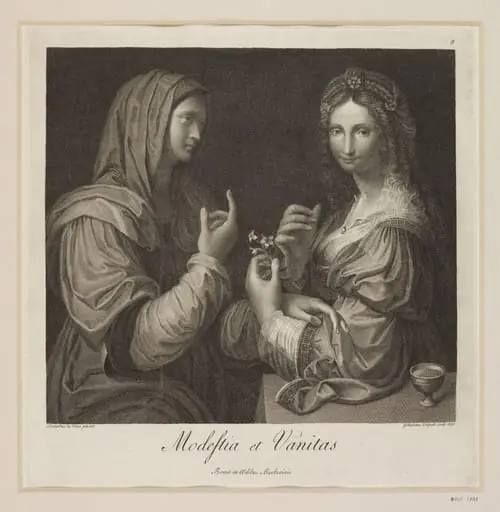
Modesty and Vanity is a print by Angelo Campanella. It dates from 1850 and is held in the collection of the Victoria and Albert Museum.
About this work
Overview
Modesty and Vanity is a print based on a work by Leonardo da Vinci, contrasting two virtues through the depiction of two women.
Subject & Meaning
The print portrays two women embodying opposing virtues: one in a dark, hooded cloak, gesturing towards the other, who sits in a flowing gown, holding a mirror and a flower. The mirror may symbolize vanity or pride, while the flower could represent the transience of beauty.
Technique & Style
The composition utilizes chiaroscuro, a technique pioneered by da Vinci, which employs strong contrasts of light and dark to create a sense of volume and depth, drawing the viewer's eye through the interplay of shadows and illumination.
History & Provenance
Originally a painting by Leonardo da Vinci, this work was later reproduced as a print, titled *Modesty and Vanity*, with the printing process allowing for wider dissemination of the artist's thematic exploration.
Context
Created in a period where moral dichotomies were frequently explored in art, *Modesty and Vanity* reflects Renaissance interests in contrasting virtues and vices, using symbolic objects to convey moral messages.
Legacy
As a print after da Vinci, *Modesty and Vanity* contributes to the broader legacy of the artist's works being reproduced and interpreted across different mediums, influencing subsequent artistic explorations of light, shadow, and moral themes.
Artist & collection

Artist
Angelo Campanella was an Italian painter and engraver. Born in Rome, he trained under Giovanni Volpato. He engraved the statues of twelve apostles found in the church of St. John Lateran; and some of the plates for…