Artwork
LA SAINTE VIERGE
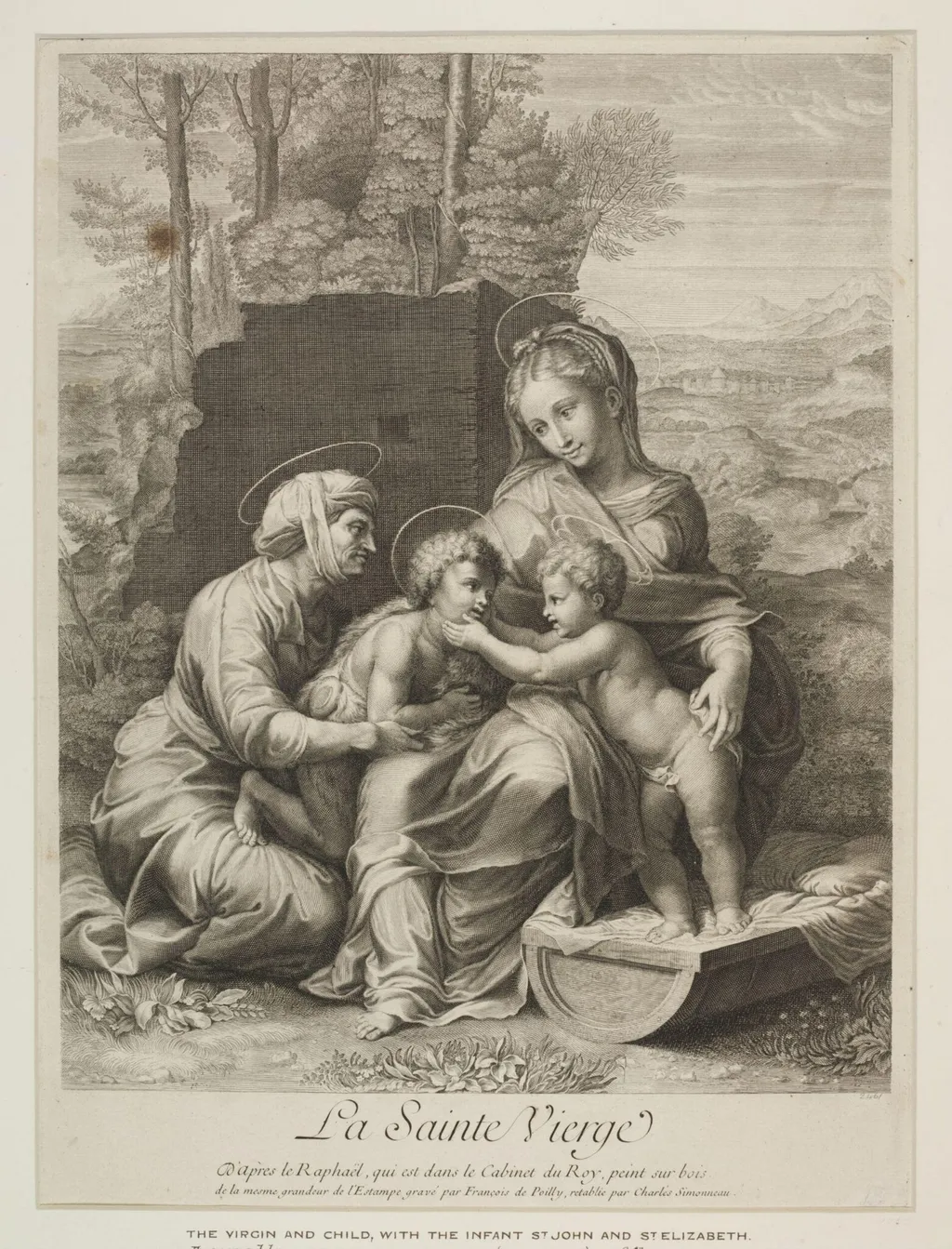
LA SAINTE VIERGE is a print by the Baroque artist François de Poilly. It dates from 1635 and is held in the collection of the Victoria and Albert Museum.
About this work
Overview
François de Poilly’s engraving titled *La Sainte Vierge* presents a serene grouping of figures in a rocky landscape. The central female figure cradles an infant, while a younger child reaches toward her and an older woman kneels nearby, all rendered with soft modeling and gentle shadows.
Subject & Meaning
The composition identifies the seated woman as the Virgin Mary, holding the Christ Child. Beside them stands the infant Saint John the Baptist, and the kneeling figure represents Saint Elizabeth, mother of John, evoking the biblical scene of the Holy Family’s intimate encounter.
Technique & Style
Executed as a copper engraving on paper, the image reflects the refined line work typical of mid‑18th‑century French printmaking. Poilly’s handling of drapery and facial expression conveys a quiet warmth, while the landscape background provides a modest contextual frame.
History & Provenance
The print derives from a composition originally by Raphael, reproduced in the *Cabinet du Roy* series. It survives in a third state, later retouched by Charles Simonneau for inclusion in the Crozat Gallery collection, indicating its circulation among elite French patrons.
Context
*La Sainte Vierge* belongs to a tradition of devotional prints that translated celebrated paintings into accessible formats. By adapting Raphael’s design, Poilly participated in the broader 18th‑century practice of disseminating canonical religious imagery through engraving.
Artist & collection
Artist
François de Poilly made intricate religious prints and engravings in 17th-century France.

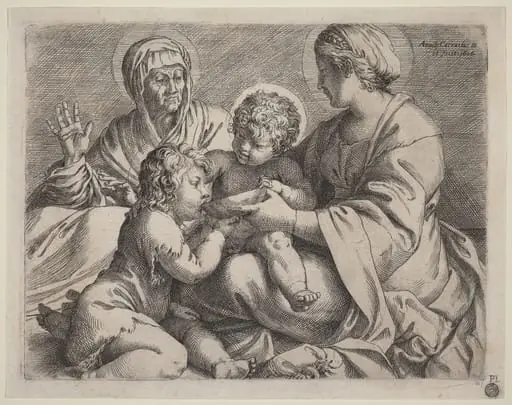 The Madonna della Scodella
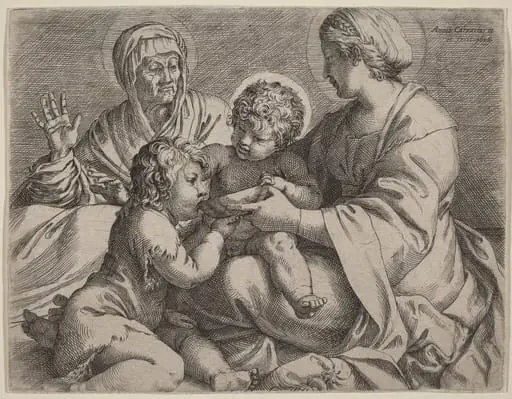 Madonna and Child with Saints Elizabeth and John the Baptist (La Madonna della Scodella)
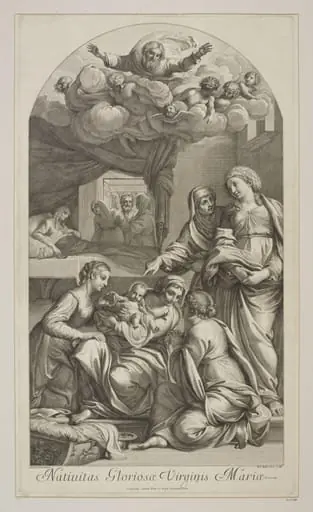 Birth of the Virgin
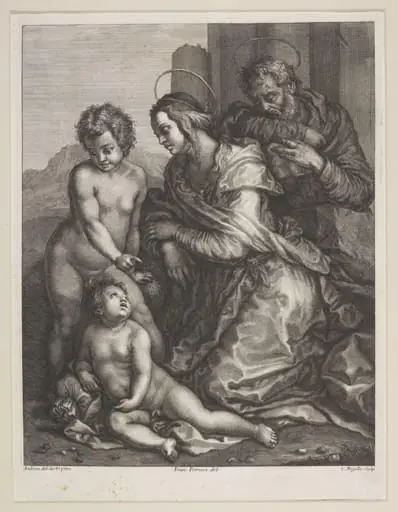 Holy Family
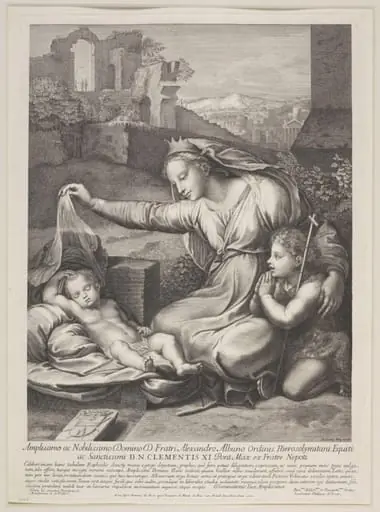 The Holy Family
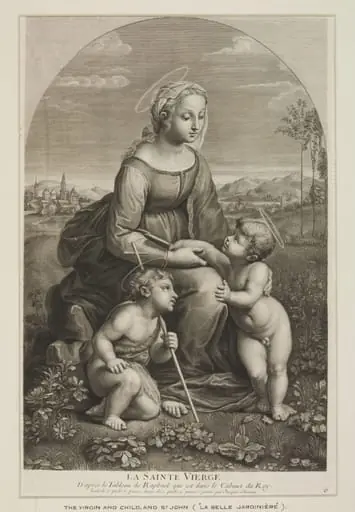 La Belle Jardinière
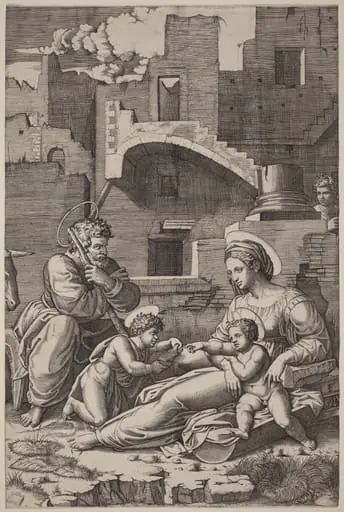 The Holy Family with the Young Saint John the Baptist (The Madonna of the Long Thigh)
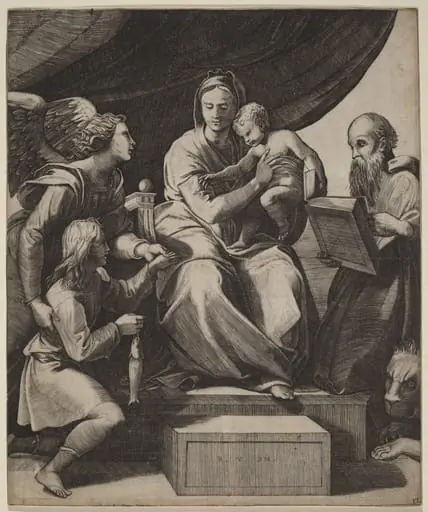 The Virgin with a Fish
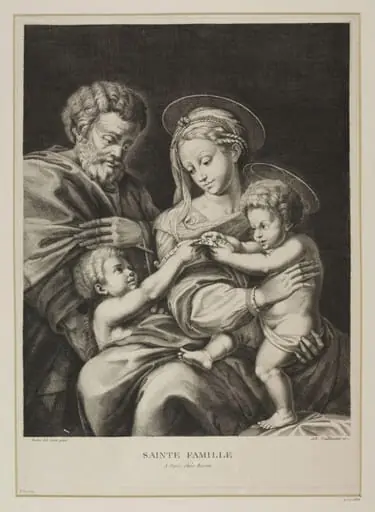 Holy Family
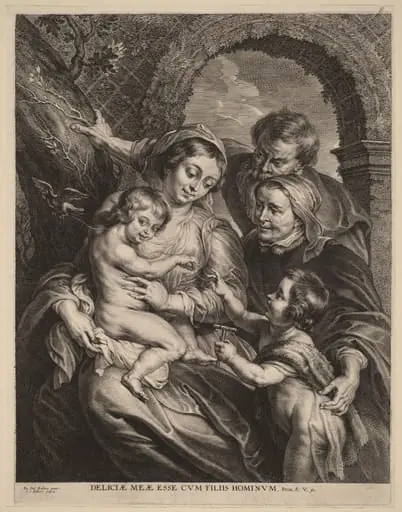 The Holy Family with the Goldfinch
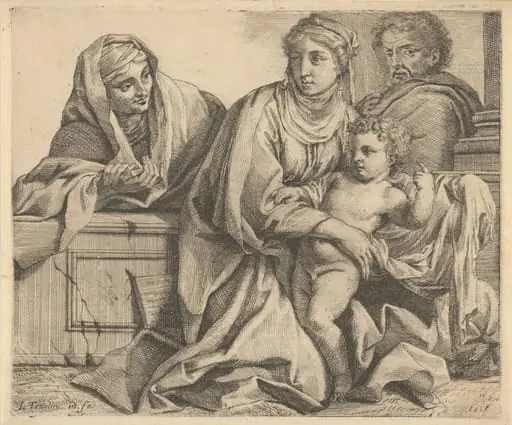 The Holy Family with Saint Anne
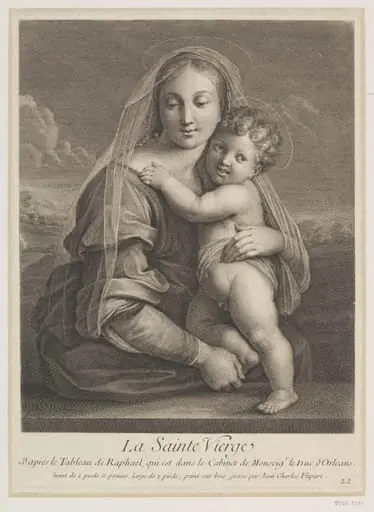 La Sainte Vierge